de Silva Thushan I, Liu Guihai, Lindsey Benjamin B, Dong Danning, Moore Shona C, Hsu Nienyun Sharon, Shah Dhruv, Wellington Dannielle, Mentzer Alexander J, Angyal Adrienn, Brown Rebecca, Parker Matthew D, Ying Zixi, Yao Xuan, Turtle Lance, Dunachie Susanna, Maini Mala K, Ogg Graham, Knight Julian C, Peng Yanchun, Rowland-Jones Sarah L, Dong Tao
The Florey Institute for Host-Pathogen Interactions and Department of Infection, Immunity and Cardiovascular Disease, Medical School, University of Sheffield, Sheffield S10 2RX, UK.
Vaccines and Immunity Theme, Medical Research Council Unit The Gambia at the London School of Hygiene and Tropical Medicine, P.O. Box 273, Banjul, The Gambia.
iScience. 2021 Nov 19;24(11):103353. doi: 10.1016/j.isci.2021.103353. Epub 2021 Oct 28.
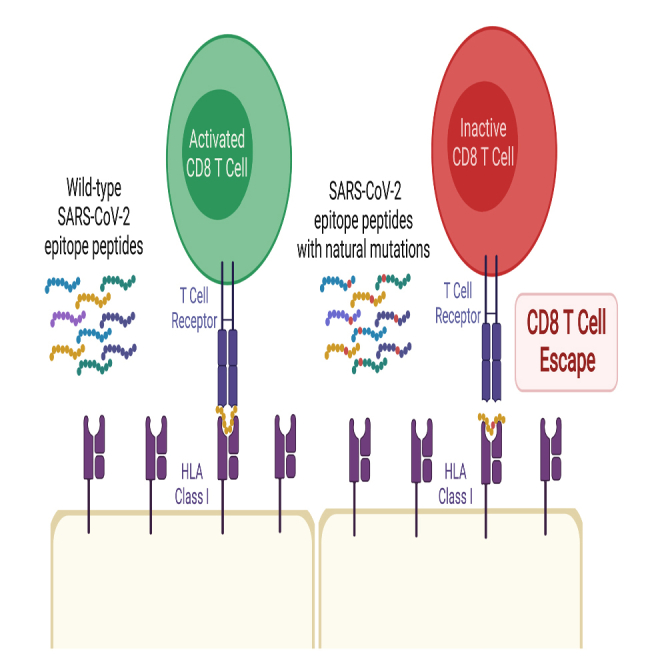
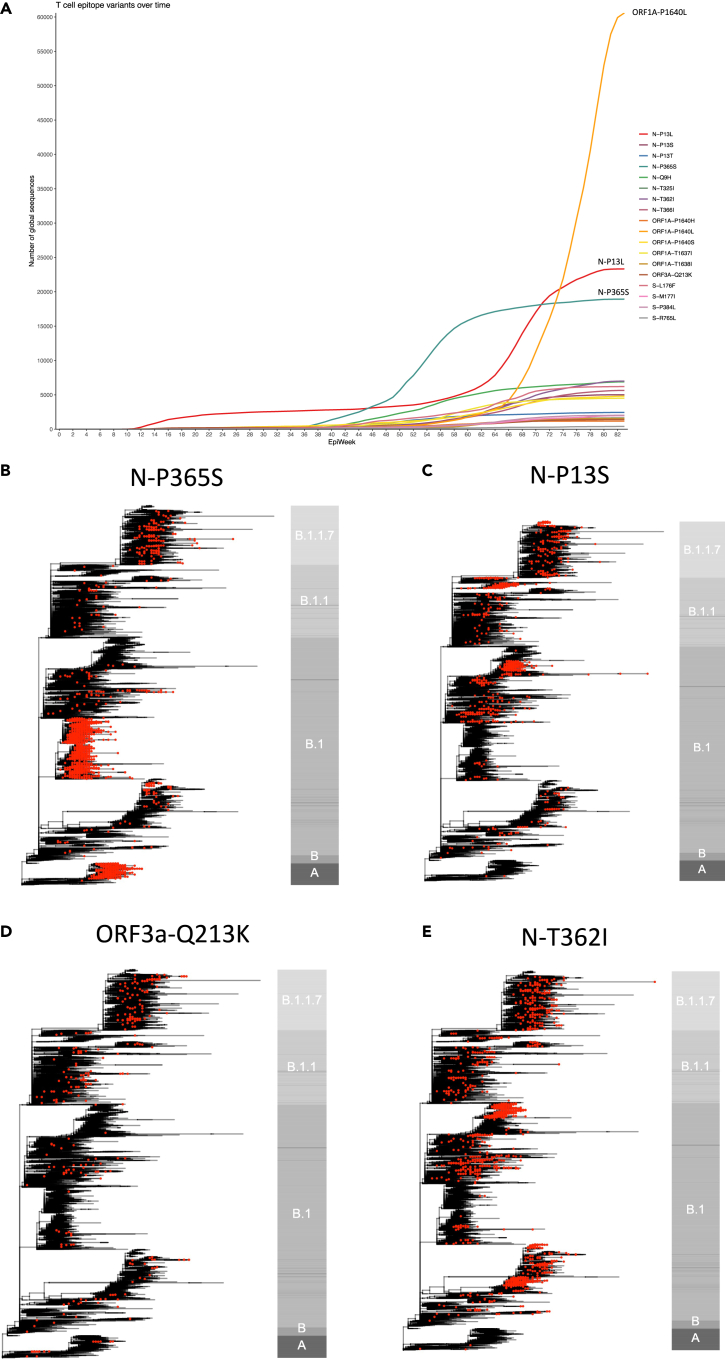
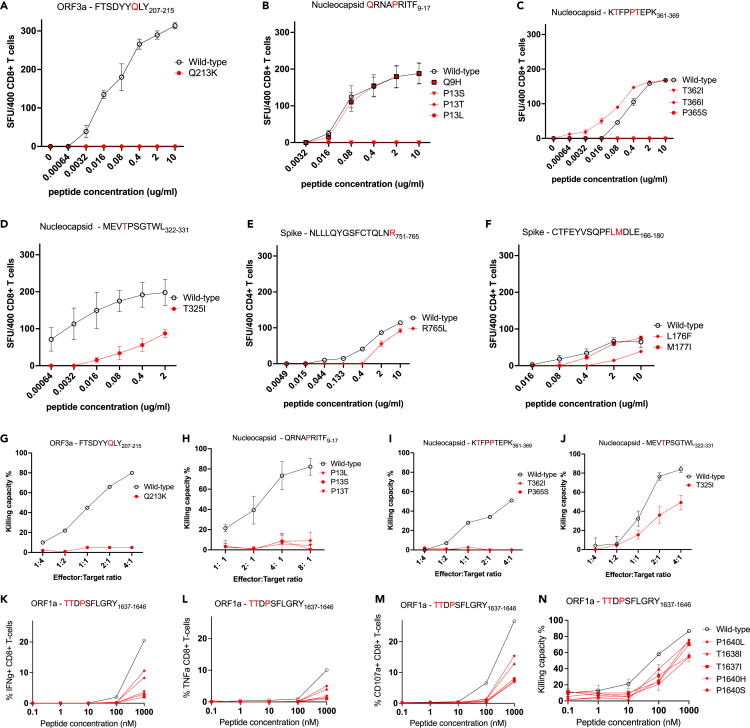
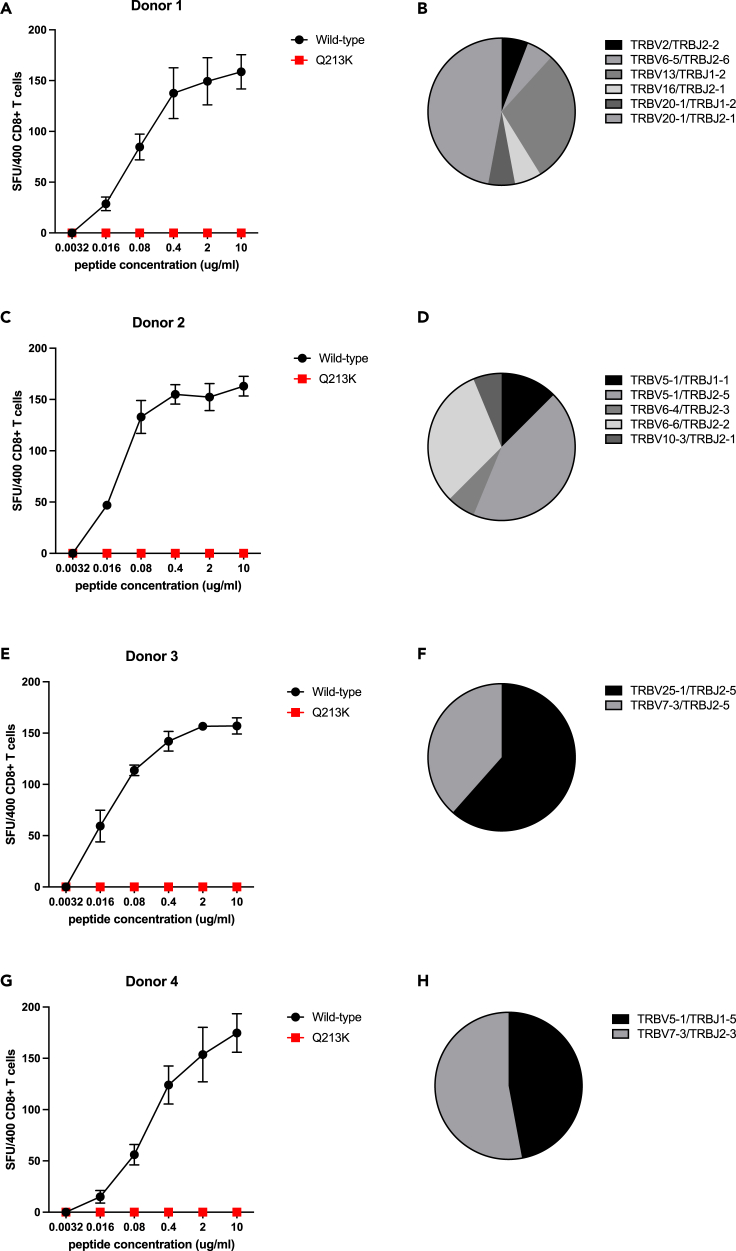
We identify amino acid variants within dominant SARS-CoV-2 T cell epitopes by interrogating global sequence data. Several variants within nucleocapsid and ORF3a epitopes have arisen independently in multiple lineages and result in loss of recognition by epitope-specific T cells assessed by IFN-γ and cytotoxic killing assays. Complete loss of T cell responsiveness was seen due to Q213K in the A∗01:01-restricted CD8+ ORF3a epitope FTSDYYQLY; due to P13L, P13S, and P13T in the B∗27:05-restricted CD8+ nucleocapsid epitope QRNAPRITF; and due to T362I and P365S in the A∗03:01/A∗11:01-restricted CD8+ nucleocapsid epitope KTFPPTEPK. CD8+ T cell lines unable to recognize variant epitopes have diverse T cell receptor repertoires. These data demonstrate the potential for T cell evasion and highlight the need for ongoing surveillance for variants capable of escaping T cell as well as humoral immunity.
我们通过分析全球序列数据来识别新冠病毒主要T细胞表位中的氨基酸变体。核衣壳蛋白和ORF3a表位中的几种变体在多个谱系中独立出现,并导致通过IFN-γ和细胞毒性杀伤试验评估的表位特异性T细胞对其识别能力丧失。在A∗01:01限制性CD8+ ORF3a表位FTSDYYQLY中,Q213K导致T细胞反应性完全丧失;在B∗27:05限制性CD8+核衣壳蛋白表位QRNAPRITF中,P13L、P13S和P13T导致T细胞反应性完全丧失;在A∗03:01/A∗11:01限制性CD8+核衣壳蛋白表位KTFPPTEPK中,T362I和P365S导致T细胞反应性完全丧失。无法识别变体表位的CD8+ T细胞系具有多样的T细胞受体库。这些数据证明了T细胞逃逸的可能性,并强调需要持续监测能够逃避T细胞免疫和体液免疫的变体。