School of Rehabilitation Medicine, Shandong University of Traditional Chinese Medicine, Jinan, Shandong, China.
Qilu Hospital of Shandong University, Jinan, Shandong, China.
Medicine (Baltimore). 2021 Oct 15;100(41):e27490. doi: 10.1097/MD.0000000000027490.
Prunella vulgaris (PV), a traditional Chinese medical herb, is considered beneficial for some thyroid diseases. However, the effectiveness is not consistent in different studies. This review compiles the evidence from randomized controlled trials (RCTs) and quantifies the effects of PV preparation on thyroid nodules.
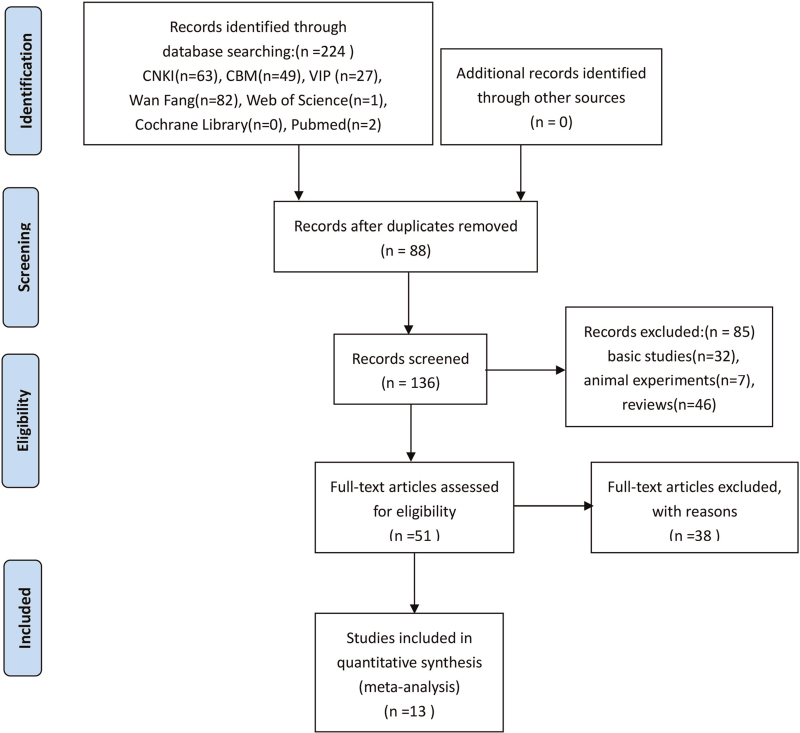
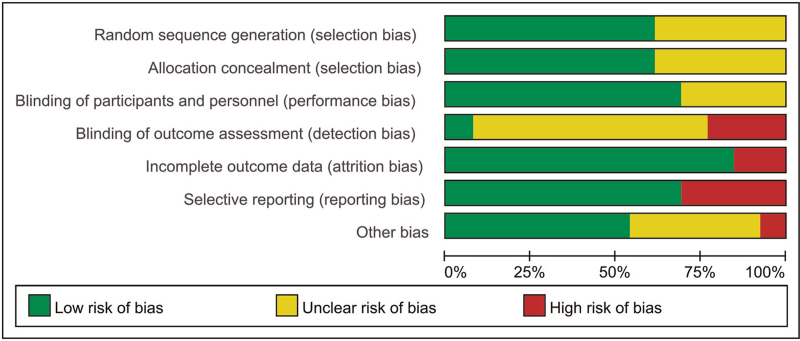
Eight databases were searched up to April 2021 to identify eligible studies. Only RCTs were included. Meta-analysis of homogeneous studies was performed by RevMan5.3 software. Cochrane risk of bias assessment tool version 2.0 was used to assess the risk of bias of each trial. The research screening, data extraction, and risk of bias assessment were employed by 2 reviewers independently, and disagreement will be decided by a third senior reviewer. The risk ratio (RR), mean difference (MD) and corresponding 95% confidence interval (CI) of each study are summarized.
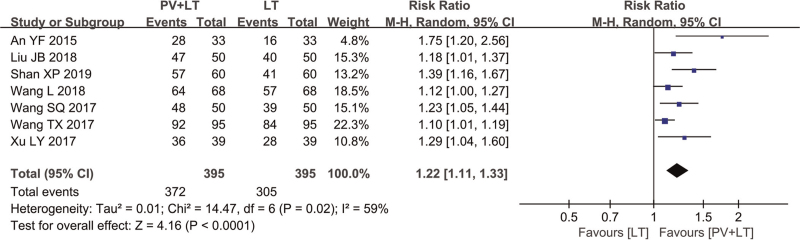
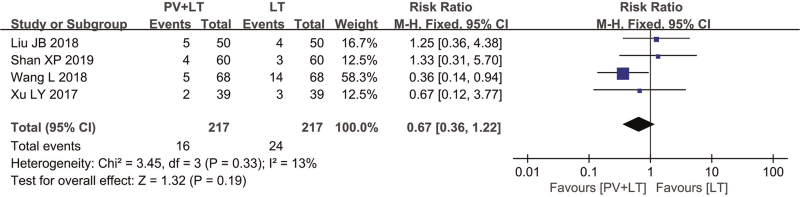
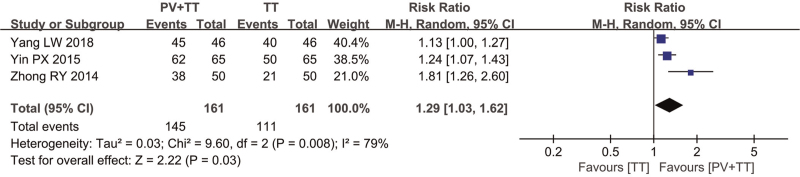
Thirteen RCTs with 1468 patients were included in this study. A meta-analysis showed that the RR of the clinical efficacy of PV combined with levothyroxine sodium tablets was 1.22 (95% CI [1.11, 1.33]). The MD of thyroid nodule diameter was -0.43 (95% CI [-0.63, -0.22]). The MD of free triiodothyronine and free tetraiodothyronine levels was -1.99 (95% CI [-3.14, -0.86]) and -3.20 (95% CI [-5.50, -0.89]), respectively. The RR of the adverse reaction rate was 0.67 (95% CI [0.36, 1.22]), and the RR of the clinical efficacy of PV preparation combined with thyroxin tablets was 1.29 (95% CI [1.03, 1.62]).
PV combined with levothyroxine sodium tablets or thyroxin tablets has more benefits for thyroid nodules, further improving the clinical efficiency, reducing the diameter of nodules and reducing the occurrence of adverse reactions. However, the quality of these studies is uncertain, and higher quality and more RCTs are needed to provide comprehensive evidence-based medical evidence in the future.
夏枯草(PV)是一种传统的中药,被认为对某些甲状腺疾病有益。然而,其疗效在不同的研究中并不一致。本综述汇总了随机对照试验(RCT)的证据,并定量评估了 PV 制剂对甲状腺结节的影响。
检索了截至 2021 年 4 月的 8 个数据库,以确定合格的研究。仅纳入 RCT。使用 RevMan5.3 软件对同质研究进行荟萃分析。采用 Cochrane 偏倚风险评估工具版本 2.0 评估每个试验的偏倚风险。研究筛选、数据提取和偏倚风险评估由 2 名评审员独立进行,如果存在分歧,则由 1 名资深评审员进行裁决。总结了每项研究的风险比(RR)、均数差(MD)和相应的 95%置信区间(CI)。
纳入了 13 项 RCT 共 1468 例患者。荟萃分析显示,PV 联合左甲状腺素钠片治疗的临床疗效 RR 为 1.22(95%CI [1.11, 1.33])。甲状腺结节直径的 MD 为-0.43(95%CI [-0.63, -0.22])。游离三碘甲状腺原氨酸和游离甲状腺素水平的 MD 分别为-1.99(95%CI [-3.14, -0.86])和-3.20(95%CI [-5.50, -0.89])。不良反应发生率的 RR 为 0.67(95%CI [0.36, 1.22]),PV 制剂联合甲状腺素片的临床疗效 RR 为 1.29(95%CI [1.03, 1.62])。
PV 联合左甲状腺素钠片或甲状腺素片治疗甲状腺结节更有效,进一步提高了临床疗效,缩小了结节直径,减少了不良反应的发生。然而,这些研究的质量存在不确定性,未来需要更高质量和更多的 RCT 来提供全面的循证医学证据。