Department of Sleep Medicine, Mental Health Center of Shantou University, Shantou, China; Sleep Medicine Center, Shantou University Medical College, Shantou, China.
Department of Sleep Medicine, Mental Health Center of Shantou University, Shantou, China; Sleep Medicine Center, Shantou University Medical College, Shantou, China.
Sleep Med. 2022 Mar;91:262-272. doi: 10.1016/j.sleep.2021.09.014. Epub 2021 Sep 28.
Evidence suggests that the outbreak of the coronavirus disease 2019 (COVID-19) and the prevention/control measures for COVID-19 may cause insomnia during the acute phase of COVID-19 pandemic in China. However, it is unclear whether insomnia sustains during the later phases of the pandemic.
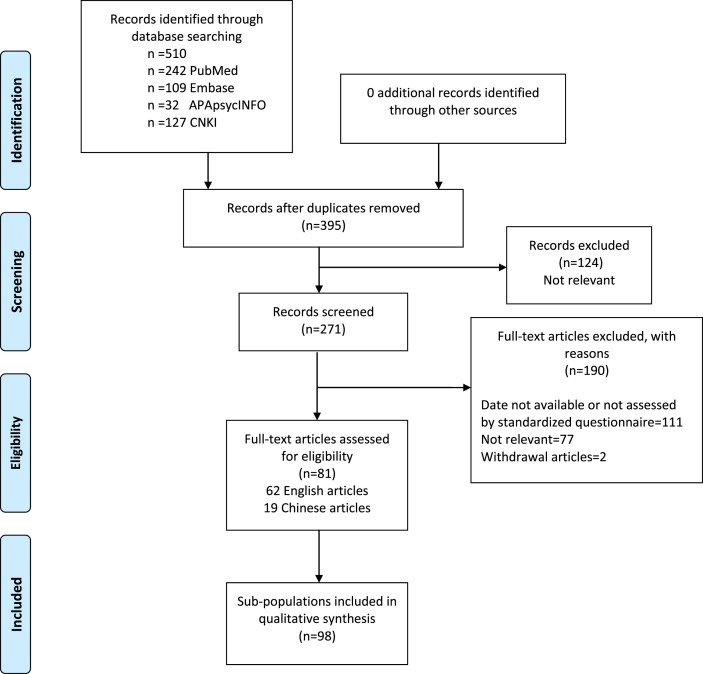
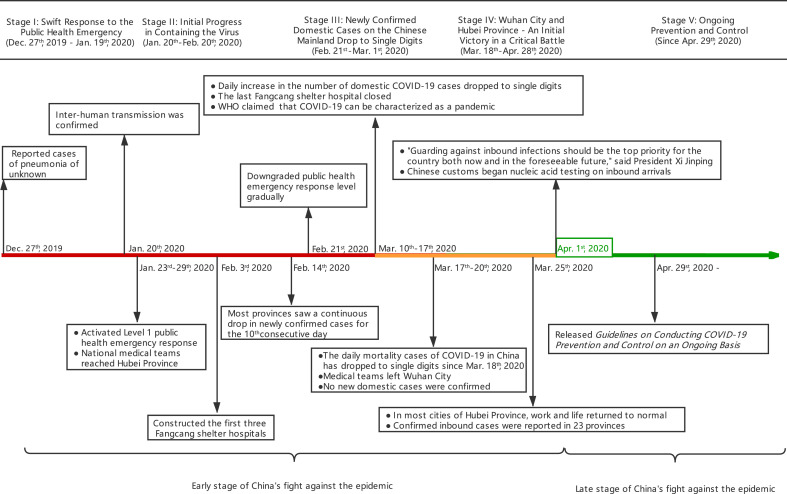
We searched PubMed/Medline, EMBASE, PsycINFO and China National Knowledge Infrastructure from the 27th December 2019 to the 2nd February 2021. As early stage studies on COVID-19 pandemic in China were defined as those conducted prior to April 1st, 2020, while late stage studies were those conducted after April 1st, 2020.
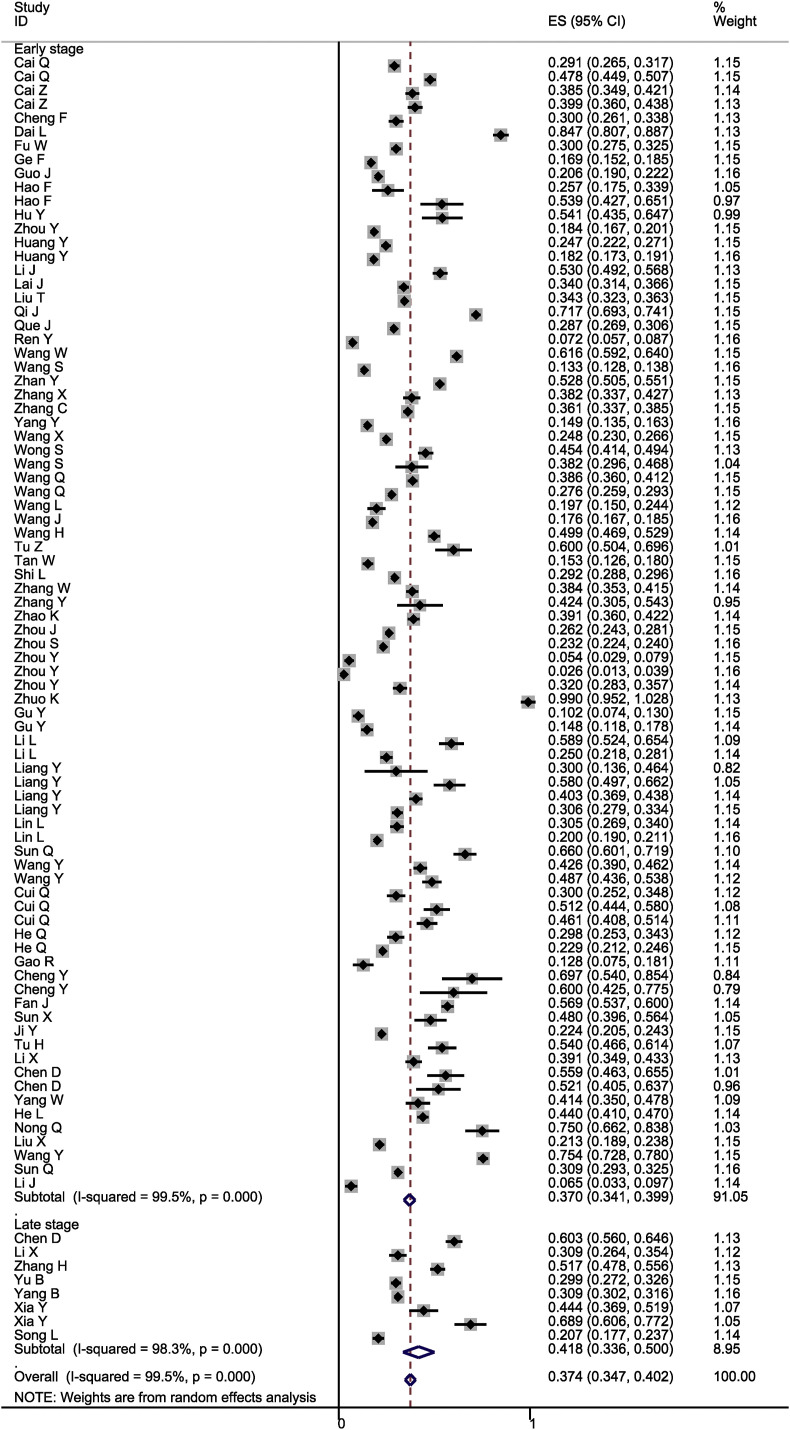
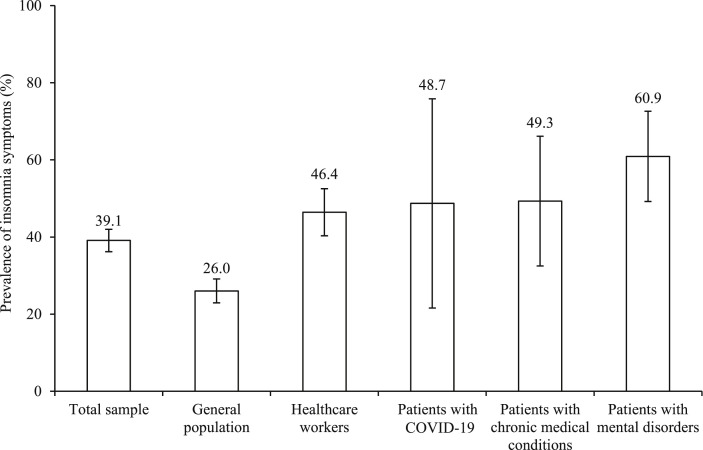
A total of 98 studies with 193,889 participants were included. The pooled prevalence of insomnia symptoms among all populations was 39.1% (95% CI 36.2-42.0%); the pooled prevalence of insomnia symptoms during the early and late stages of COVID-19 in China were 37.0% (95% CI 34.1-39.9%) and 41.8% (95% CI 33.6-50.0%), respectively. Importantly, there was no significant difference regarding the prevalence of insomnia symptoms between the early and late stages of COVID-19. Meta-regression showed that healthcare workers, COVID-19 patients, patients with chronic medical conditions and patients with mental disorders had a higher prevalence of insomnia symptoms compared to the general population. This association remained significant in healthcare workers and patients with chronic medical conditions after adjusting for age, gender, areas of high or low prevalence of COVID-19 cases, anxiety and depression.
Over one third of our sample present insomnia symptoms during the early stage of COVID-19 pandemic in China. Interestingly, prevalence of insomnia symptoms sustains high during the late stage of the pandemic despite the control of the disease and the amelioration of its adverse effects. Our findings suggest that insomnia symptoms related to COVID-19 appear to persist of over time.
有证据表明,2019 年冠状病毒病(COVID-19)的爆发以及 COVID-19 的预防/控制措施可能会导致中国 COVID-19 大流行的急性期出现失眠。然而,目前尚不清楚这种失眠是否会在大流行的后期持续存在。
我们从 2019 年 12 月 27 日至 2021 年 2 月 2 日在 PubMed/Medline、EMBASE、PsycINFO 和中国国家知识基础设施(CNKI)中进行了检索。由于中国 COVID-19 大流行的早期研究被定义为在 2020 年 4 月 1 日之前进行的研究,而晚期研究则定义为在 2020 年 4 月 1 日之后进行的研究。
共纳入 98 项研究,涉及 193889 名参与者。所有人群中失眠症状的总患病率为 39.1%(95%置信区间 36.2-42.0%);中国 COVID-19 大流行早期和晚期的失眠症状患病率分别为 37.0%(95%置信区间 34.1-39.9%)和 41.8%(95%置信区间 33.6-50.0%)。重要的是,COVID-19 大流行的早期和晚期阶段失眠症状的患病率没有显著差异。元回归显示,与一般人群相比,医护人员、COVID-19 患者、患有慢性疾病的患者和患有精神障碍的患者失眠症状的患病率更高。在调整年龄、性别、COVID-19 病例高发或低发地区、焦虑和抑郁后,这种关联在医护人员和患有慢性疾病的患者中仍然显著。
在中国 COVID-19 大流行的早期阶段,超过三分之一的样本出现失眠症状。有趣的是,尽管疾病得到控制且其不良影响得到改善,但在大流行的后期,失眠症状的患病率仍居高不下。我们的研究结果表明,与 COVID-19 相关的失眠症状似乎会持续很长时间。