Department of Thoracic Surgery and Institute of Thoracic Oncology, West China Hospital, Sichuan University, Chengdu, Sichuan 610041, China.
Western China Collaborative Innovation Center for Early Diagnosis and Multidisciplinary Therapy of Lung Cancer, Chengdu, Sichuan 610041, China.
Chin Med J (Engl). 2021 Nov 3;134(22):2700-2709. doi: 10.1097/CM9.0000000000001819.
There is limited information about thymosin α1 (Tα1) as adjuvant immunomodulatory therapy, either used alone or combined with other treatments, in patients with non-small cell lung cancer (NSCLC). This study aimed to evaluate the effect of adjuvant Tα1 treatment on long-term survival in margin-free (R0)-resected stage IA-IIIA NSCLC patients.
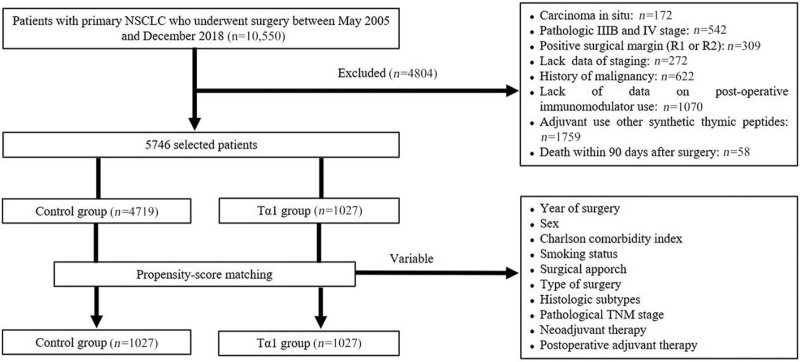
A total of 5746 patients with pathologic stage IA-IIIA NSCLC who underwent R0 resection were included. The patients were divided into the Tα1 group and the control group according to whether they received Tα1 or not. A propensity score matching (PSM) analysis was performed to reduce bias, resulting in 1027 pairs of patients.
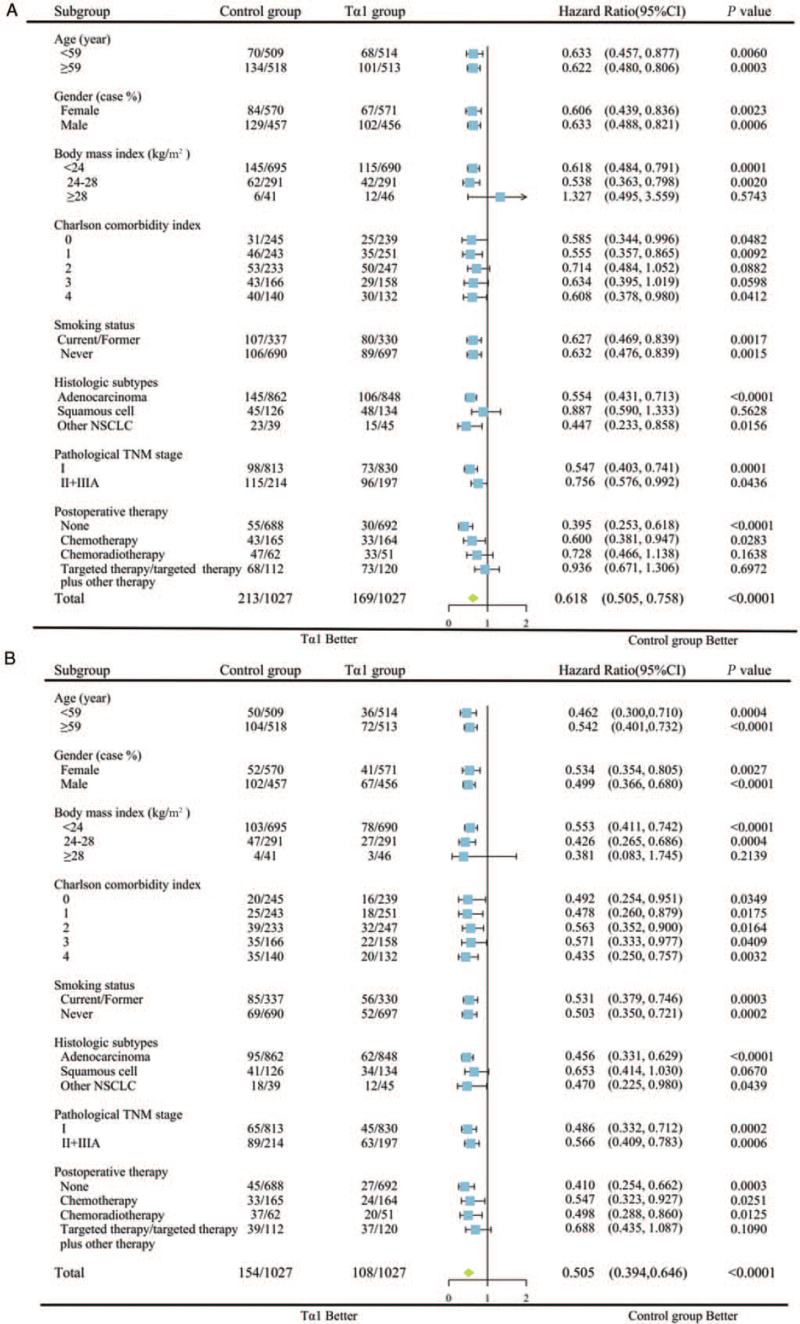
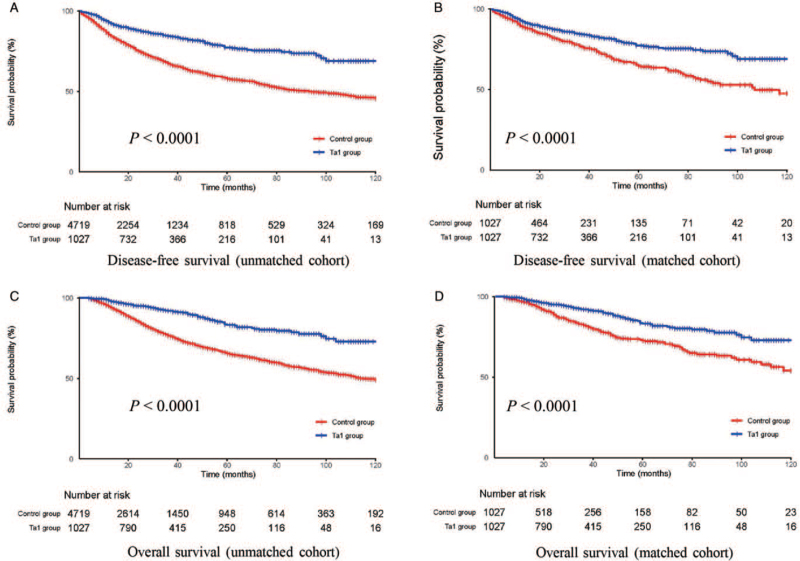
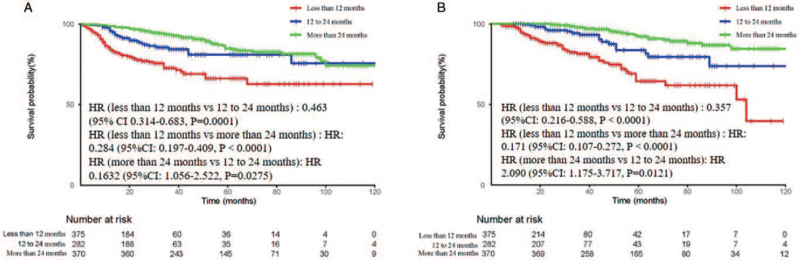
After PSM, the baseline clinicopathological characteristics were similar between the two groups. The 5-year disease-free survival (DFS) and overall survival (OS) rates were significantly higher in the Tα1 group compared with the control group. The multivariable analysis showed that Tα1 treatment was independently associated with an improved prognosis. A longer duration of Tα1 treatment was associated with improved OS and DFS. The subgroup analyses showed that Tα1 therapy could improve the DFS and/or OS in all subgroups of age, sex, Charlson Comorbidity Index (CCI), smoking status, and pathological tumor-node-metastasis (TNM) stage, especially for patients with non-squamous cell NSCLC and without targeted therapy.
Tα1 as adjuvant immunomodulatory therapy can significantly improve DFS and OS in patients with NSCLC after R0 resection, except for patients with squamous cell carcinoma and those receiving targeted therapy. The duration of Tα1 treatment is recommended to be >24 months.
胸腺肽 α1(Tα1)作为辅助免疫调节治疗药物,无论是单独使用还是与其他治疗方法联合使用,在非小细胞肺癌(NSCLC)患者中的应用相关信息有限。本研究旨在评估辅助 Tα1 治疗对无肿瘤切缘(R0)切除的 IA-IIIA 期 NSCLC 患者长期生存的影响。
共纳入 5746 例病理分期为 IA-IIIA 期 NSCLC 并接受 R0 切除的患者。根据是否接受 Tα1 治疗,将患者分为 Tα1 组和对照组。采用倾向评分匹配(PSM)分析以减少偏倚,最终匹配出 1027 对患者。
PSM 后,两组患者的基线临床病理特征相似。与对照组相比,Tα1 组的 5 年无病生存率(DFS)和总生存率(OS)显著更高。多变量分析表明,Tα1 治疗与改善预后独立相关。Tα1 治疗时间越长,OS 和 DFS 改善越明显。亚组分析显示,Tα1 治疗可改善所有年龄、性别、Charlson 合并症指数(CCI)、吸烟状态和病理肿瘤-淋巴结-转移(TNM)分期亚组的 DFS 和/或 OS,尤其是对于非鳞状细胞 NSCLC 且未接受靶向治疗的患者。
Tα1 作为辅助免疫调节治疗药物可显著改善 R0 切除后的 NSCLC 患者的 DFS 和 OS,但不包括鳞状细胞癌和接受靶向治疗的患者。建议 Tα1 治疗时间>24 个月。