Alfred Wegener Institute, Helmholtz Center for Polar and Marine Research, D-27570, Bremerhaven, Germany.
Max Planck Institute for Marine Microbiology, D-28359, Bremen, Germany.
Commun Biol. 2021 Nov 3;4(1):1255. doi: 10.1038/s42003-021-02776-w.
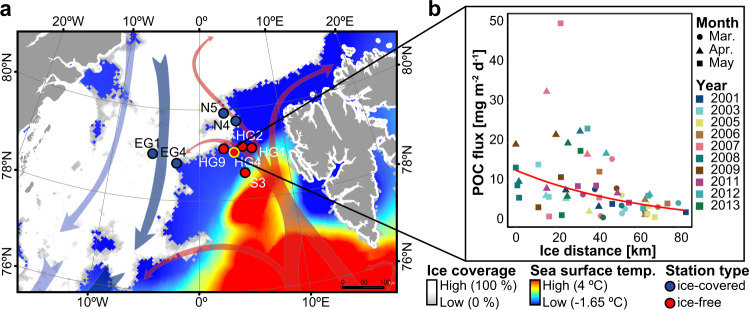
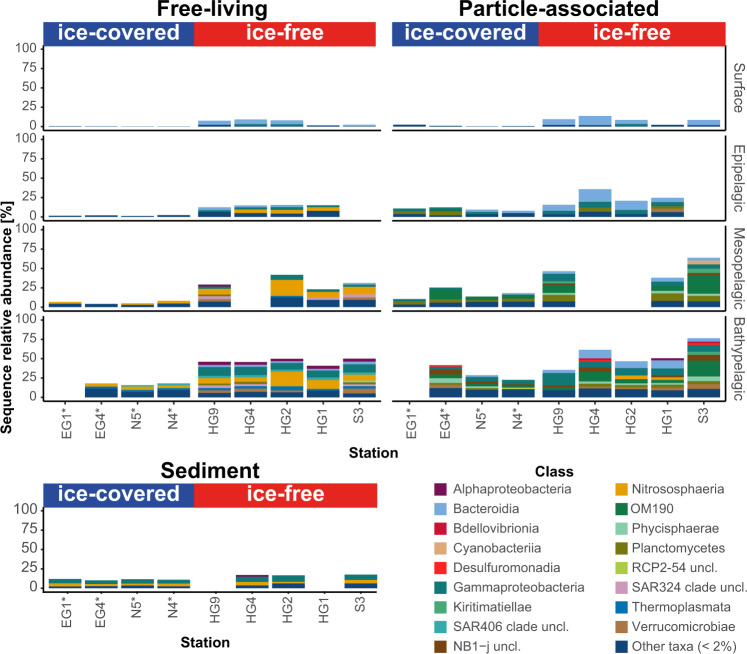
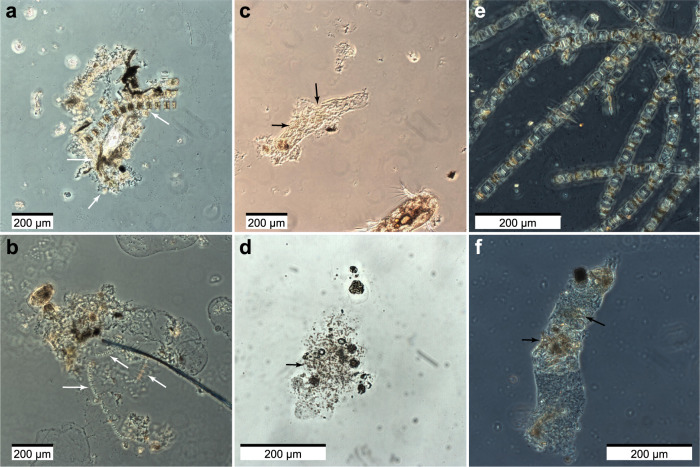
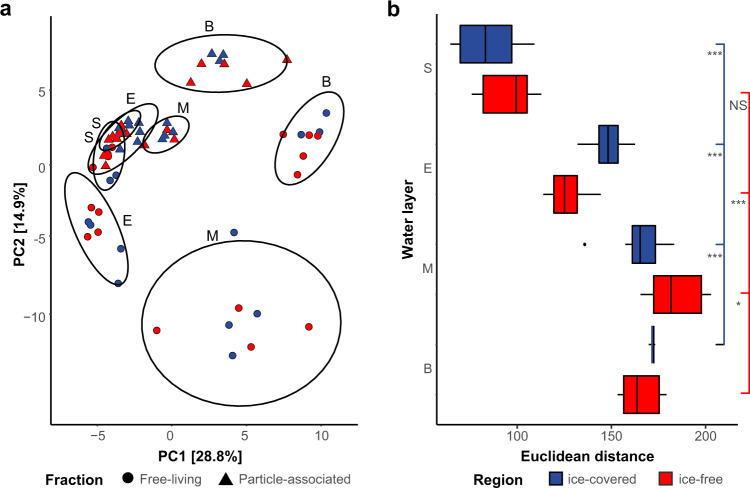
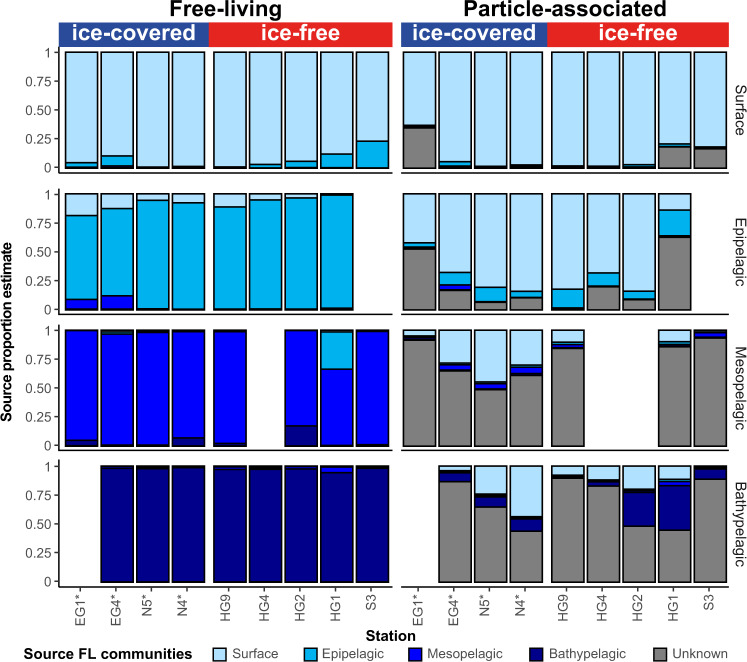
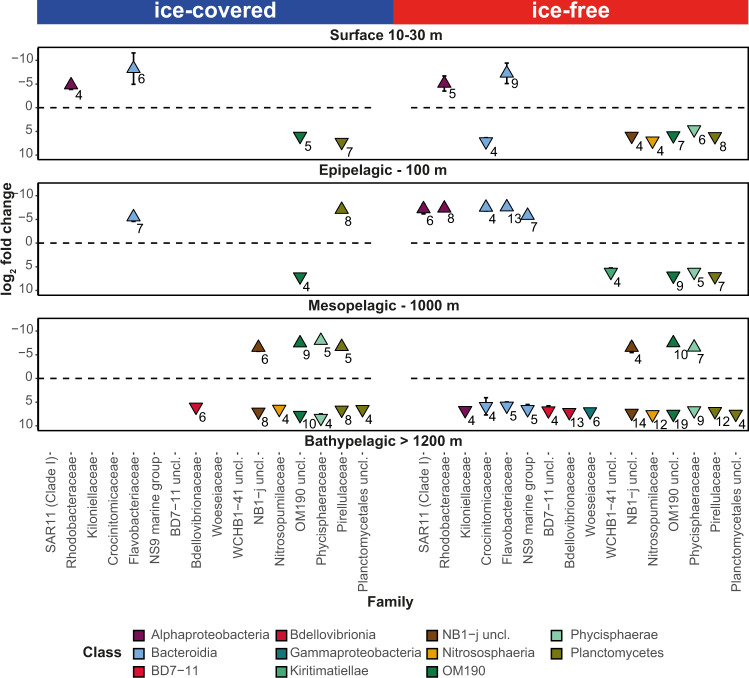
Arctic Ocean sea ice cover is shrinking due to warming. Long-term sediment trap data shows higher export efficiency of particulate organic carbon in regions with seasonal sea ice compared to regions without sea ice. To investigate this sea-ice enhanced export, we compared how different early summer phytoplankton communities in seasonally ice-free and ice-covered regions of the Fram Strait affect carbon export and vertical dispersal of microbes. In situ collected aggregates revealed two-fold higher carbon export of diatom-rich aggregates in ice-covered regions, compared to Phaeocystis aggregates in the ice-free region. Using microbial source tracking, we found that ice-covered regions were also associated with more surface-born microbial clades exported to the deep sea. Taken together, our results showed that ice-covered regions are responsible for high export efficiency and provide strong vertical microbial connectivity. Therefore, continuous sea-ice loss may decrease the vertical export efficiency, and thus the pelagic-benthic coupling, with potential repercussions for Arctic deep-sea ecosystems.
由于变暖,北冰洋海冰覆盖面积正在缩小。长期的沉积物捕获器数据显示,与无海冰区相比,季节性海冰区的颗粒有机碳输出效率更高。为了研究这种海冰增强的输出,我们比较了在弗拉姆海峡无冰区和有冰区的初夏浮游植物群落如何影响碳的输出和微生物的垂直扩散。现场采集的聚集体显示,与无冰区的聚集体相比,富含硅藻的聚集体的碳输出量高出两倍。利用微生物源追踪技术,我们发现,与无冰区相比,有冰区的微生物类群更多地被输送到深海。总的来说,我们的结果表明,有冰区是高输出效率的原因,并为微生物提供了强大的垂直连通性。因此,持续的海冰损失可能会降低垂直输出效率,从而减少浮游生物与海底的耦合,这可能对北极深海生态系统产生潜在影响。