Department of Radiation Oncology, Jiangsu Cancer Hospital & Jiangsu Institute of Cancer Research & The Affiliated Cancer Hospital of Nanjing Medical University, Nanjing, China.
Department of Radiation Oncology, University of Texas MD Anderson Cancer Center, Houston, TX, United States.
Front Immunol. 2021 Oct 18;12:719285. doi: 10.3389/fimmu.2021.719285. eCollection 2021.
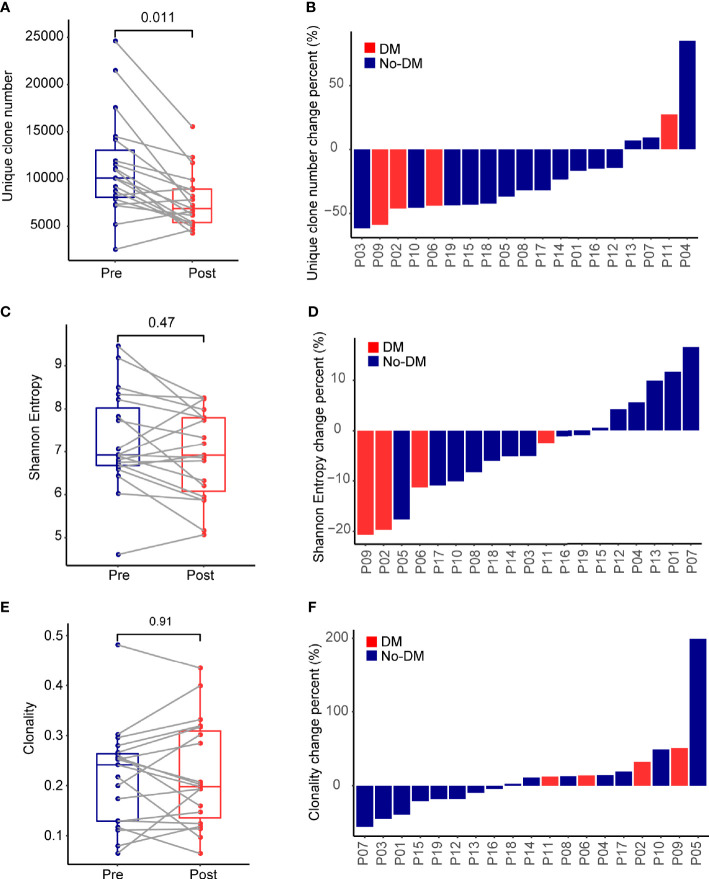
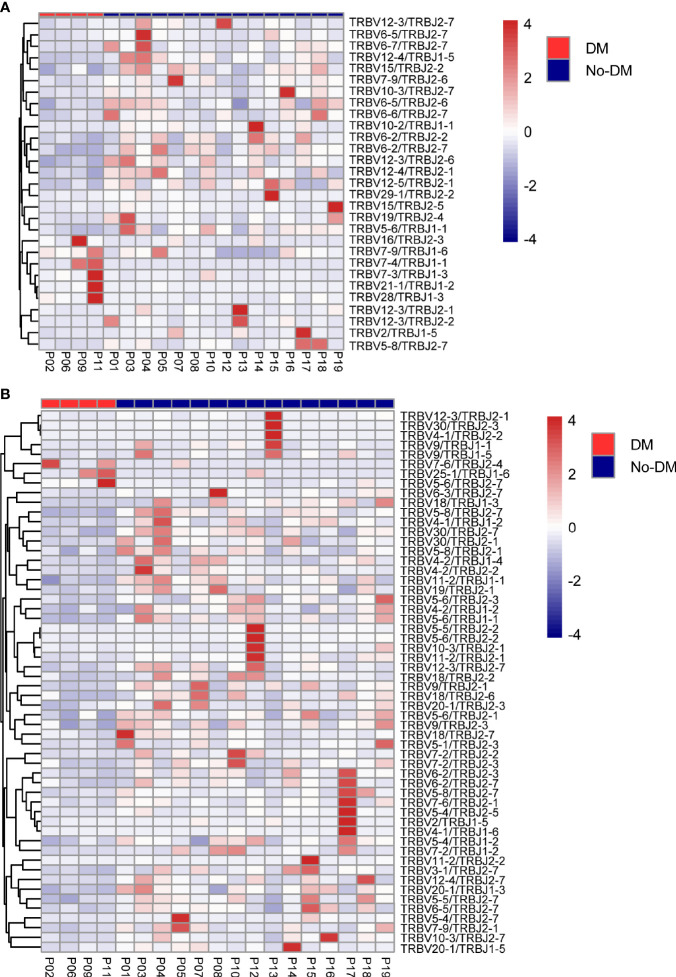
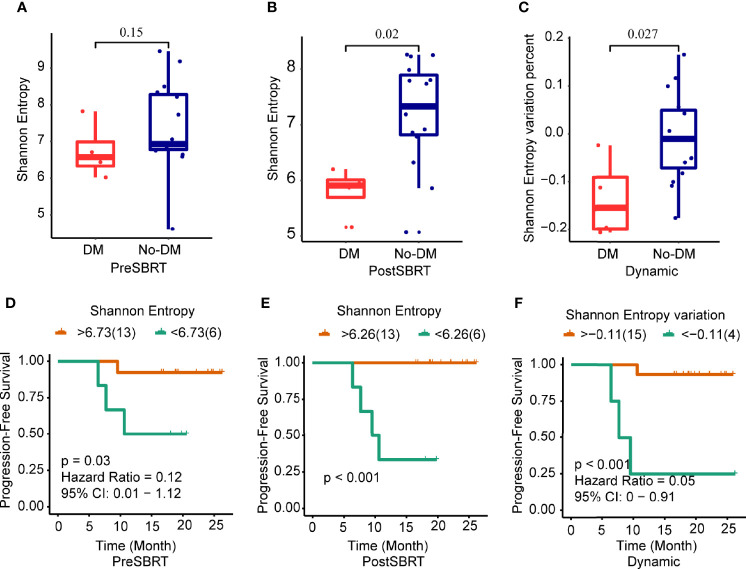
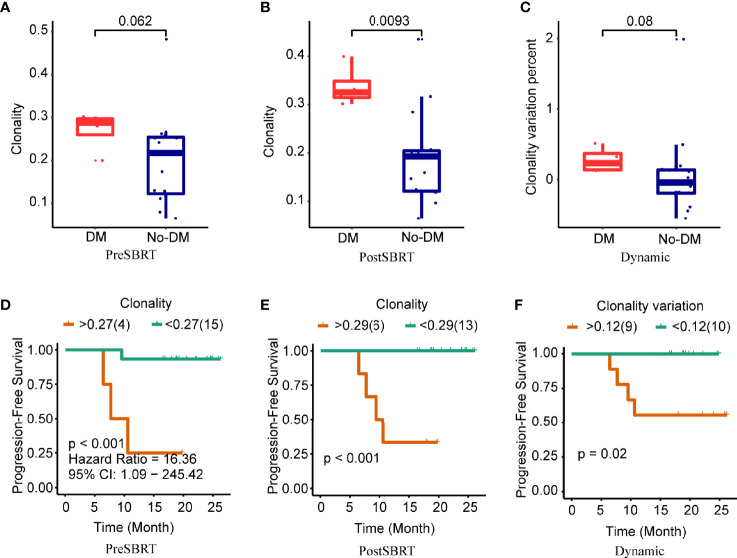
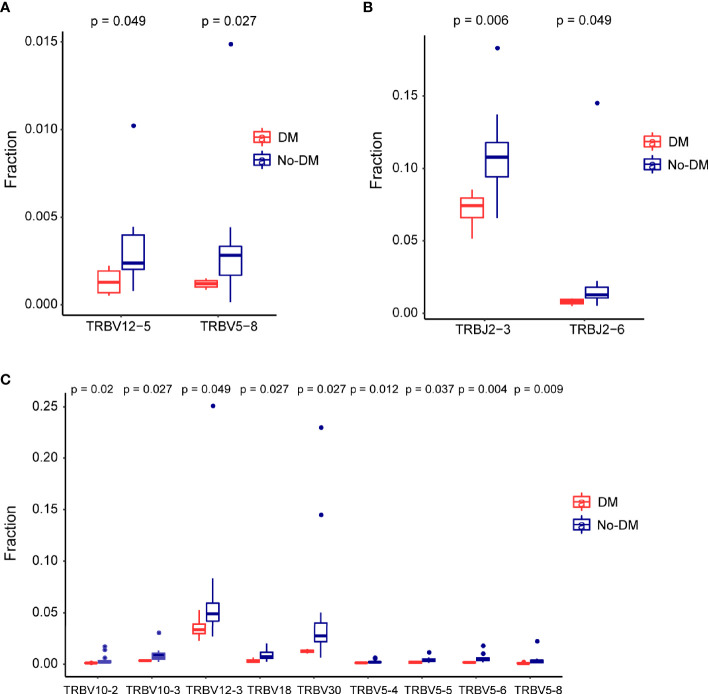
Radiotherapy is known to influence immune function, including T cell receptor (TCR) repertoire. We evaluated the TCR repertoire before and after stereotactic body radiotherapy (SBRT) for stage I non-small-cell lung cancer (NSCLC) and explored correlations between TCR indexes and distant failure after SBRT. TCR repertoires were analyzed in peripheral blood mononuclear cells (PBMCs) collected before and after SBRT from 19 patients. TCR combinational diversity in V and J genes was assessed with multiplex PCR of genomic DNA from PBMCs and tested for associations with clinical response. All patients received definitive SBRT to a biologically effective dose of >=100 Gy. The number of unique TCR clones was decreased after SBRT versus before, but clonality and the Shannon Entropy did not change. Four patients (21%) developed distant metastases after SBRT (median 7 months); those patients had lower Shannon Entropy in post-SBRT samples than patients without metastasis. Patients with a low change in Shannon Entropy from before to after SBRT [(post-SBRT Shannon Entropy minus baseline Shannon)/(baseline Shannon) * 100] had poorer metastasis-free survival than those with high change in Shannon Entropy (P<0.001). Frequencies in V/J gene fragment expression in the TCR β chain were also different for patients with or without metastases (two V fragments in baseline samples and 2 J and 9 V fragments in post-treatment samples). This comprehensive analysis of immune status before and after SBRT showed that quantitative assessments of TCRs can help evaluate prognosis in early-stage NSCLC.
放疗已知会影响免疫功能,包括 T 细胞受体(TCR)谱。我们评估了 I 期非小细胞肺癌(NSCLC)立体定向体部放疗(SBRT)前后的 TCR 谱,并探讨了 SBRT 后 TCR 指数与远处失败之间的相关性。我们分析了 19 例患者 SBRT 前后外周血单个核细胞(PBMC)中的 TCR 谱。用 PBMC 基因组 DNA 的多重 PCR 评估 V 和 J 基因的 TCR 组合多样性,并测试其与临床反应的关联。所有患者均接受了> = 100 Gy 的生物有效剂量的根治性 SBRT。与治疗前相比,SBRT 后独特 TCR 克隆的数量减少,但克隆性和香农熵没有改变。4 例患者(21%)在 SBRT 后发生远处转移(中位数为 7 个月);与无转移患者相比,这些患者的 SBRT 后样本香农熵较低。SBRT 前后香农熵变化较小的患者[(SBRT 后香农熵-基线香农熵)/(基线香农熵)* 100]的无转移生存时间比香农熵变化较大的患者差(P<0.001)。有或无转移患者的 TCR β 链 V/J 基因片段表达频率也不同(基线样本中有 2 个 V 片段,治疗后样本中有 2 个 J 和 9 个 V 片段)。这项对 SBRT 前后免疫状态的综合分析表明,TCR 的定量评估可帮助评估早期 NSCLC 的预后。