Sharma Monica, Castro-Piedras Isabel, Rasha Fahmida, Ramachandran Sabarish, Sennoune Souad R, Furr Kathryn, Almodovar Sharilyn, Ganapathy Vadivel, Grisham Matthew B, Rahman Rakhshanda Layeequr, Pruitt Kevin
Immunology and Molecular Microbiology, Texas Tech University Health Sciences Center, Lubbock, TX, USA.
Cell Biology and Biochemistry, Texas Tech University Health Sciences Center, Lubbock, TX, USA.
Oncotarget. 2021 Oct 26;12(22):2234-2251. doi: 10.18632/oncotarget.28089.
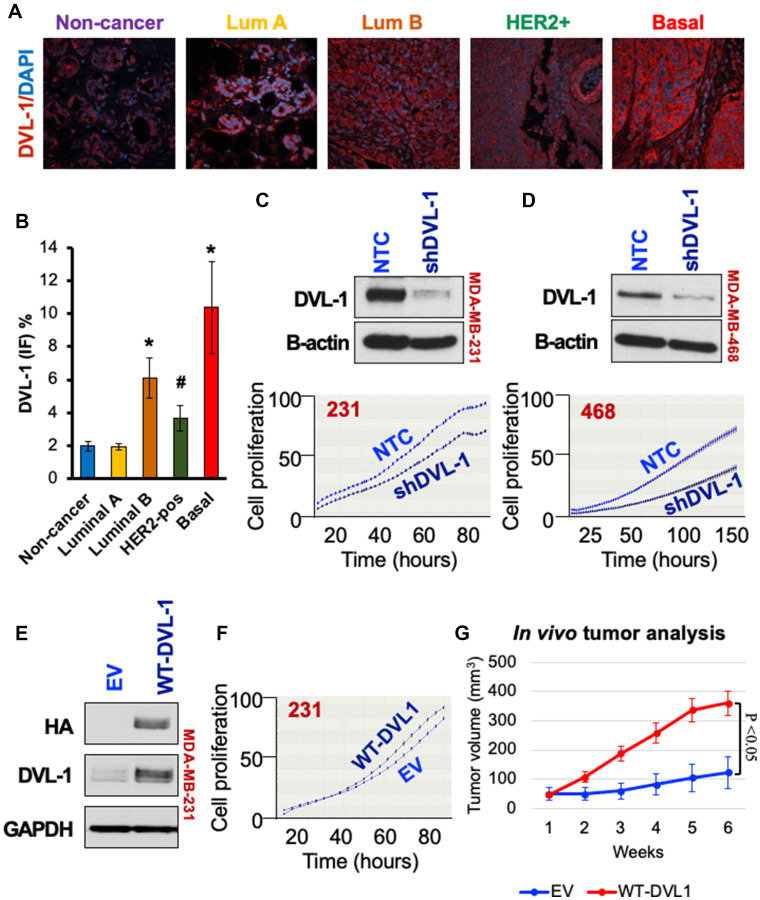
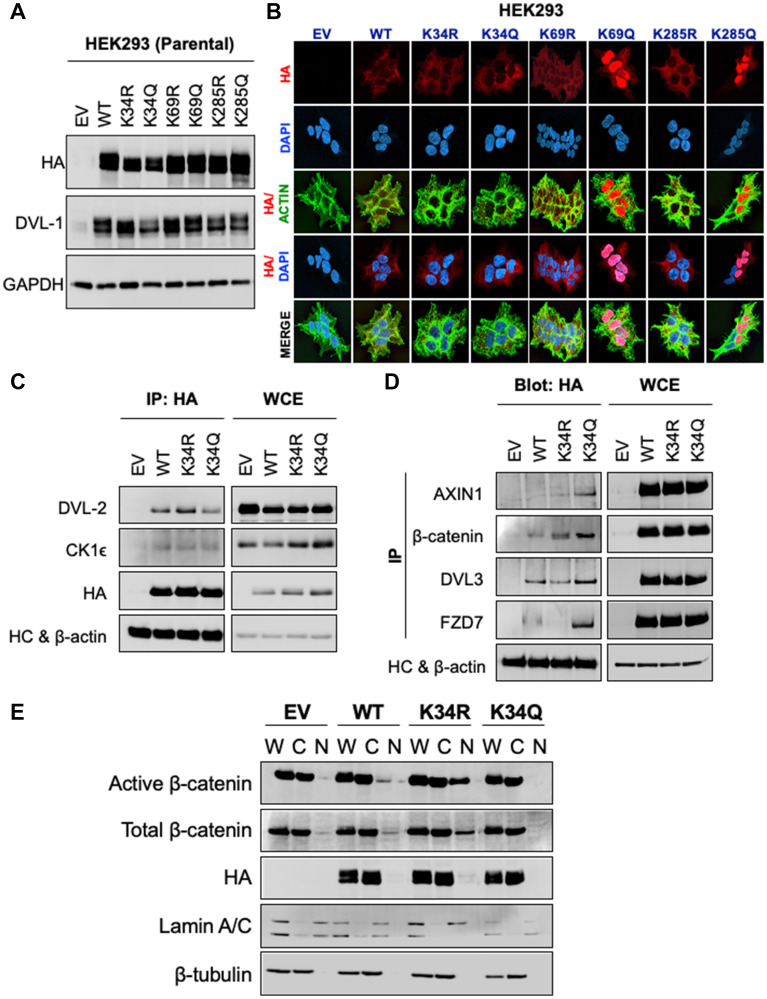
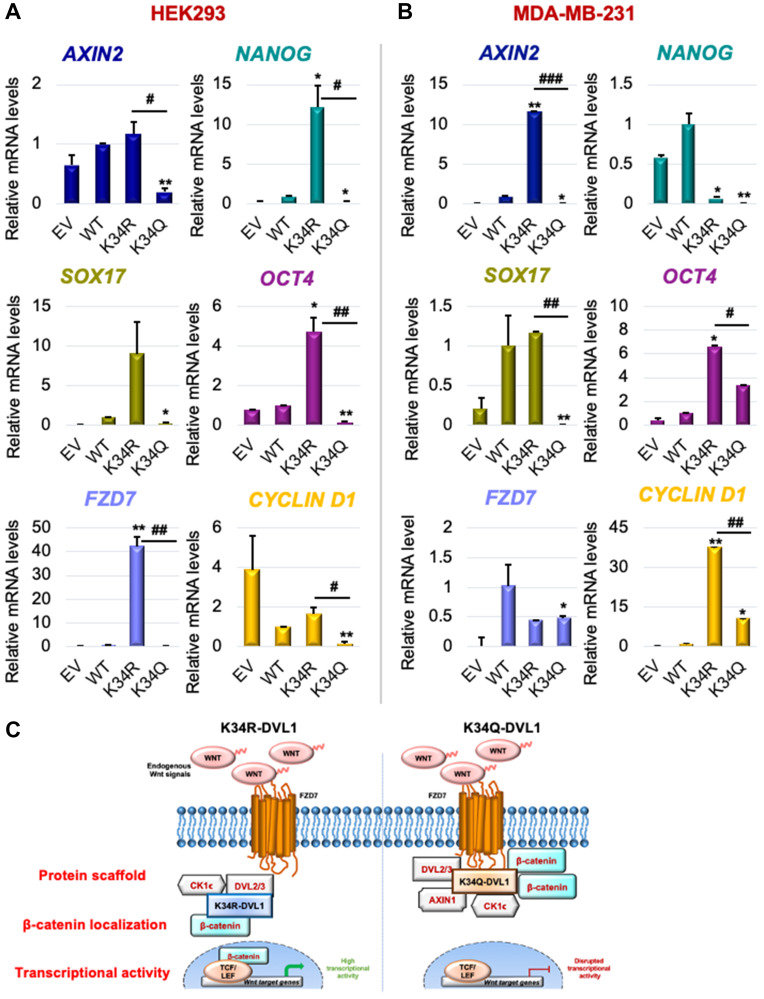
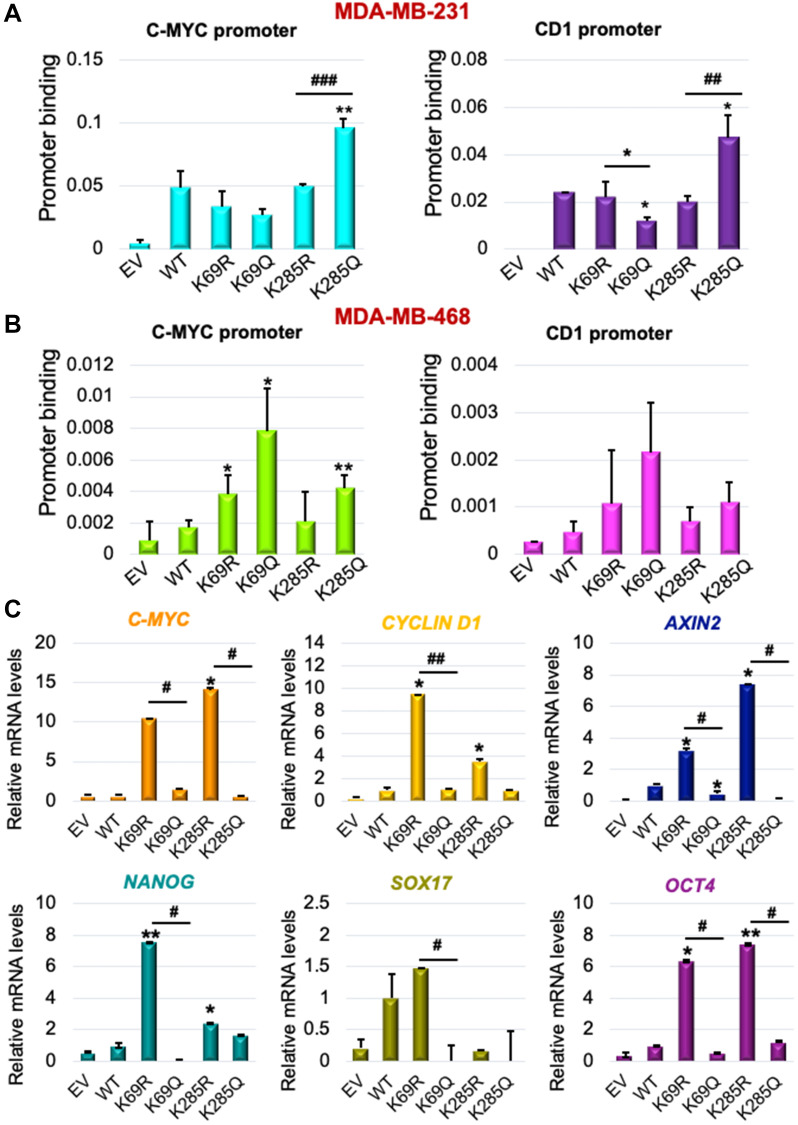
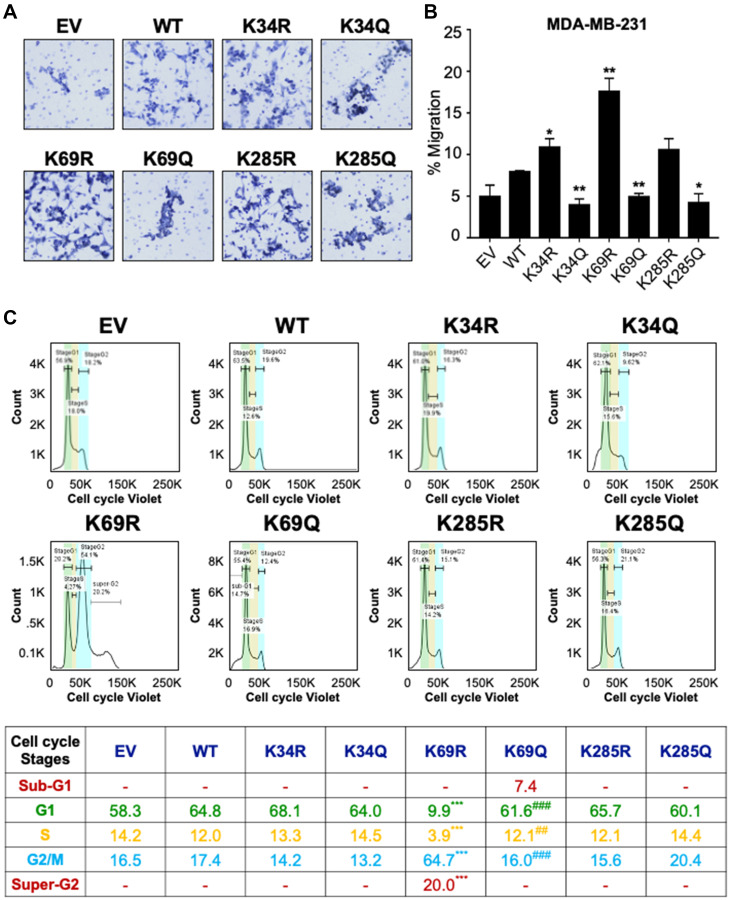
DVL proteins are central mediators of the Wnt pathway and relay complex input signals into different branches of the Wnt signaling network. However, molecular mechanism(s) that regulate DVL-mediated relay of Wnt signals still remains unclear. Here, for the first time, we elucidate the functional significance of three DVL-1 lysines (K/Lys) which are subject to post-translational acetylation. We demonstrate that K34 Lys residue in the DIX domain regulates subcellular localization of β-catenin, thereby influencing downstream Wnt target gene expression. Additionally, we show that K69 (DIX domain) and K285 (PDZ domain) regulate binding of DVL-1 to Wnt target gene promoters and modulate expression of Wnt target genes including , , , and , in cell line models and xenograft tumors. Finally, we report that conserved DVL-1 lysines modulate various oncogenic functions such as cell migration, proliferation, cell-cycle progression, 3D-spheroid formation and tumor growth in breast cancer models. Collectively, these findings highlight the importance of DVL-1 domain-specific lysines which were recently shown to be acetylated and characterize their influence on Wnt signaling. These site-specific modifications may be subject to regulation by therapeutics already in clinical use (lysine deacetylase inhibitors such as Panobinostat and Vorinostat) or may possibly have prognostic utility in translational efforts that seek to modulate dysfunctional Wnt signaling.
DVL蛋白是Wnt信号通路的核心介质,可将复杂的输入信号传递至Wnt信号网络的不同分支。然而,调节DVL介导的Wnt信号传递的分子机制仍不清楚。在此,我们首次阐明了三个发生翻译后乙酰化修饰的DVL-1赖氨酸(K/Lys)的功能意义。我们证明,DIX结构域中的K34赖氨酸残基调节β-连环蛋白的亚细胞定位,从而影响下游Wnt靶基因的表达。此外,我们表明,K69(DIX结构域)和K285(PDZ结构域)调节DVL-1与Wnt靶基因启动子的结合,并在细胞系模型和异种移植肿瘤中调节包括、、、和在内的Wnt靶基因的表达。最后,我们报告,保守的DVL-1赖氨酸在乳腺癌模型中调节多种致癌功能,如细胞迁移、增殖、细胞周期进程、三维球体形成和肿瘤生长。总的来说,这些发现突出了DVL-1结构域特异性赖氨酸的重要性,这些赖氨酸最近被证明发生了乙酰化修饰,并描述了它们对Wnt信号的影响。这些位点特异性修饰可能受临床使用的治疗药物(如帕比司他和伏立诺他等赖氨酸脱乙酰酶抑制剂)的调节,或者在试图调节功能失调的Wnt信号的转化研究中可能具有预后价值。