Merkhan Marwan M, Shephard Matthew T, Forsyth Nicholas R
Guy Hilton Research Centre, School of Pharmacy and Bioengineering, Keele University, Staffordshire, UK.
College of Pharmacy, University of Mosul, Mosul, Iraq.
J Tissue Eng. 2021 Oct 29;12:20417314211056132. doi: 10.1177/20417314211056132. eCollection 2021 Jan-Dec.
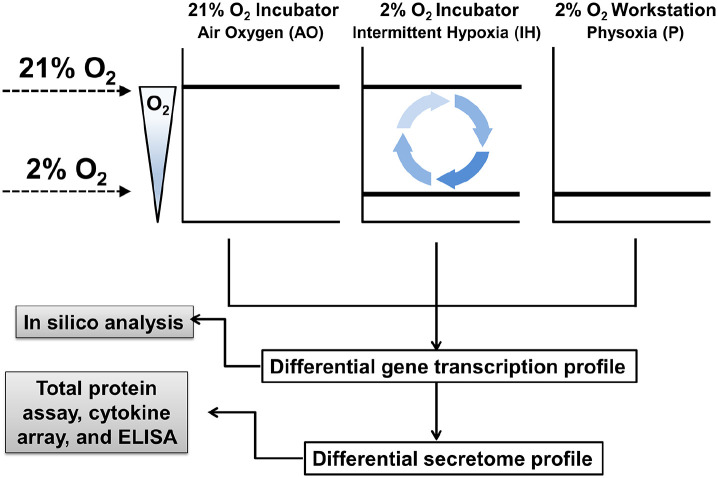
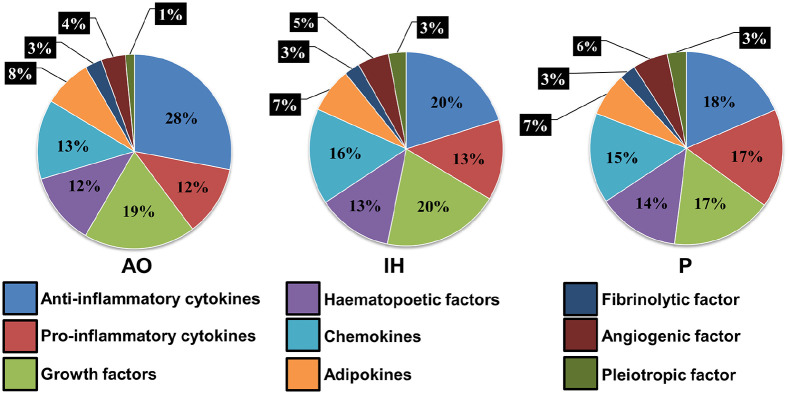
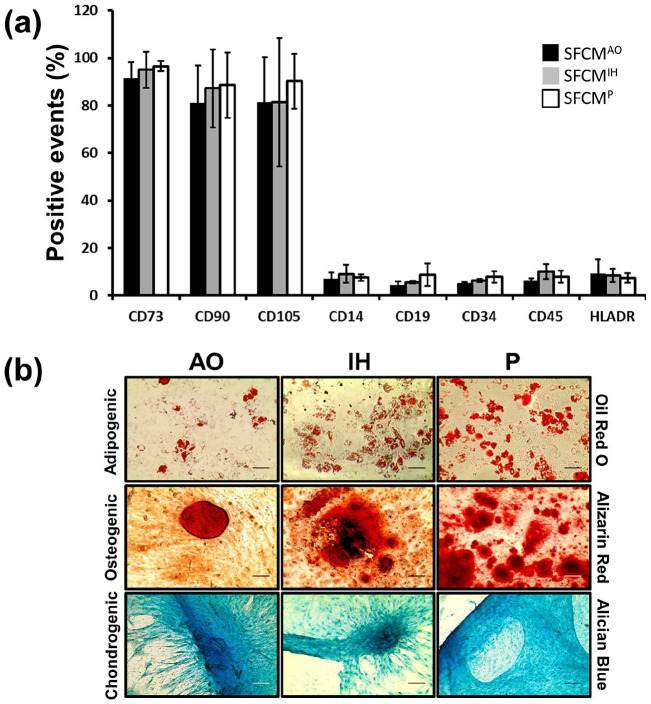
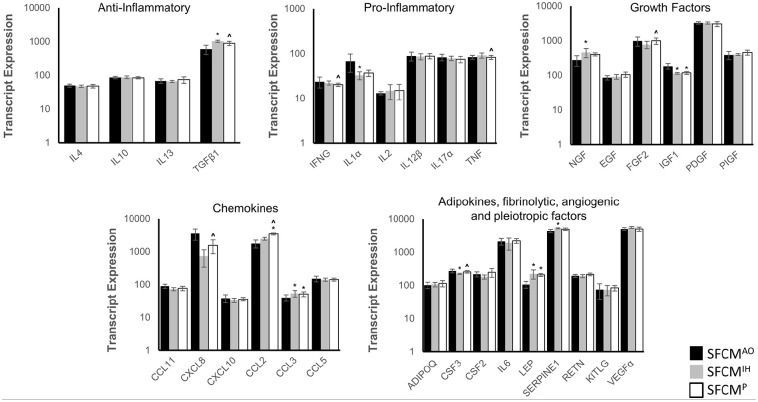
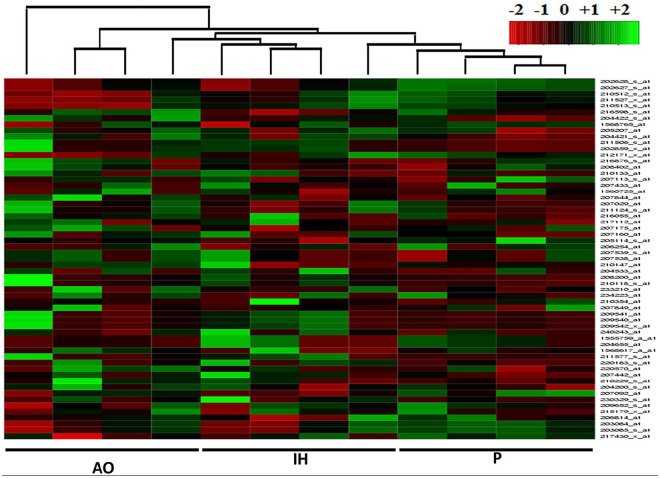
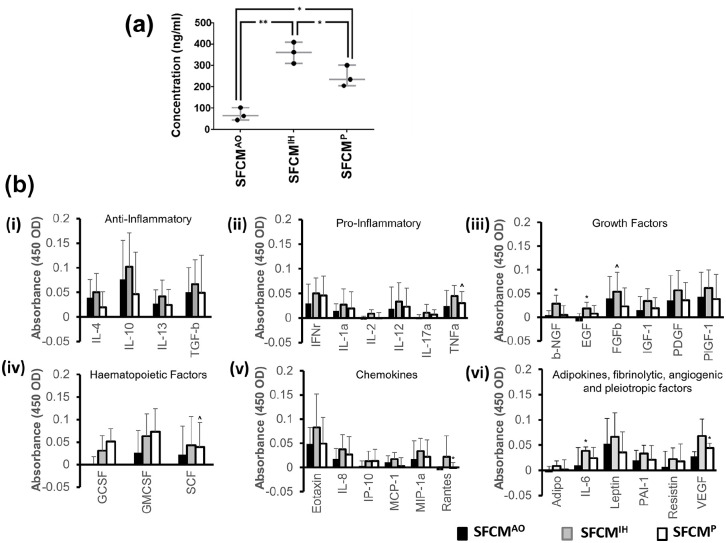
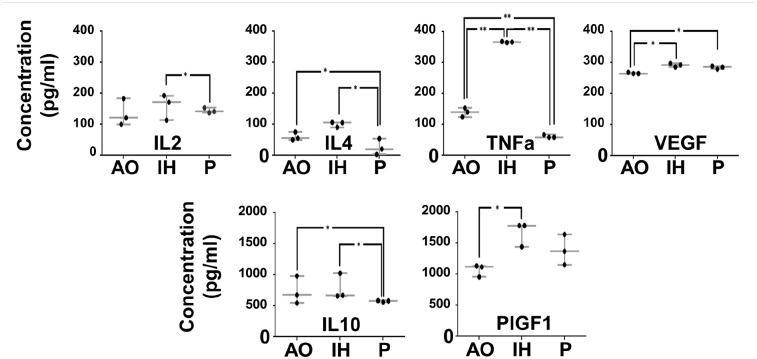
The human mesenchymal stem cell (hMSC) secretome has pleiotropic effects which underpin their therapeutic potential. hMSC serum-free conditioned media (SFCM) has been determined to contain a variety of cytokines with roles in regeneration and suppression of inflammation. Physiological oxygen (physoxia) has been demonstrated to impact upon a number of facets of hMSC biology and we hypothesized that the secretome would be similarly modified. We tested a range of oxygen conditions; 21% O (air oxygen (AO)), 2% O (intermittent hypoxia (IH)) and 2% O Workstation (physoxia (P)) to evaluate their effect on hMSC secretome profiles. Total protein content of secretome was upregulated in IH and P (>3 fold vs AO) and IH (>1 fold vs P). Focused cytokine profiling indicated global upregulation in IH of all 31 biomolecules tested in comparison to AO and P with basic-nerve growth factor (bNGF) and granulocyte colony-stimulating factor (GCSF) (>3 fold vs AO) and bNGF and Rantes (>3 fold vs P) of note. Similarly, upregulation of interferon gamma-induced protein 10 (IP10) was noted in P (>3 fold vs AO). Interleukin-2 (IL2) and Rantes (in AO and P) and adiponectin, IL17a, and epidermal growth factor (EGF) (in AO only) were entirely absent or below detection limits. Quantitative analysis validated the pattern of IH-induced upregulation in vascular endothelial growth factor (VEGF), placental growth factor-1 (PIGF1), Tumor necrosis factor alpha (TNFa), IL2, IL4, and IL10 when compared to AO and P. In summary, modulation of environmental oxygen alters both secretome concentration and composition. This consideration will likely impact on delivering improved mechanistic understanding and potency effects of hMSC-based therapeutics.
人间充质干细胞(hMSC)分泌组具有多效性作用,这支撑了它们的治疗潜力。已确定hMSC无血清条件培养基(SFCM)含有多种在再生和炎症抑制中起作用的细胞因子。已证明生理氧(生理性低氧)会影响hMSC生物学的多个方面,我们推测分泌组也会受到类似的影响。我们测试了一系列氧条件:21% O₂(空气氧(AO))、2% O₂(间歇性低氧(IH))和2% O₂工作站(生理性低氧(P)),以评估它们对hMSC分泌组谱的影响。分泌组的总蛋白含量在IH和P条件下上调(与AO相比>3倍),且在IH条件下高于P(>1倍)。聚焦细胞因子分析表明,与AO和P相比,在IH条件下测试的所有31种生物分子均整体上调,其中碱性神经生长因子(bNGF)和粒细胞集落刺激因子(GCSF)(与AO相比>3倍)以及bNGF和RANTES(与P相比>3倍)值得注意。同样,在P条件下观察到干扰素γ诱导蛋白10(IP10)上调(与AO相比>3倍)。白细胞介素-2(IL2)和RANTES(在AO和P条件下)以及脂联素、IL17a和表皮生长因子(EGF)(仅在AO条件下)完全缺失或低于检测限。与AO和P相比,定量分析验证了IH诱导的血管内皮生长因子(VEGF)、胎盘生长因子-1(PIGF1)、肿瘤坏死因子α(TNFα)、IL2、IL4和IL10上调模式。总之,环境氧的调节会改变分泌组的浓度和组成。这一考虑可能会影响对基于hMSC治疗的作用机制的深入理解以及效力效果。