Zhao Mei, Chi Fengli, Zhang Tingyu, Teng Xiaoming, Li Kunming
Department of Assisted Reproductive Medicine, Shanghai First Maternity and Infant Hospital, School of Medicine, Tongji University, Shanghai, China.
Ann Transl Med. 2021 Sep;9(18):1476. doi: 10.21037/atm-21-4652.
Human infertility is caused by many factors, among which thin endometrium is the main reason for poor embryo implantation. Currently, stem cell therapy could be a potential approach in treating human endometrial disorder like thin endometrium. In this study, we aimed to explore the influence of menstrual stem cells from non-thin endometrium (NTE-MenSCs) and thin endometrium (TE-MenSCs) on the phenotype of endometrial epithelial cells (EECs).
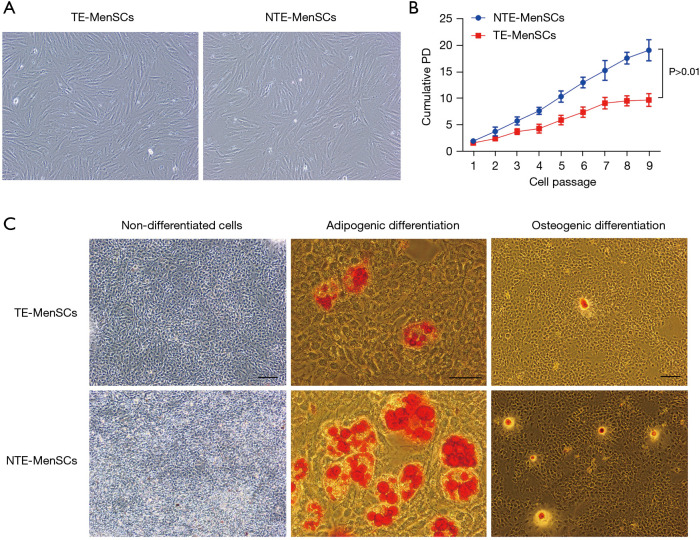
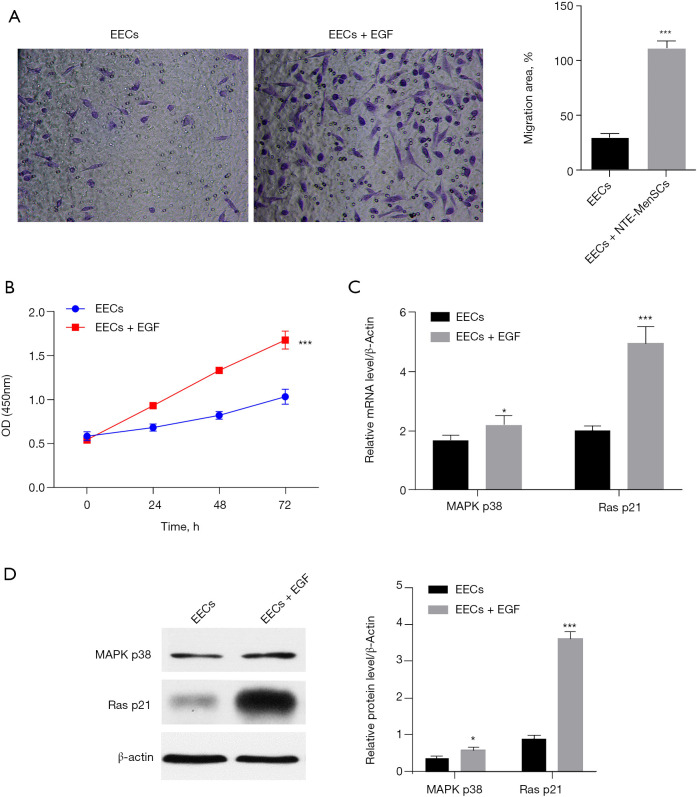
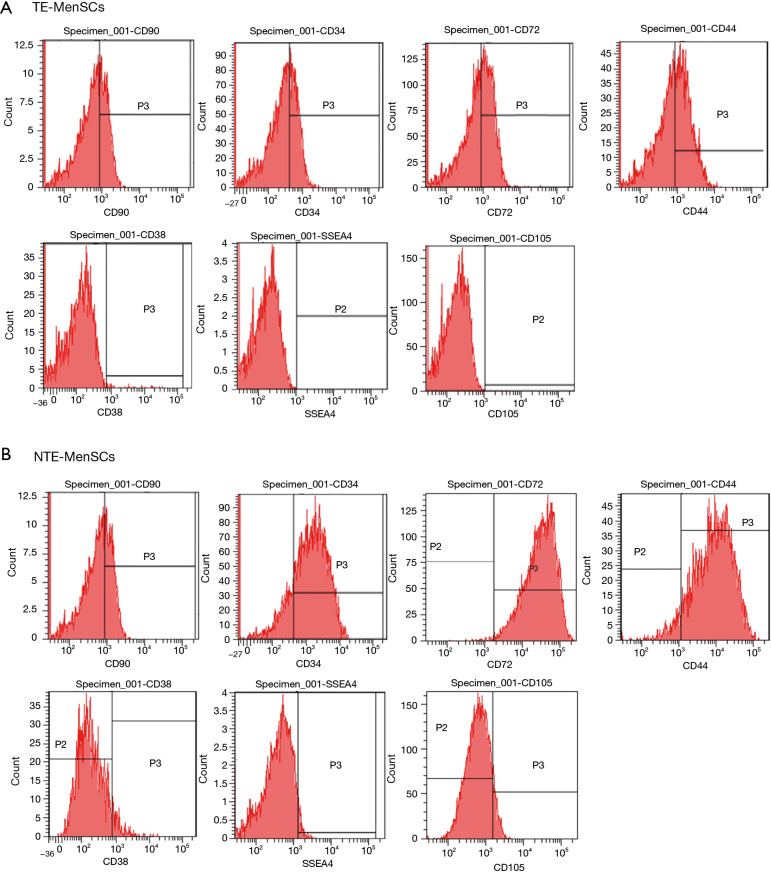
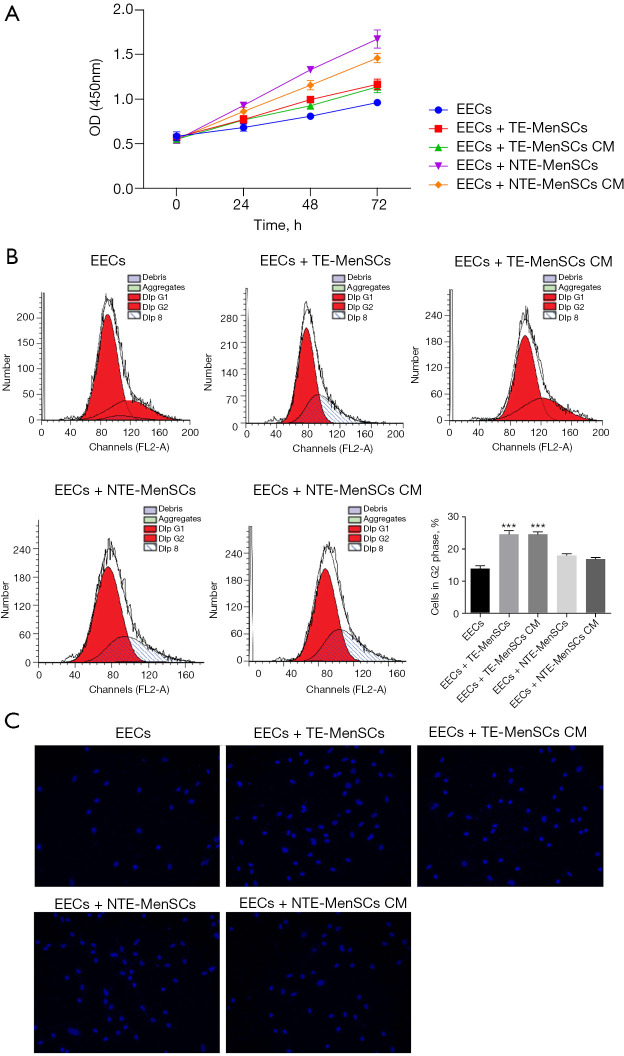
The MenSCs were isolated from women with and without thin endometria, characterized and co-cultured with the EECs. The expression of cytokeratin 7 (CK7) was verified by immunofluorescence while the detection stem cell markers was determined flow cytometry. Osteogenic and adipogenic differentiation were induced in appropriate media. The quantitative real-time PCR and western blotting were respectively used for detecting the mRNA and protein expression levels, respectively. The CCK-8 assay was used for cell viability analysis whereas ELISA was used for the detection of cytokine levels.
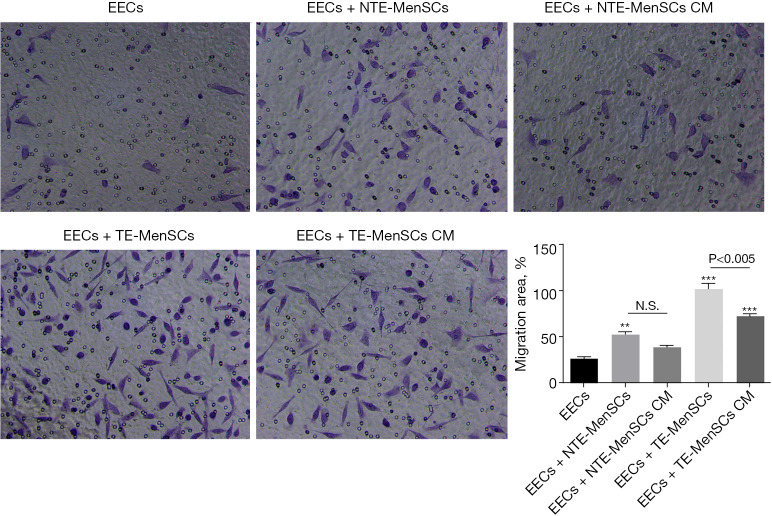
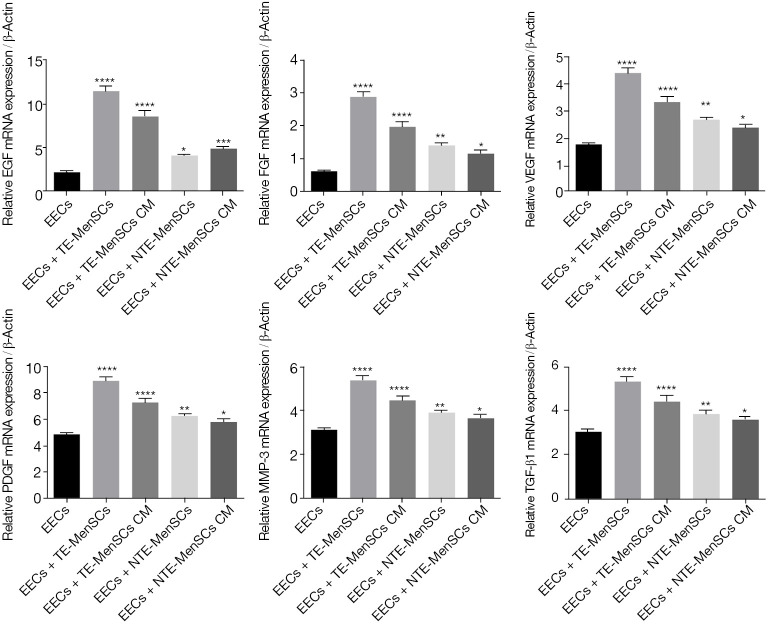
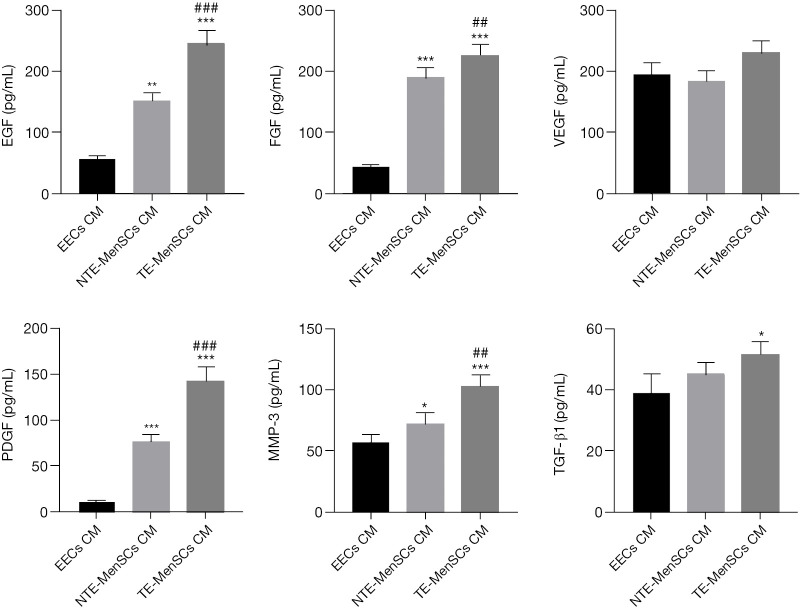
The results showed that the co-culture of NTE-MenSCs or TE-MenSCs and EECs promoted the proliferation, migration, and angiogenesis of endothelial progenitor cells differently. Furthermore, the TE-MenSCs promoted the expression of inflammation, vascularized adipose, and extracellular matrix related proteins. The epidermal growth factor (EGF)/Ras p21 pathway was found to mediate the influence of MenSCs on EECs.
These findings are vital in that they may promote stem cell therapy of thin endometrium and enable embryo implantation in humans with thin endometrium.
人类不孕症由多种因素引起,其中子宫内膜薄是胚胎着床不良的主要原因。目前,干细胞疗法可能是治疗子宫内膜疾病如子宫内膜薄的一种潜在方法。在本研究中,我们旨在探讨来自非薄型子宫内膜(NTE-MenSCs)和薄型子宫内膜(TE-MenSCs)的月经干细胞对子宫内膜上皮细胞(EECs)表型的影响。
从有或无子宫内膜薄的女性中分离月经干细胞,进行表征并与子宫内膜上皮细胞共培养。通过免疫荧光验证细胞角蛋白7(CK7)的表达,同时用流式细胞术检测干细胞标志物。在合适的培养基中诱导成骨和成脂分化。分别用定量实时PCR和蛋白质印迹法检测mRNA和蛋白质表达水平。用CCK-8法进行细胞活力分析,而用ELISA法检测细胞因子水平。
结果表明,NTE-MenSCs或TE-MenSCs与EECs共培养对内皮祖细胞的增殖、迁移和血管生成有不同程度的促进作用。此外,TE-MenSCs促进炎症、血管化脂肪和细胞外基质相关蛋白的表达。发现表皮生长因子(EGF)/Ras p21信号通路介导月经干细胞对子宫内膜上皮细胞的影响。
这些发现至关重要,因为它们可能促进子宫内膜薄的干细胞治疗,并使子宫内膜薄的人类能够实现胚胎着床。