Institute of Cancer and Genomic Sciences, College of Medical and Dental Sciences, University of Birmingham, Birmingham, West Midlands, United Kingdom.
Genomics Birmingham, University of Birmingham, Birmingham, West Midlands, United Kingdom.
PLoS Pathog. 2021 Nov 4;17(11):e1010032. doi: 10.1371/journal.ppat.1010032. eCollection 2021 Nov.
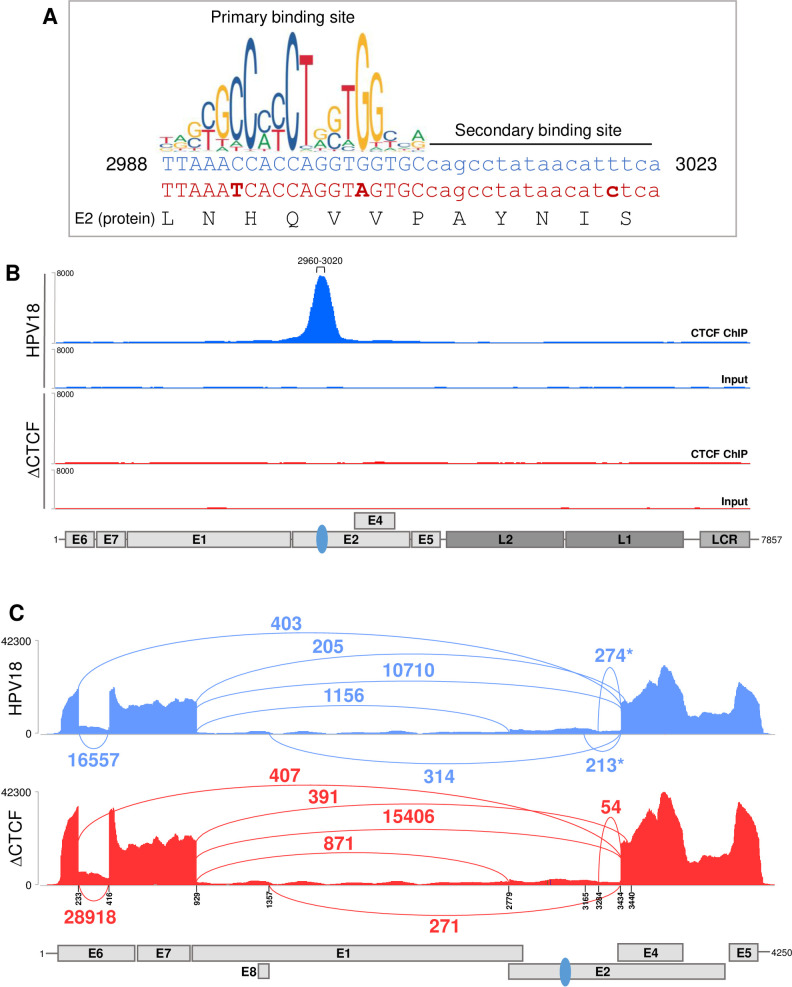
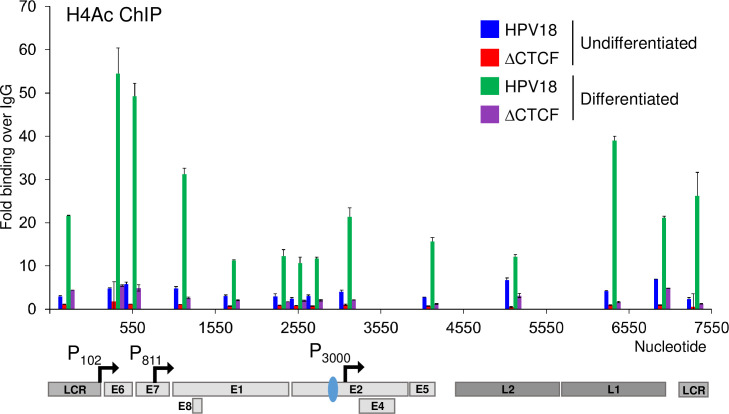
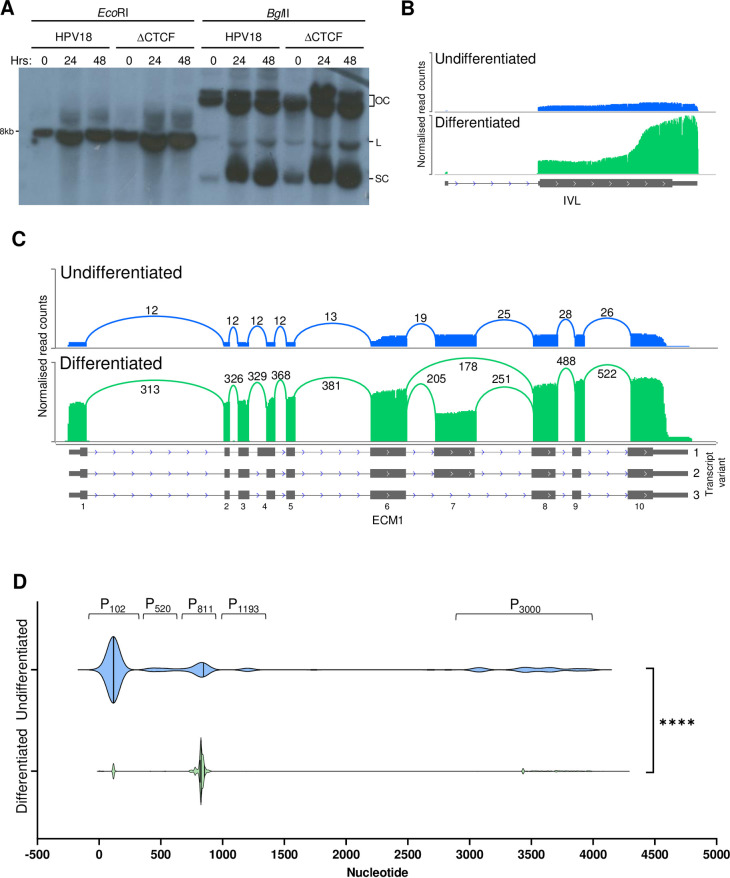
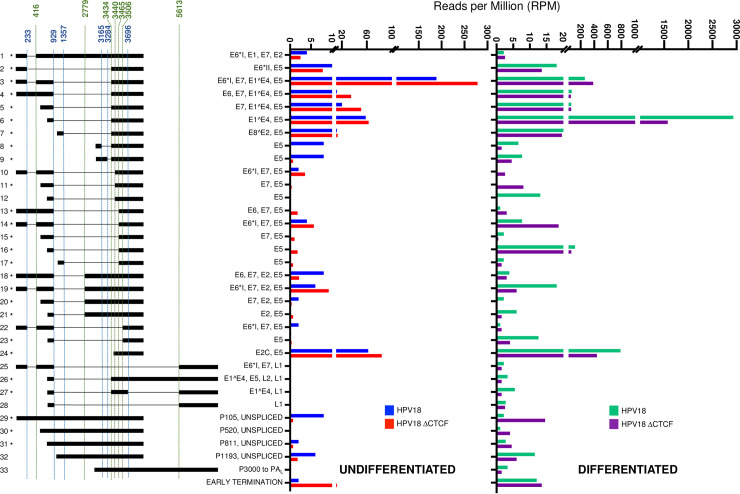
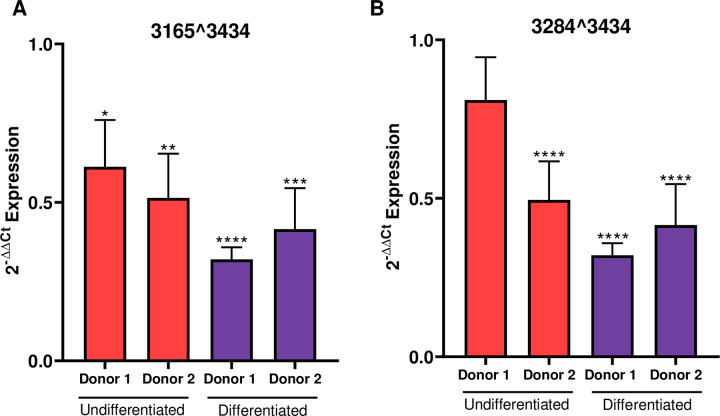
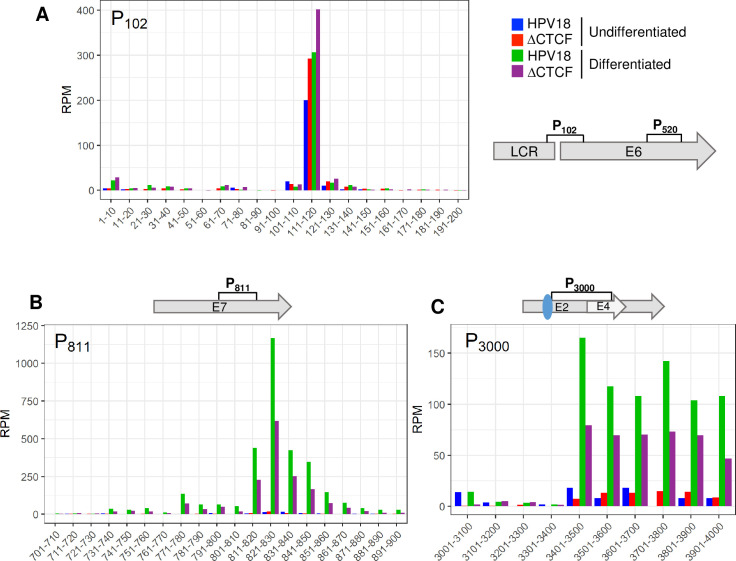
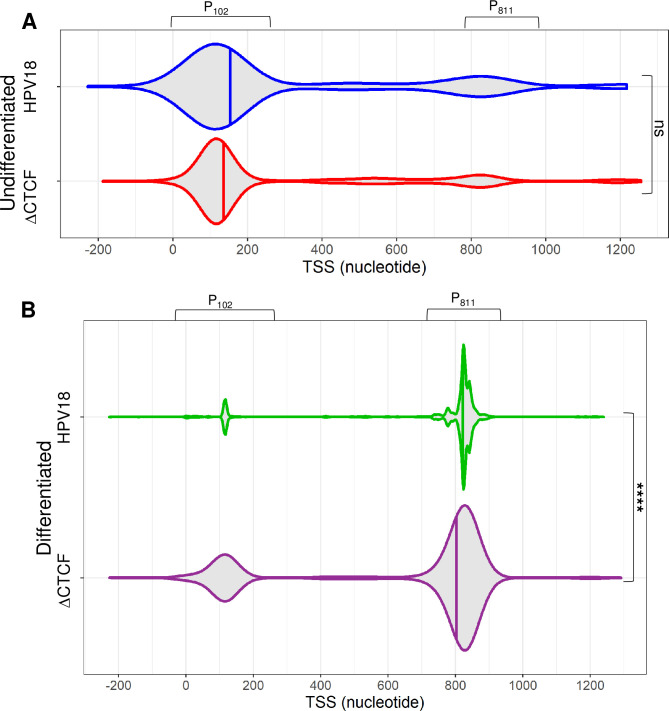
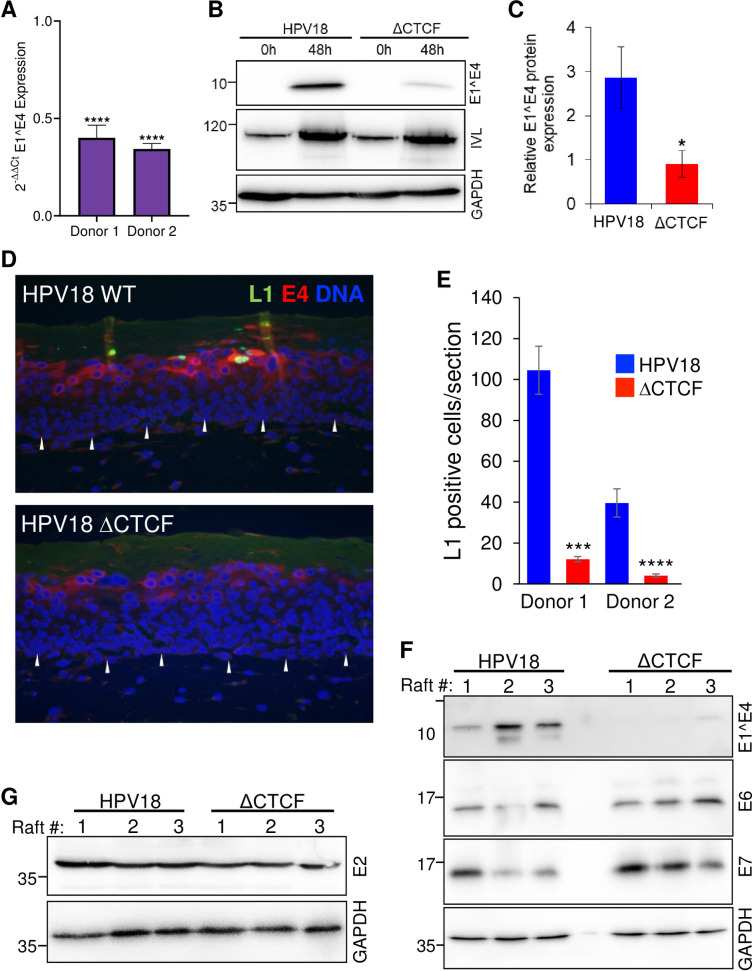
The ubiquitous host protein, CCCTC-binding factor (CTCF), is an essential regulator of cellular transcription and functions to maintain epigenetic boundaries, stabilise chromatin loops and regulate splicing of alternative exons. We have previously demonstrated that CTCF binds to the E2 open reading frame (ORF) of human papillomavirus (HPV) 18 and functions to repress viral oncogene expression in undifferentiated keratinocytes by co-ordinating an epigenetically repressed chromatin loop within HPV episomes. Keratinocyte differentiation disrupts CTCF-dependent chromatin looping of HPV18 episomes promoting induction of enhanced viral oncogene expression. To further characterise CTCF function in HPV transcription control we utilised direct, long-read Nanopore RNA-sequencing which provides information on the structure and abundance of full-length transcripts. Nanopore analysis of primary human keratinocytes containing HPV18 episomes before and after synchronous differentiation allowed quantification of viral transcript species, including the identification of low abundance novel transcripts. Comparison of transcripts produced in wild type HPV18 genome-containing cells to those identified in CTCF-binding deficient genome-containing cells identifies CTCF as a key regulator of differentiation-dependent late promoter activation, required for efficient E1^E4 and L1 protein expression. Furthermore, our data show that CTCF binding at the E2 ORF promotes usage of the downstream weak splice donor (SD) sites SD3165 and SD3284, to the dominant E4 splice acceptor site at nucleotide 3434. These findings demonstrate that in the HPV life cycle both early and late virus transcription programmes are facilitated by recruitment of CTCF to the E2 ORF.
普遍存在的宿主蛋白 CCCTC 结合因子 (CTCF) 是细胞转录的重要调节剂,其功能是维持表观遗传边界、稳定染色质环,并调节选择性外显子的剪接。我们之前已经证明,CTCF 结合人乳头瘤病毒 (HPV) 18 的 E2 开放阅读框 (ORF),并通过协调 HPV 染色体外体中受表观遗传抑制的染色质环,来抑制未分化角质细胞中的病毒致癌基因表达。角质细胞分化破坏了 HPV18 染色体外体中 CTCF 依赖性染色质环,促进了增强的病毒致癌基因表达的诱导。为了进一步研究 CTCF 在 HPV 转录调控中的功能,我们利用了直接的、长读长 Nanopore RNA 测序,该技术提供了关于全长转录物结构和丰度的信息。在同步分化前后,对含有 HPV18 染色体外体的原代人角质细胞进行 Nanopore 分析,可定量测定病毒转录物种类,包括鉴定低丰度的新型转录物。将野生型 HPV18 基因组含细胞中产生的转录物与 CTCF 结合缺陷基因组含细胞中鉴定出的转录物进行比较,确定 CTCF 是分化依赖的晚期启动子激活的关键调节剂,这对于有效表达 E1^E4 和 L1 蛋白是必需的。此外,我们的数据表明,CTCF 在 E2 ORF 上的结合促进了下游弱剪接受体 (SD) 位点 SD3165 和 SD3284 的使用,从而促进了位于核苷酸 3434 的主导 E4 剪接受体位点的使用。这些发现表明,在 HPV 生命周期中,早期和晚期病毒转录程序都通过 CTCF 募集到 E2 ORF 来促进。