Affiliated Hosptial of Nanjing University of Chinese Medicine, Jiangsu Province Hospital of Chinese Medicine, Nanjing, China; IIT Research Institute, Chicago, IL, USA.
Division of Nephrology, Department of Medicine, University of Connecticut School of Medicine, Farmington, CT, USA.
Mol Metab. 2021 Dec;54:101367. doi: 10.1016/j.molmet.2021.101367. Epub 2021 Nov 1.
Diabetic kidney disease (DKD) is the most common microvascular complication of type 2 diabetes mellitus (2-DM). Currently, urine and kidney biopsy specimens are the major clinical resources for DKD diagnosis. Our study proposes to evaluate the diagnostic value of blood in monitoring the onset of DKD and distinguishing its status in the clinic.
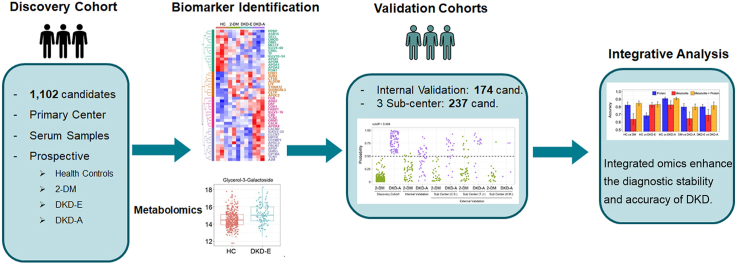
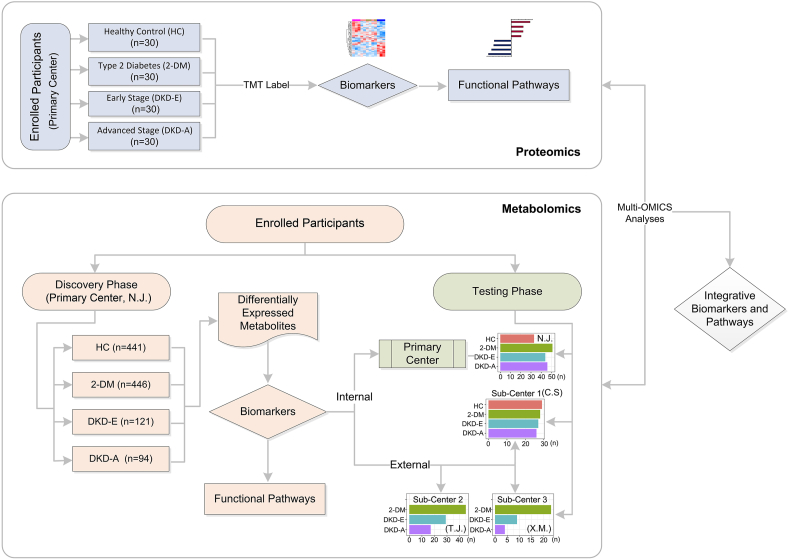
This study recruited 1,513 participants including healthy adults and patients diagnosed with 2-DM, early-stage DKD (DKD-E), and advanced-stage DKD (DKD-A) from 4 independent medical centers. One discovery and four testing cohorts were established. Sera were collected and subjected to training proteomics and large-scale metabolomics.
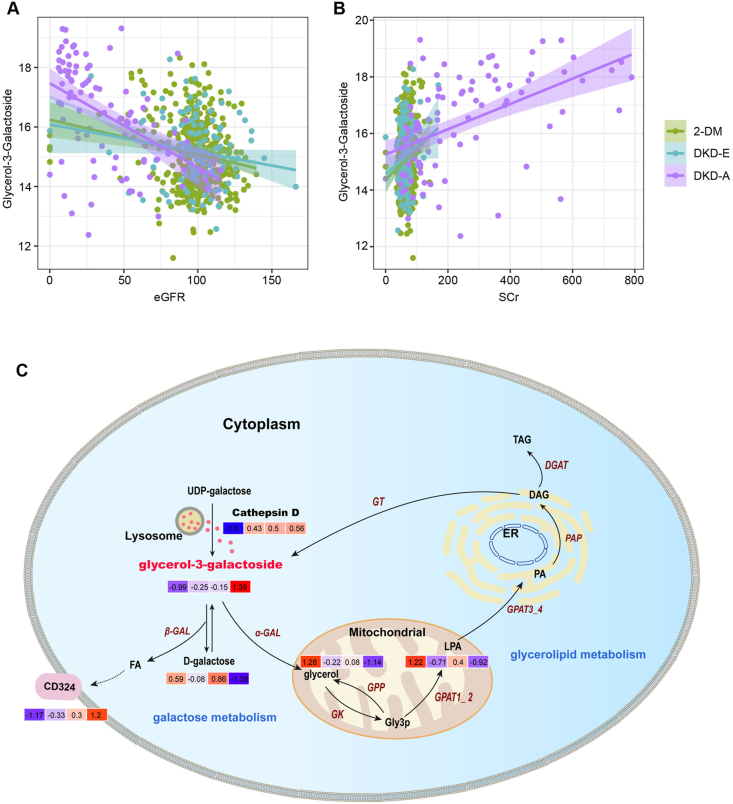
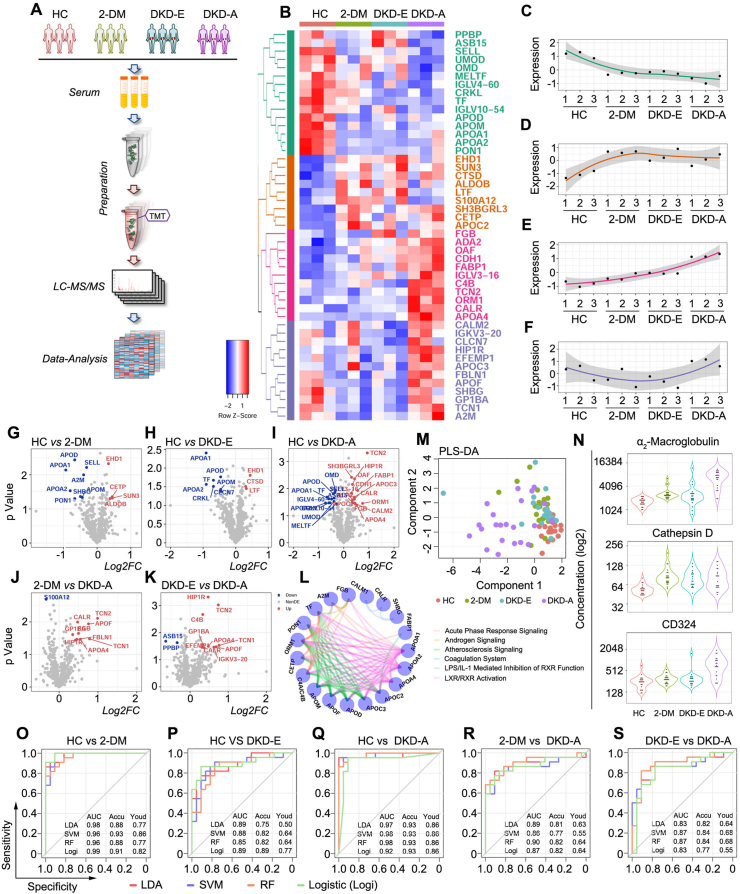
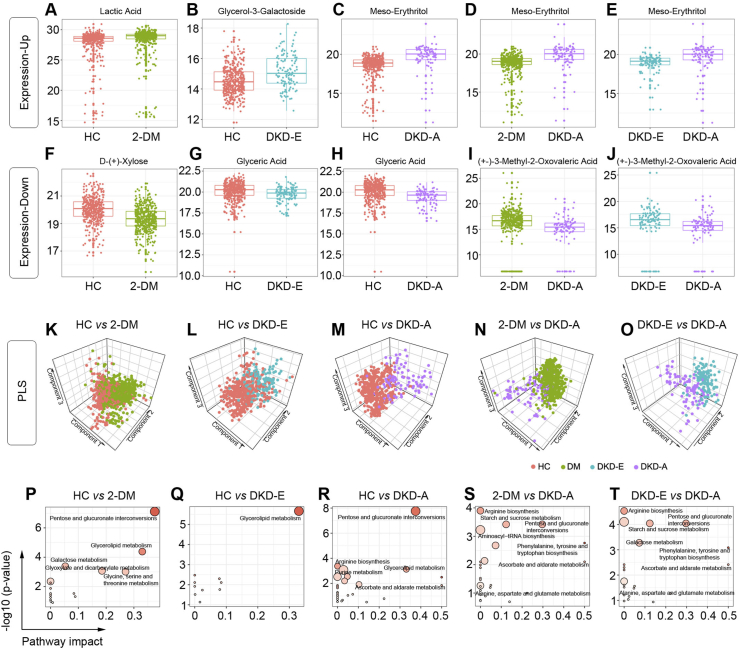
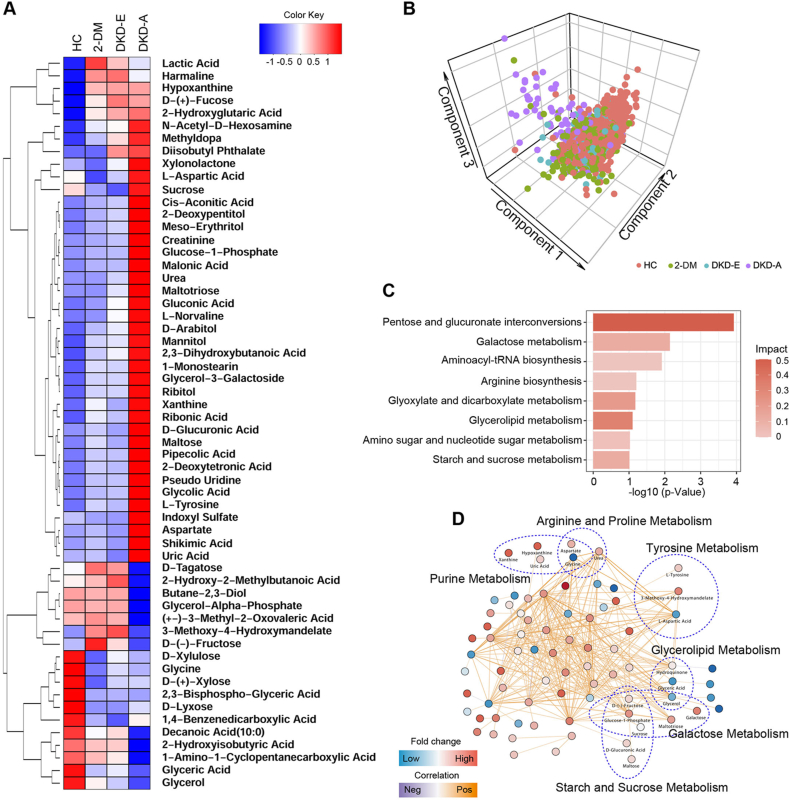
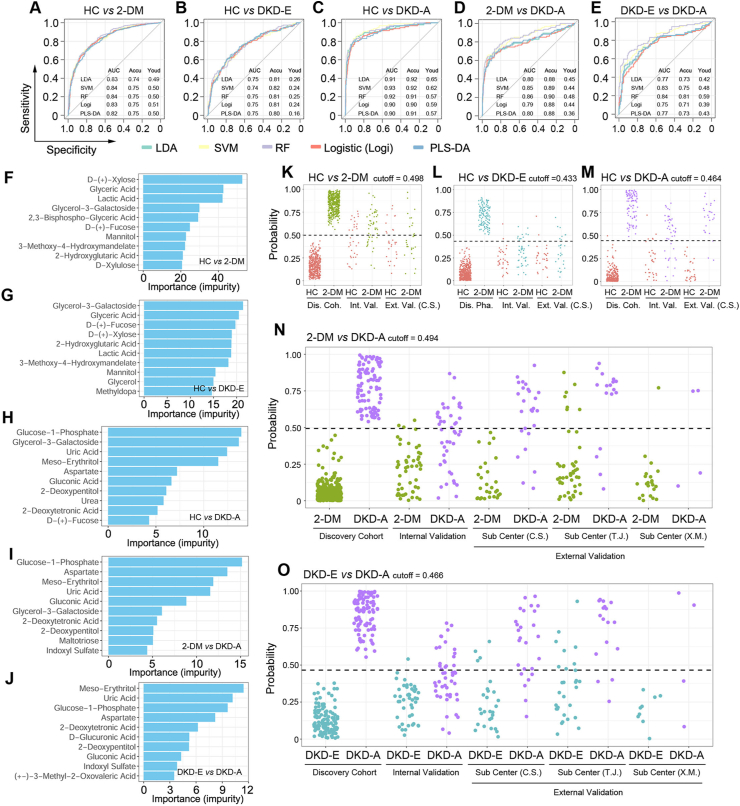
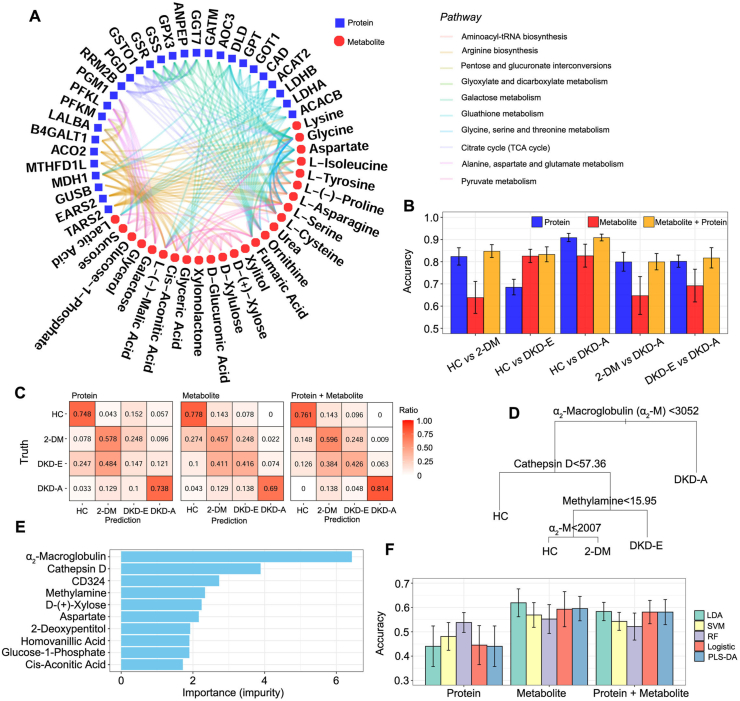
Deep profiling of serum proteomes and metabolomes revealed several insights. First, the training proteomics revealed that the combination of α-macroglobulin, cathepsin D, and CD324 could serve as a surrogate protein biomarker for monitoring DKD progression. Second, metabolomics demonstrated that galactose metabolism and glycerolipid metabolism are the major disturbed metabolic pathways in DKD, and serum metabolite glycerol-3-galactoside could be used as an independent marker to predict DKD. Third, integrating proteomics and metabolomics increased the diagnostic and predictive stability and accuracy for distinguishing DKD status.
Serum integrative omics provide stable and accurate biomarkers for early warning and diagnosis of DKD. Our study provides a rich and open-access data resource for optimizing DKD management.
糖尿病肾病(DKD)是 2 型糖尿病(2-DM)最常见的微血管并发症。目前,尿液和肾活检标本是 DKD 诊断的主要临床资源。本研究旨在评估血液在监测 DKD 发病和区分其临床状态方面的诊断价值。
本研究招募了来自 4 个独立医疗中心的 1513 名参与者,包括健康成年人和 2-DM、早期 DKD(DKD-E)和晚期 DKD(DKD-A)患者。建立了一个发现和四个测试队列。采集血清进行训练蛋白质组学和大规模代谢组学分析。
血清蛋白质组学和代谢组学的深度分析揭示了一些见解。首先,训练蛋白质组学表明,α-巨球蛋白、组织蛋白酶 D 和 CD324 的组合可以作为监测 DKD 进展的替代蛋白生物标志物。其次,代谢组学表明,半乳糖代谢和甘油脂质代谢是 DKD 中主要失调的代谢途径,血清代谢物甘油-3-半乳糖苷可作为独立标志物预测 DKD。第三,整合蛋白质组学和代谢组学提高了区分 DKD 状态的诊断和预测稳定性和准确性。
血清组学提供了稳定和准确的 DKD 早期预警和诊断生物标志物。我们的研究为优化 DKD 管理提供了丰富的开放数据资源。