Jang Minwoo Wendy, Kim Tai Young, Sharma Kushal, Kwon Jea, Yi Eunyoung, Lee C Justin
KU-KIST Graduate School of Converging Science and Technology, Korea University, Seoul 02841, Korea.
Center for Cognition and Sociality, Institute for Basic Science (IBS), Daejeon 34141, Korea.
Exp Neurobiol. 2021 Oct 31;30(5):319-328. doi: 10.5607/en21028.
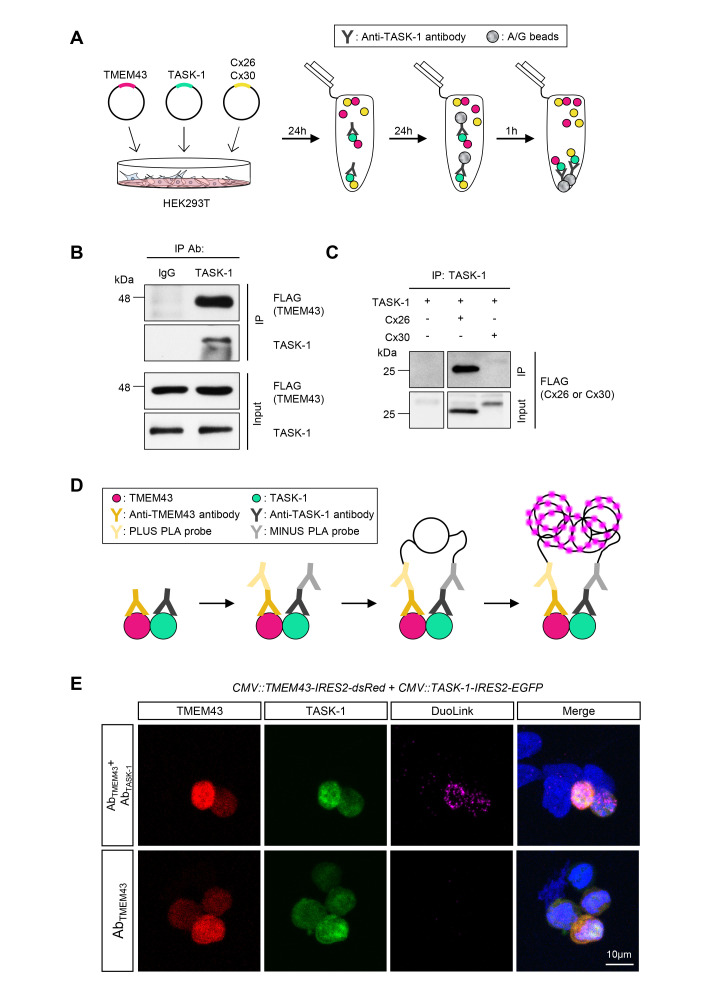
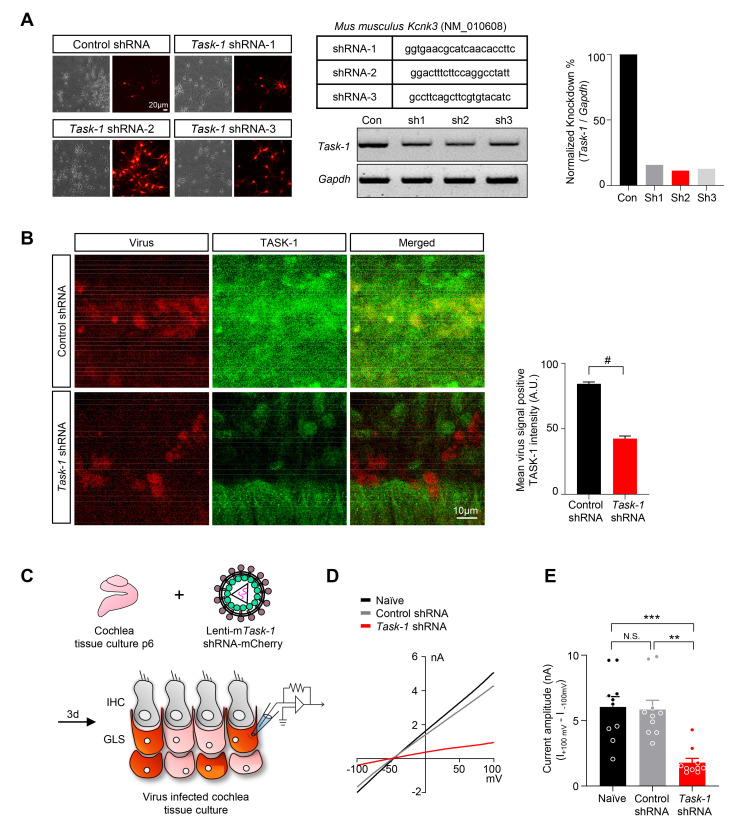
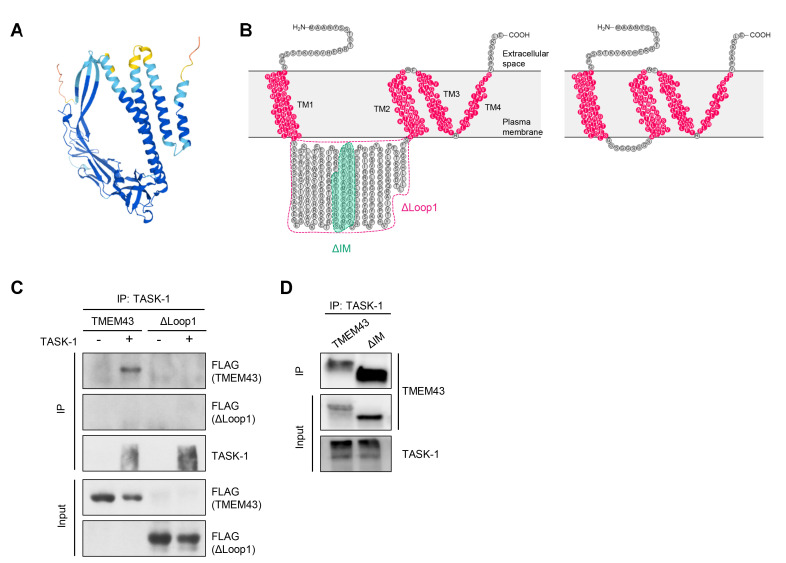
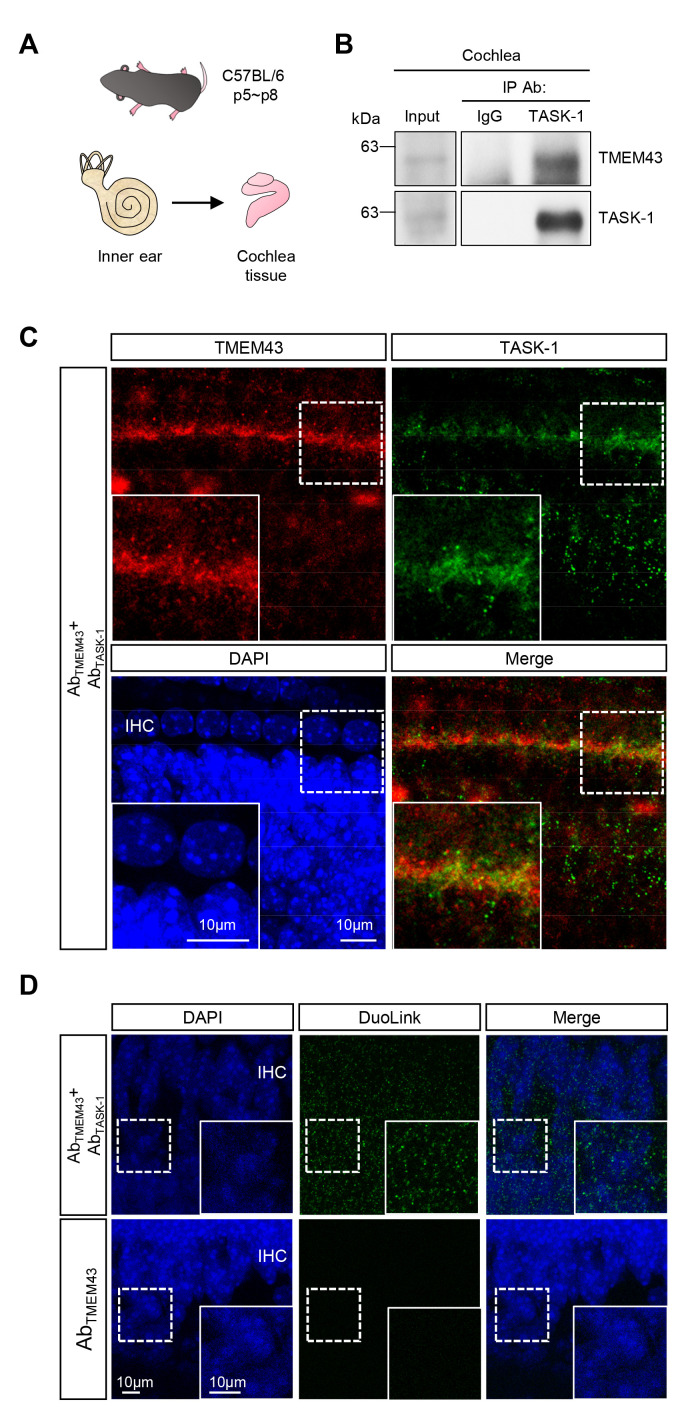
The TMEM43 has been studied in human diseases such as arrhythmogenic right ventricular cardiomyopathy type 5 (ARVC5) and auditory neuropathy spectrum disorder (ANSD). In the heart, the p.(Ser358Leu) mutation has been shown to alter intercalated disc protein function and disturb beating rhythms. In the cochlea, the p.(Arg372Ter) mutation has been shown to disrupt connexin-linked function in glia-like supporting cells (GLSs), which maintain inner ear homeostasis for hearing. The TMEM43-p.(Arg372Ter) mutant knock-in mice displayed a significantly reduced passive conductance current in the cochlear GLSs, raising a possibility that TMEM43 is essential for mediating the passive conductance current in GLSs. In the brain, the two-pore-domain potassium (K2P) channels are generally known as the "leak channels" to mediate background conductance current, raising another possibility that K2P channels might contribute to the passive conductance current in GLSs. However, the possible association between TMEM43 and K2P channels has not been investigated yet. In this study, we examined whether TMEM43 physically interacts with one of the K2P channels in the cochlea, KCNK3 (TASK-1). Utilizing co-immunoprecipitation (IP) assay and Duolink proximity ligation assay (PLA), we revealed that TMEM43 and TASK-1 proteins could directly interact. Genetic modifications further delineated that the intracellular loop domain of TMEM43 is responsible for TASK-1 binding. In the end, gene-silencing of resulted in significantly reduced passive conductance current in GLSs. Together, our findings demonstrate that TMEM43 and TASK-1 form a protein-protein interaction in the cochlea and provide the possibility that TASK-1 is a potential contributor to the passive conductance current in GLSs.
跨膜蛋白43(TMEM43)已在诸如5型致心律失常性右室心肌病(ARVC5)和听觉神经病谱系障碍(ANSD)等人类疾病中得到研究。在心脏中,已证实p.(Ser358Leu)突变会改变闰盘蛋白功能并扰乱心跳节律。在耳蜗中,已证实p.(Arg372Ter)突变会破坏胶质样支持细胞(GLSs)中连接蛋白相关功能,而这些细胞维持内耳听觉内环境稳定。TMEM43-p.(Arg372Ter)突变敲入小鼠的耳蜗GLSs中被动传导电流显著降低,这增加了TMEM43对介导GLSs中被动传导电流至关重要的可能性。在大脑中,双孔域钾离子(K2P)通道通常被称为介导背景传导电流的“渗漏通道”,这又增加了K2P通道可能对GLSs中被动传导电流有贡献的可能性。然而,TMEM43与K2P通道之间的可能关联尚未得到研究。在本研究中,我们检测了TMEM43是否与耳蜗中的一种K2P通道——钾离子通道亚家族K成员3(KCNK3,即TASK-1)发生物理相互作用。利用免疫共沉淀(IP)分析和Duolink邻近连接分析(PLA),我们发现TMEM43和TASK-1蛋白可直接相互作用。基因修饰进一步明确了TMEM43的细胞内环结构域负责与TASK-1结合。最后,对……进行基因沉默导致GLSs中被动传导电流显著降低。总之,我们的研究结果表明TMEM43和TASK-1在耳蜗中形成了蛋白质-蛋白质相互作用,并提示TASK-1可能是GLSs中被动传导电流的潜在贡献者。 (注:原文中“基因沉默”部分未明确具体基因,翻译时保留原文表述方式)