From the Department of Surgery (A.T.F., Y.A.S., Z.A.M., J.C., L.Z.K.), Department of Anesthesia (M.-C.L., F.M., C.M.V.B., N.M., R.J.B.), Zuckerberg San Francisco General Hospital and the University of California, San Francisco; and Bakar Computational Health Sciences Institute (R.A.C., K.M.K.), University of California, San Francisco, San Francisco, California.
J Trauma Acute Care Surg. 2022 Feb 1;92(2):313-322. doi: 10.1097/TA.0000000000003450.
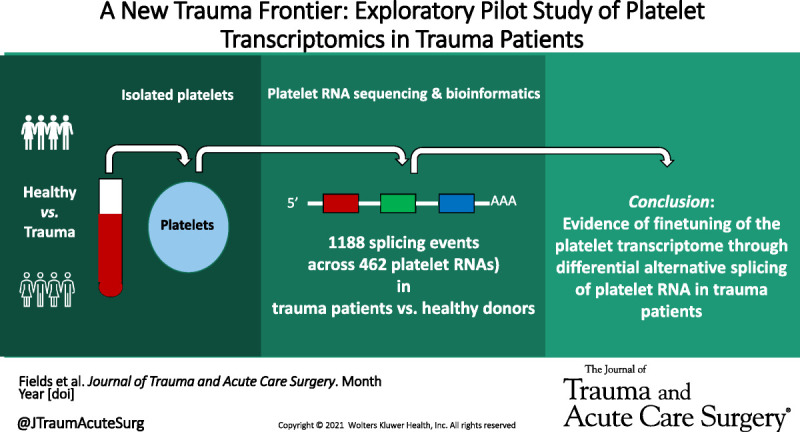
The earliest measurable changes to postinjury platelet biology may be in the platelet transcriptome, as platelets are known to carry messenger ribonucleic acids (RNAs), and there is evidence in other inflammatory and infectious disease states of differential and alternative platelet RNA splicing in response to changing physiology. Thus, the aim of this exploratory pilot study was to examine the platelet transcriptome and platelet RNA splicing signatures in trauma patients compared with healthy donors.
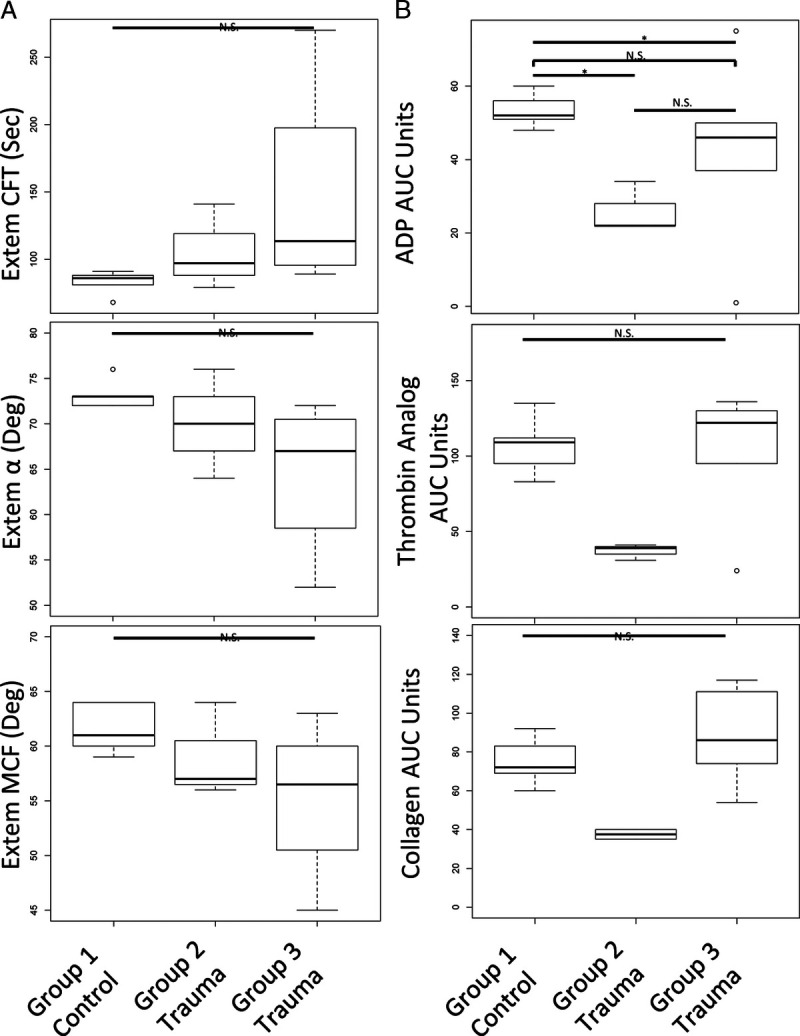
Preresuscitation platelets purified from trauma patients (n = 9) and healthy donors (n = 5) were assayed using deep RNA sequencing. Differential gene expression analysis, weighted gene coexpression network analysis, and differential alternative splicing analyses were performed. In parallel samples, platelet function was measured with platelet aggregometry, and clot formation was measured with thromboelastography.
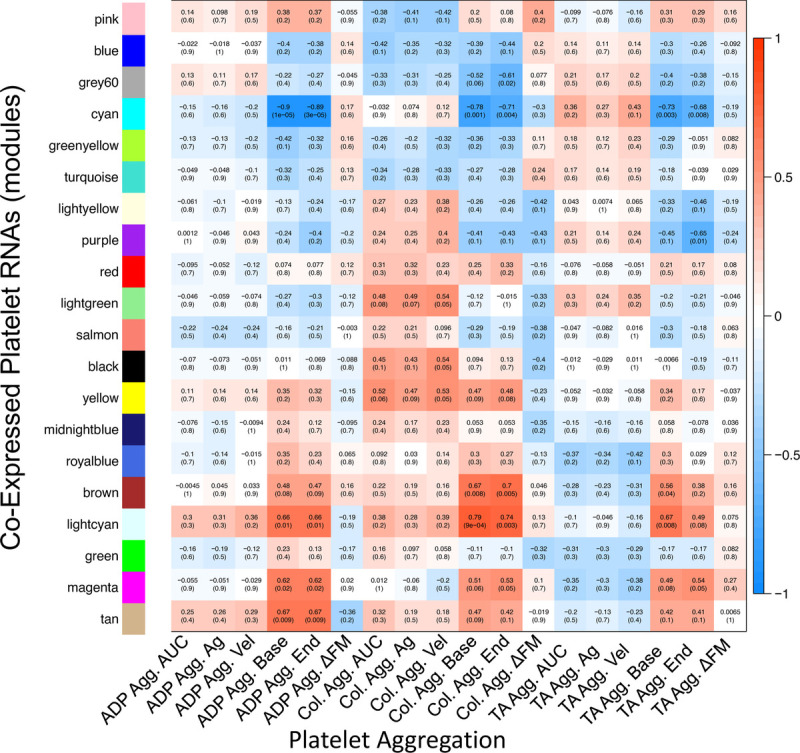
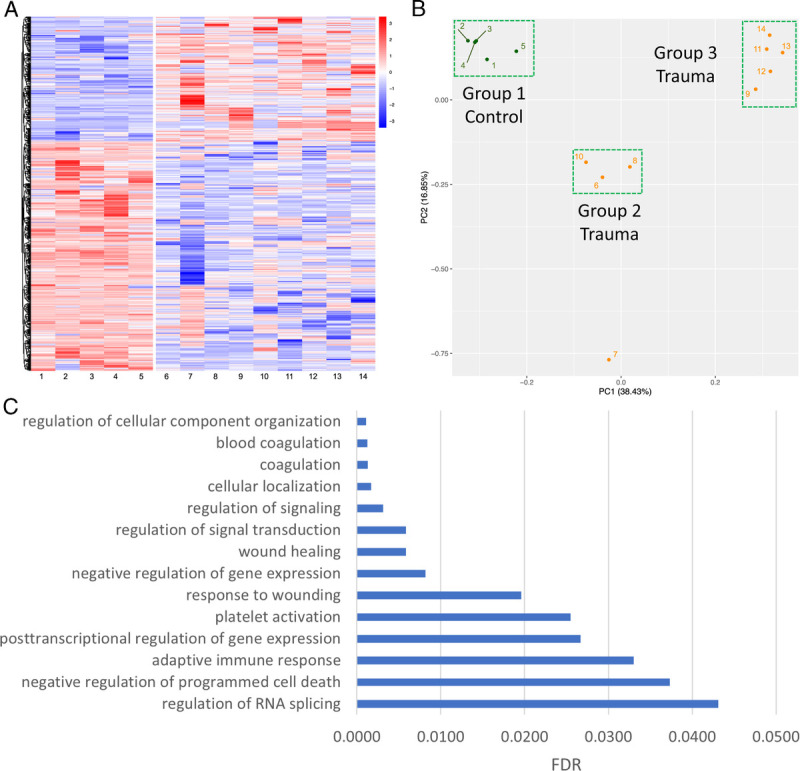
Differential gene expression analysis identified 49 platelet RNAs to have differing abundance between trauma patients and healthy donors. Weighted gene coexpression network analysis identified coexpressed platelet RNAs that correlated with platelet aggregation. Differential alternative splicing analyses revealed 1,188 splicing events across 462 platelet RNAs that were highly statistically significant (false discovery rate <0.001) in trauma patients compared with healthy donors. Unsupervised principal component analysis of these platelet RNA splicing signatures segregated trauma patients in two main clusters separate from healthy controls.
Our findings provide evidence of finetuning of the platelet transcriptome through differential alternative splicing of platelet RNA in trauma patients and that this finetuning may have relevance to downstream platelet signaling. Additional investigations of the trauma platelet transcriptome should be pursued to improve our understanding of the platelet functional responses to trauma on a molecular level.
受伤后血小板生物学最早可测量的变化可能是在血小板转录组中,因为已知血小板携带信使核糖核酸(RNA),并且在其他炎症和感染性疾病状态下,有证据表明血小板 RNA 剪接在应对生理变化时存在差异和替代。因此,本探索性初步研究的目的是检查创伤患者与健康供体的血小板转录组和血小板 RNA 剪接特征。
使用深度 RNA 测序分析创伤患者(n=9)和健康供体(n=5)的预复苏血小板。进行差异基因表达分析、加权基因共表达网络分析和差异替代剪接分析。在平行样本中,用血小板聚集仪测量血小板功能,用血栓弹性描记术测量血凝块形成。
差异基因表达分析确定了 49 个血小板 RNA 在创伤患者和健康供体之间的丰度不同。加权基因共表达网络分析确定了与血小板聚集相关的共表达血小板 RNA。差异替代剪接分析显示,在创伤患者中,462 个血小板 RNA 中有 1188 个剪接事件具有高度统计学意义(错误发现率<0.001)。这些血小板 RNA 剪接特征的无监督主成分分析将创伤患者分为两个主要簇,与健康对照组分开。
我们的发现提供了证据,表明在创伤患者中,通过血小板 RNA 的差异替代剪接对血小板转录组进行微调,这种微调可能与下游血小板信号转导有关。应进一步研究创伤血小板转录组,以提高我们对创伤后血小板功能反应的分子水平的理解。