Department of Animal Science and Technology, Hebei Agricultural University, Baoding 071001, China.
Department of Animal Science and Technology, Hebei Agricultural University, Baoding 071001, China.
Poult Sci. 2021 Dec;100(12):101510. doi: 10.1016/j.psj.2021.101510. Epub 2021 Sep 28.
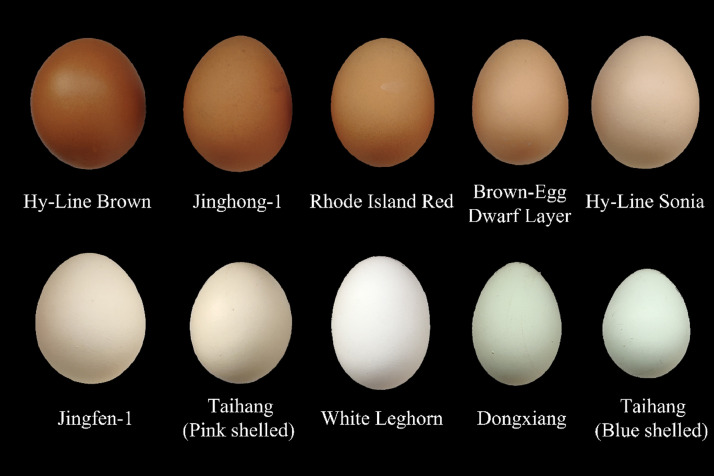
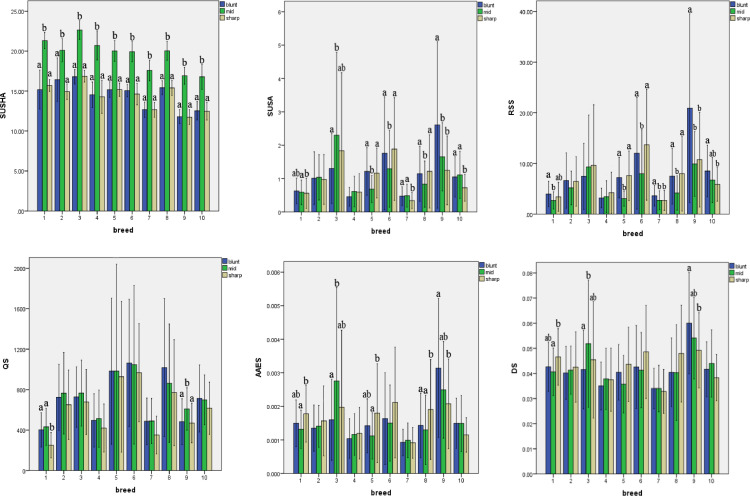
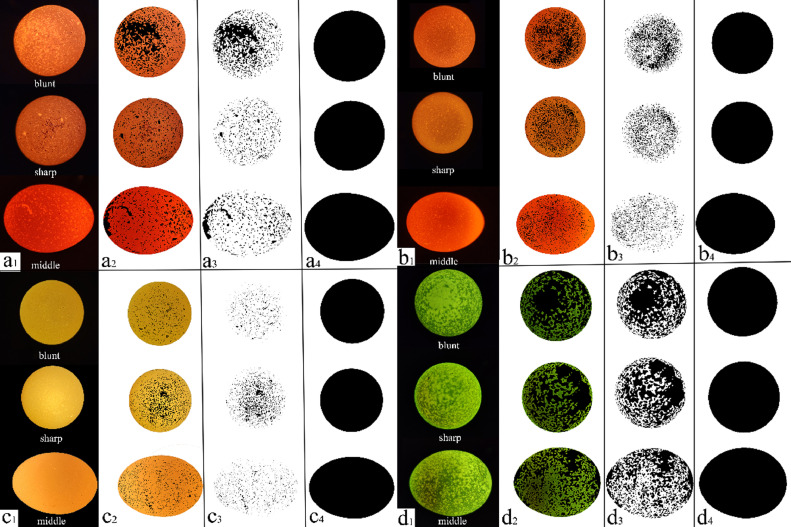
Eggshell translucency is a ubiquitous external eggshell quality problem caused by variations of eggshell ultrastructure or shell membrane. In previous studies, researchers have widely investigated this phenomenon with nutritional, environmental, and genetic perspectives in many breeds. However, most studies referring to phenotypic measurement of shell translucency have been performed using a relatively subjective two-, three-, or four-grading methods, which made it impossible to compare distribution of shell translucency among different breeds. In this study, we aimed to explore variations of translucent eggshell spots in different breeds and their distribution in blunt, middle, and sharp ends of eggshell using a relatively objective grayscale recognition method. We selected 45 eggs from each flock of pure lines, commercial strains, and Chinese local breeds (10 flocks, aged 60 to 70 wk), and stored them in a constant environment for 5 d. Then measured eggshell translucency using grayscale recognition method. Indicators of shell translucency included sum of spot areas on the whole eggshell (SUSA), sum area of the whole eggshell (SUSHA), RSS (ratio of SUSA to SUSHA), quantity of spots (QS), average spot area in eggshell (AAES), and diameter of spots in eggshell (DS). As results, in Hy-Line Brown, Brown-Egg Dwarf Layer, and Taihang (pink-shelled) breeds, phenotypic intensity of eggshell translucency was slight; in Rhode Island Red, Jingfen-1, and Dongxiang breeds, phenotypic intensity of eggshell translucency was relatively extensive; and in Jinghong-1, Hy-Line Sonia, White Leghorn, and Taihang (blue-shelled), phenotypic intensity of eggshell translucency was at an intermediate level. In general, the larger the RSS, the larger the QS, AAES, and DS. Of 3 ends for most breeds, eggshell translucency of blunt and sharp ends was usually greater than that of middle ends, and blunt ends seemed to have the most extensive eggshell translucency. Findings from this study could provide a reference for population selection to locate genes regulating shell translucency and to explore the physical structure mechanism for eggshell translucency formation.
蛋壳半透明性是一种普遍存在的蛋壳外部质量问题,由蛋壳超微结构或壳膜的变化引起。在以前的研究中,研究人员从营养、环境和遗传等角度广泛研究了这一现象,涉及许多品种。然而,大多数关于蛋壳半透明性表型测量的研究都采用了相对主观的二、三或四分等级方法,这使得不同品种之间的蛋壳半透明性分布无法进行比较。在这项研究中,我们旨在使用相对客观的灰度识别方法探索不同品种中半透明蛋壳斑点的变化及其在蛋壳钝端、中端和锐端的分布。我们从纯系、商业品系和中国地方品种(10 个品系,年龄 60-70 周)的每个鸡群中各选择 45 个鸡蛋,并将其储存在恒定环境中 5 天。然后使用灰度识别法测量蛋壳半透明性。蛋壳半透明性的指标包括蛋壳总面积上斑点的总和(SUSA)、蛋壳总面积(SUSHA)、RSS(SUSA 与 SUSHA 的比值)、斑点数量(QS)、蛋壳平均斑点面积(AAES)和蛋壳斑点直径(DS)。结果表明,在海兰褐、棕壳矮脚鸡和太行(粉壳)品种中,蛋壳半透明性的表型强度较弱;在罗岛红、金粉 1 号和东乡鸡品种中,蛋壳半透明性的表型强度较强;而在京红 1 号、海兰索尼亚、白来航和太行(蓝壳)品种中,蛋壳半透明性的表型强度处于中等水平。总的来说,RSS 越大,QS、AAES 和 DS 越大。对于大多数品种的 3 个末端,钝端和锐端的蛋壳半透明性通常大于中端,而钝端似乎具有最广泛的蛋壳半透明性。本研究的结果可为群体选择提供参考,以定位调节蛋壳半透明性的基因,并探索蛋壳半透明性形成的物理结构机制。