Department of Anesthesiology, Shanghai Jiao Tong University Affiliated Sixth People's Hospital, No.600 Yishan Road, Xuhui District, Shanghai, 200233, China.
J Neuroinflammation. 2021 Nov 5;18(1):257. doi: 10.1186/s12974-021-02307-8.
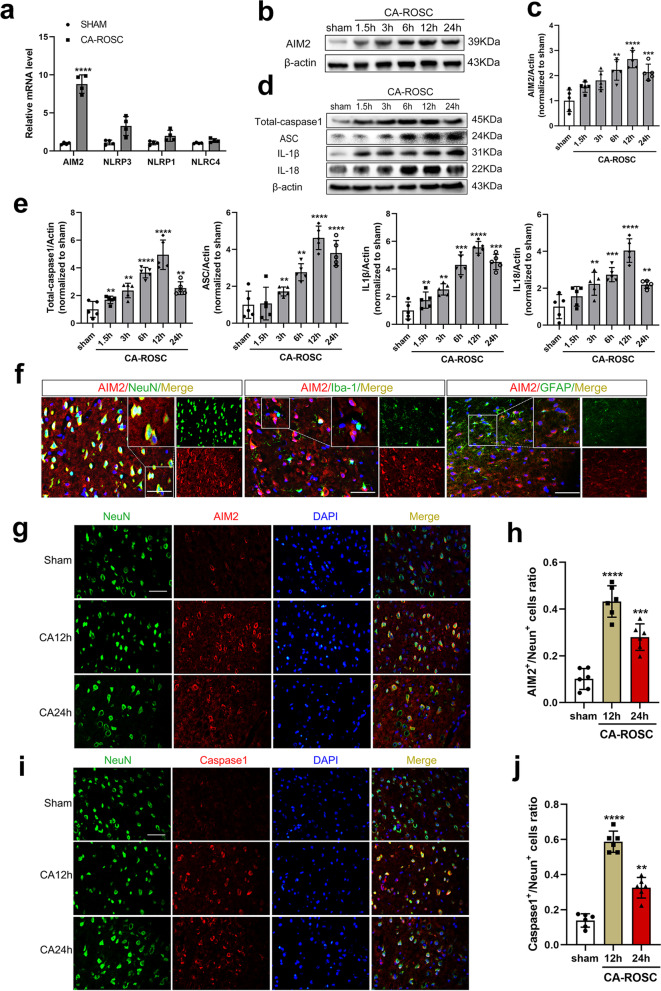
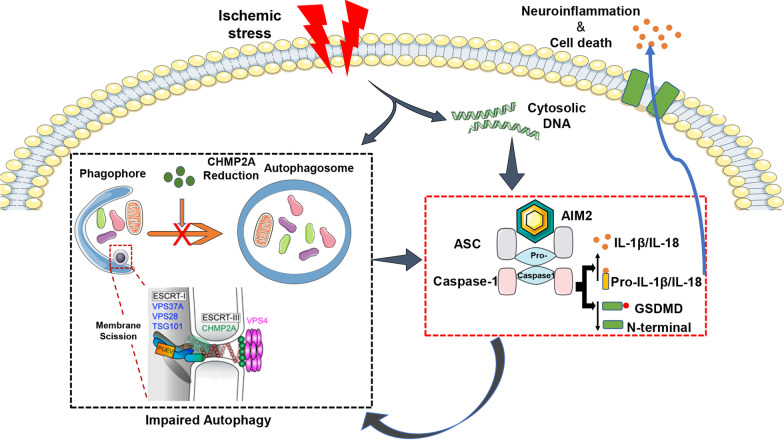
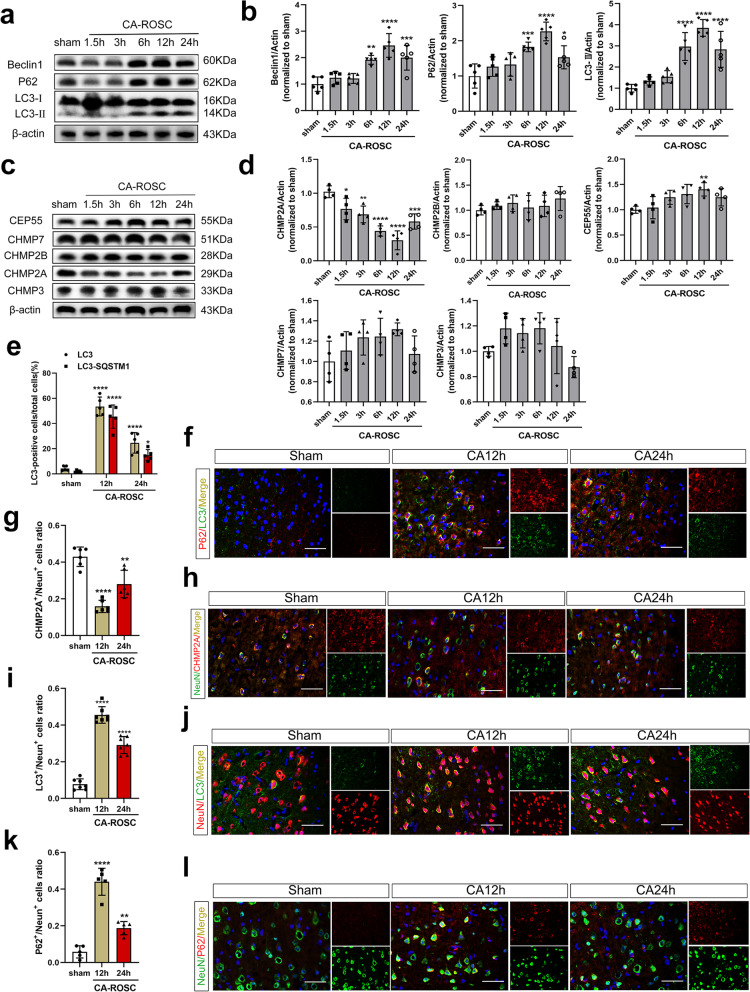
Activation of the absent in melanoma 2 (AIM2) inflammasome and impaired autophagosome clearance in neurons contribute significantly to cardiac arrest and return of spontaneous circulation (CA-ROSC) injury, while the mechanism by which the AIM2 inflammasome is regulated and relationship between the processes remain poorly understood. Recently, charged multivesicular body protein 2A (CHMP2A), a subunit of endosomal sorting complex required for transport (ESCRT), was shown to regulate phagophore closure, and its depletion led to the accumulation of autophagosomes and induced cell death. Here, we investigated whether CHMP2A-mediated autophagy was an underlying mechanism of AIM2-associated inflammation after CA-ROSC and explored the potential link between the AIM2 inflammasome and autophagy under ischemic conditions.
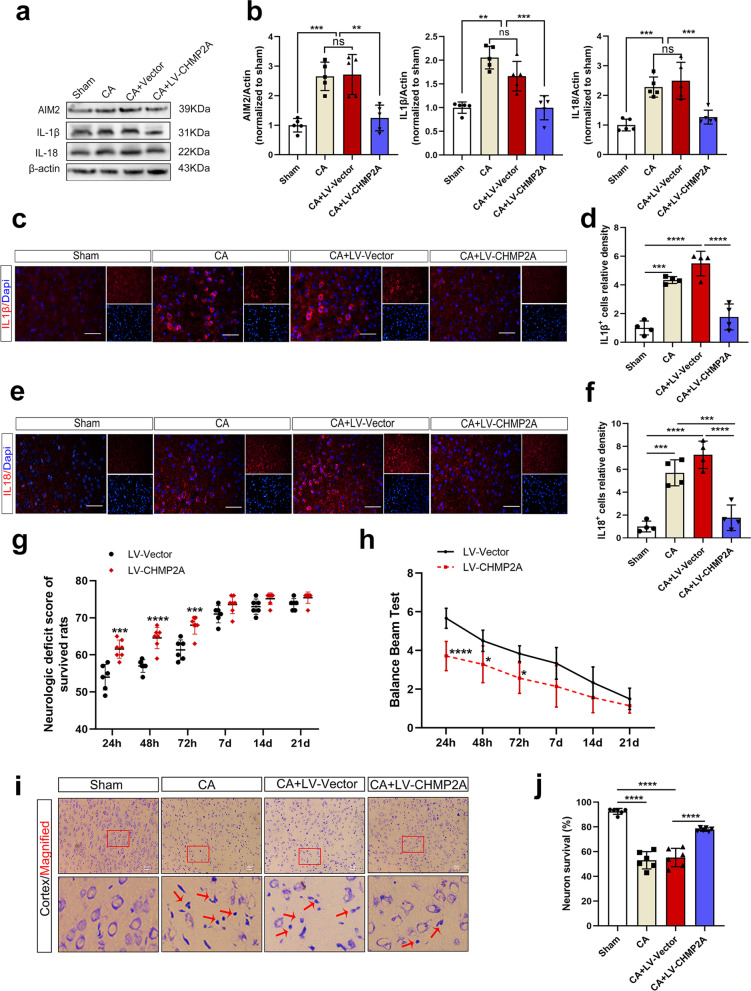
AIM2 inflammasome activation and autophagic flux in the cortex were assessed in the CA-ROSC rat model. We injected LV-Vector or LV-CHMP2A virus into the motor cortex with stereotaxic coordinates and divided the rats into four groups: Sham, CA, CA+LV-Vector, and CA+LV-CHMP2A. Neurologic deficit scores (NDSs), balance beam tests, histopathological injury of the brain, and expression of the AIM2 inflammasome and proinflammatory cytokines were analyzed.
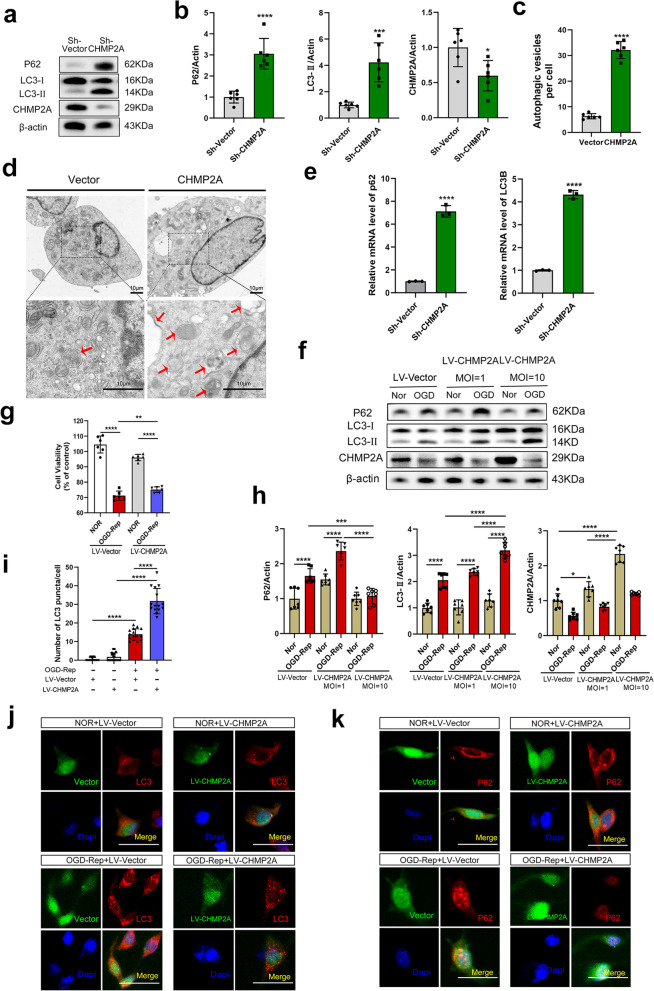
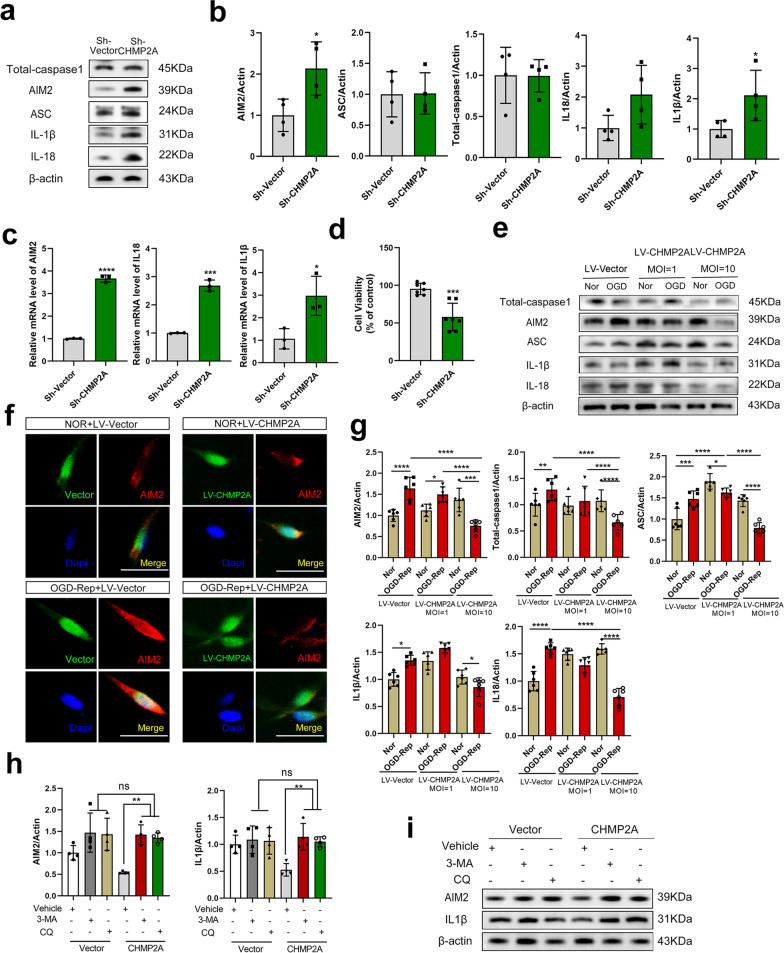
AIM2 inflammasome activation and increased interleukin 1 beta (IL-1β) and IL-18 release were concurrent with reduced levels of CHMP2A-induced autophagy in CA-ROSC rat neurons. In addition, silencing CHMP2A resulted in autophagosome accumulation and decreased autophagic degradation of the AIM2 inflammasome. In parallel, a reduction in AIM2 contributed to autophagy activation and mitigated oxygen-glucose deprivation and reperfusion (OGD-Rep)-induced inflammation. Notably, CHMP2A overexpression in the cortex hindered neuroinflammation, protected against ischemic brain damage, and improved neurologic outcomes after CA.
Our results support a potential link between autophagy and AIM2 signaling, and targeting CHMP2A may provide new insights into neuroinflammation in the early phase during CA-ROSC.
黑色素瘤缺失 2 激活(AIM2)炎症小体和神经元中自噬体清除受损,对心脏骤停和自主循环恢复(CA-ROSC)损伤有重要贡献,而 AIM2 炎症小体的调节机制以及这些过程之间的关系尚不清楚。最近,内体分选复合物必需的运输蛋白(ESCRT)的一个亚基,带电多泡体蛋白 2A(CHMP2A),被证明可以调节噬泡闭合,其耗竭导致自噬体的积累,并诱导细胞死亡。在这里,我们研究了 CHMP2A 介导的自噬是否是 CA-ROSC 后 AIM2 相关炎症的潜在机制,并探讨了缺血条件下 AIM2 炎症小体与自噬之间的潜在联系。
在 CA-ROSC 大鼠模型中评估皮质中的 AIM2 炎症小体激活和自噬流。我们用立体定向坐标将 LV-载体或 LV-CHMP2A 病毒注入运动皮层,并将大鼠分为四组:假手术、CA、CA+LV-载体和 CA+LV-CHMP2A。分析神经功能缺损评分(NDS)、平衡木测试、脑组织病理学损伤以及 AIM2 炎症小体和促炎细胞因子的表达。
在 CA-ROSC 大鼠神经元中,AIM2 炎症小体的激活和白细胞介素 1β(IL-1β)和白细胞介素 18(IL-18)的释放增加与 CHMP2A 诱导的自噬水平降低同时发生。此外,沉默 CHMP2A 导致自噬体积累和自噬体对 AIM2 炎症小体的降解减少。同时,AIM2 的减少促进了自噬的激活,并减轻了氧葡萄糖剥夺和再灌注(OGD-Rep)诱导的炎症。值得注意的是,皮质中 CHMP2A 的过表达抑制了神经炎症,保护了缺血性脑损伤,并改善了 CA 后的神经功能结局。
我们的结果支持自噬和 AIM2 信号之间的潜在联系,靶向 CHMP2A 可能为 CA-ROSC 早期阶段的神经炎症提供新的见解。