Global Regulatory Science and Policy, Sanofi R&D, Chilly-Mazarin, France.
Global Quality External Liaisons, GB Aventis Pharma Ltd, Reading, United Kingdom.
Clin Ther. 2021 Dec;43(12):2046-2063. doi: 10.1016/j.clinthera.2021.10.003. Epub 2021 Oct 13.
The COVID-19 pandemic has affected the management and operation of regulatory agencies and the pharmaceutical industry around the world. It has prompted regulatory authorities to consider new ways of working and introduced, among others, remote inspections to validate the integrity of the regulatory data submitted by companies, to evaluate the quality of production and manufacturing sites, and to ensure the conformity with Good Regulatory Practices with the overall goal of guaranteeing patient safety during the crisis.
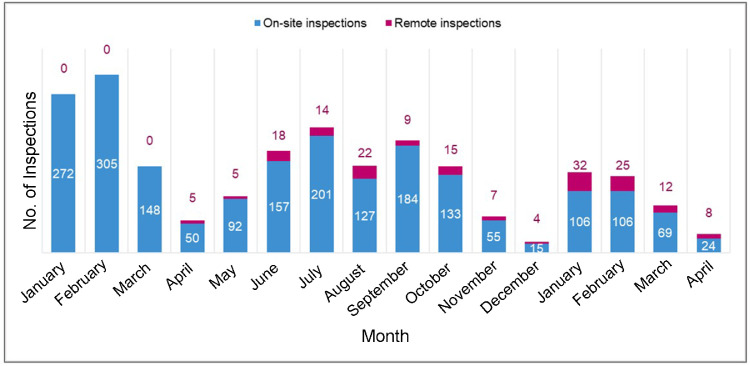
This article summarizes and discusses remote inspection guidelines and other related information made available by the Therapeutic Goods Administration (Australia), the European Medicines Agency (EMA), the Pharmaceutical and Medical Devices Agency (Japan), the Medicines and Healthcare Products Regulatory Agency (United Kingdom), and the US Food and Drug Administration (FDA). We also analyze the effect of the pandemic on inspections conducted by the inspectorates of the EMA and the FDA.
The regulatory authorities that we studied all recognized the importance of implementing regulatory policies on remote inspections in response to the COVID-19 pandemic. The remote inspection guidelines from the 5 selected regulatory authorities aimed at mitigating the impact of the pandemic but, while providing valuable advice to the pharmaceutical companies and being similar in intent, were not always aligned in terms of approach and solutions.
On-site inspections are likely to continue to be the norm and the preferred standard for the foreseeable future. However, health authorities will need to further adopt a risk-based inspection approach and stimulate the increased uptake of inspection reliance as proposed by the Pharmaceutical Inspection Convention and Pharmaceutical Inspection Co-operation Scheme not to overwhelm the pharmaceutical companies with repeat and redundant inspections. Remote inspections have proven to be a new inspection tool, but health authorities should align on their approach to remote inspections in terms of methods applied and documentation requested.
COVID-19 大流行影响了全球监管机构和制药行业的管理和运营。它促使监管机构考虑新的工作方式,并引入了远程检查,以验证公司提交的监管数据的完整性,评估生产和制造现场的质量,并确保符合良好监管实践,总体目标是在危机期间保障患者安全。
本文总结并讨论了澳大利亚治疗商品管理局(Therapeutic Goods Administration)、欧洲药品管理局(European Medicines Agency)、日本药品和医疗器械管理局(Pharmaceutical and Medical Devices Agency)、英国药品和保健产品监管局(Medicines and Healthcare Products Regulatory Agency)以及美国食品和药物管理局(US Food and Drug Administration)发布的远程检查指南和其他相关信息。我们还分析了大流行对 EMA 和 FDA 检查机构进行的检查的影响。
我们研究的监管机构都认识到,必须实施针对 COVID-19 大流行的远程检查监管政策。这 5 个选定的监管机构的远程检查指南旨在减轻大流行的影响,但在提供有价值的建议给制药公司方面,虽然意图相似,但在方法和解决方案方面并不总是一致。
在可预见的未来,现场检查可能仍将是常态和首选标准。然而,卫生当局将需要进一步采取基于风险的检查方法,并按照《药品检查公约》和《药品检查合作计划》的建议,鼓励更多地依赖检查,以免对制药公司进行重复和多余的检查。远程检查已被证明是一种新的检查工具,但卫生当局应在方法应用和所需文件方面就远程检查方法达成一致。