The Dinosaur Institute, Natural History Museum of Los Angeles County, 900 W Exposition Blvd, Los Angeles, CA, USA.
BMC Ecol Evol. 2021 Nov 6;21(1):202. doi: 10.1186/s12862-021-01932-4.
Dinosaurs dominated terrestrial environments for over 100 million years due in part to innovative feeding strategies. Although a range of dental adaptations was present in Late Jurassic dinosaurs, it is unclear whether dinosaur ecosystems exhibited patterns of tooth disparity and dietary correlation similar to those of modern amniotes, in which carnivores possess simple teeth and herbivores exhibit complex dentitions. To investigate these patterns, we quantified dental shape in Late Jurassic dinosaurs to test relationships between diet and dental complexity.
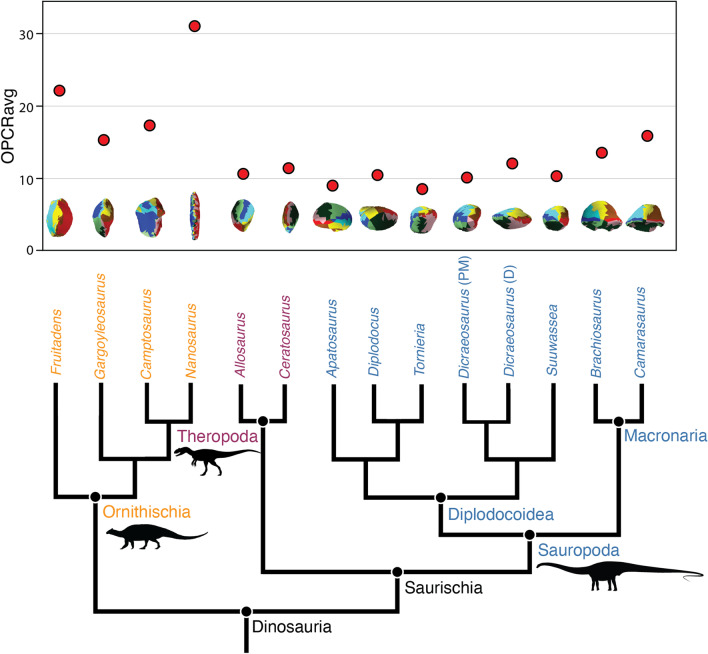
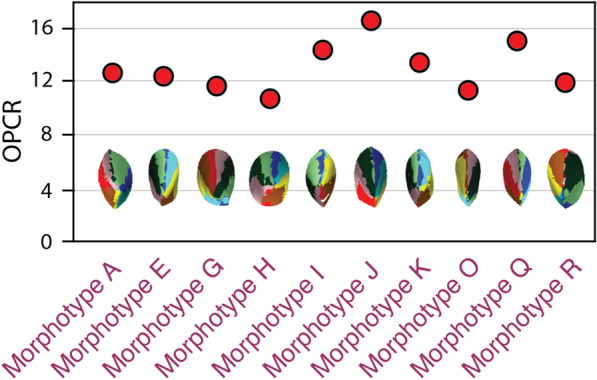
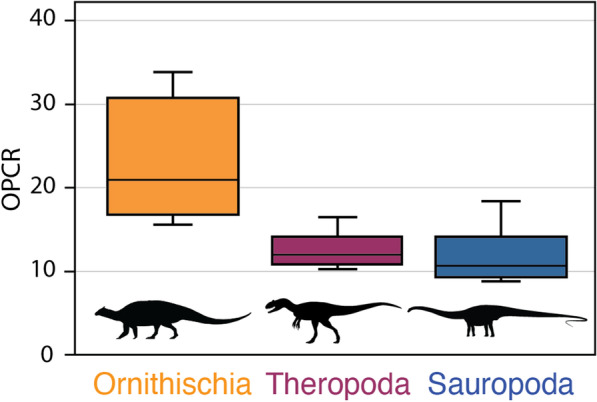
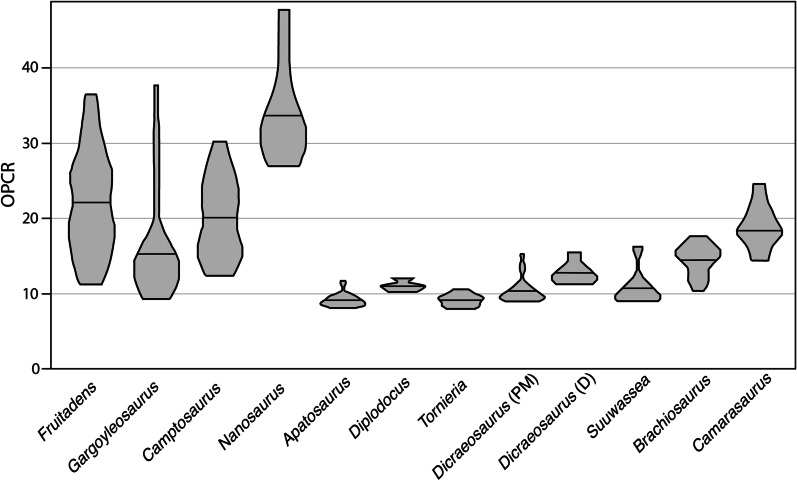
Here, we show that Late Jurassic dinosaurs exhibited a disparity of dental complexities on par with those of modern saurians. Theropods possess relatively simple teeth, in spite of the range of morphologies tested, and is consistent with their inferred carnivorous habits. Ornithischians, in contrast, have complex dentitions, corresponding to herbivorous habits. The dentitions of macronarian sauropods are similar to some ornithischians and living herbivorous squamates but slightly more complex than other sauropods. In particular, all diplodocoid sauropods investigated possess remarkably simple teeth. The existence of simple teeth in diplodocoids, however, contrasts with the pattern observed in nearly all known herbivores (living or extinct).
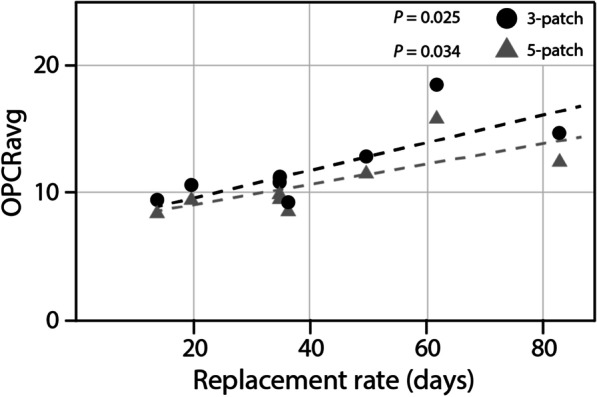
Sauropod dinosaurs exhibit a novel approach to herbivory not yet observed in other amniotes. We demonstrate that sauropod tooth complexity is related to tooth replacement rate rather than diet, which contrasts with the results from mammals and saurians. This relationship is unique to the sauropod clade, with ornithischians and theropods displaying the patterns observed in other groups. The decoupling of herbivory and tooth complexity paired with a correlation between complexity and replacement rate demonstrates a novel evolutionary strategy for plant consumption in sauropod dinosaurs.
恐龙在陆地上的环境中统治了超过 1 亿年,部分原因是它们具有创新的进食策略。尽管在晚侏罗世恐龙中存在一系列牙齿适应,但尚不清楚恐龙生态系统是否表现出与现代羊膜动物相似的牙齿差异和饮食相关性模式,在现代羊膜动物中,肉食动物具有简单的牙齿,而草食动物则具有复杂的牙齿结构。为了研究这些模式,我们量化了晚侏罗世恐龙的牙齿形状,以测试饮食与牙齿复杂性之间的关系。
在这里,我们表明晚侏罗世恐龙的牙齿复杂性差异与现代爬行动物相当。尽管测试了各种形态,但兽脚亚目恐龙的牙齿相对简单,这与其推测的肉食性习惯一致。相比之下,鸟臀目恐龙则具有复杂的牙齿结构,对应于草食性习惯。大型蜥脚类恐龙的牙齿与一些鸟臀目恐龙和现存的草食性有鳞目相似,但比其他蜥脚类恐龙稍微复杂一些。特别是,所有研究的梁龙类恐龙都具有非常简单的牙齿。然而,梁龙类恐龙中简单牙齿的存在与几乎所有已知草食动物(现存或已灭绝)所观察到的模式形成对比。
蜥脚类恐龙表现出一种新的草食策略,尚未在其他羊膜动物中观察到。我们证明,蜥脚类恐龙的牙齿复杂性与牙齿替换率有关,而与饮食无关,这与哺乳动物和爬行动物的结果相反。这种关系是蜥脚类恐龙特有的,鸟臀目恐龙和兽脚亚目恐龙表现出其他类群中观察到的模式。草食性和牙齿复杂性的分离,加上复杂性与替换率之间的相关性,证明了蜥脚类恐龙在植物消耗方面的一种新的进化策略。