Department of Microbiology, RIBES, Radboud University, Heyendaalseweg 135, 6525 AJ, Nijmegen, the Netherlands.
Division of Microbial Ecology, Center for Microbiology and Environmental Systems Science, University of Vienna, Althanstraße 14, 1090, Vienna, Austria.
ISME J. 2022 Apr;16(4):958-971. doi: 10.1038/s41396-021-01144-0. Epub 2021 Nov 6.
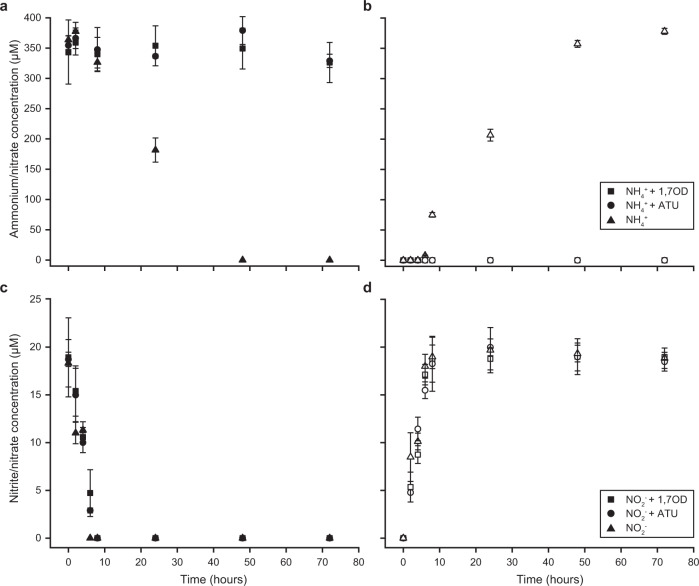
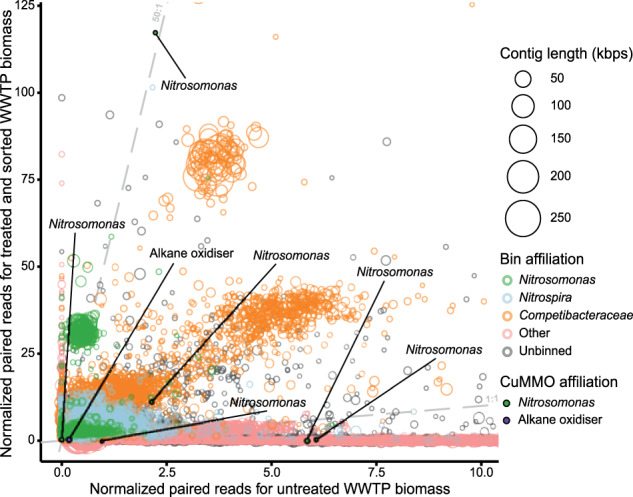
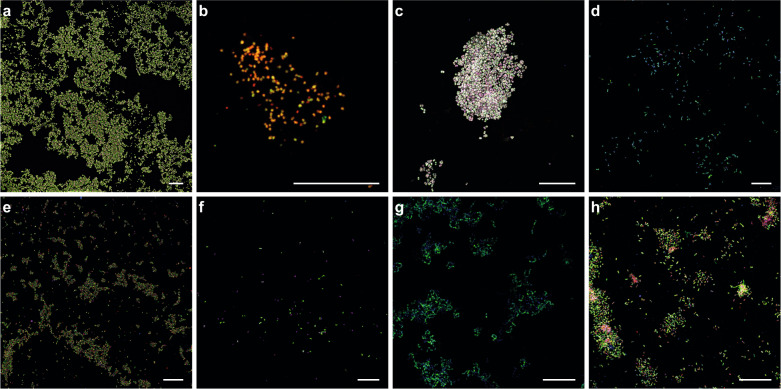
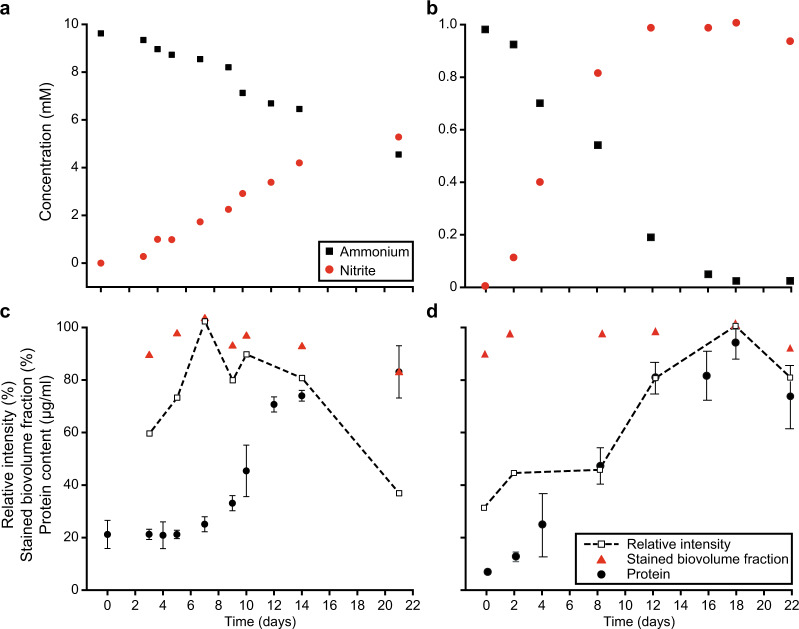
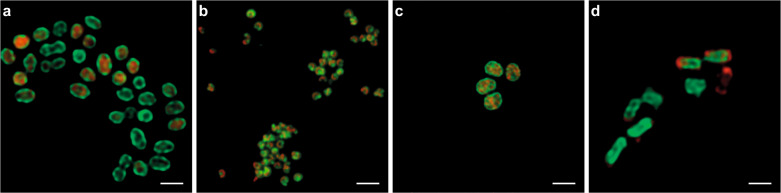
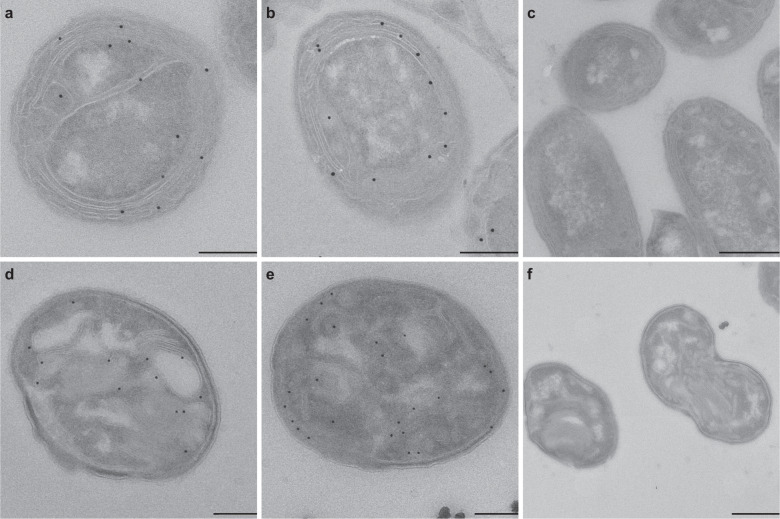
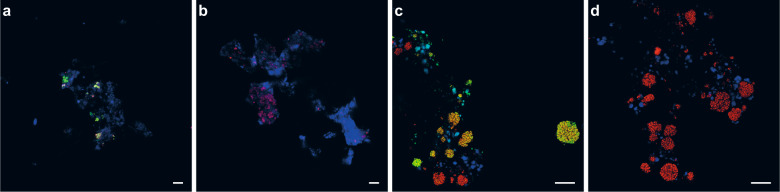
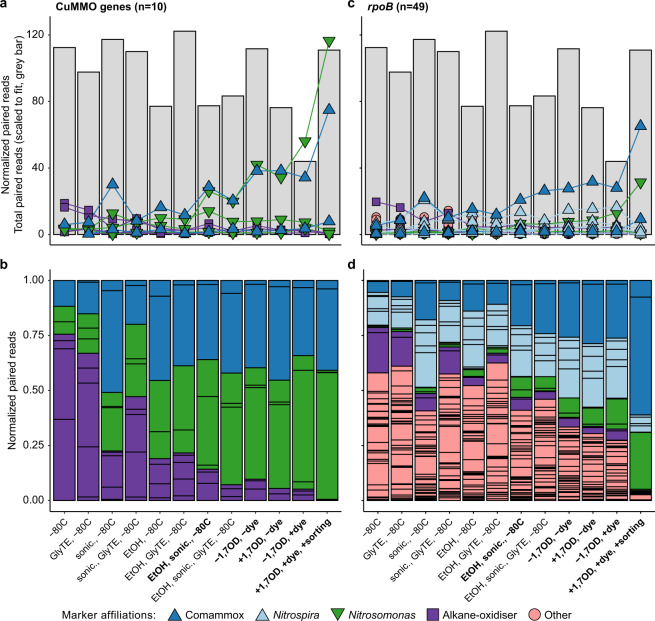
The advance of metagenomics in combination with intricate cultivation approaches has facilitated the discovery of novel ammonia-, methane-, and other short-chain alkane-oxidizing microorganisms, indicating that our understanding of the microbial biodiversity within the biogeochemical nitrogen and carbon cycles still is incomplete. The in situ detection and phylogenetic identification of novel ammonia- and alkane-oxidizing bacteria remain challenging due to their naturally low abundances and difficulties in obtaining new isolates from complex samples. Here, we describe an activity-based protein profiling protocol allowing cultivation-independent unveiling of ammonia- and alkane-oxidizing bacteria. In this protocol, 1,7-octadiyne is used as a bifunctional enzyme probe that, in combination with a highly specific alkyne-azide cycloaddition reaction, enables the fluorescent or biotin labeling of cells harboring active ammonia and alkane monooxygenases. Biotinylation of these enzymes in combination with immunogold labeling revealed the subcellular localization of the tagged proteins, which corroborated expected enzyme targets in model strains. In addition, fluorescent labeling of cells harboring active ammonia or alkane monooxygenases provided a direct link of these functional lifestyles to phylogenetic identification when combined with fluorescence in situ hybridization. Furthermore, we show that this activity-based labeling protocol can be successfully coupled with fluorescence-activated cell sorting for the enrichment of nitrifiers and alkane-oxidizing bacteria from complex environmental samples, enabling the recovery of high-quality metagenome-assembled genomes. In conclusion, this study demonstrates a novel, functional tagging technique for the reliable detection, identification, and enrichment of ammonia- and alkane-oxidizing bacteria present in complex microbial communities.
宏基因组学的发展与复杂的培养方法相结合,促进了新型氨氧化微生物、甲烷氧化微生物和其他短链烷烃氧化微生物的发现,这表明我们对生物地球化学氮碳循环中微生物生物多样性的理解仍不完整。由于新型氨氧化菌和烷烃氧化菌的自然丰度低,且从复杂样本中获取新分离株存在困难,因此其原位检测和系统发育鉴定仍然具有挑战性。本文描述了一种基于活性的蛋白谱分析方案,可实现无需培养即可揭示氨氧化菌和烷烃氧化菌。在该方案中,1,7-辛二炔被用作双功能酶探针,与高度特异性的炔基-叠氮化物环加成反应相结合,可对含有活性氨单加氧酶和烷烃单加氧酶的细胞进行荧光或生物素标记。这些酶的生物素化与免疫金标记相结合,揭示了标记蛋白的亚细胞定位,这与模型菌株中的预期酶靶标相吻合。此外,对含有活性氨单加氧酶或烷烃单加氧酶的细胞进行荧光标记,与荧光原位杂交相结合,为这些功能生活方式与系统发育鉴定之间提供了直接联系。此外,本文还证明,该基于活性的标记方案可与荧光激活细胞分选成功结合,从复杂的环境样本中富集硝化菌和烷烃氧化菌,从而获得高质量的宏基因组组装基因组。总之,本研究证明了一种新型的功能标记技术,可用于可靠地检测、鉴定和富集复杂微生物群落中存在的氨氧化菌和烷烃氧化菌。