Department of Microbiology, IWWR, Radboud University, Nijmegen, the Netherlands.
Research Center of Biotechnology of the Russian Academy of Sciences, Winogradski Institute of Microbiology, Moscow, Russia.
mSphere. 2019 Jun 5;4(3):e00631-18. doi: 10.1128/mSphere.00631-18.
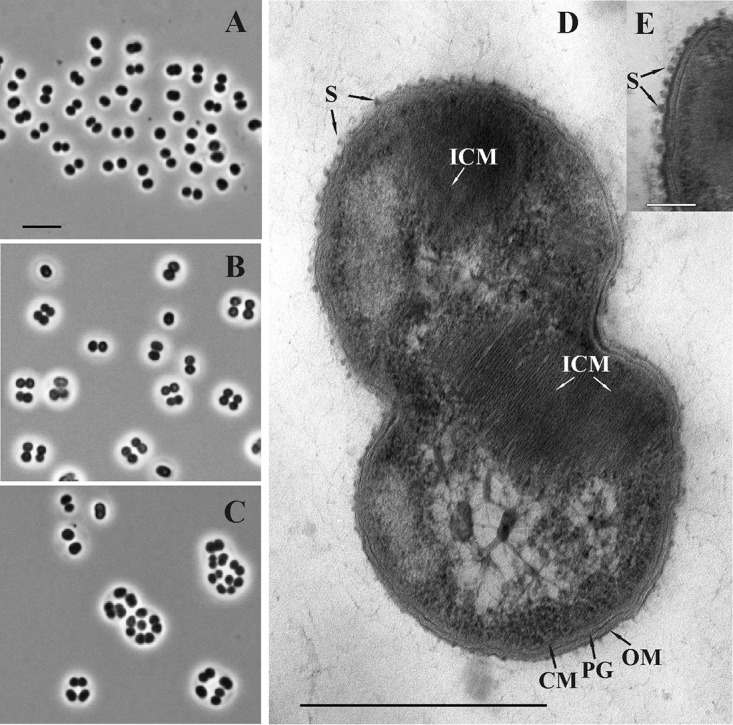
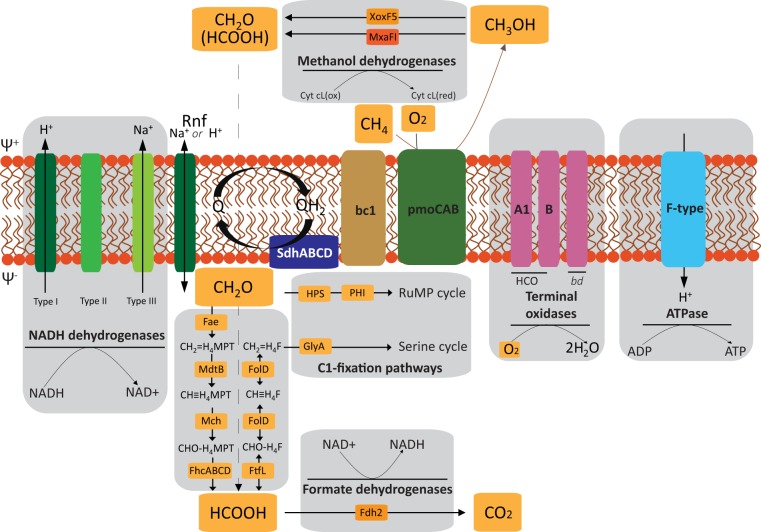
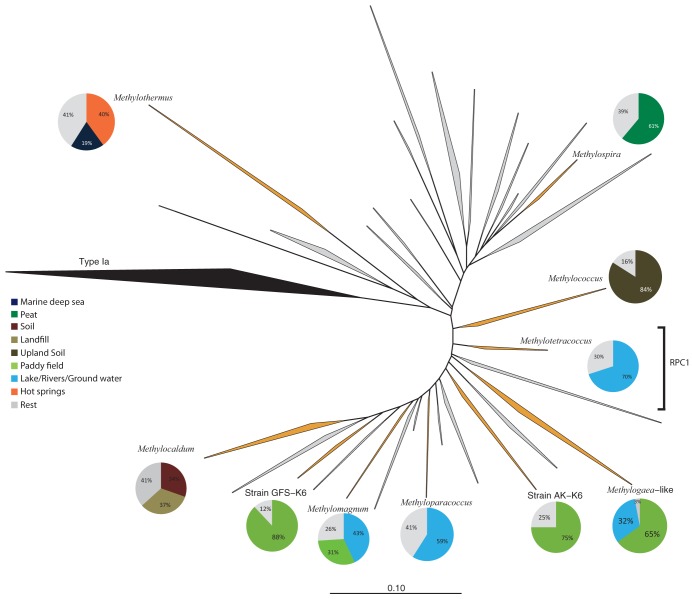
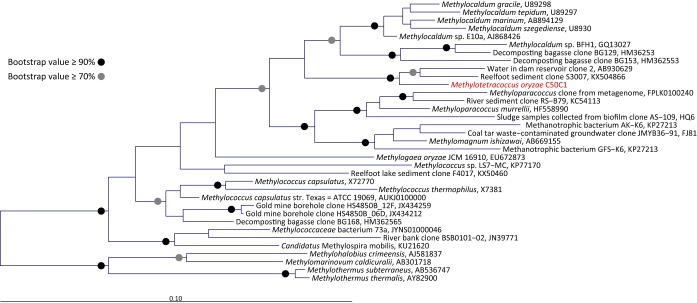
Methane-oxidizing microorganisms perform an important role in reducing emissions of the greenhouse gas methane to the atmosphere. To date, known bacterial methanotrophs belong to the , , and NC10 phyla. Within the phylum, they can be divided into type Ia, type Ib, and type II methanotrophs. Type Ia and type II are well represented by isolates. Contrastingly, the vast majority of type Ib methanotrophs have not been able to be cultivated so far. Here, we compared the distributions of type Ib lineages in different environments. Whereas the cultivated type Ib methanotrophs ( and ) are found in landfill and upland soils, lineages that are not represented by isolates are mostly dominant in freshwater environments, such as paddy fields and lake sediments. Thus, we observed a clear niche differentiation within type Ib methanotrophs. Our subsequent isolation attempts resulted in obtaining a pure culture of a novel type Ib methanotroph, tentatively named "" C50C1. Strain C50C1 was further characterized to be an obligate methanotroph, containing Cω9c as the major membrane phospholipid fatty acid, which has not been found in other methanotrophs. Genome analysis of strain C50C1 showed the presence of two operon copies and XoxF5-type methanol dehydrogenase in addition to MxaFI. The genome also contained genes involved in nitrogen and sulfur cycling, but it remains to be demonstrated if and how these help this type Ib methanotroph to adapt to fluctuating environmental conditions in freshwater ecosystems. Most of the methane produced on our planet gets naturally oxidized by a group of methanotrophic microorganisms before it reaches the atmosphere. These microorganisms are able to oxidize methane, both aerobically and anaerobically, and use it as their sole energy source. Although methanotrophs have been studied for more than a century, there are still many unknown and uncultivated groups prevalent in various ecosystems. This study focused on the diversity and adaptation of aerobic methane-oxidizing bacteria in different environments by comparing their phenotypic and genotypic properties. We used lab-scale microcosms to create a countergradient of oxygen and methane for preenrichment, followed by classical isolation techniques to obtain methane-oxidizing bacteria from a freshwater environment. This resulted in the discovery and isolation of a novel methanotroph with interesting physiological and genomic properties that could possibly make this bacterium able to cope with fluctuating environmental conditions.
甲烷氧化微生物在减少温室气体甲烷向大气排放方面发挥着重要作用。迄今为止,已知的细菌甲烷营养菌属于、和 NC10 门。在门内,它们可以分为 I 型、Ib 型和 II 型甲烷营养菌。I 型和 II 型都有很好的分离株代表。相比之下,绝大多数 Ib 型甲烷营养菌迄今尚未能够培养。在这里,我们比较了不同环境中 Ib 型谱系的分布。虽然已培养的 Ib 型甲烷营养菌(和)存在于垃圾填埋场和旱地土壤中,但未被分离株代表的谱系主要在淡水环境中占主导地位,如稻田和湖底沉积物。因此,我们观察到 Ib 型甲烷营养菌内明显的生态位分化。我们随后的分离尝试导致获得了一种新型 Ib 型甲烷营养菌的纯培养物,暂定名为“”C50C1。进一步对 C50C1 菌株的特征进行研究,发现其是一种专性甲烷营养菌,含有 Cω9c 作为主要的膜磷酯脂肪酸,这在其他甲烷营养菌中尚未发现。C50C1 菌株的基因组分析表明,除了 MxaFI 之外,还存在两个 操纵子拷贝和 XoxF5 型甲醇脱氢酶。基因组还包含参与氮和硫循环的基因,但尚不清楚这些基因是否以及如何帮助这种 Ib 型甲烷营养菌适应淡水生态系统中不断变化的环境条件。地球上产生的大部分甲烷在到达大气之前都会被一群甲烷氧化微生物自然氧化。这些微生物能够有氧和无氧地氧化甲烷,并将其用作唯一的能源。尽管甲烷营养菌已经研究了一个多世纪,但在各种生态系统中仍有许多未知和未培养的群体。本研究通过比较不同环境中好氧甲烷氧化细菌的表型和基因型特性,重点研究了它们的多样性和适应性。我们使用实验室规模的微宇宙来创建氧气和甲烷的反梯度进行预富集,然后使用经典的分离技术从淡水环境中获得甲烷氧化细菌。这导致发现并分离出一种具有有趣生理和基因组特性的新型甲烷营养菌,这可能使该细菌能够应对不断变化的环境条件。