Cong Qian, Zhang Jing, Shen Jinhui, Cao Xiaolong, Brévignon Christian, Grishin Nick V
Departments of Biophysics and Biochemistry, University of Texas Southwestern Medical Center, Dallas, TX, U.S.A.
Villa A7 Rochambeau, Matoury, French Guiana, University of Texas Southwestern Medical Center, Dallas, TX, U.S.A.
Syst Entomol. 2020 Oct;45(4):803-837. doi: 10.1111/syen.12428. Epub 2020 Feb 28.
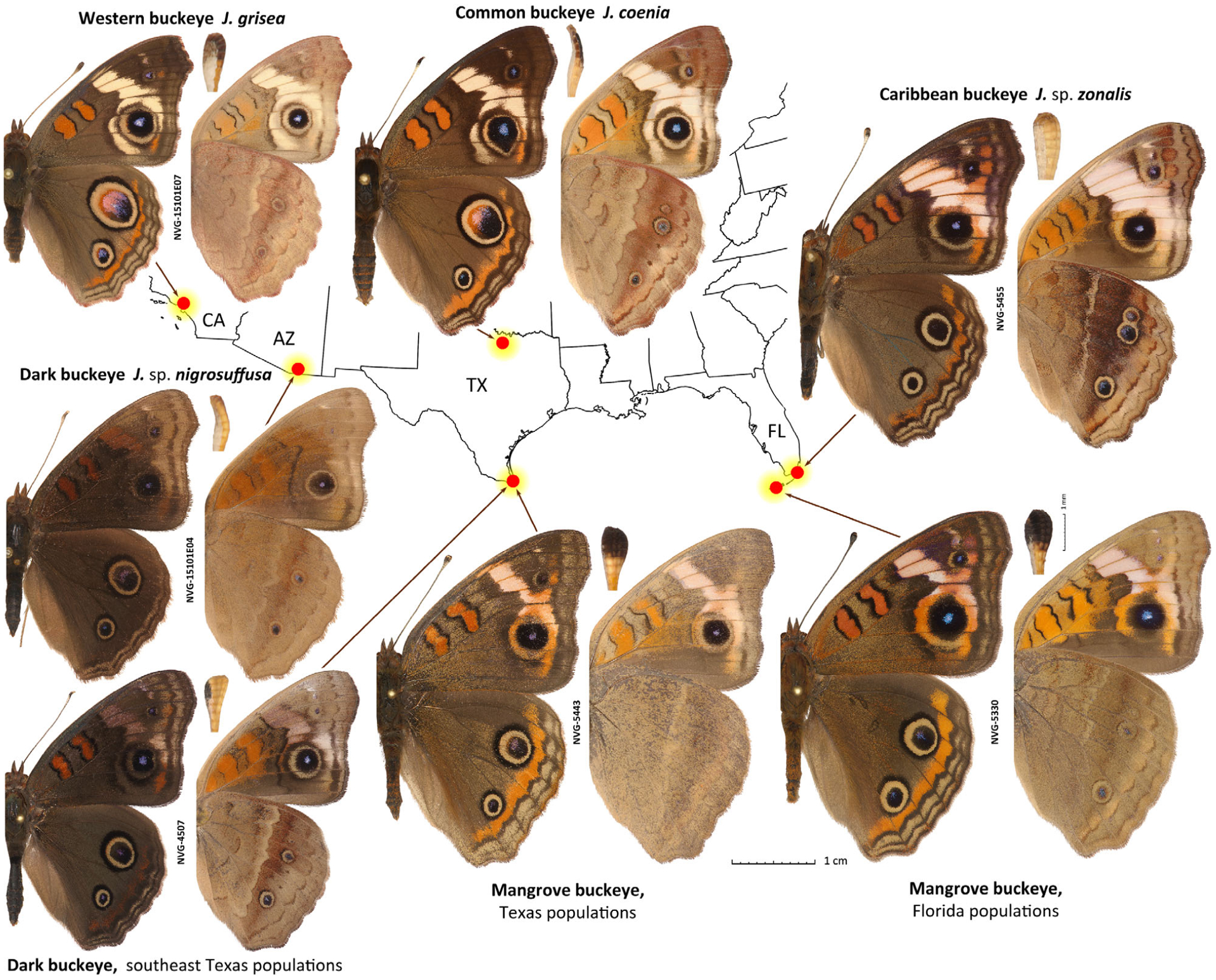
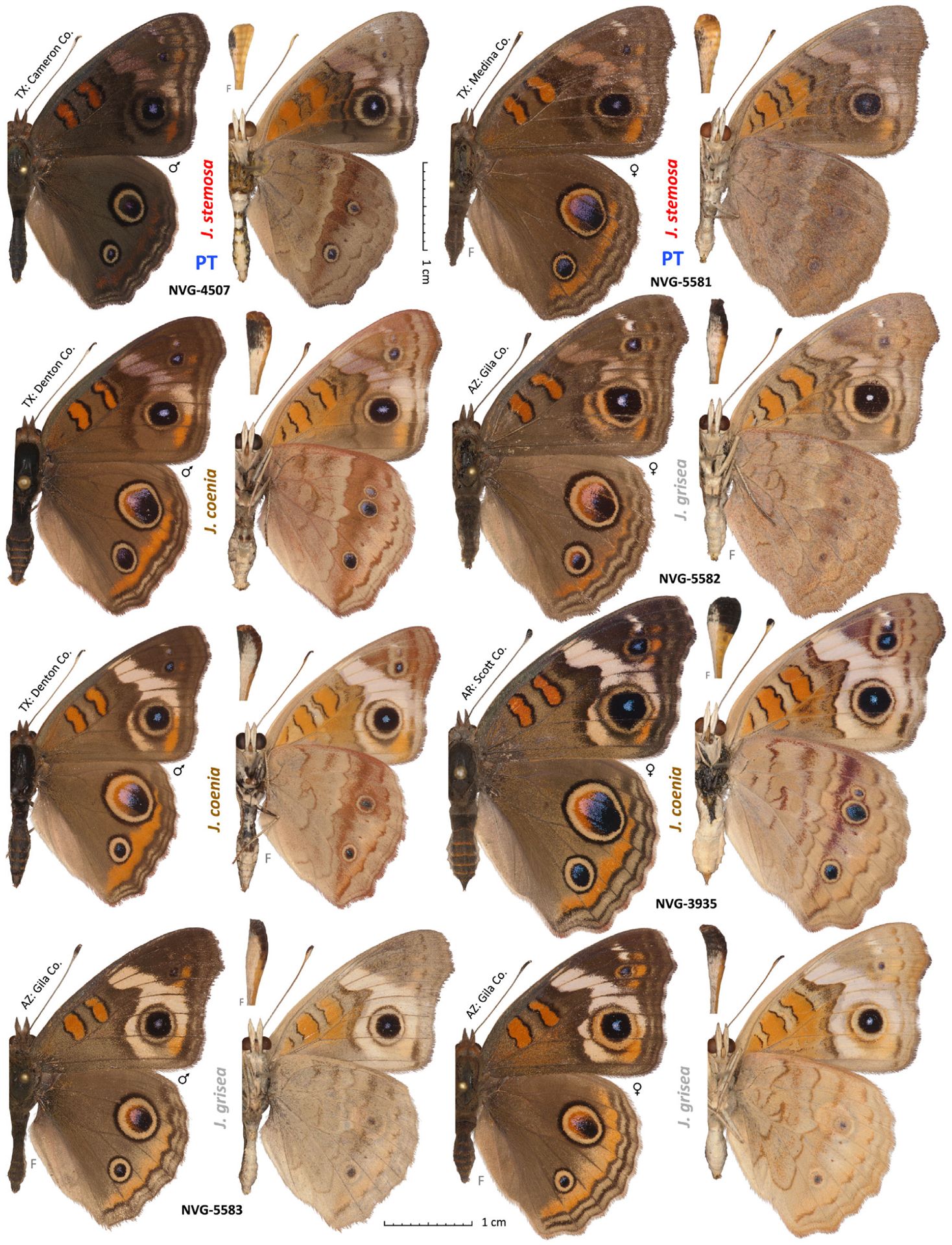
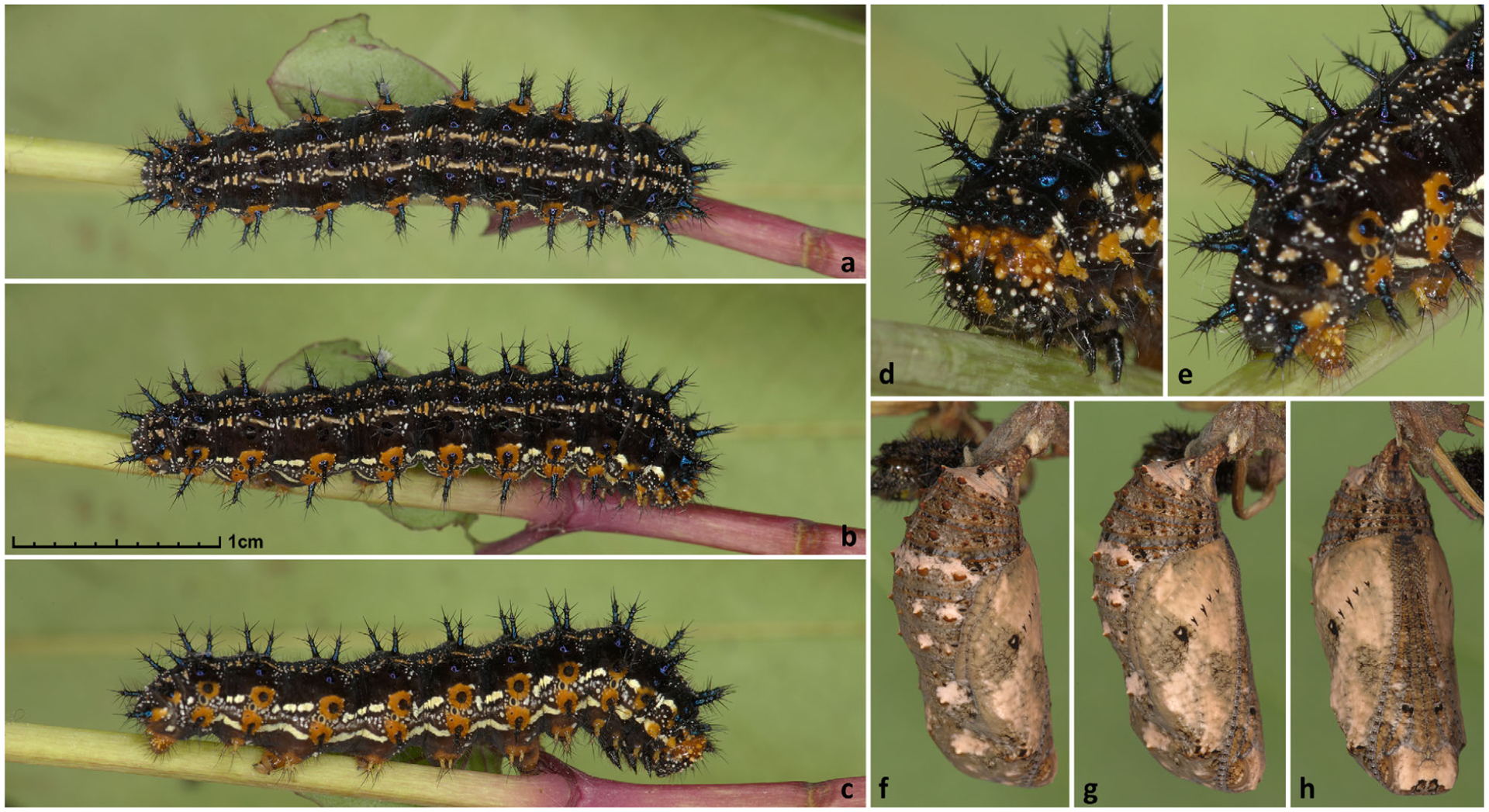
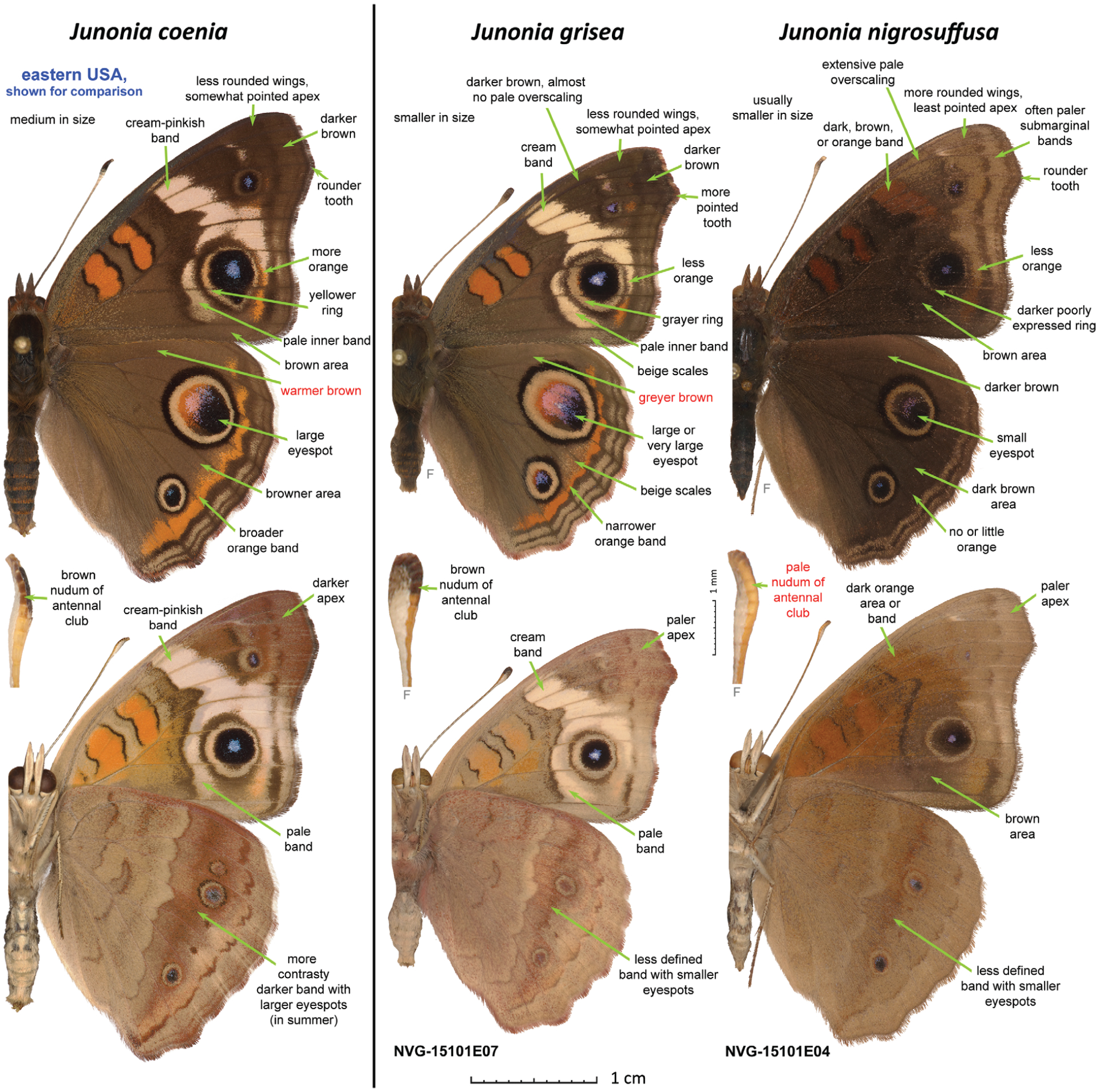
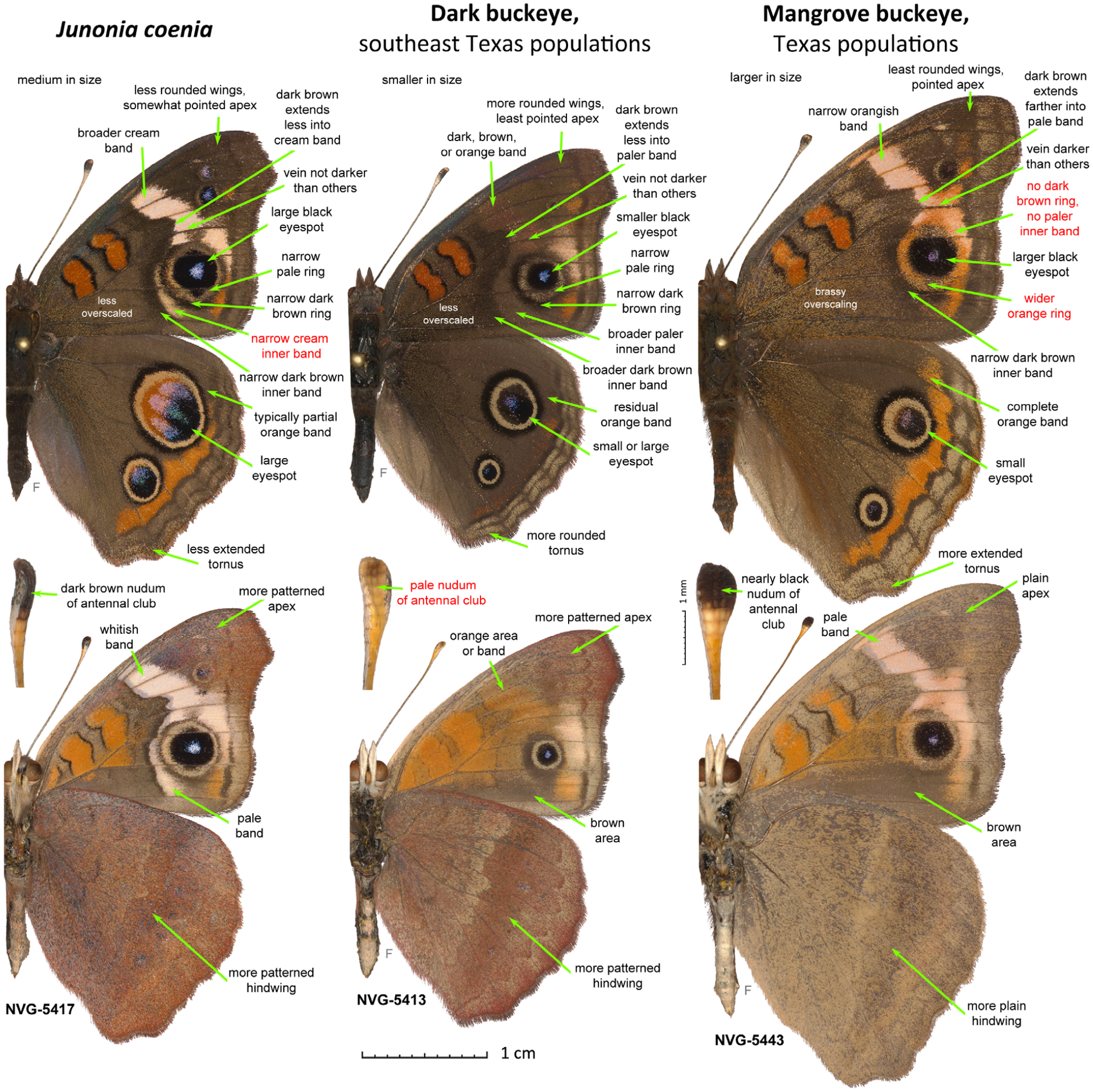
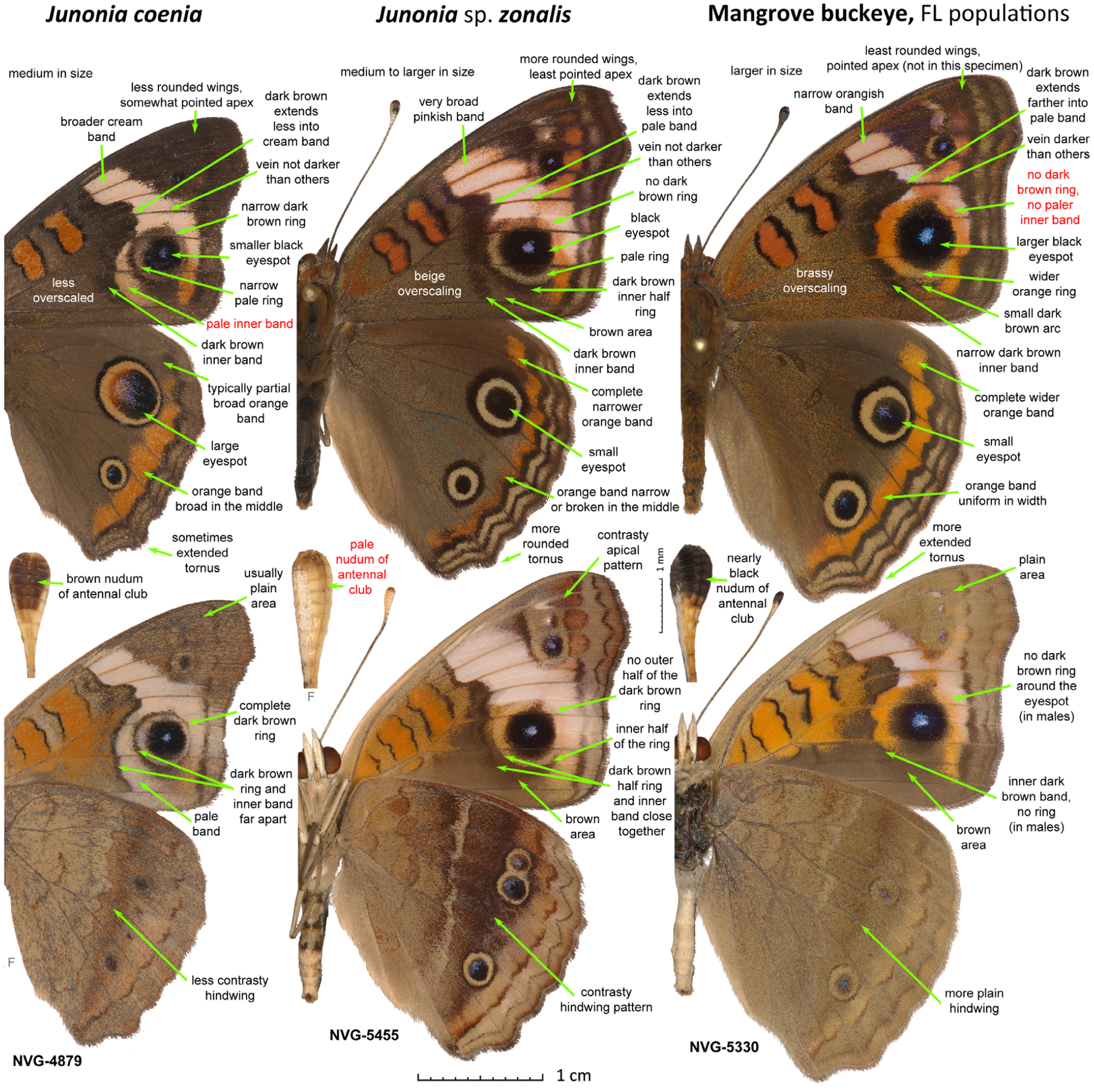
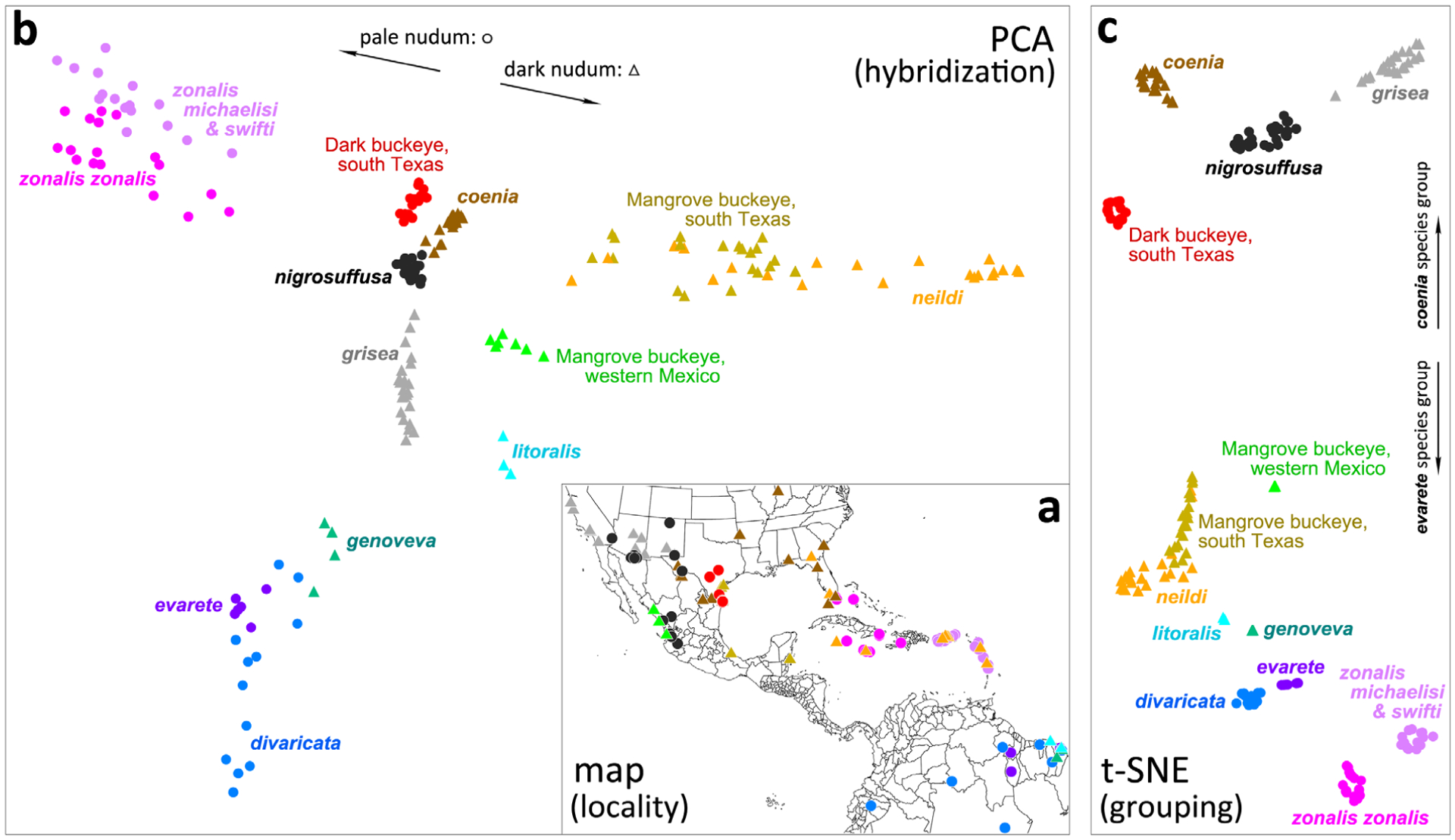
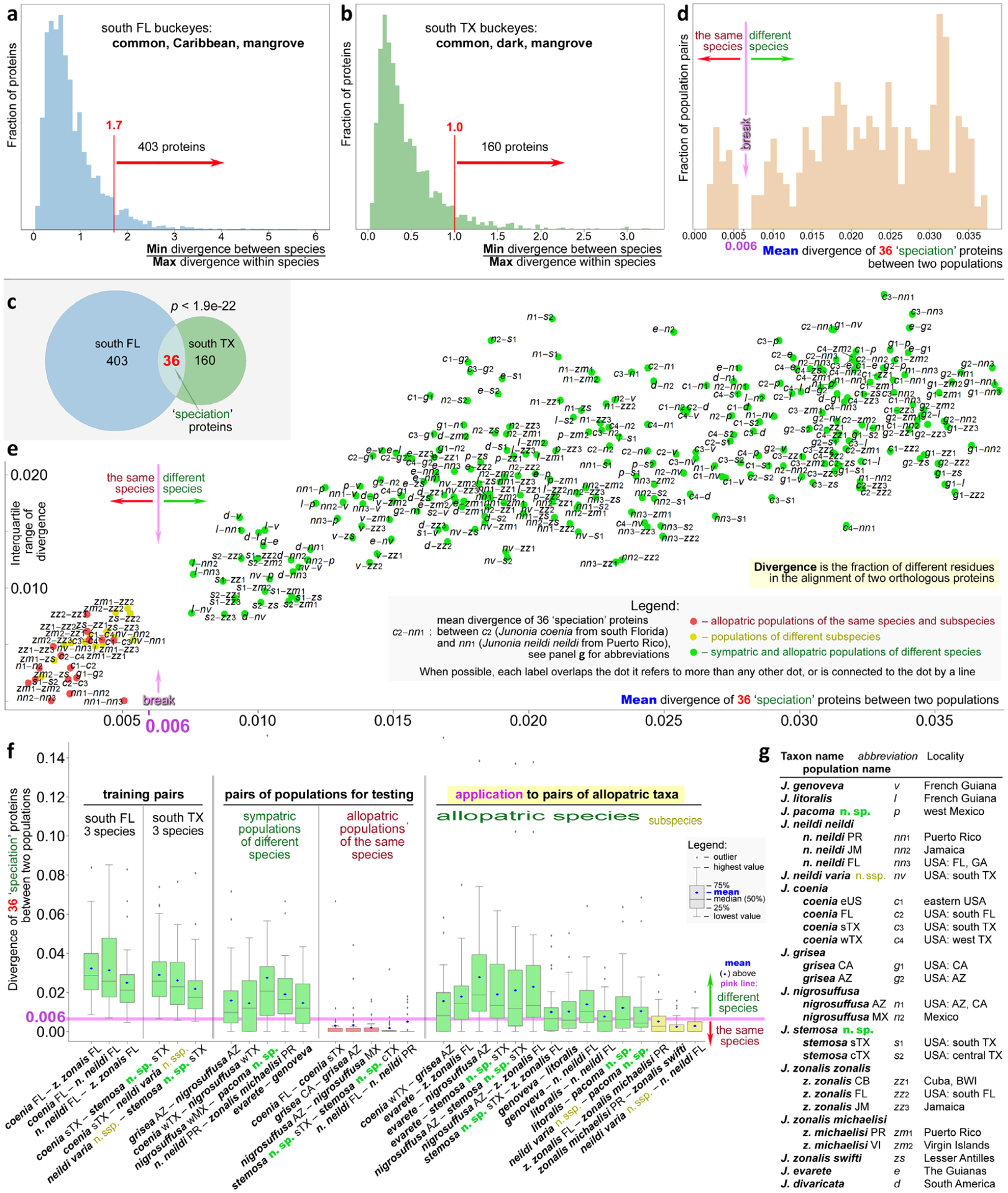
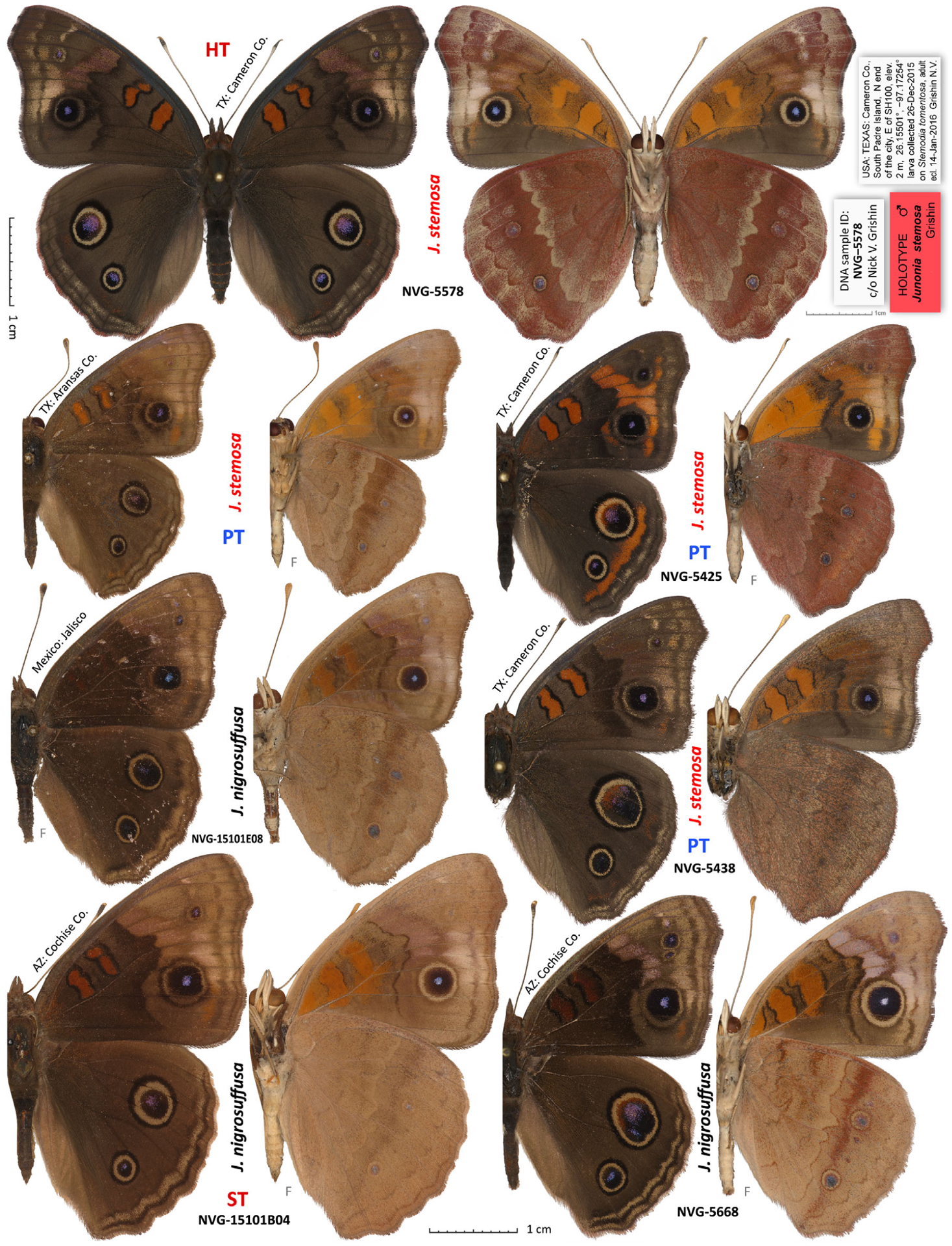
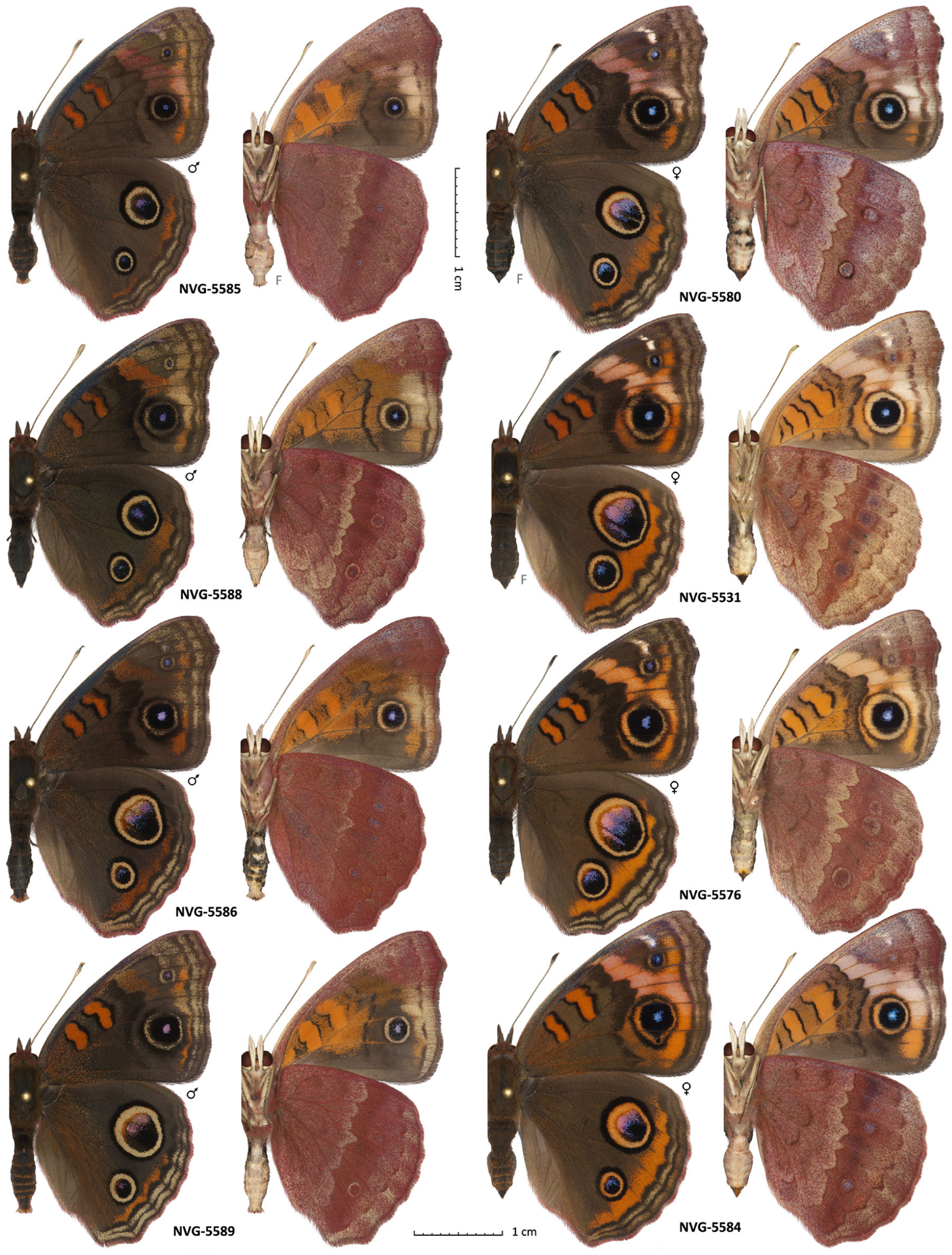
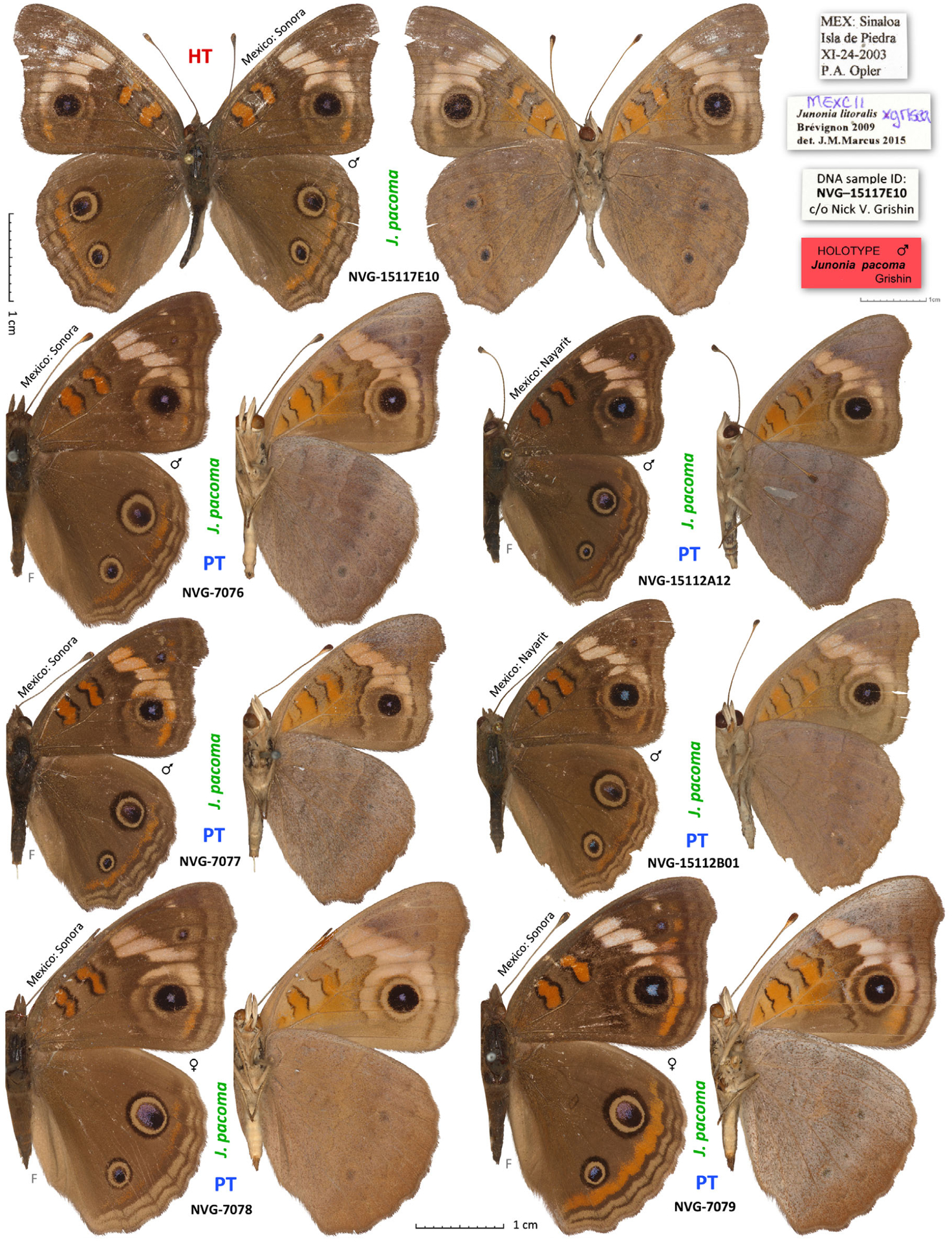
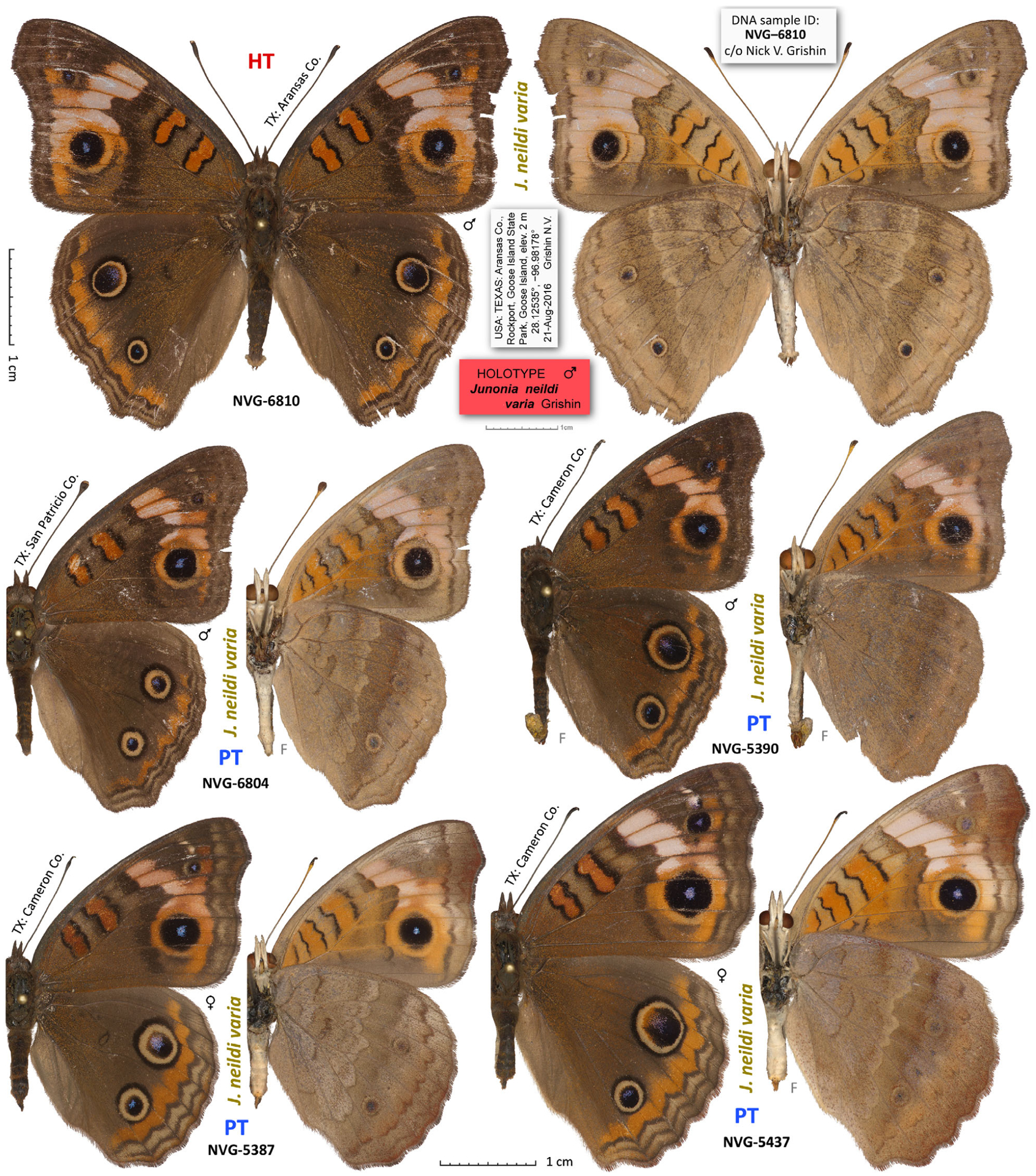
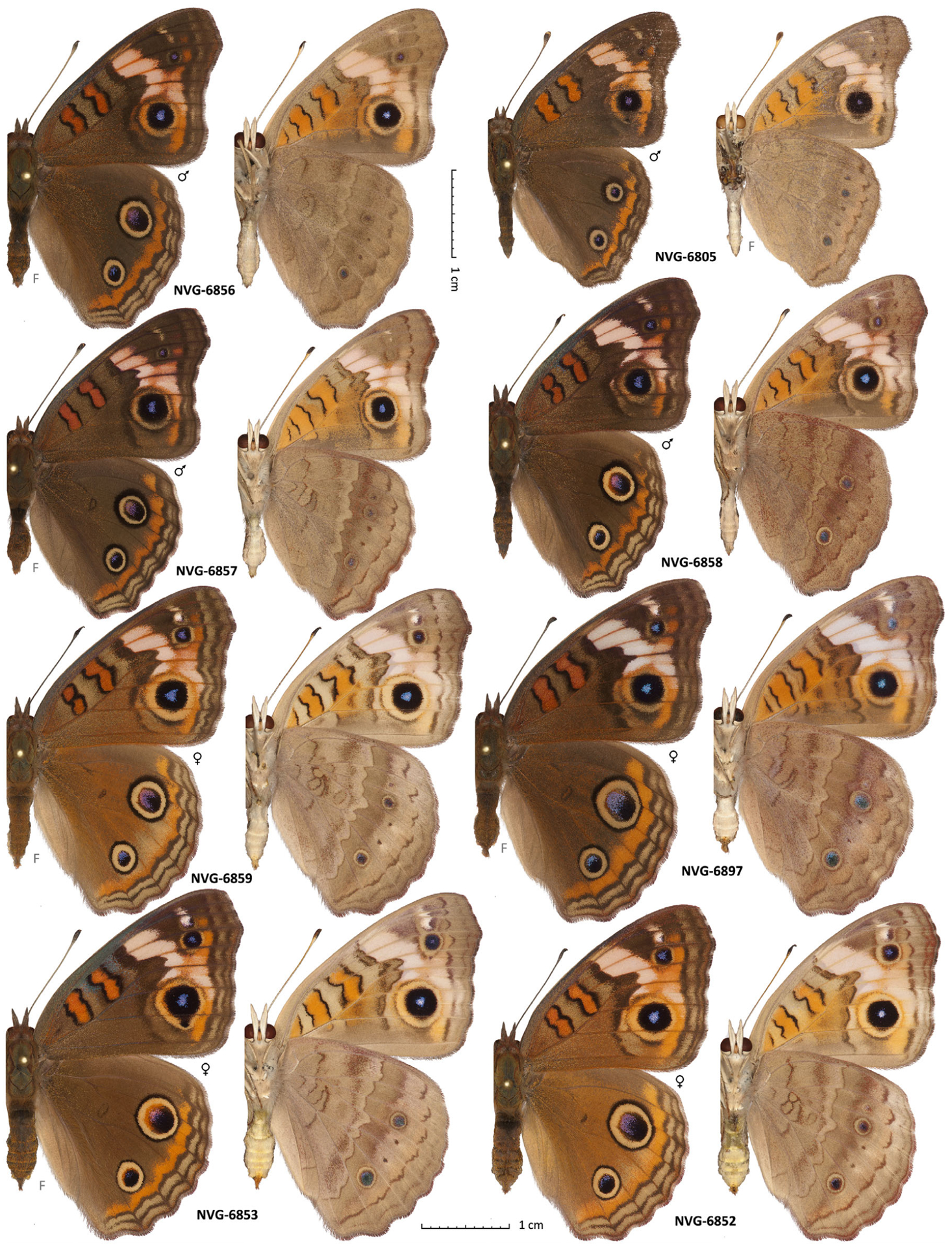
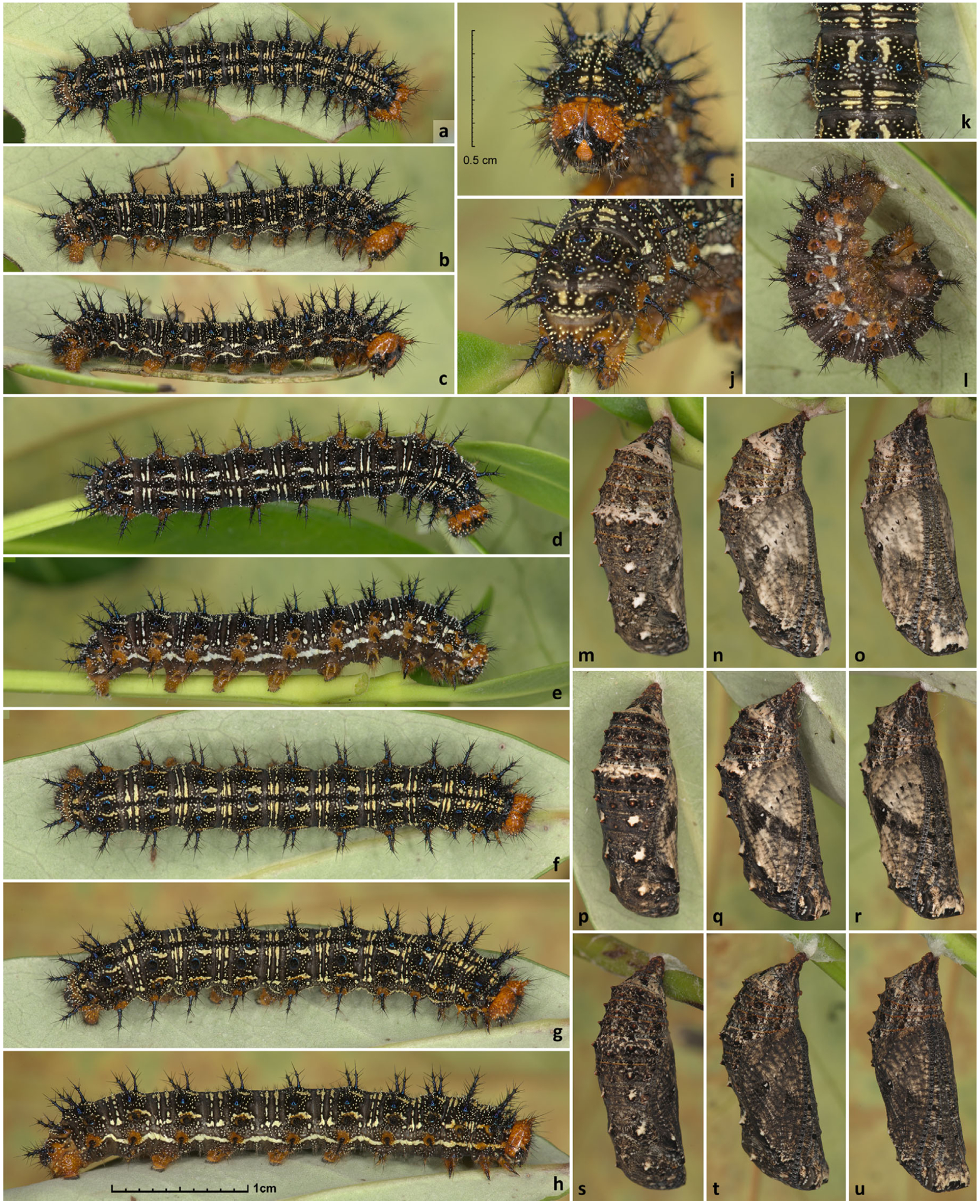
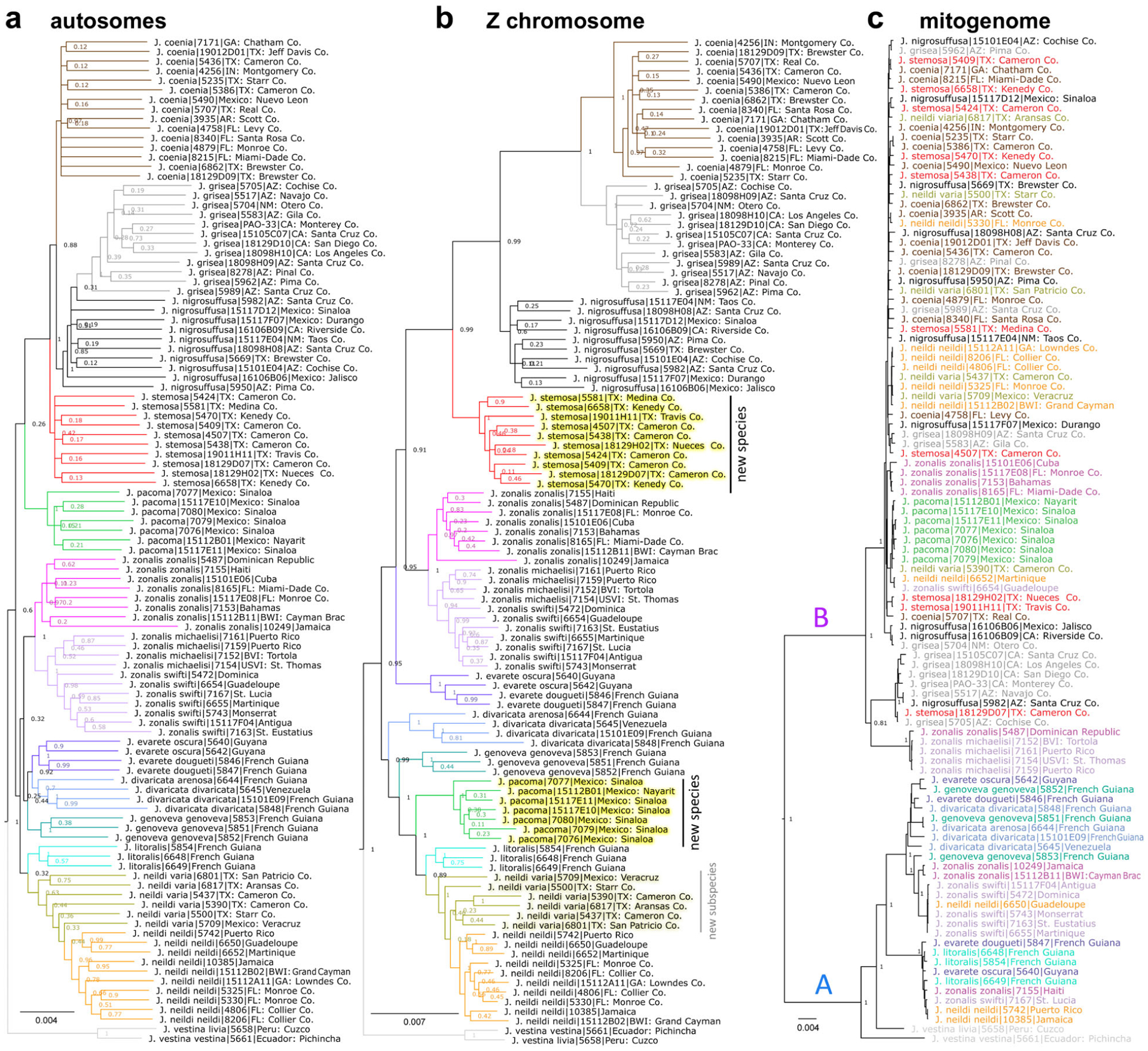
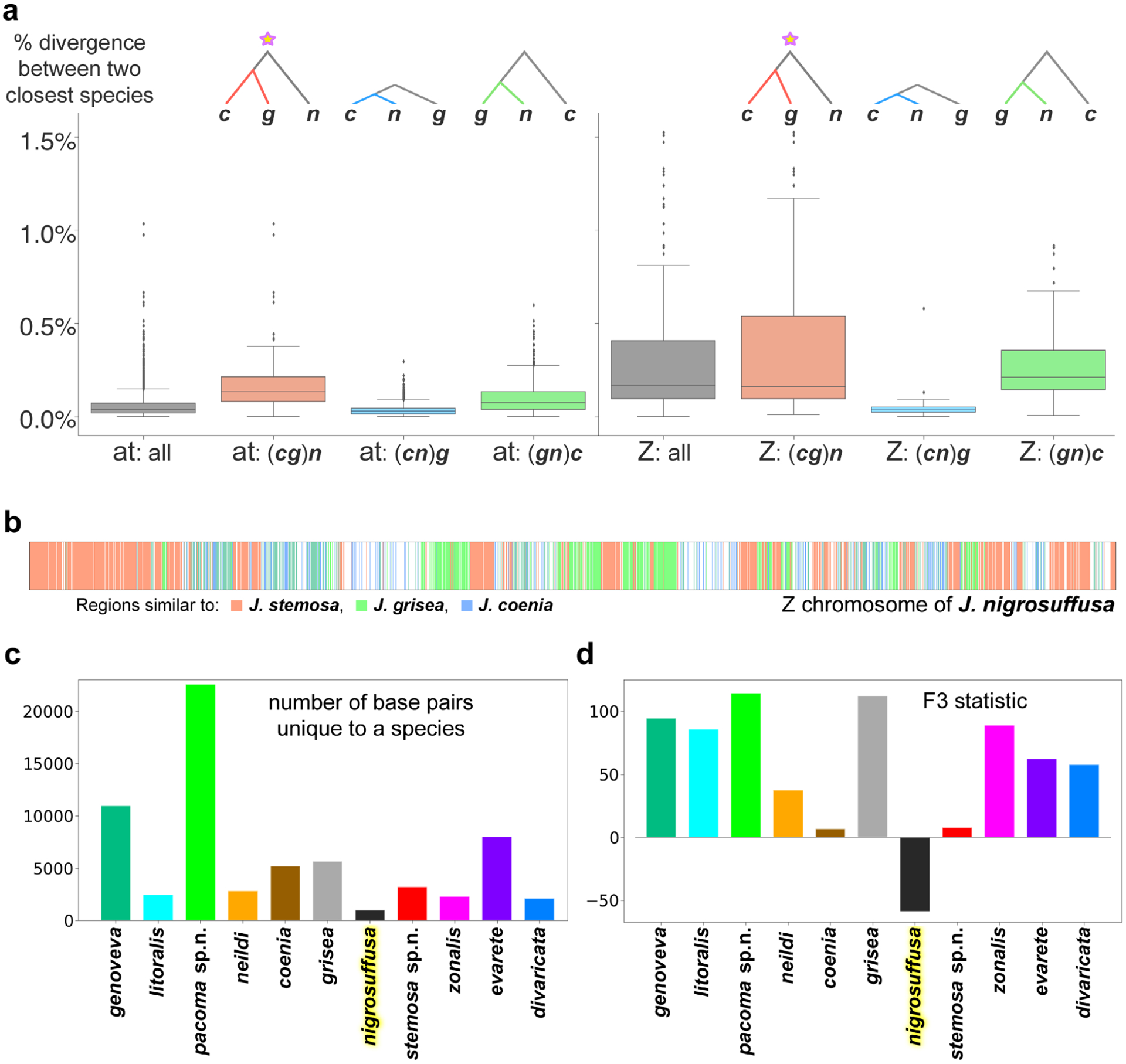
Delineating species boundaries in phylogenetic groups undergoing recent radiation is a daunting challenge akin to discretizing continuity. Here, we propose a general approach exemplified by American butterflies from the genus Hübner notorious for the variety of similar phenotypes, ease of hybridization, and the lack of consensus about their classification. We obtain whole-genome shotgun sequences of about 200 specimens. We reason that discreteness emerges from continuity by means of a small number of key players, and search for the proteins that diverged markedly between sympatric populations of different species, while keeping low polymorphism within these species. Being 0.25% of the total number, these three dozen 'speciation' proteins indeed partition pairs of populations into two clusters with a prominent break in between, while all proteins taken together fail to reveal this discontinuity. Populations with larger divergence from each other, comparable to that between two sympatric species, form the first cluster and correspond to different species. The other cluster is characterized by smaller divergence, similar to that between allopatric populations of the same species and comprise conspecific pairs. Using this method, we conclude that (Cramer), Brévignon, (Cramer), and C. & R. Felder are restricted to South America. We find that six species of are present in the United States, one of which is new: Grishin, (i), found in south Texas and phenotypically closest to W. Barnes & McDunnough (ii) in its dark appearance. In the pale nudum of the antennal club, these two species resemble C. & R. Felder (iii) from Florida and the Caribbean Islands. The pair of sister species, Austin & J. Emmel (iv) and Hübner (v), represent the classic west/east U.S.A. split. The mangrove feeder (as caterpillar), dark nudum Brévignon (vi) enters south Texas as a new subspecies Grishin characterized by more extensive hybridization with and introgression from , and, as a consequence, more variable wing patterns compared with the nominal in Florida. Furthermore, a new mangrove-feeding species from the Pacific Coast of Mexico is described as Grishin Finally, genomic analysis suggests that may be a hybrid species formed by the ancestors of and
在经历近期辐射演化的系统发育类群中划定物种界限是一项艰巨的挑战,类似于将连续性离散化。在此,我们提出一种通用方法,以美洲的赫布纳蝶属蝴蝶为例,该属以其多样的相似表型、易于杂交以及在分类上缺乏共识而闻名。我们获取了约200个标本的全基因组鸟枪法测序数据。我们推断,离散性是通过少数关键因素从连续性中产生的,并寻找在不同物种的同域种群之间有显著差异、而在这些物种内部保持低多态性的蛋白质。这三打“物种形成”蛋白质占总数的0.25%,确实将种群对分成两个簇,中间有明显的间断,而所有蛋白质合在一起则无法揭示这种不连续性。彼此差异较大的种群,类似于两个同域物种之间的差异,形成第一个簇,对应于不同的物种。另一个簇的特征是差异较小,类似于同一物种的异域种群之间的差异,包含同种的配对。使用这种方法,我们得出结论,(克莱默)、布雷维尼奥、(克莱默)以及C. & R. 费尔德仅限于南美洲。我们发现美国有六种赫布纳蝶,其中一种是新物种:格里申,(一),发现于得克萨斯州南部,其深色外观在表型上最接近W. 巴恩斯 & 麦克多诺(二)。在触角棒的浅色裸节上,这两个物种类似于来自佛罗里达州和加勒比群岛的C. & R. 费尔德(三)。姐妹物种对,奥斯汀 & J. 埃梅尔(四)和赫布纳(五),代表了美国经典的西部/东部划分。红树林食者(作为毛虫),深色裸节布雷维尼奥(六)作为一个新亚种进入得克萨斯州南部,即格里申,其特征是与(另一物种)有更广泛的杂交和基因渗入,因此与佛罗里达州的指名亚种相比,翅型更具变异性。此外,一种来自墨西哥太平洋海岸的以红树林为食的新物种被描述为格里申。最后,基因组分析表明,(某物种)可能是由(另外两个物种)的祖先形成的杂交物种。