Wang Xinxin, Zhou Quanfu, Zhang Mingjuan, Zhang Qinghai
Department of Landscape Architecture, College of Horticulture, Post-doctoral Research Station in Public Administration, Nanjing Agricultural University, Nanjing, China.
Department of Sports, Nanjing Agricultural University, Nanjing, China.
Front Psychol. 2021 Oct 22;12:728826. doi: 10.3389/fpsyg.2021.728826. eCollection 2021.
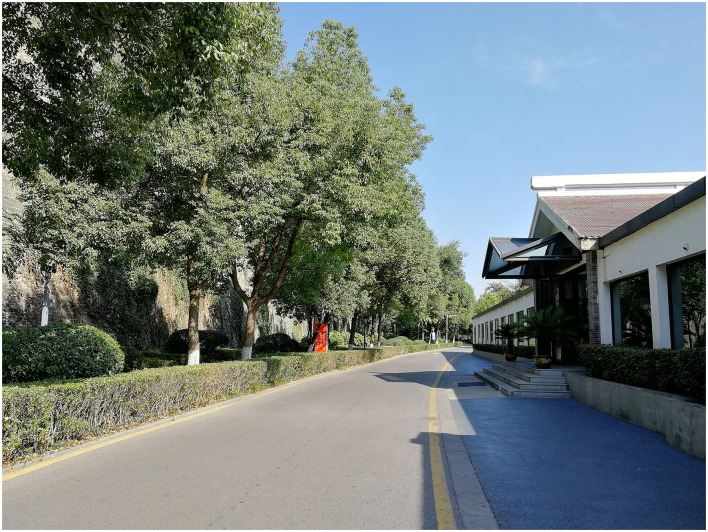
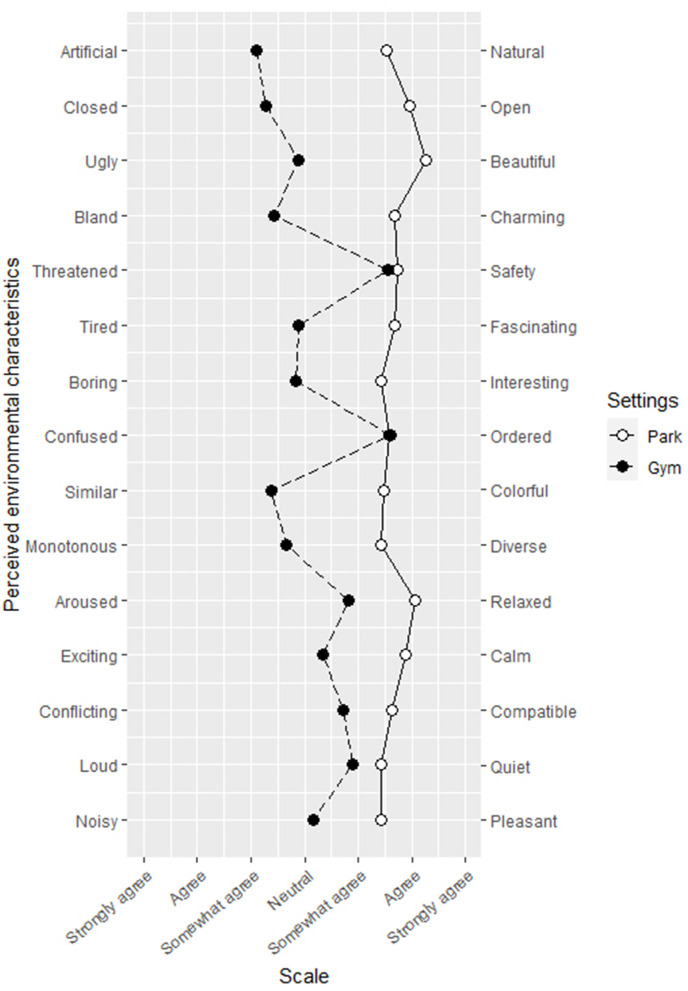
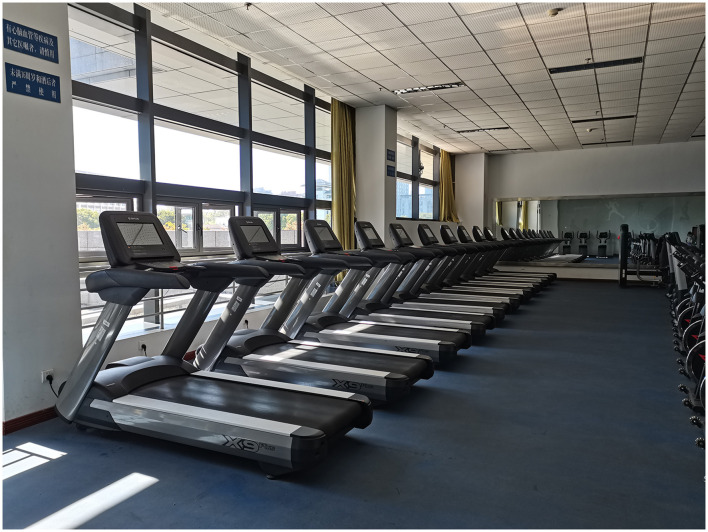
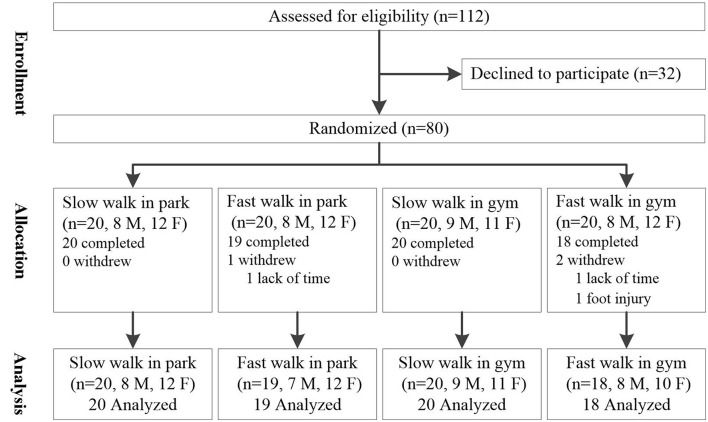
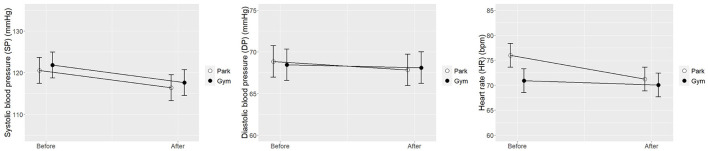
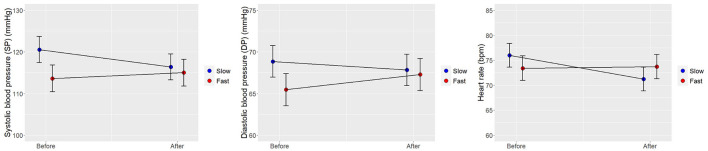
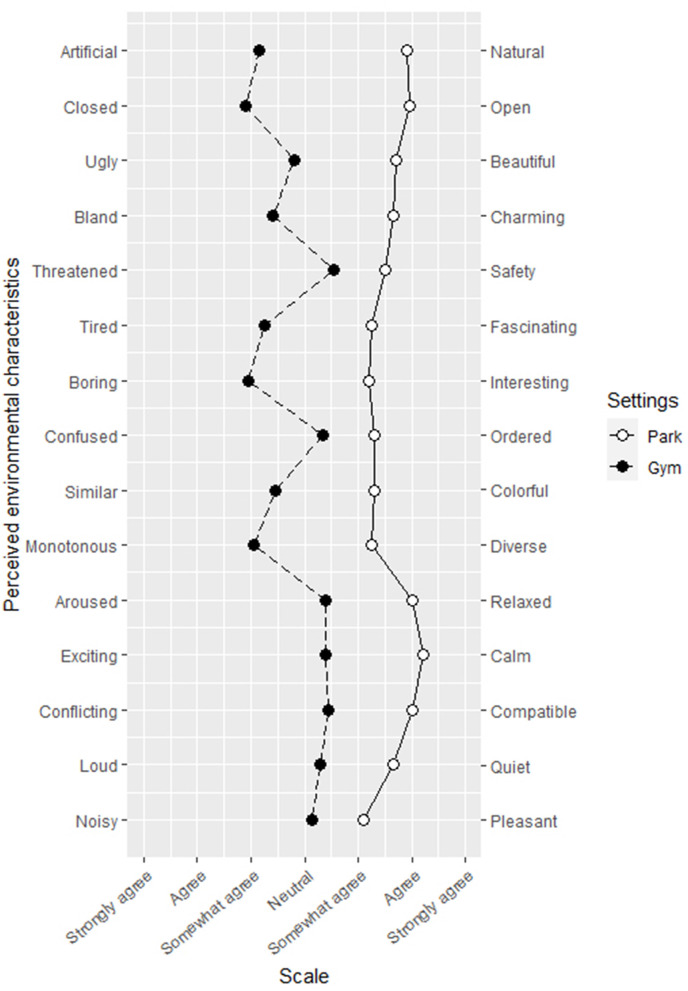
Evidence shows that physical activity has multiple health benefits for the body and mind of oneself, but little is known about the impacts of the setting and the intensity on exercise experience, especially for obese people. This study investigated the physiological and psychological effects of four walking conditions with different settings (park vs. gym) and intensity (slow vs. fast) on young obese adults. Subjects were 18-21 years old Chinese university students ( = 77), who were diagnosed as obese. They were randomly assigned to participate in one of the four activities in the field: slow walk in the park (2.8 km/h), fast walk in the park (5.5 km/h), slow walk in the gym, and fast walk in the gym. Physiological indices, including blood pressure and heart rate, were measured before and after the walk. Psychological responses were measured by the Symbol Digit Modalities Test, the mood states scale, and the semantic differential scale. This study of obese people aged 18-21 years confirmed the previous findings that exercising in natural environments better relieved stress and restored attentional level than indoor activities. The results suggested that the mood states of the participants and their environmental perceptions may be influenced by the walking conditions with different setting and speed. The findings can be used in planning and designing urban green spaces for promoting physical activity and making exercise plans for obese people.
有证据表明,体育活动对个人的身心健康有多重益处,但对于环境和强度对运动体验的影响却知之甚少,尤其是对肥胖者而言。本研究调查了四种不同环境(公园与健身房)和强度(慢走与快走)的步行条件对年轻肥胖成年人的生理和心理影响。受试者为18至21岁被诊断为肥胖的中国大学生(n = 77)。他们被随机分配参加以下四项实地活动之一:在公园慢走(2.8公里/小时)、在公园快走(5.5公里/小时)、在健身房慢走以及在健身房快走。在步行前后测量生理指标,包括血压和心率。通过符号数字模态测试、情绪状态量表和语义差异量表来测量心理反应。这项针对18至21岁肥胖者的研究证实了先前的研究结果,即在自然环境中锻炼比室内活动能更好地缓解压力并恢复注意力水平。结果表明,参与者的情绪状态及其对环境的感知可能会受到不同环境和速度的步行条件的影响。这些研究结果可用于规划和设计城市绿地,以促进体育活动并为肥胖者制定锻炼计划。