Lim Junsub, Lim Chae Woo, Lee Sung Chul
Department of Life Science (BK21 Program), Chung-Ang University, Seoul, South Korea.
Front Plant Sci. 2021 Oct 20;12:736421. doi: 10.3389/fpls.2021.736421. eCollection 2021.
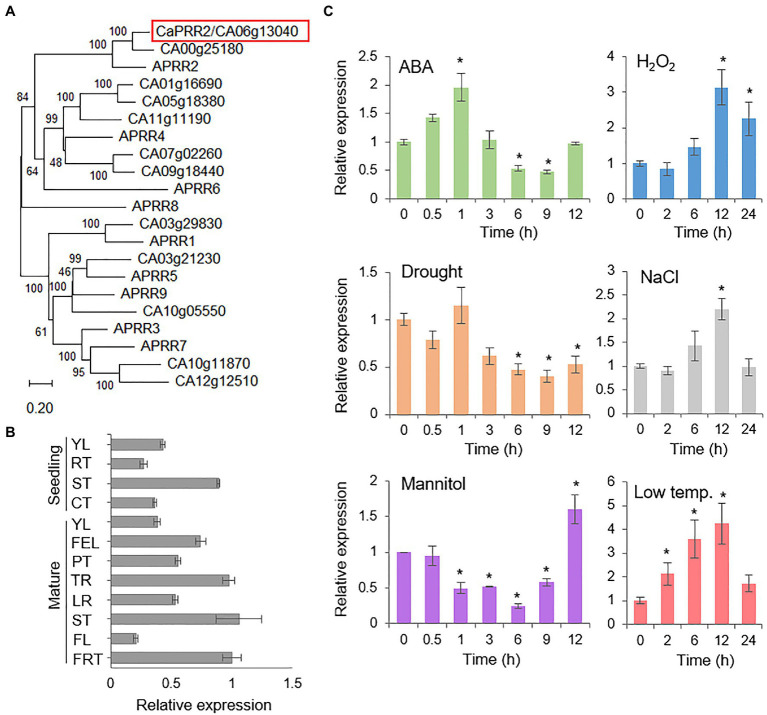
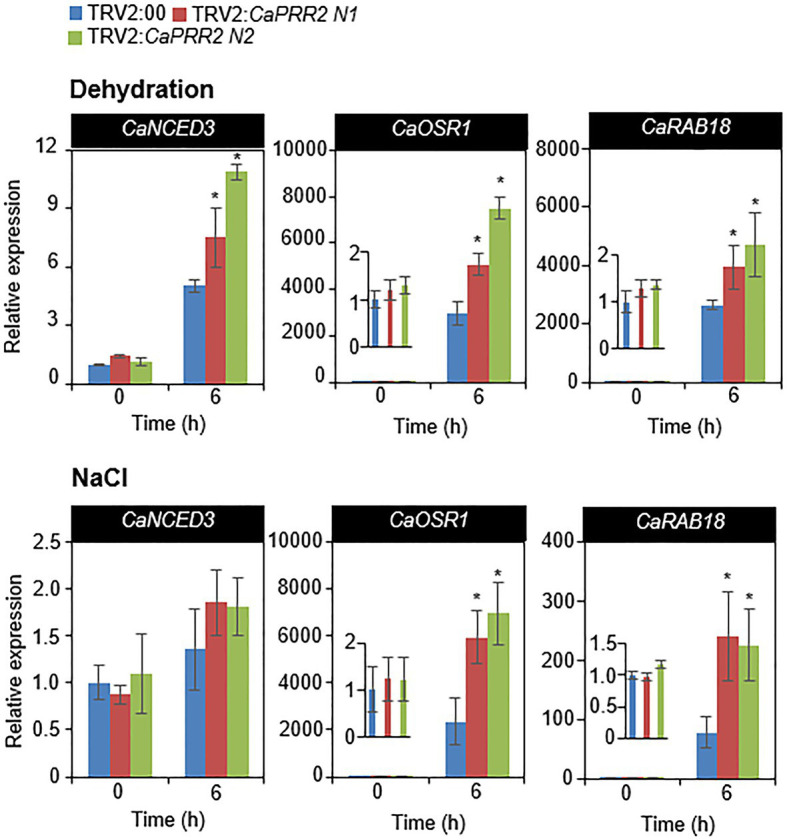
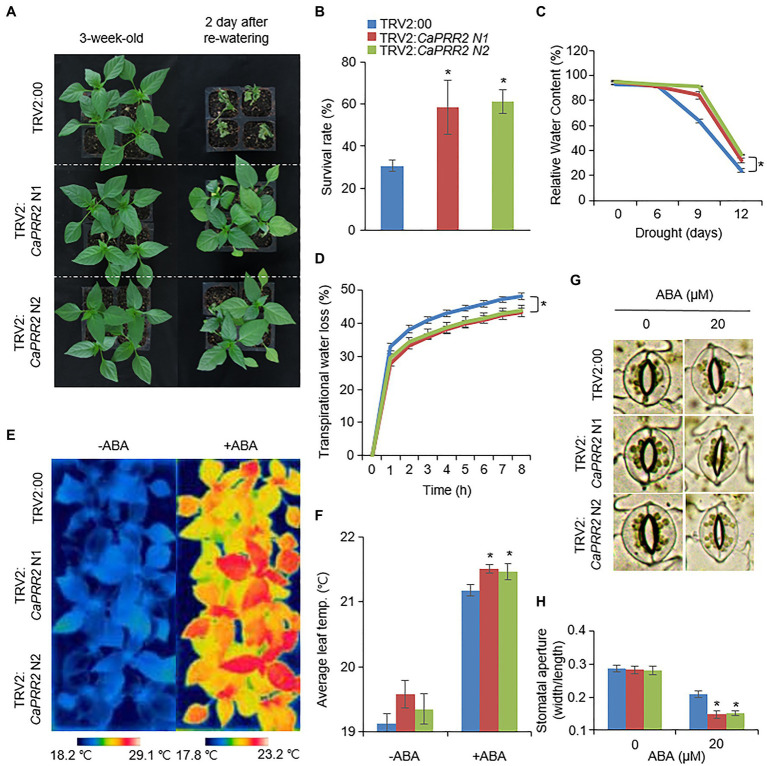
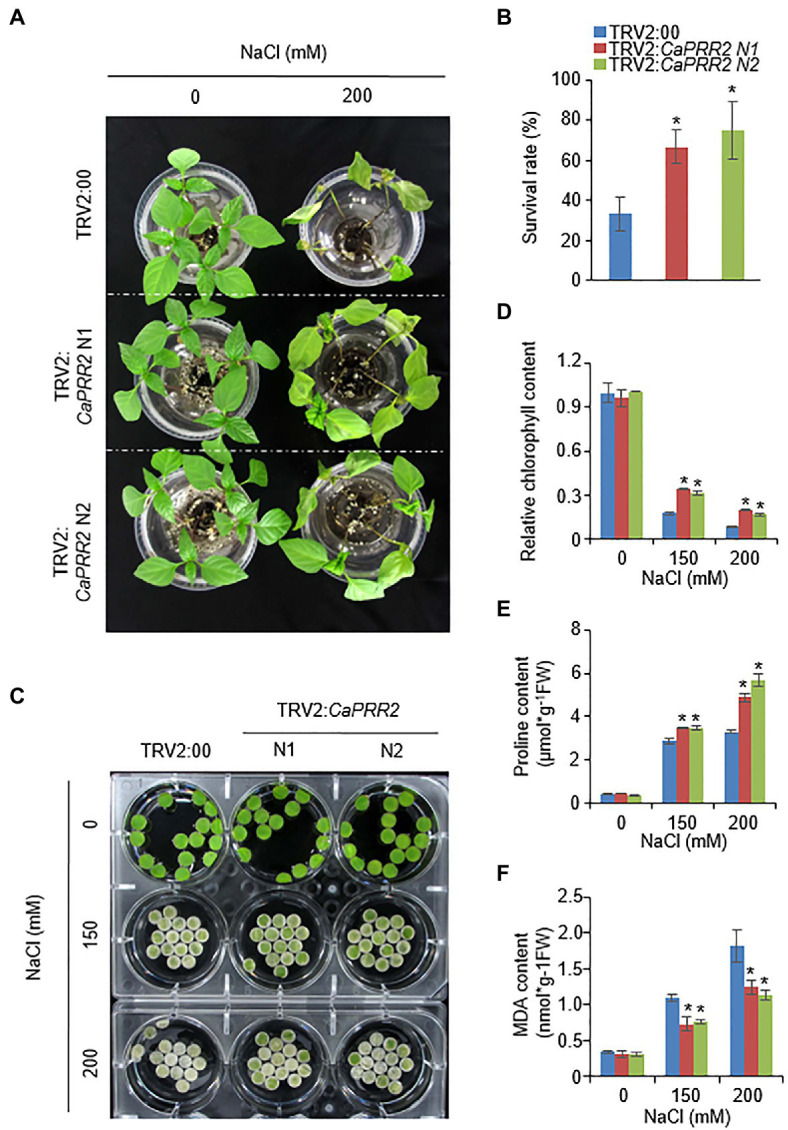
Plants modify their internal states to adapt to environmental stresses. Under environmental stress conditions, plants restrict their growth and development and activate defense responses. Abscisic acid (ABA) is a major phytohormone that plays a crucial role in the osmotic stress response. In osmotic stress adaptation, plants regulate stomatal closure, osmoprotectant production, and gene expression. Here, we isolated - encoding a pseudo response regulator protein - from the leaves of pepper plants (). After exposure to ABA and environmental stresses, such as drought and salt stresses, expression in pepper leaves was significantly altered. Under drought and salt stress conditions, -silenced pepper plants exhibited enhanced osmotic stress tolerance, characterized by an enhanced ABA-induced stomatal closing and high MDA and proline contents, compared to the control pepper plants. Taken together, our data indicate that CaPRR2 negatively regulates osmotic stress tolerance.
植物会改变其内部状态以适应环境胁迫。在环境胁迫条件下,植物会限制其生长和发育并激活防御反应。脱落酸(ABA)是一种主要的植物激素,在渗透胁迫反应中起关键作用。在渗透胁迫适应过程中,植物会调节气孔关闭、渗透保护剂的产生以及基因表达。在此,我们从辣椒植株()的叶片中分离出了编码一种假反应调节蛋白的 。在暴露于ABA和干旱、盐胁迫等环境胁迫后,辣椒叶片中的 表达发生了显著变化。与对照辣椒植株相比,在干旱和盐胁迫条件下, 沉默的辣椒植株表现出增强的渗透胁迫耐受性,其特征为ABA诱导的气孔关闭增强以及丙二醛(MDA)和脯氨酸含量较高。综上所述,我们的数据表明CaPRR2负向调节渗透胁迫耐受性。