Laboratory of Experimental Psychiatry, Instituto Nacional de Neurología y Neurocirugía, Mexico City, Mexico.
Integrated Program in Neuroscience, McGill University, Montreal, QC, Canada; Computational Brain Anatomy (CoBrA) Lab, Cerebral Imaging Centre, Douglas Research Centre, Montreal, QC, Canada.
Prog Neuropsychopharmacol Biol Psychiatry. 2022 Mar 8;113:110473. doi: 10.1016/j.pnpbp.2021.110473. Epub 2021 Nov 6.
Recent studies have observed that patients with treatment-resistant schizophrenia as well as patients with schizophrenia who do not respond within a medication trial exhibit excess activity of the glutamate system. In this study we sought to replicate the within-trial glutamate abnormality and to investigate the potential for structural differences and treatment-induced changes to improve identification of medication responders and non-responders.
We enrolled 48 medication-naïve patients in a 4-week trial of risperidone and classified them retrospectively into responders and non-responders using clinical criteria. Proton magnetic resonance spectroscopy and T-weighted structural MRI were acquired pre- and post-treatment to quantify striatal glutamate levels and several measures of subcortical brain structure.
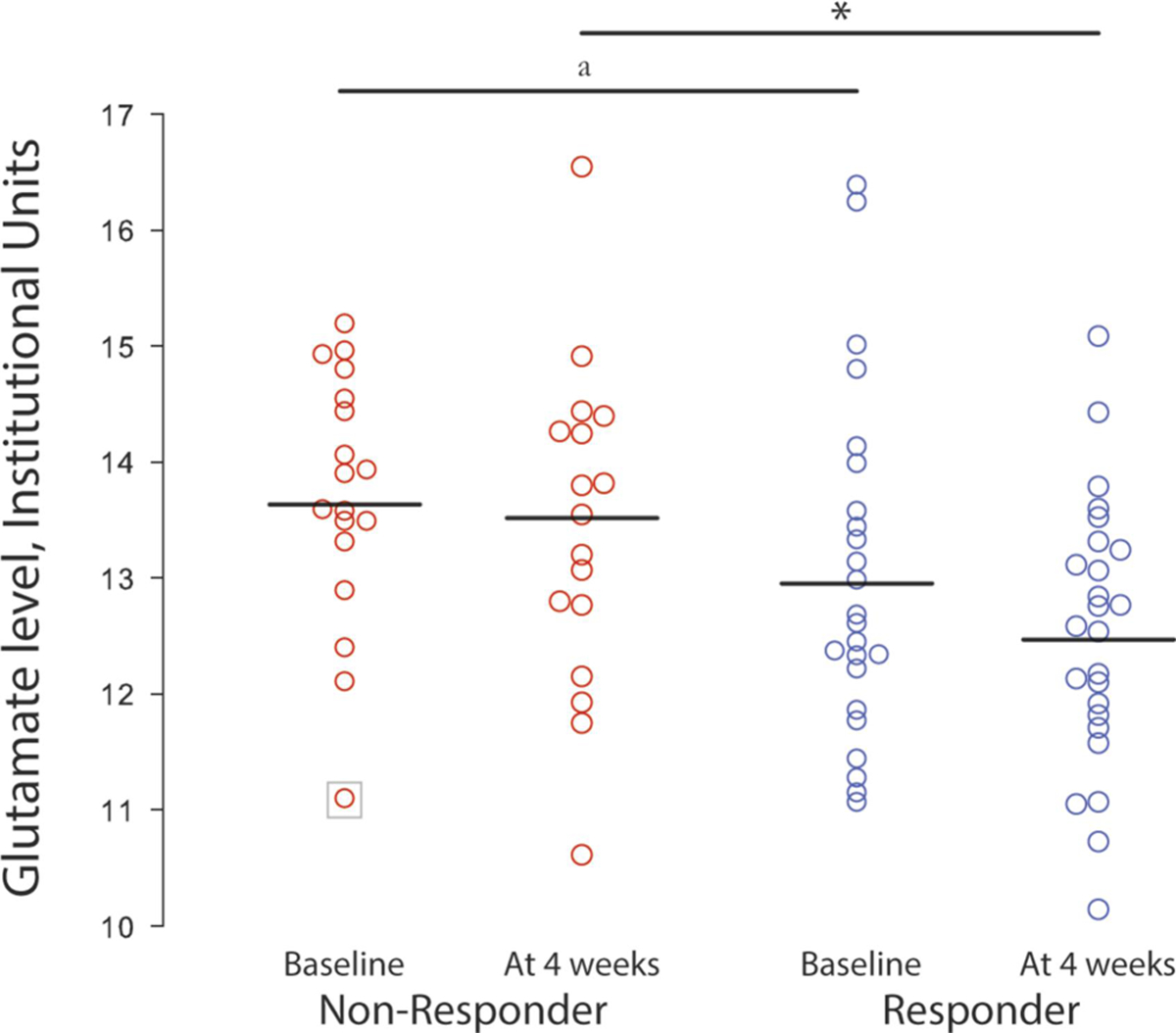
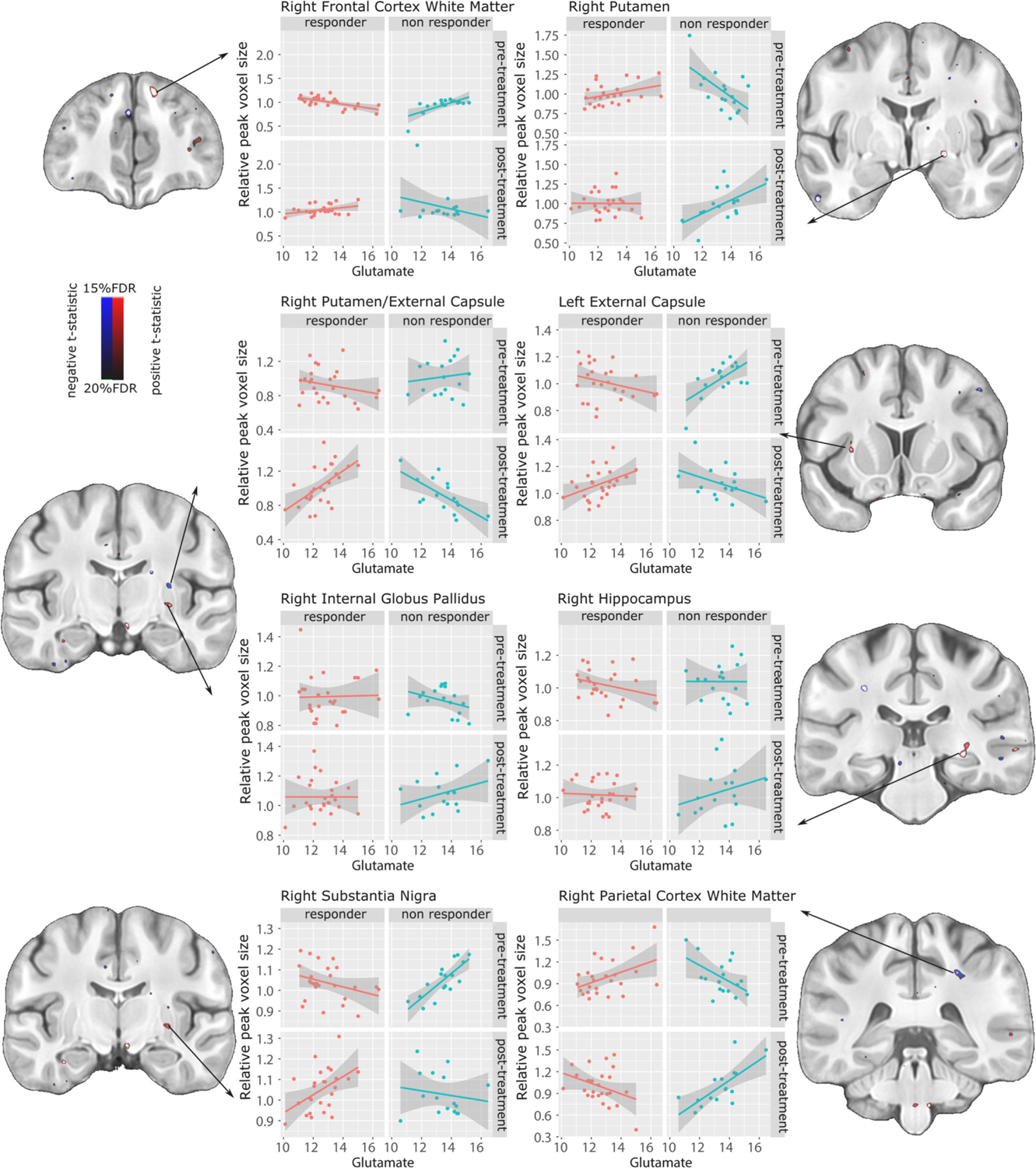
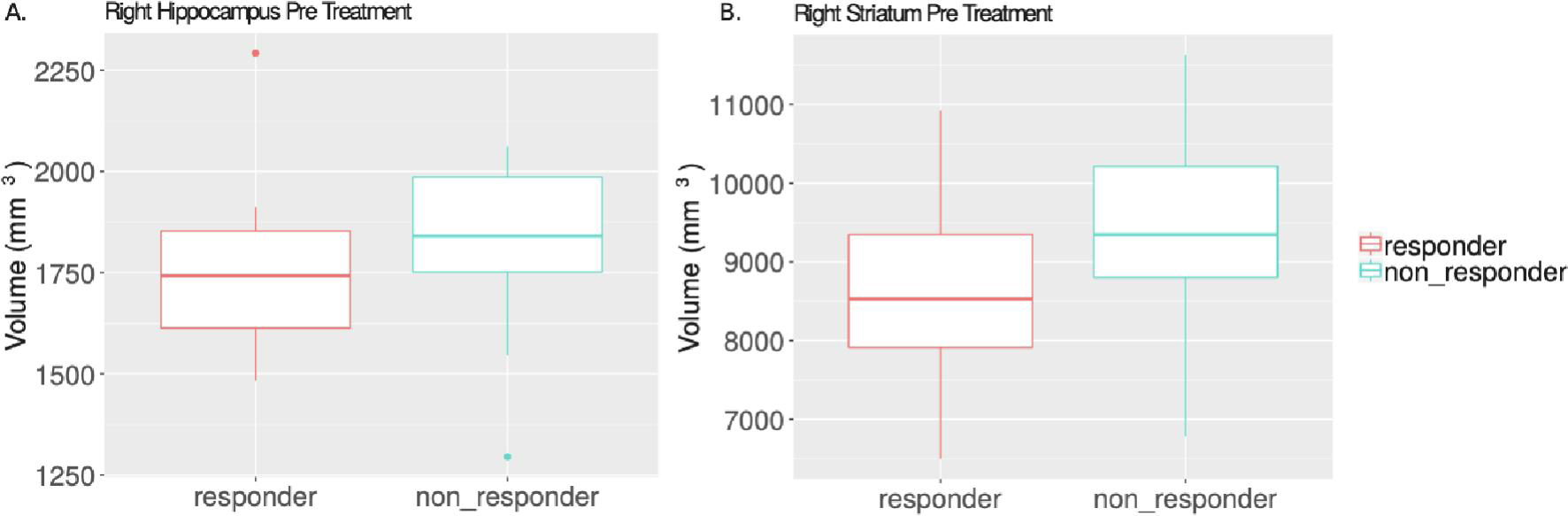
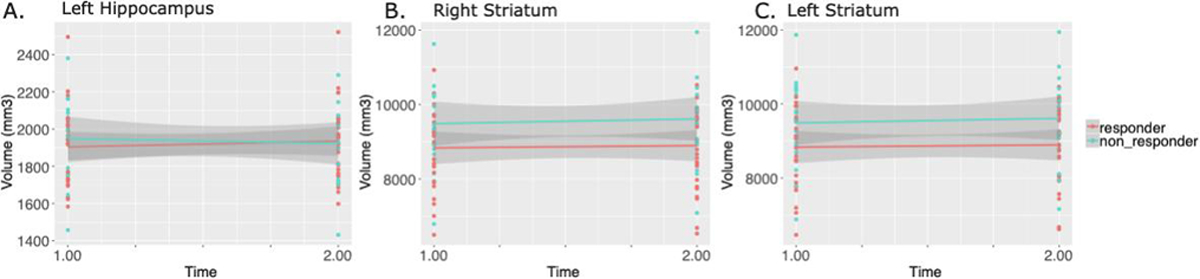
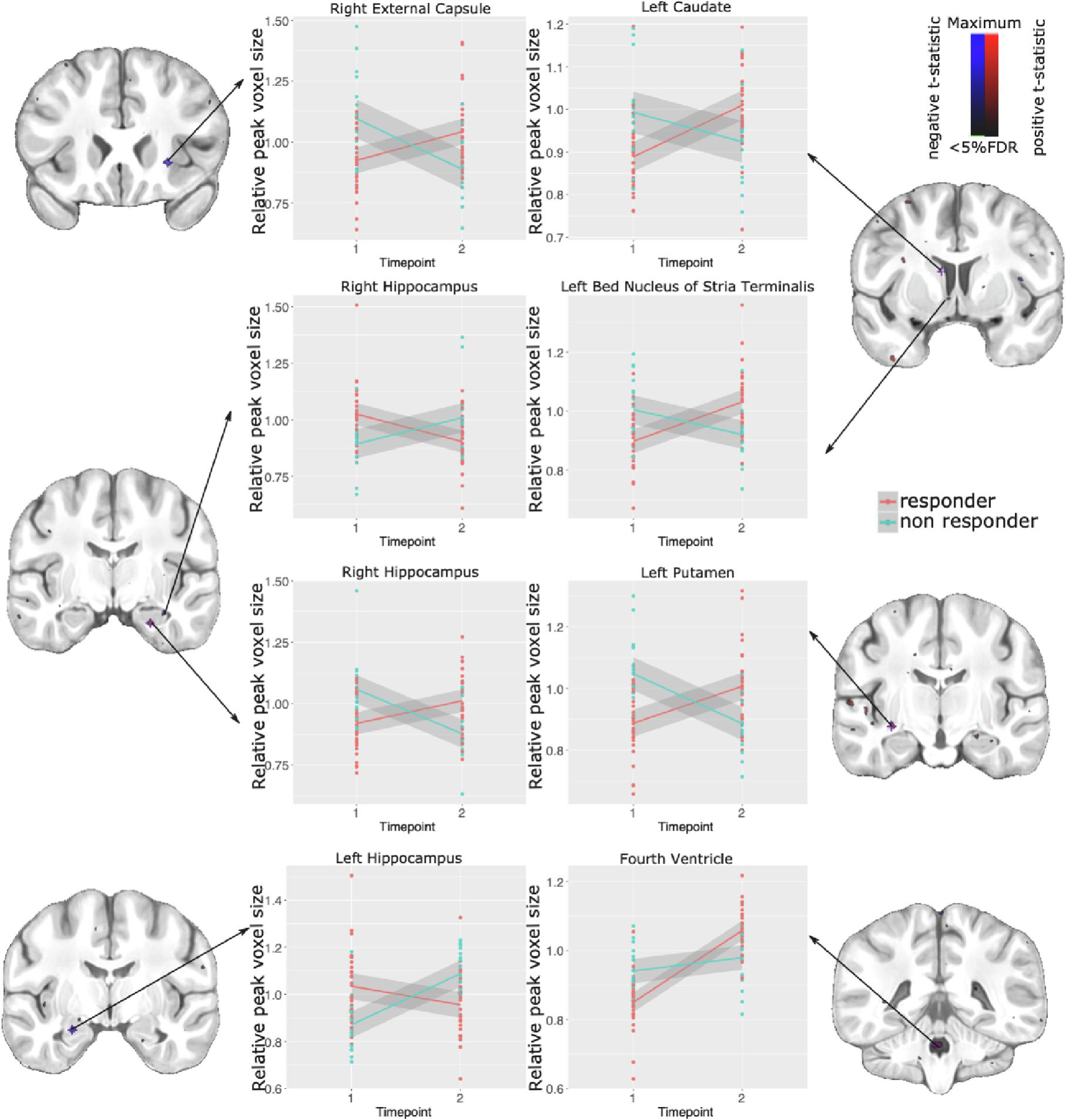
Patients were classified as 29 responders and 19 non-responders. Striatal glutamate was higher in the non-responders than responders both pre- and post-treatment (F = 7.15, p = .01). Volumetric measures showed a significant group x time interaction (t = 5.163, <1%FDR), and group x time x glutamate interaction (t = 4.23, <15%FDR) were seen in several brain regions. Striatal volumes increased at trend level with treatment in both groups, and a positive association of striatal volumes with glutamate levels was seen in the non-responders.
Combining anatomic measures with glutamate levels offers the potential to enhance classification of responders and non-responders to antipsychotic medications as well as to provide mechanistic understanding of the interplay between neuroanatomical and neurochemical changes induced by these medications. Ethical statement The study was approved by the Ethics and Scientific committees of the Instituto Nacional de Neurología y Neurocirugía in Mexico City. All participants over 18 years fully understood and signed the informed consent; in case the patient was under 18 years, informed consent was obtained from both parents. Participants did not receive a stipend.
最近的研究表明,治疗抵抗性精神分裂症患者以及在药物试验中无反应的精神分裂症患者的谷氨酸系统活性过高。在这项研究中,我们试图复制试验内的谷氨酸异常,并研究结构差异和治疗诱导的变化是否有可能改善对药物反应者和无反应者的识别。
我们招募了 48 名未经药物治疗的精神分裂症患者,进行为期 4 周的利培酮试验,并根据临床标准将他们回顾性地分为反应者和无反应者。在治疗前后采集质子磁共振波谱和 T1 加权结构磁共振成像,以定量纹状体谷氨酸水平和几种皮质下脑结构的测量值。
患者被分为 29 名反应者和 19 名无反应者。无反应者的纹状体谷氨酸水平在治疗前后均高于反应者(F=7.15,p=0.01)。体积测量显示出显著的组间时间交互作用(t=5.163,<1% FDR),以及在几个脑区观察到的组间时间谷氨酸交互作用(t=4.23,<15% FDR)。两组的纹状体体积均随治疗呈趋势性增加,且无反应者的纹状体体积与谷氨酸水平呈正相关。
将解剖学测量值与谷氨酸水平相结合,有可能提高抗精神病药物反应者和无反应者的分类,并提供对这些药物引起的神经解剖学和神经化学变化相互作用的机制理解。
该研究得到墨西哥城国立神经病学和神经外科学研究所伦理和科学委员会的批准。所有 18 岁以上的参与者都充分理解并签署了知情同意书;如果患者未满 18 岁,则同时获得了其父母的同意。参与者没有获得津贴。