Co-Innovation Center for Sustainable Forestry in Southern China, Key Laboratory of Forest Genetics and Biotechnology of Ministry of Education, Nanjing Forestry University, Nanjing, 210037, China.
BMC Genomics. 2021 Nov 8;22(1):807. doi: 10.1186/s12864-021-08119-7.
Liriodendron chinense is a distinctive ornamental tree species due to its unique leaves and tulip-like flowers. The discovery of genes involved in leaf development and morphogenesis is critical for uncovering the underlying genetic basis of these traits. Genes in the AP2/ERF family are recognized as plant-specific transcription factors that contribute to plant growth, hormone-induced development, ethylene response factors, and stress responses.
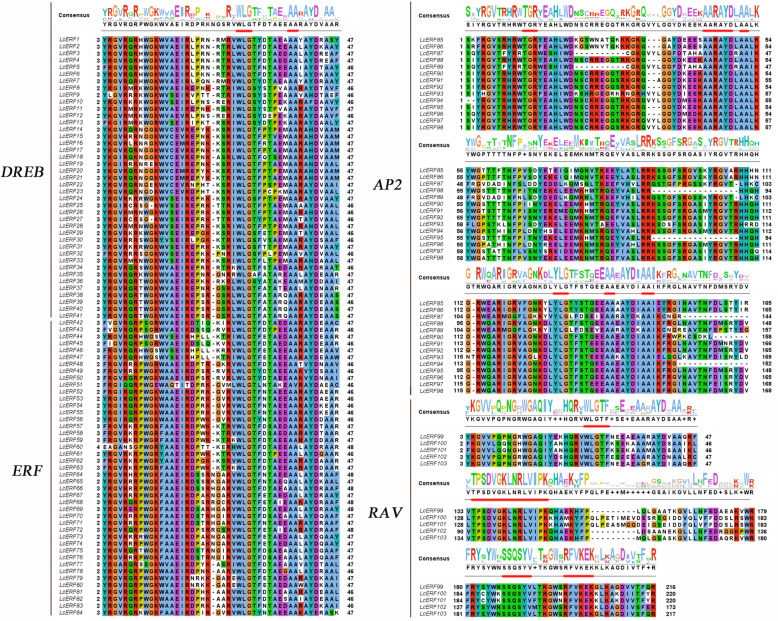
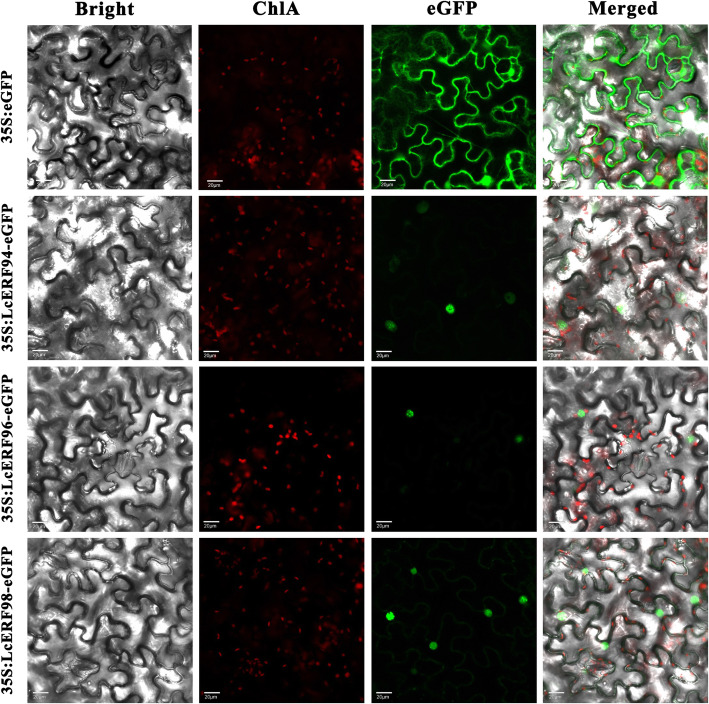
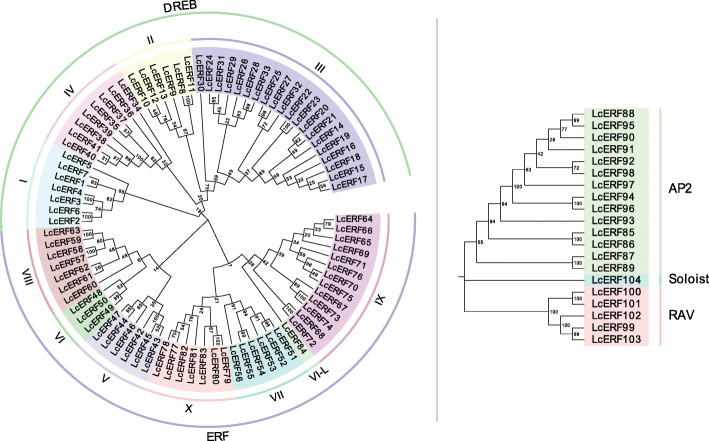
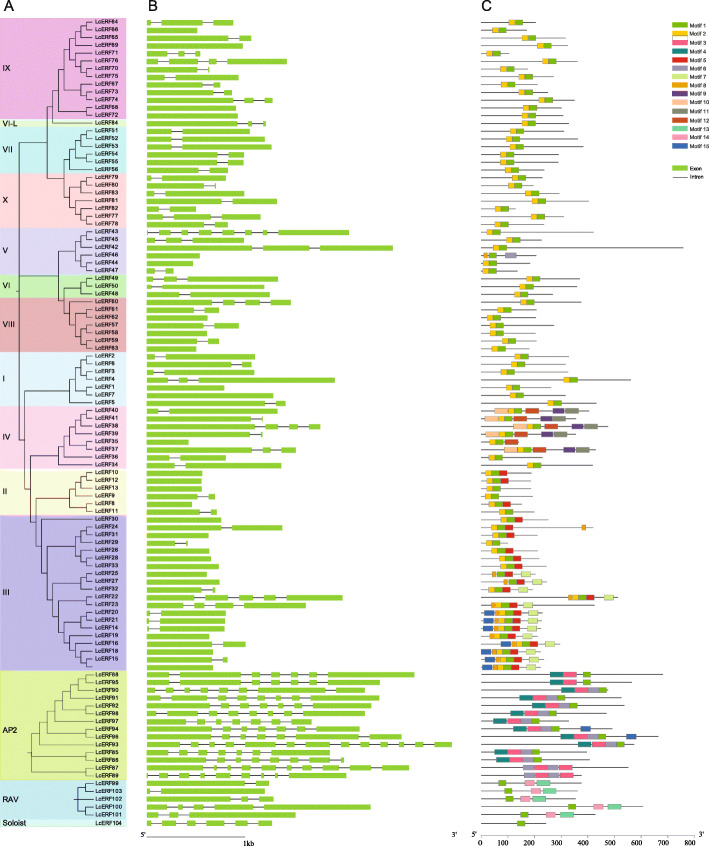
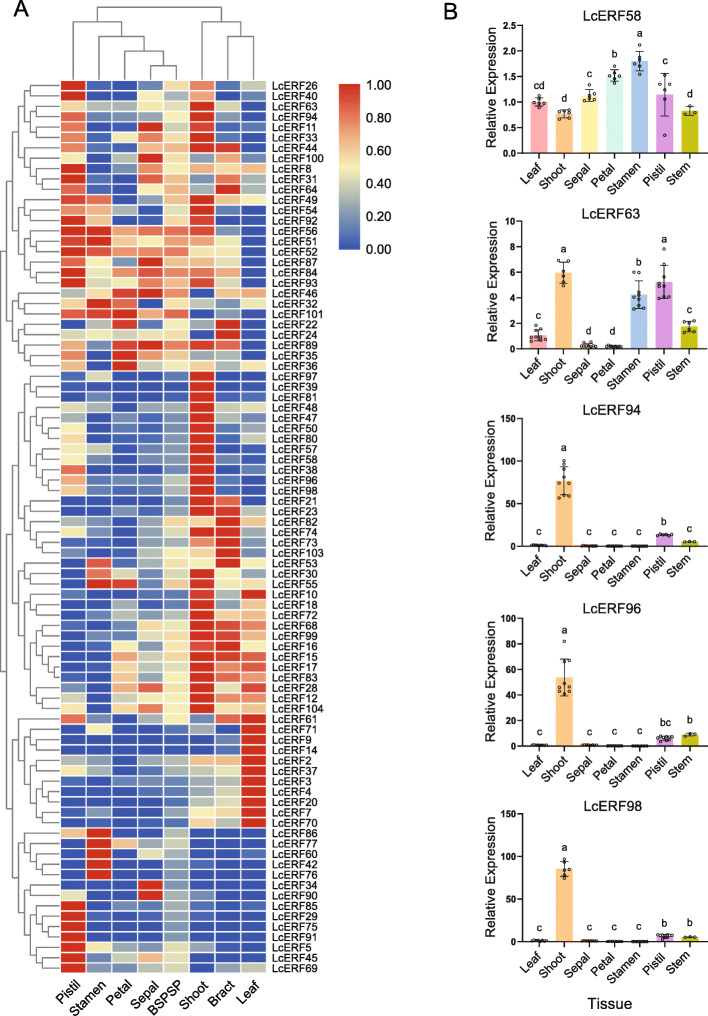
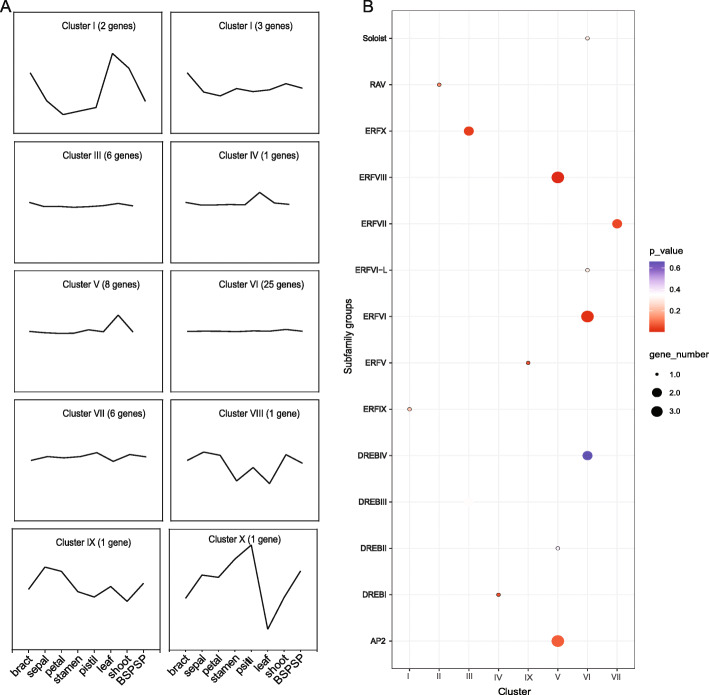
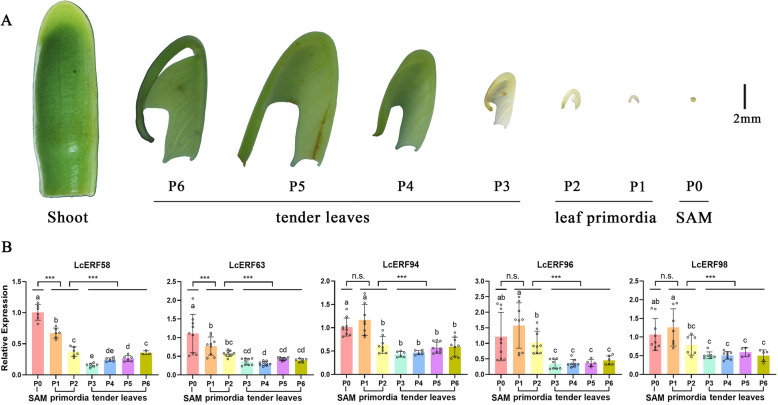
In this study, we identified 104 putative AP2/ERF genes in the recently released L. chinense genome and transcriptome database. In addition, all 104 genes were grouped into four subfamilies, the AP2, ERF, RAV, and Soloist subfamilies. This classification was further supported by the results of gene structure and conserved motif analyses. Intriguingly, after application of a series test of cluster analysis, three AP2 genes, LcERF 94, LcERF 96, and LcERF 98, were identified as tissue-specific in buds based on the expression profiles of various tissues. These results were further validated via RT-qPCR assays and were highly consistent with the STC analysis. We further investigated the dynamic changes of immature leaves by dissecting fresh shoots into seven discontinuous periods, which were empirically identified as shoot apical meristem (SAM), leaf primordia and tender leaf developmental stages according to the anatomic structure. Subsequently, these three candidates were highly expressed in SAM and leaf primordia but rarely in tender leaves, indicating that they were mainly involved in early leaf development and morphogenesis. Moreover, these three genes displayed nuclear subcellular localizations through the transient transformation of tobacco epidermal cells.
Overall, we identified 104 AP2/ERF family members at the genome-wide level and discerned three candidate genes that might participate in the development and morphogenesis of the leaf primordium in L. chinense.
鹅掌楸是一种独特的观赏树种,因其独特的叶子和郁金香状的花朵而备受关注。发现参与叶片发育和形态发生的基因对于揭示这些性状的潜在遗传基础至关重要。AP2/ERF 家族中的基因被认为是植物特异性转录因子,它们参与植物生长、激素诱导的发育、乙烯反应因子和应激反应。
在本研究中,我们从最新发布的鹅掌楸基因组和转录组数据库中鉴定了 104 个推定的 AP2/ERF 基因。此外,所有 104 个基因被分为四个亚家族,即 AP2、ERF、RAV 和 Soloist 亚家族。基因结构和保守基序分析进一步支持了这一分类。有趣的是,通过一系列聚类分析测试后,根据各种组织的表达谱,三个 AP2 基因 LcERF 94、LcERF 96 和 LcERF 98 被鉴定为芽组织特异性。这些结果通过 RT-qPCR 检测得到进一步验证,与 STC 分析高度一致。我们通过将新鲜嫩枝解剖成七个不连续的时期,进一步研究了未成熟叶片的动态变化,根据解剖结构,这些时期被经验性地鉴定为茎尖分生组织(SAM)、叶原基和嫩叶片发育阶段。随后,这三个候选基因在 SAM 和叶原基中高度表达,但在嫩叶片中很少表达,表明它们主要参与早期叶片发育和形态发生。此外,这三个基因通过瞬时转化烟草表皮细胞显示出核亚细胞定位。
总体而言,我们在全基因组水平上鉴定了 104 个 AP2/ERF 家族成员,并确定了三个候选基因,它们可能参与鹅掌楸叶片原基的发育和形态发生。