Department of Pediatrics, Biological Sciences Division, The University of Chicago Medical Center, 5841 S. Maryland Avenue, MC 5058, Chicago, IL, 60637, USA.
Center for Research Informatics, Biological Sciences Division, The University of Chicago, Chicago, IL, 60637, USA.
J Neuroinflammation. 2021 Nov 8;18(1):262. doi: 10.1186/s12974-021-02302-z.
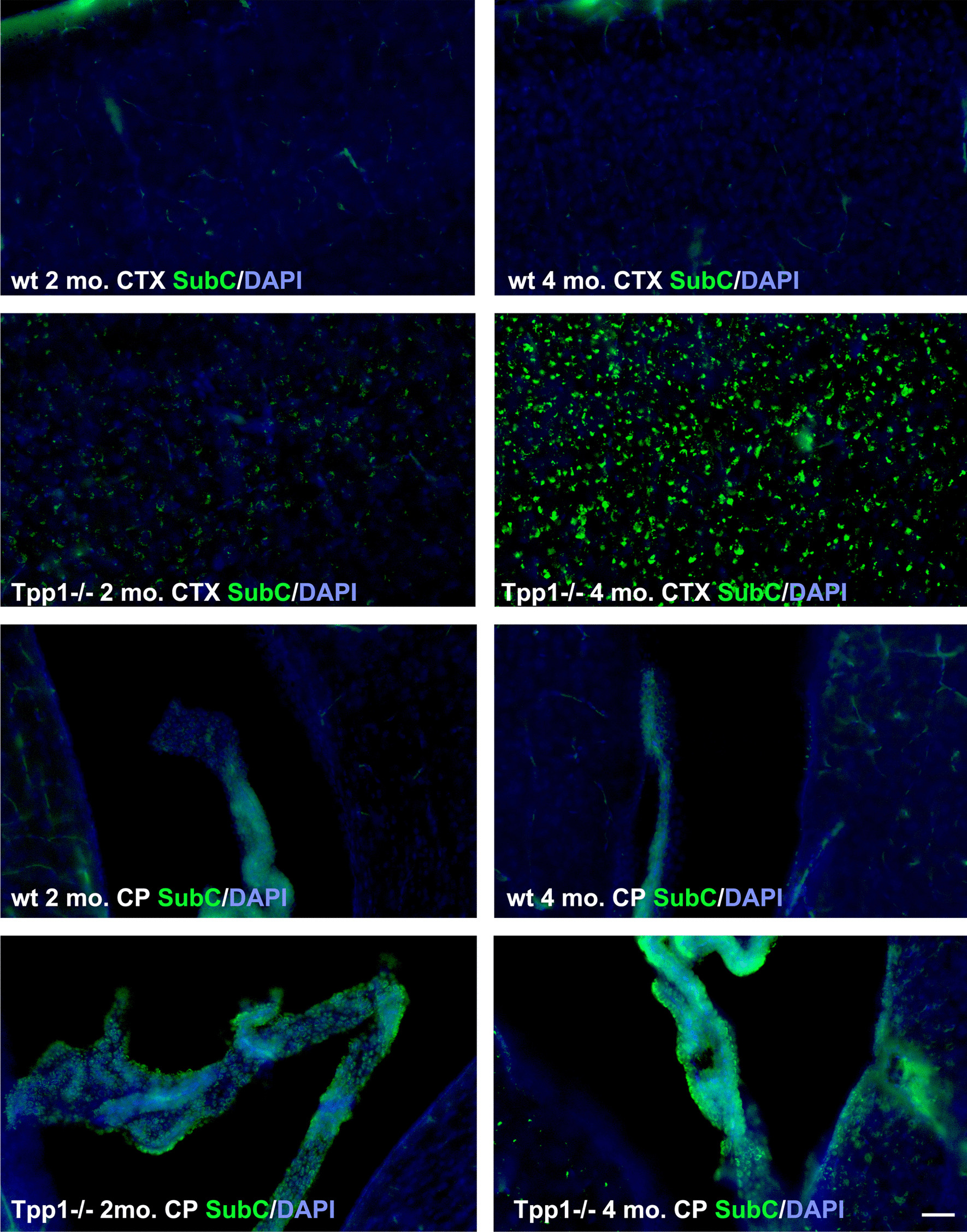
Neuronal ceroid lipofuscinoses, (NCLs or Batten disease) are a group of inherited, early onset, fatal neurodegenerative diseases associated with mutations in 13 genes. All forms of the disease are characterized by lysosomal accumulation of fluorescent storage material, as well as profound neurodegeneration, but the relationship of the various genes' function to a single biological process is not obvious. In this study, we used a well-characterized mouse model of classical late infantile NCL (cLINCL) in which the tripeptidyl peptidase 1 (Tpp1) gene is disrupted by gene targeting, resulting in loss of detectable TPP1 activity and leading to progressive neurological phenotypes including ataxia, increased motor deficiency, and early death.
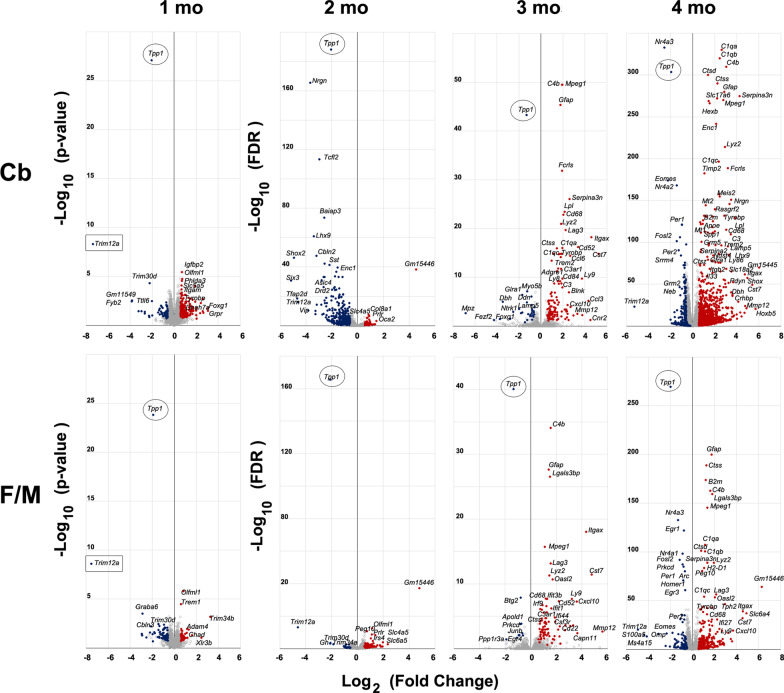
In order to identify genes and pathways that may contribute to progression of the neurodegenerative process, we analyzed forebrain/midbrain and cerebellar transcriptional differences at 1, 2, 3 and 4 months of age in control and TPP1-deficient mice by global RNA-sequencing.
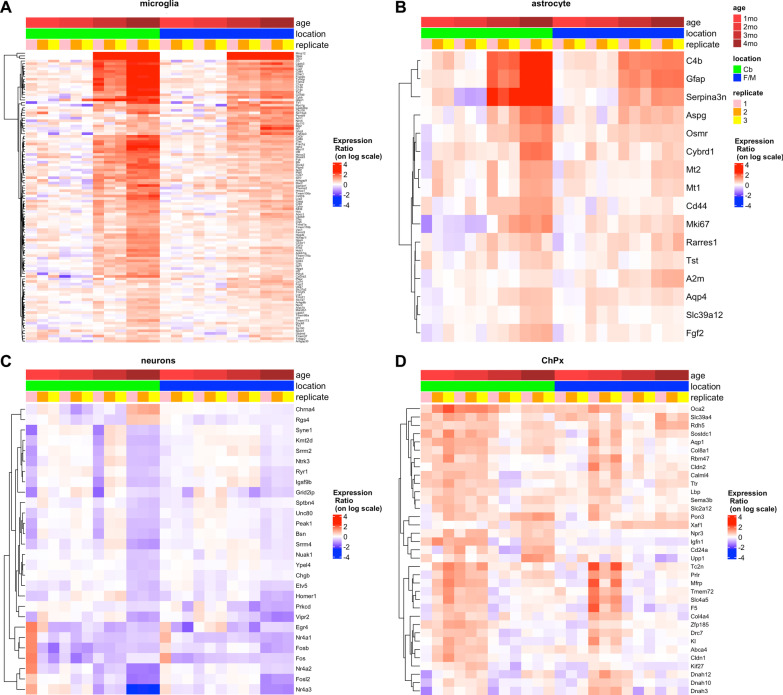
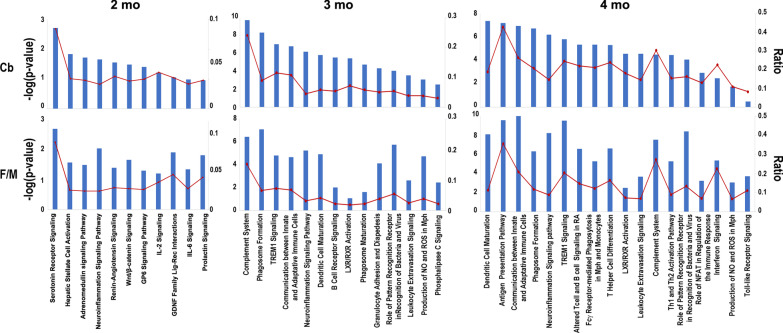
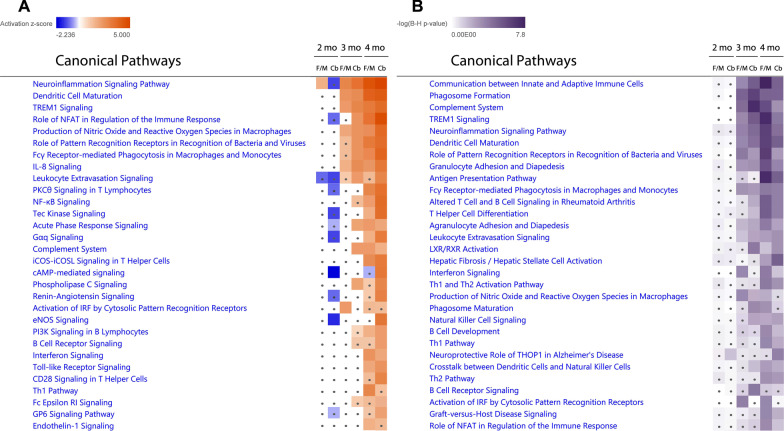
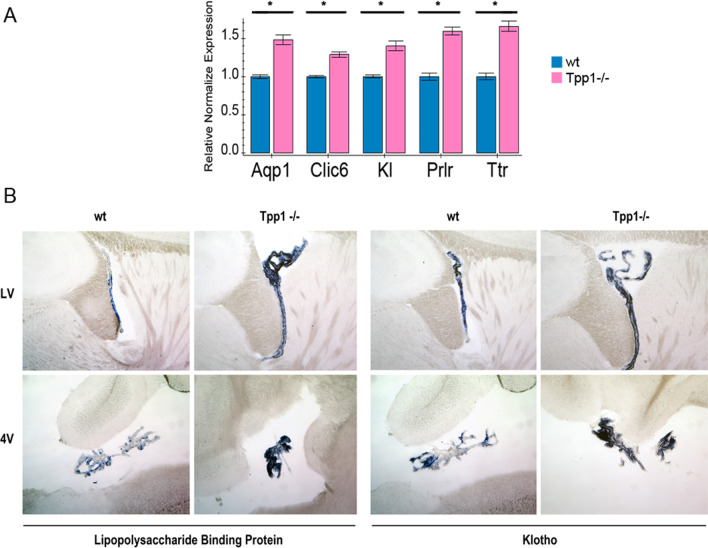
Progressive neurodegenerative inflammatory responses involving microglia, astrocytes and endothelial cells were observed, accompanied by activation of leukocyte extravasation signals and upregulation of nitric oxide production and reactive oxygen species. Several astrocytic (i.e., Gfap, C4b, Osmr, Serpina3n) and microglial (i.e., Ctss, Itgb2, Itgax, Lyz2) genes were identified as strong markers for assessing disease progression as they showed increased levels of expression in vivo over time. Furthermore, transient increased expression of choroid plexus genes was observed at 2 months in the lateral and fourth ventricle, highlighting an early role for the choroid plexus and cerebrospinal fluid in the disease pathology. Based on these gene expression changes, we concluded that neuroinflammation starts, for the most part, after 2 months in the Tpp1 brain and that activation of microglia and astrocytes occur more rapidly in cerebellum than in the rest of the brain; confirming increased severity of inflammation in this region.
These findings have led to a better understanding of cLINCL pathological onset and progression, which may aid in development of future therapeutic treatments for this disease.
神经元蜡样脂褐质沉积症(NCLs 或巴滕病)是一组遗传性、早发性、致命的神经退行性疾病,与 13 个基因的突变有关。所有形式的疾病都表现为溶酶体中荧光储存物质的积累,以及严重的神经退行性变,但各种基因的功能与单一生物过程的关系并不明显。在这项研究中,我们使用了一种经过充分表征的经典晚发性婴儿神经元蜡样脂褐质沉积症(cLINCL)小鼠模型,该模型中三肽基肽酶 1(Tpp1)基因通过基因靶向被破坏,导致可检测的 TPP1 活性丧失,并导致进行性神经表型,包括共济失调、运动缺陷增加和早逝。
为了确定可能有助于神经退行性过程进展的基因和途径,我们通过全局 RNA 测序分析了对照和 TPP1 缺陷小鼠在 1、2、3 和 4 个月龄时的前脑/中脑和小脑转录差异。
观察到涉及小胶质细胞、星形胶质细胞和内皮细胞的进行性神经退行性炎症反应,同时伴有白细胞渗出信号的激活以及一氧化氮产生和活性氧的上调。一些星形胶质细胞(即 Gfap、C4b、Osmr、Serpina3n)和小胶质细胞(即 Ctss、Itgb2、Itgax、Lyz2)基因被鉴定为评估疾病进展的强标志物,因为它们在体内随时间表达水平增加。此外,在 2 个月时,在侧脑室和第四脑室观察到脉络丛基因的短暂表达增加,突出了脉络丛和脑脊液在疾病病理学中的早期作用。基于这些基因表达变化,我们得出结论,Tpp1 大脑中的神经炎症大多在 2 个月后开始,小胶质细胞和星形胶质细胞的激活在小脑比在大脑其他部位更快;证实了该区域炎症的严重程度增加。
这些发现使我们更好地理解了 cLINCL 的发病和进展机制,这可能有助于开发针对这种疾病的未来治疗方法。