Tsukuba Research Laboratories, Eisai Co., Ltd., Ibaraki, Japan.
Cancer Res. 2022 Jan 15;82(2):292-306. doi: 10.1158/0008-5472.CAN-20-2426. Epub 2021 Nov 9.
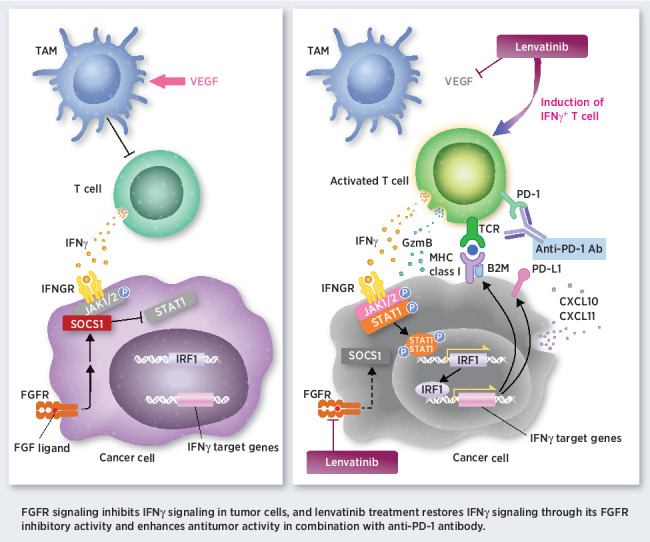
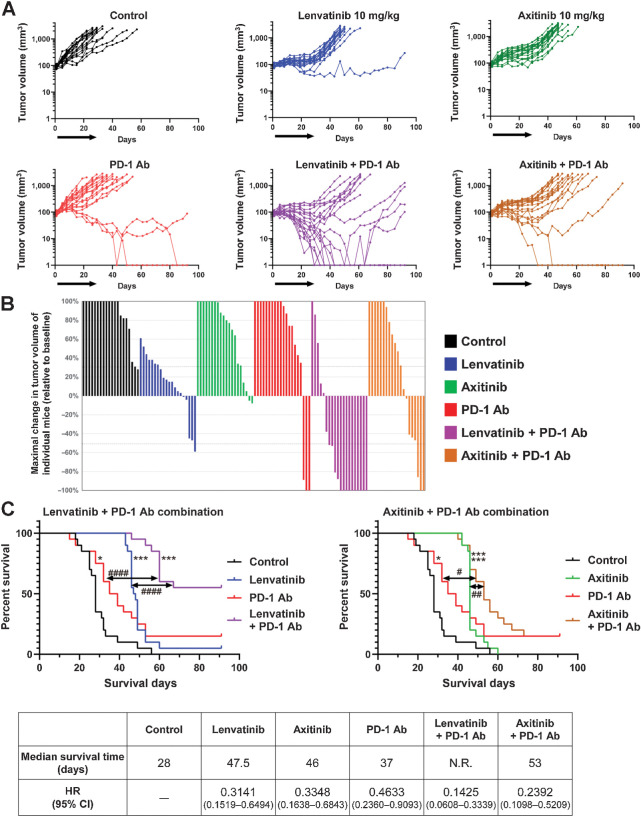
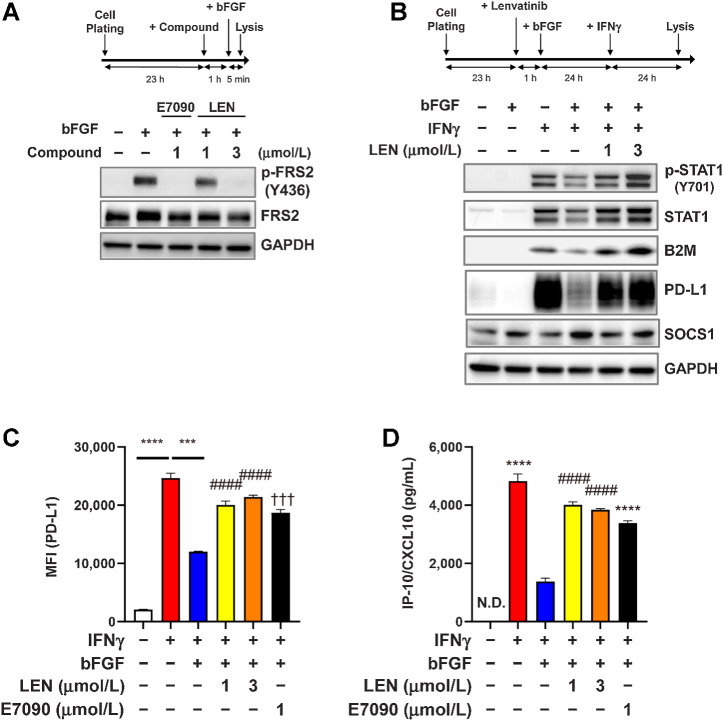
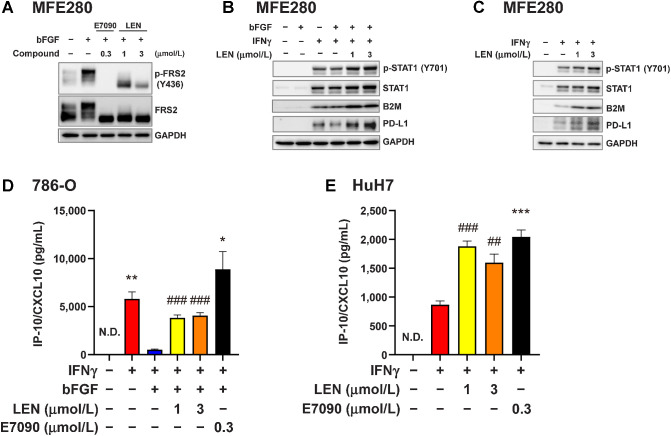
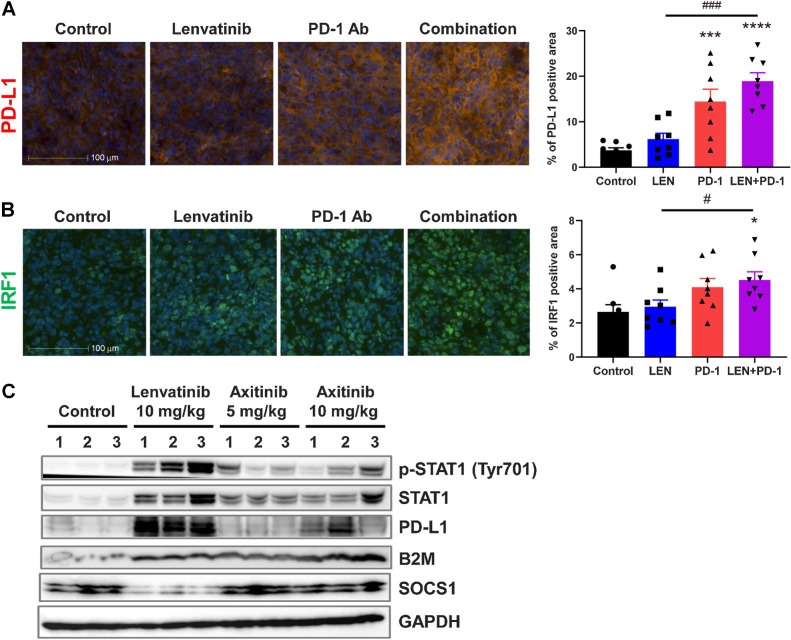
Combination therapies consisting of immune checkpoint inhibitors plus anti-VEGF therapy show enhanced antitumor activity and are approved treatments for patients with renal cell carcinoma (RCC). The immunosuppressive roles of VEGF in the tumor microenvironment are well studied, but those of FGF/FGFR signaling remain largely unknown. Lenvatinib is a receptor tyrosine kinase inhibitor that targets both VEGFR and FGFR. Here, we examine the antitumor activity of anti-PD-1 mAb combined with either lenvatinib or axitinib, a VEGFR-selective inhibitor, in RCC. Both combination treatments showed greater antitumor activity and longer survival in mouse models versus either single agent treatment, whereas anti-PD-1 mAb plus lenvatinib had enhanced antitumor activity compared with anti-PD-1 mAb plus axitinib. Flow cytometry analysis showed that lenvatinib decreased the population of tumor-associated macrophages and increased that of IFNγ-positive CD8 T cells. Activation of FGFR signaling inhibited the IFNγ-stimulated JAK/STAT signaling pathway and decreased expression of its target genes, including , , and . Furthermore, inhibition of FGFR signaling by lenvatinib restored the tumor response to IFNγ stimulation in mouse and human RCC cell lines. These preclinical results reveal novel roles of tumor FGFR signaling in the regulation of cancer immunity through inhibition of the IFNγ pathway, and the inhibitory activity of lenvatinib against FGFRs likely contributes to the enhanced antitumor activity of combination treatment comprising lenvatinib plus anti-PD-1 mAb. SIGNIFICANCE: FGFR pathway activation inhibits IFNγ signaling in tumor cells, and FGFR inhibition with lenvatinib enhances antitumor immunity and the activity of anti-PD-1 antibodies.
联合治疗包括免疫检查点抑制剂加抗血管内皮生长因子治疗,显示出增强的抗肿瘤活性,并且是肾细胞癌(RCC)患者的批准治疗方法。VEGF 在肿瘤微环境中的免疫抑制作用得到了很好的研究,但 FGF/FGFR 信号的作用在很大程度上仍然未知。仑伐替尼是一种受体酪氨酸激酶抑制剂,可靶向 VEGFR 和 FGFR。在这里,我们研究了抗 PD-1 mAb 联合仑伐替尼或阿昔替尼(一种 VEGFR 选择性抑制剂)在 RCC 中的抗肿瘤活性。与单药治疗相比,两种联合治疗在小鼠模型中均显示出更强的抗肿瘤活性和更长的生存时间,而抗 PD-1 mAb 加仑伐替尼与抗 PD-1 mAb 加阿昔替尼相比具有更强的抗肿瘤活性。流式细胞术分析表明,仑伐替尼减少了肿瘤相关巨噬细胞的数量,并增加了 IFNγ 阳性 CD8 T 细胞的数量。FGFR 信号的激活抑制了 IFNγ 刺激的 JAK/STAT 信号通路,并降低了其靶基因的表达,包括 、 、和 。此外,仑伐替尼抑制 FGFR 信号通过恢复 IFNγ 刺激在小鼠和人类 RCC 细胞系中的肿瘤反应。这些临床前结果揭示了肿瘤 FGFR 信号在通过抑制 IFNγ 通路调节癌症免疫方面的新作用,并且仑伐替尼对 FGFR 的抑制活性可能有助于仑伐替尼联合抗 PD-1 mAb 的抗肿瘤活性增强。意义:FGFR 途径的激活抑制肿瘤细胞中的 IFNγ 信号,并且仑伐替尼抑制 FGFR 增强抗肿瘤免疫和抗 PD-1 抗体的活性。