Department of Animal and Range Sciences, New Mexico State University, MSC 3-I, PO Box 30003, Las Cruces, NM, 88003, USA.
Department of Cell Biology and Physiology, University of North Carolina, Chapel Hill, NC, USA.
Reprod Sci. 2022 Jan;29(1):122-132. doi: 10.1007/s43032-021-00791-0. Epub 2021 Nov 9.
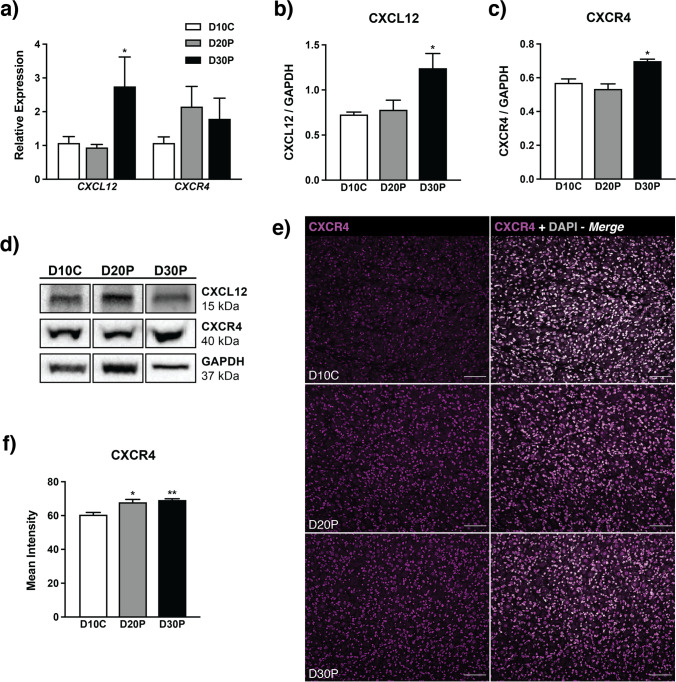
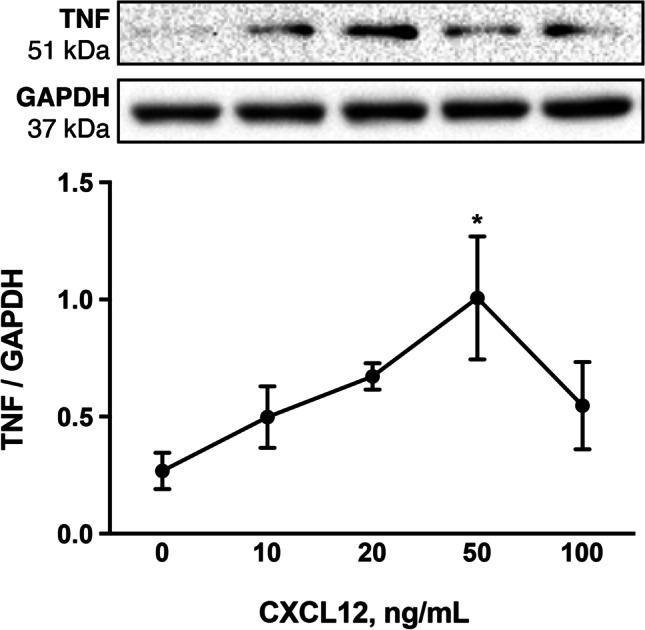
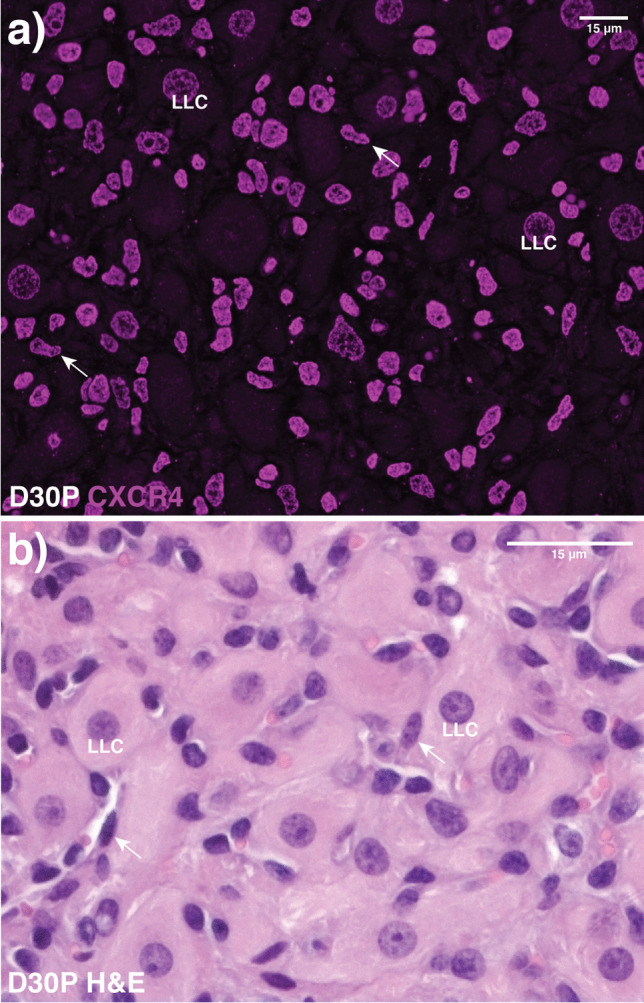
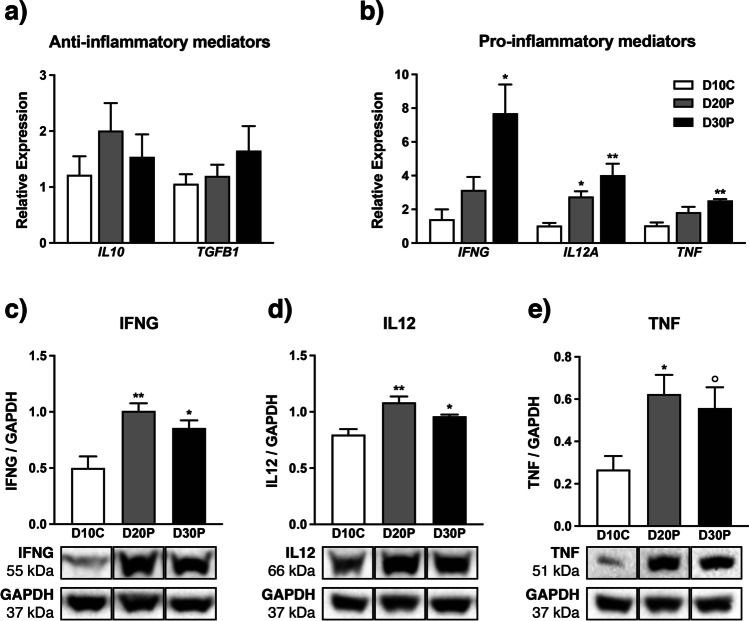
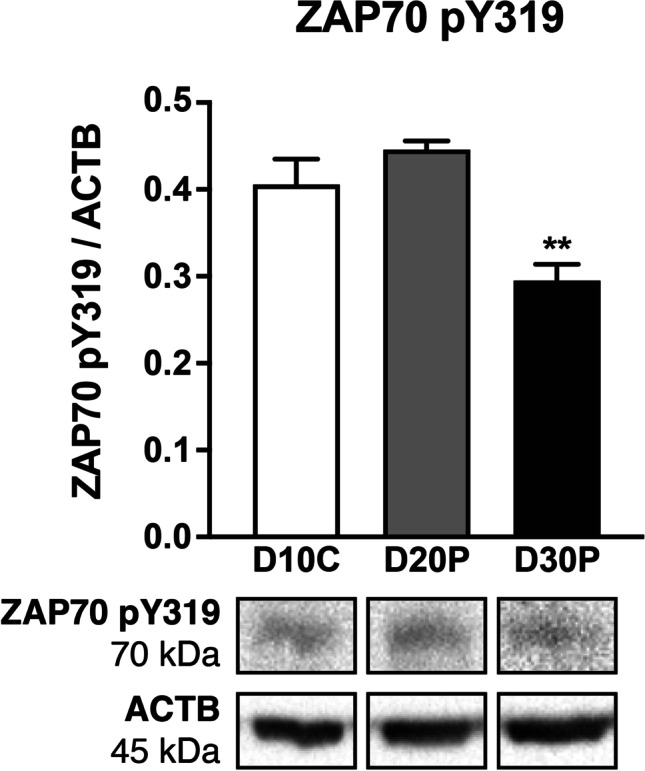
Adequate corpus luteum (CL) function is paramount to successful pregnancy. Structural and functional CL integrity is controlled by diverse cell types that contribute and respond to the local cytokine milieu. The chemokine ligand 12 (CXCL12) and receptor, CXCR4, are modulators of inflammation and cell survival, but little is understood about CXCL12-CXCR4 axis and CL functional regulation. Corpora lutea from control nonpregnant ewes (n = 5; day 10 estrous cycle (D10C)) and pregnant ewes (n = 5/day) on days 20 (D20P) and 30 (D30P) post-breeding were analyzed for gene and protein expression of CXCL12, CXCR4, and select inflammatory cytokines. In separate cell culture studies, cytokine production was evaluated following CXCL12 treatment. Abundance of CXCL12 and CXCR4 increased (P < 0.05) in pregnant ewes compared to nonpregnant ewes, as determined by a combination of quantitative PCR, immunoblot, and immunofluorescence microscopy. CXCR4 was detected in steroidogenic and nonsteroidogenic cells in ovine CL, and select pro-inflammatory mediators were greater in CL from pregnant ewes. In vitro studies revealed greater abundance of tumor necrosis factor (TNF) following CXCL12 administration (P = 0.05), while P4 levels in cell media were unchanged. Fully functional CL of pregnant ewes is characterized by increased abundance of inflammatory cytokines which may function in a luteotropic manner. We report concurrent increases in CXCL12, CXCR4, and select inflammatory mediators in ovine CL as early pregnancy progresses. We propose CXCL12 stimulates production of select cytokines, rather than P4 in the CL to assist in CL establishment and survival.
黄体(CL)功能正常对于成功妊娠至关重要。CL 的结构和功能完整性由多种细胞类型控制,这些细胞类型对局部细胞因子环境做出贡献并做出反应。趋化因子配体 12(CXCL12)及其受体 CXCR4 是炎症和细胞存活的调节剂,但对于 CXCL12-CXCR4 轴和 CL 功能调节知之甚少。分析了来自非妊娠母羊(n=5;发情周期第 10 天(D10C))和妊娠母羊(n=5/天)的黄体,以检测其在配种后第 20 天(D20P)和第 30 天(D30P)时的 CXCL12、CXCR4 和选定炎症细胞因子的基因和蛋白表达。在单独的细胞培养研究中,评估了 CXCL12 处理后细胞因子的产生。与非妊娠母羊相比,妊娠母羊的 CXCL12 和 CXCR4 丰度增加(P<0.05),这是通过定量 PCR、免疫印迹和免疫荧光显微镜结合确定的。在绵羊 CL 中检测到 CXCR4 存在于类固醇生成细胞和非类固醇生成细胞中,并且妊娠母羊的 CL 中选择的促炎介质更多。体外研究显示,CXCL12 给药后肿瘤坏死因子(TNF)的丰度增加(P=0.05),而细胞培养基中的 P4 水平没有变化。妊娠母羊的完全功能黄体的特征是炎症细胞因子的丰度增加,这可能以黄体支持的方式发挥作用。我们报告了随着早期妊娠的进展,绵羊 CL 中 CXCL12、CXCR4 和选定炎症介质的同时增加。我们提出 CXCL12 刺激选定细胞因子的产生,而不是 CL 中的 P4,以协助 CL 的建立和存活。