Department of Civil and Environmental Engineering (DECA), Engineering Sciences and Global Development (EScGD), Barcelona School of Civil Engineering, Universitat Politècnica de Catalunya BarcelonaTech, Barcelona, Spain.
Int J Hyg Environ Health. 2022 Jan;239:113876. doi: 10.1016/j.ijheh.2021.113876. Epub 2021 Oct 29.
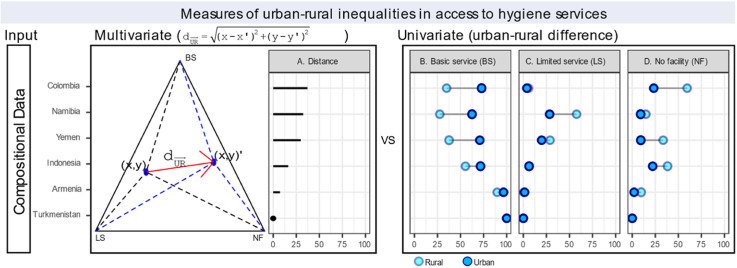
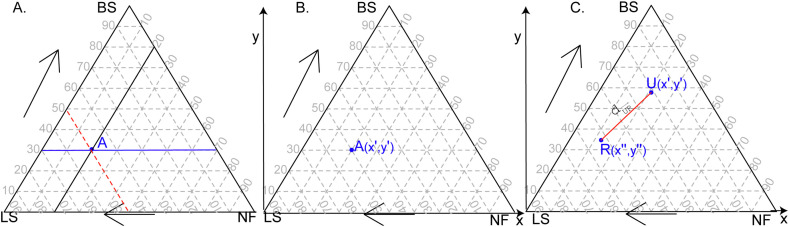
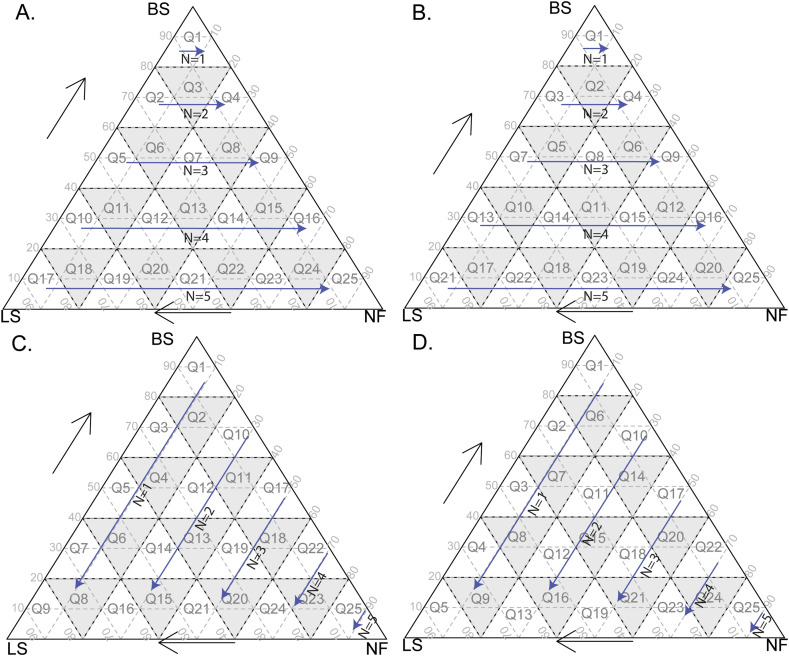
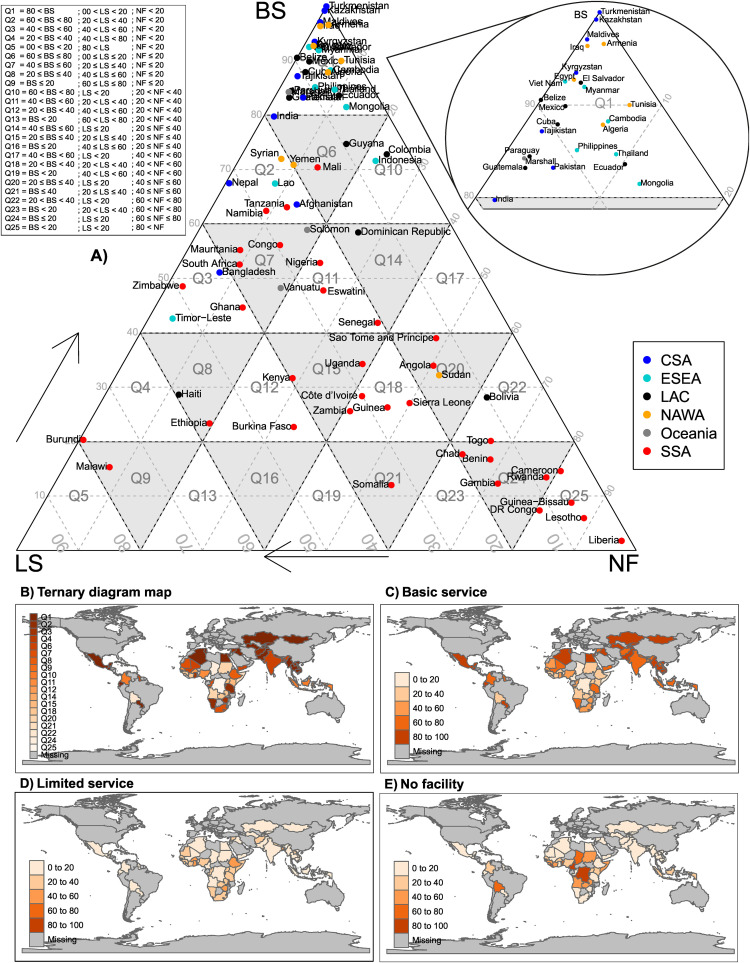
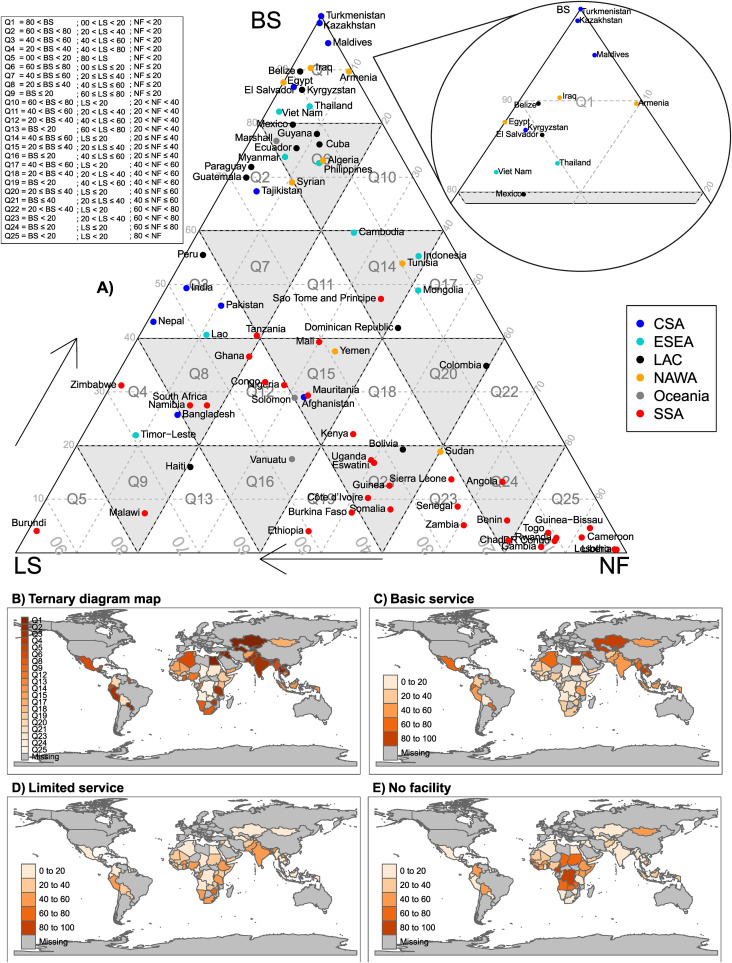
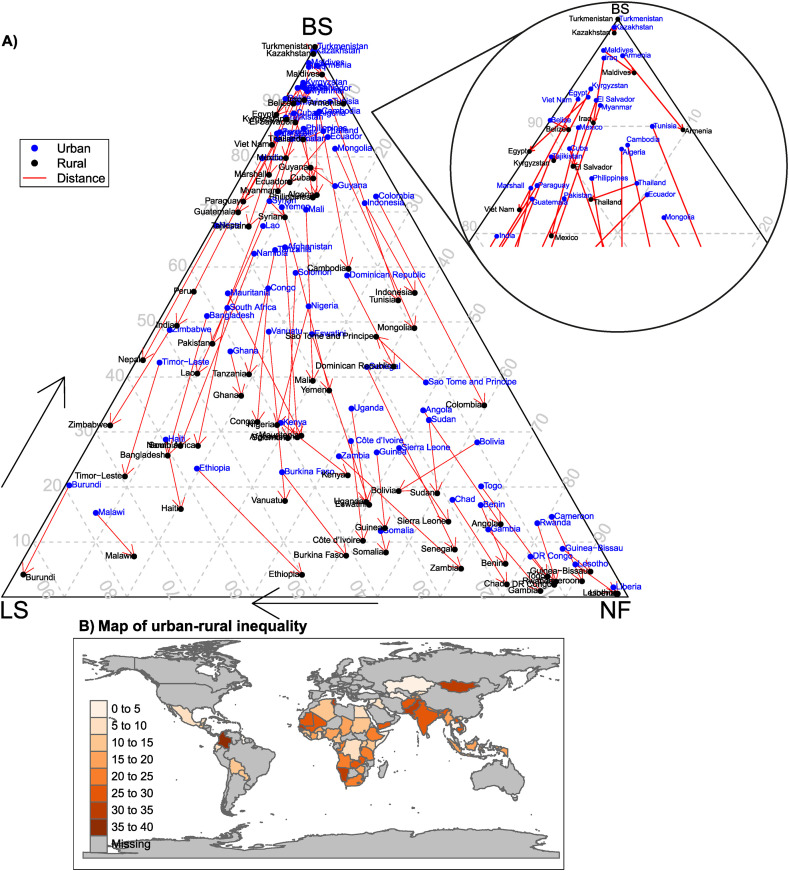
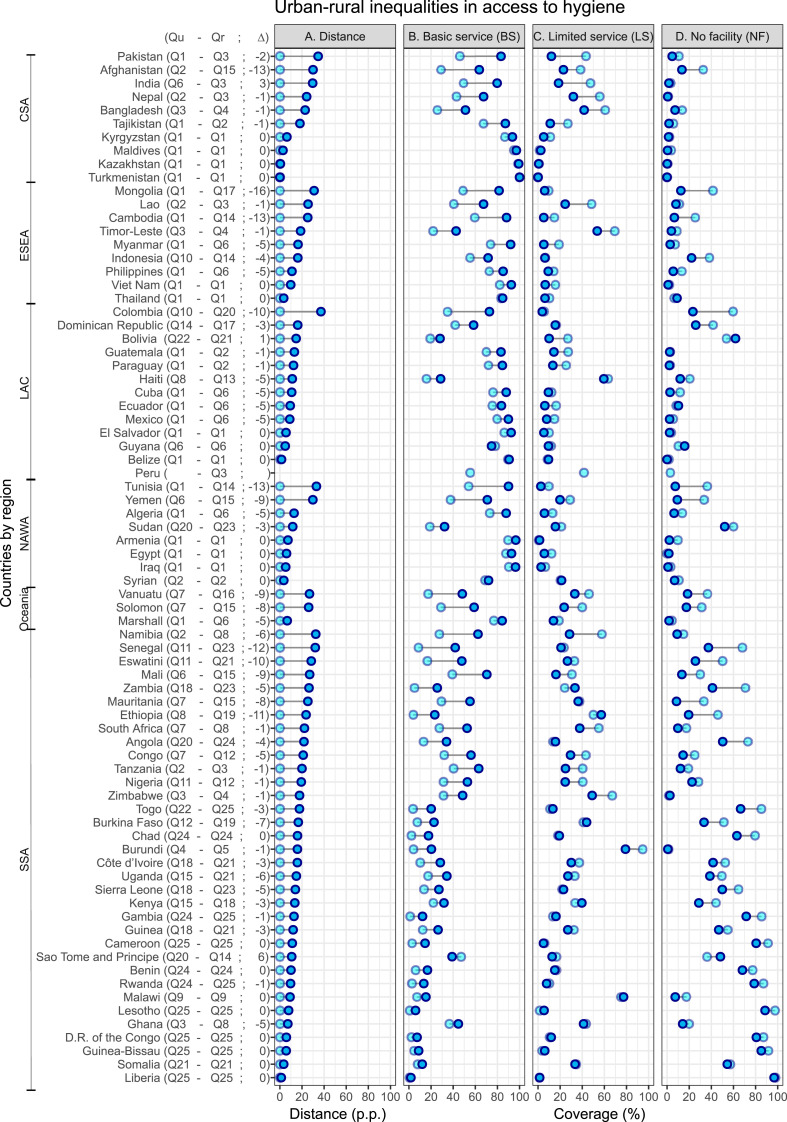
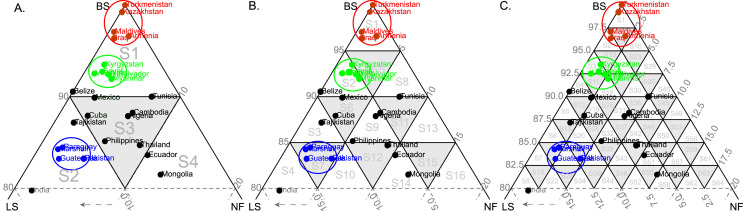
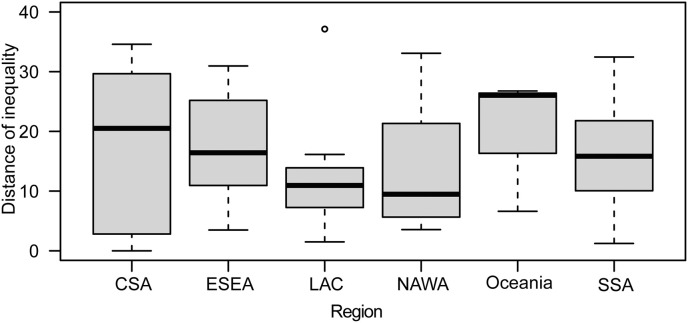
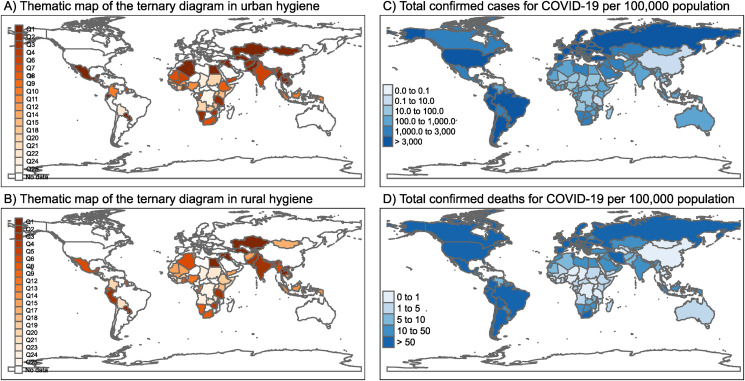
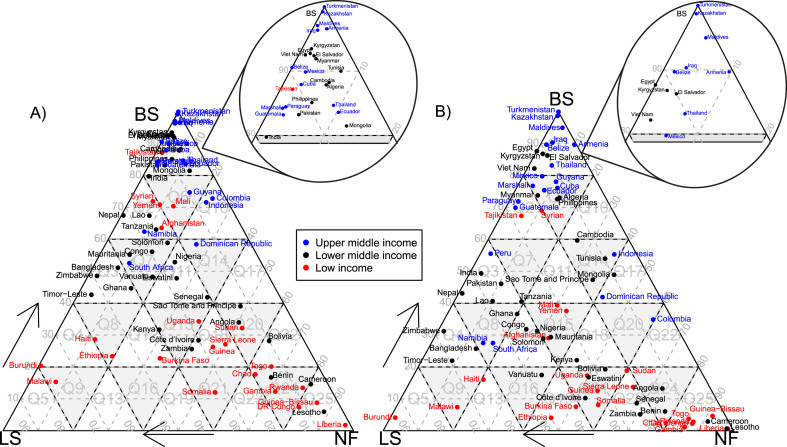
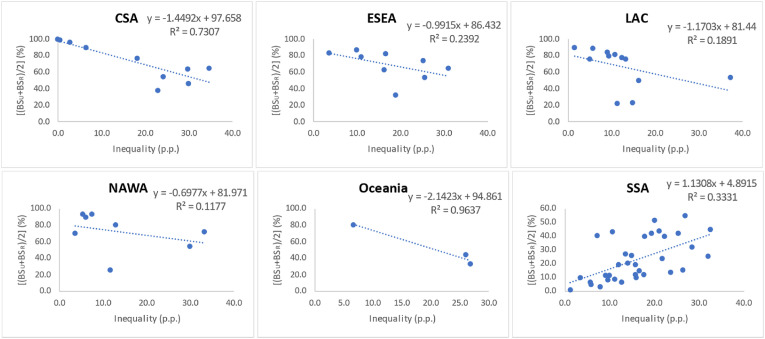
Access to hygiene services remains one of the most urgent challenges facing countries, especially low-income ones. This has become much more critical in the current context of the COVID-19 pandemic. The WHO/UNICEF Joint Monitoring Program globally monitors access to hygiene service levels. As data are in three parts with a constant sum and a positive value, they are compositional data. Inequality is monitored in disaggregated data; in the urban-rural case, this is done through a simple difference between the urban and rural service levels. However, this simple form of calculation does not take into account the characteristics of the data, which can lead to erroneous interpretations of the results. Therefore, we propose an alternative measure of inequality that uses a ternary diagram and does not infringe on the data properties. The results of the new urban-rural inequality measure show spatial heterogeneity. The highest inequality occurs in Colombia, with a value of 37.1 percentage points, and the lowest in Turkmenistan, with a value of zero. Our results also show that 73 of the 76 countries evaluated have higher basic hygiene services in urban areas than in rural areas. This means that urban households have more availability of a handwashing facility on-premises with soap and water than rural households. Likewise, by subdividing the ternary diagram into ternary parcels, we could group and rank the countries based on hygiene service conditions in a hierarchical order using tripartite information. Finally, our study finds that a multivariate measure of inequality can be important for the public policies of the sector with a general vision, which underscores the value of making evidence-based decisions.
获得卫生服务仍然是各国面临的最紧迫挑战之一,特别是低收入国家。在当前 COVID-19 大流行的背景下,这一点变得更加关键。世卫组织/儿基会联合监测规划在全球范围内监测获得卫生服务的水平。由于数据由三部分组成,总和为常数且值为正,因此它们是组合数据。不平等情况在分类数据中进行监测;在城乡情况中,这是通过城乡服务水平之间的简单差异来实现的。然而,这种简单的计算形式没有考虑到数据的特征,这可能导致对结果的错误解释。因此,我们提出了一种不平等的替代衡量方法,使用三元图,并且不侵犯数据属性。新的城乡不平等衡量方法的结果显示出空间异质性。哥伦比亚的不平等程度最高,为 37.1 个百分点,土库曼斯坦的不平等程度最低,为零。我们的结果还表明,在所评估的 76 个国家中,有 73 个国家的城市地区基本卫生服务水平高于农村地区。这意味着城市家庭比农村家庭更有可能在现场使用肥皂和水提供洗手设施。同样,通过将三元图细分为三元部分,我们可以根据卫生服务条件,使用三分信息对国家进行分组和排名,形成一个层次结构。最后,我们的研究发现,不平等的多变量衡量方法对于具有总体愿景的部门的公共政策可能很重要,这突显了基于证据做出决策的价值。