University of Miami, Coral Gables, FL, USA.
University of North Carolina at Chapel Hill, Chapel Hill, NC, USA.
Int J Hyg Environ Health. 2021 May;234:113715. doi: 10.1016/j.ijheh.2021.113715. Epub 2021 Feb 19.
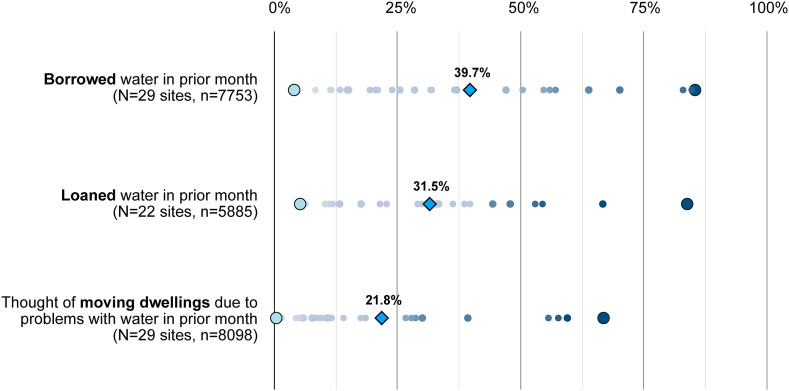
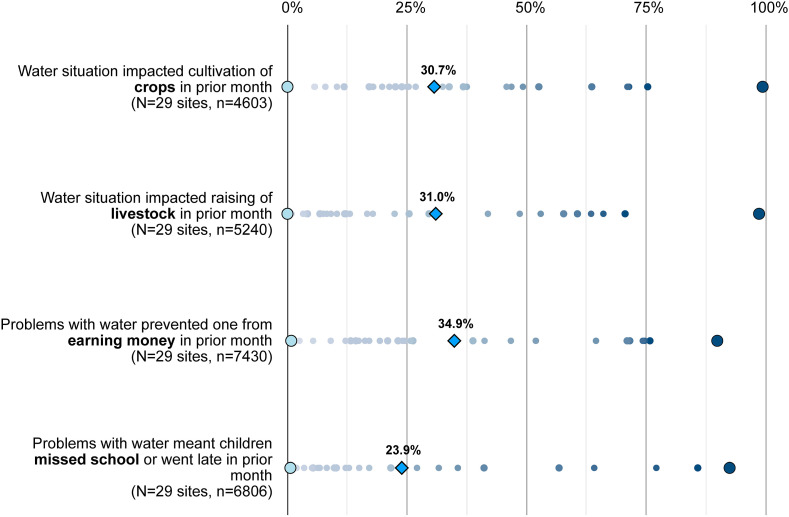
In March 2020, the World Health Organization (WHO) issued a set of public guidelines for Coronavirus Disease 2019 (COVID-19) prevention measures that highlighted handwashing, physical distancing, and household cleaning. These health behaviors are severely compromised in parts of the world that lack secure water supplies, particularly in low- and middle-income countries (LMICs). We used empirical data gathered in 2017-2018 from 8,297 households in 29 sites across 23 LMICs to address the potential implications of water insecurity for COVID-19 prevention and response. These data demonstrate how household water insecurity presents many pathways for limiting personal and environmental hygiene, impeding physical distancing and exacerbating existing social and health vulnerabilities that can lead to more severe COVID-19 outcomes. In the four weeks prior to survey implementation, 45.9% of households in our sample either were unable to wash their hands or reported borrowing water from others, which may undermine hygiene and physical distancing. Further, 70.9% of households experienced one or more water-related problems that potentially undermine COVID-19 control strategies or disease treatment, including insufficient water for bathing, laundering, or taking medication; drinking unsafe water; going to sleep thirsty; or having little-to-no drinking water. These findings help identify where water provision is most relevant to managing COVID-19 spread and outcomes.
2020 年 3 月,世界卫生组织(WHO)发布了一套针对 2019 年冠状病毒病(COVID-19)预防措施的公共指南,其中强调了洗手、保持身体距离和家庭清洁。在缺乏安全供水的世界部分地区,这些卫生行为受到严重影响,特别是在低收入和中等收入国家(LMICs)。我们使用了 2017 年至 2018 年期间在 23 个 LMIC 地区的 29 个地点从 8297 个家庭收集的经验数据,以探讨水不安全对 COVID-19 预防和应对的潜在影响。这些数据表明,家庭用水不安全会通过多种途径限制个人和环境卫生,阻碍保持身体距离,并加剧现有的社会和健康脆弱性,从而导致更严重的 COVID-19 后果。在实施调查的前四周,我们样本中的 45.9%的家庭要么无法洗手,要么报告从他人那里借水,这可能会破坏卫生和保持身体距离。此外,70.9%的家庭经历了一个或多个可能破坏 COVID-19 控制策略或疾病治疗的水相关问题,包括洗澡、洗衣或服药用水不足;饮用不安全的水;口渴入睡;或几乎没有饮用水。这些发现有助于确定在何处提供水对于管理 COVID-19 的传播和结果最为重要。