Li Shanshan, Hsieh Kan-Yen, Kuo Chiao-I, Su Shih-Chieh, Huang Kai-Fa, Zhang Kaiming, Chang Chung-I
MOE Key Laboratory for Membraneless Organelles and Cellular Dynamics, Hefei National Laboratory for Physical Sciences at the Microscale and Division of Life Sciences and Medicine, University of Science and Technology of China, Hefei 230027, China.
Institute of Biological Chemistry, Academia Sinica, Taipei 11529, Taiwan.
Sci Adv. 2021 Nov 12;7(46):eabj9537. doi: 10.1126/sciadv.abj9537. Epub 2021 Nov 10.
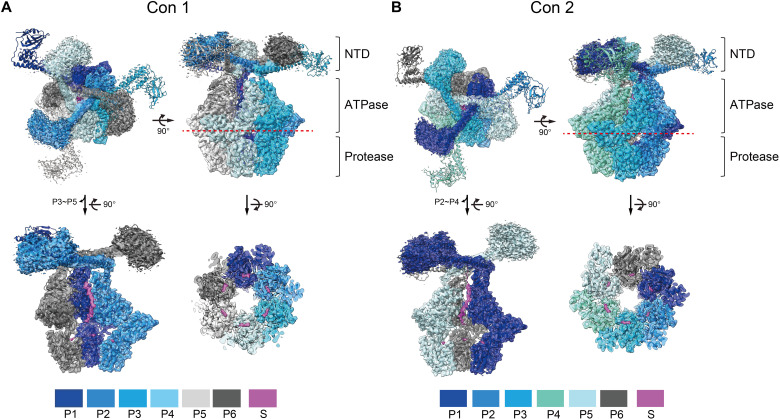
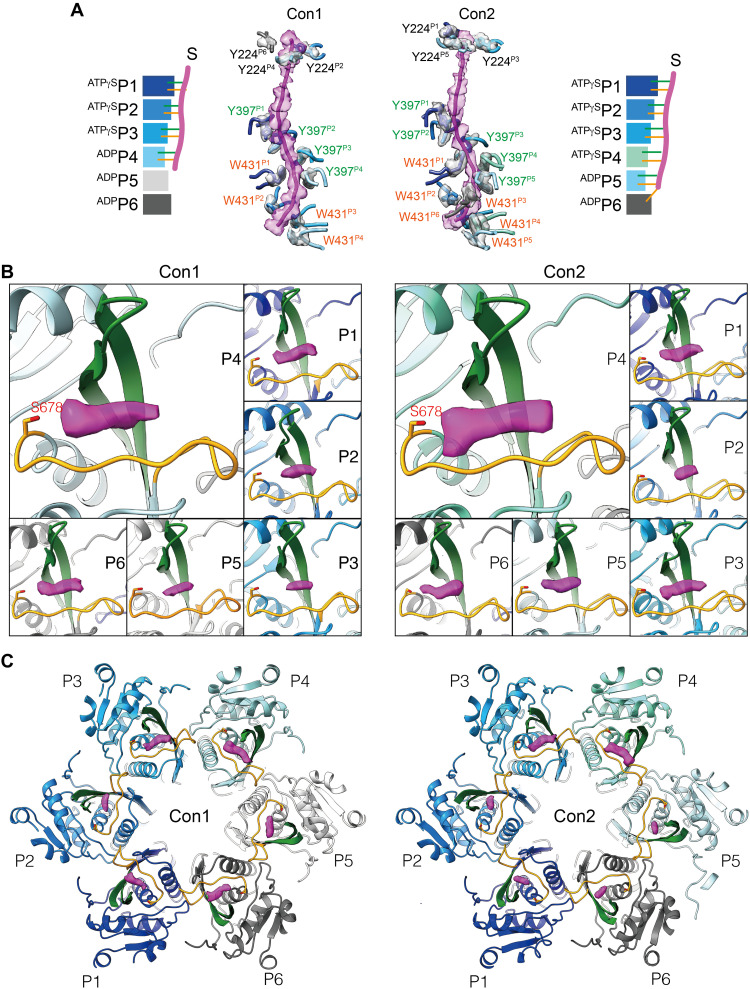
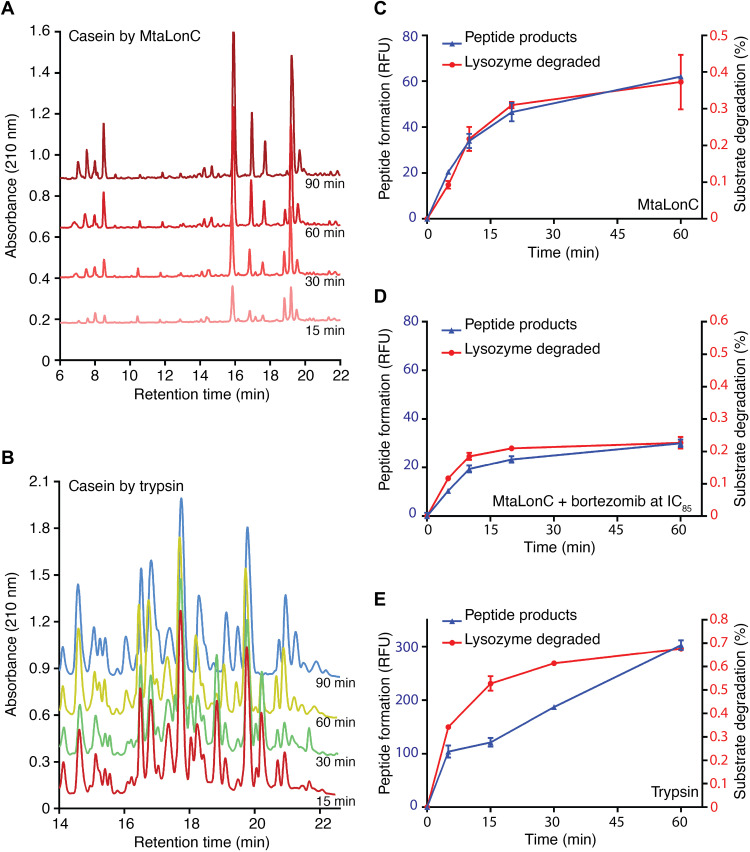
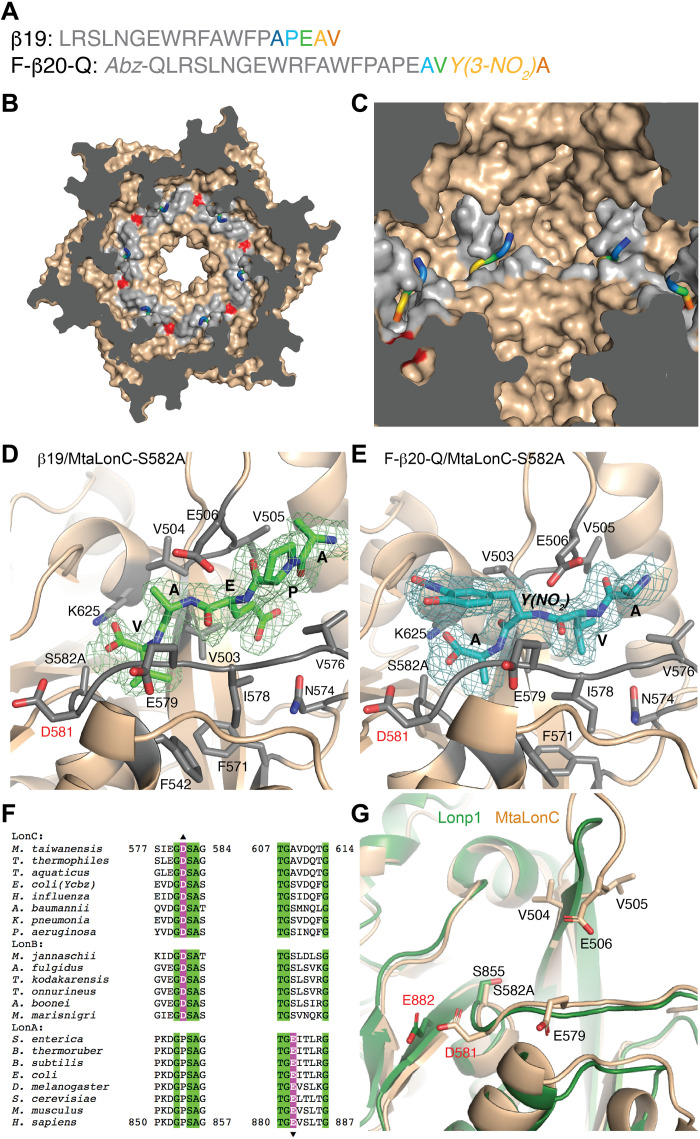
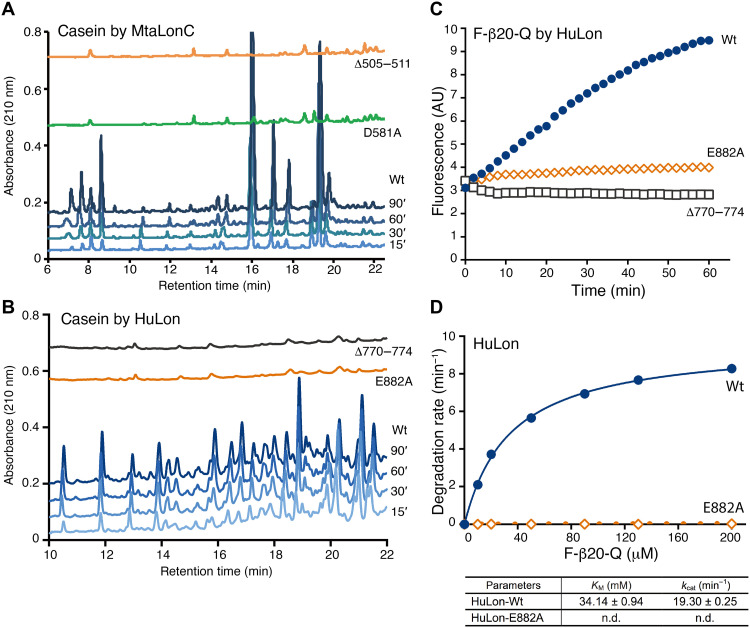
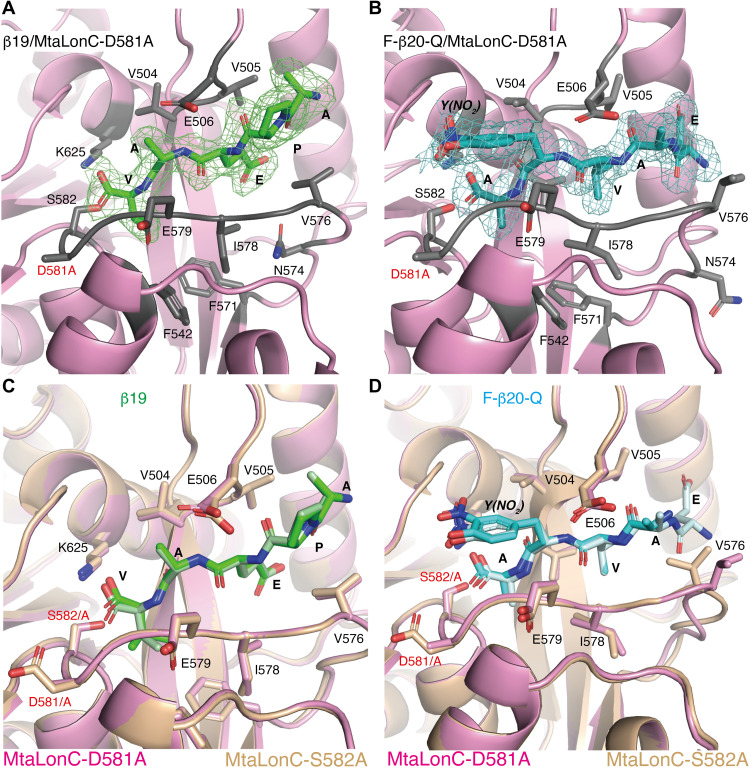
The Lon protease is the prototype of a family of proteolytic machines with adenosine triphosphatase modules built into a substrate degradation chamber. Lon is known to degrade protein substrates in a processive fashion, cutting a protein chain processively into small peptides before commencing cleavages of another protein chain. Here, we present structural and biochemical evidence demonstrating that processive substrate degradation occurs at each of the six proteolytic active sites of Lon, which forms a deep groove that partially encloses the substrate polypeptide chain by accommodating only the unprimed residues and permits processive cleavage in the C-to-N direction. We identify a universally conserved acidic residue at the exit side of the binding groove indispensable for the proteolytic activity. This noncatalytic residue likely promotes processive proteolysis by carboxyl-carboxylate interactions with cleaved intermediates. Together, these results uncover a previously unrecognized mechanism for processive substrate degradation by the Lon protease.
Lon蛋白酶是一类蛋白水解机器的原型,其在底物降解腔室中内置有三磷酸腺苷酶模块。已知Lon以连续的方式降解蛋白质底物,在开始切割另一条蛋白质链之前,将一条蛋白质链连续切割成小肽。在此,我们提供了结构和生化证据,证明在Lon的六个蛋白水解活性位点中的每一个位点都会发生连续的底物降解,Lon形成了一个深沟,该深沟仅容纳未引发的残基,从而部分包围底物多肽链,并允许在C端到N端的方向上进行连续切割。我们在结合沟的出口侧鉴定出一个对蛋白水解活性必不可少的普遍保守的酸性残基。这个非催化残基可能通过与切割中间体的羧基-羧酸盐相互作用促进连续蛋白水解。这些结果共同揭示了Lon蛋白酶连续底物降解的一种先前未被认识的机制。