Petrović Marija, Veljović Sonja, Tomić Nikola, Zlatanović Snežana, Tosti Tomislav, Vukosavljević Predrag, Gorjanović Stanislava
Institute of General and Physical Chemistry, Studentski trg 12, 11158 Belgrade, Serbia.
Faculty of Agriculture, University of Belgrade, Nemanjina 6, 11080 Belgrade, Serbia.
Food Technol Biotechnol. 2021 Sep;59(3):282-294. doi: 10.17113/ftb.59.03.21.6759.
Apple juice is one of the most popular and liked beverages worldwide. Due to the increased health consciousness among consumers, beetroot and chokeberry juices have also rising consumption trends. Despite representing a considerable percentage of the processed fruit and rich source of bioactive compounds, fruit pomace, remaining after juice production, has still been underutilised. Here, the possibility of using apple, beetroot and chokeberry pomace in liqueur formulations is investigated.
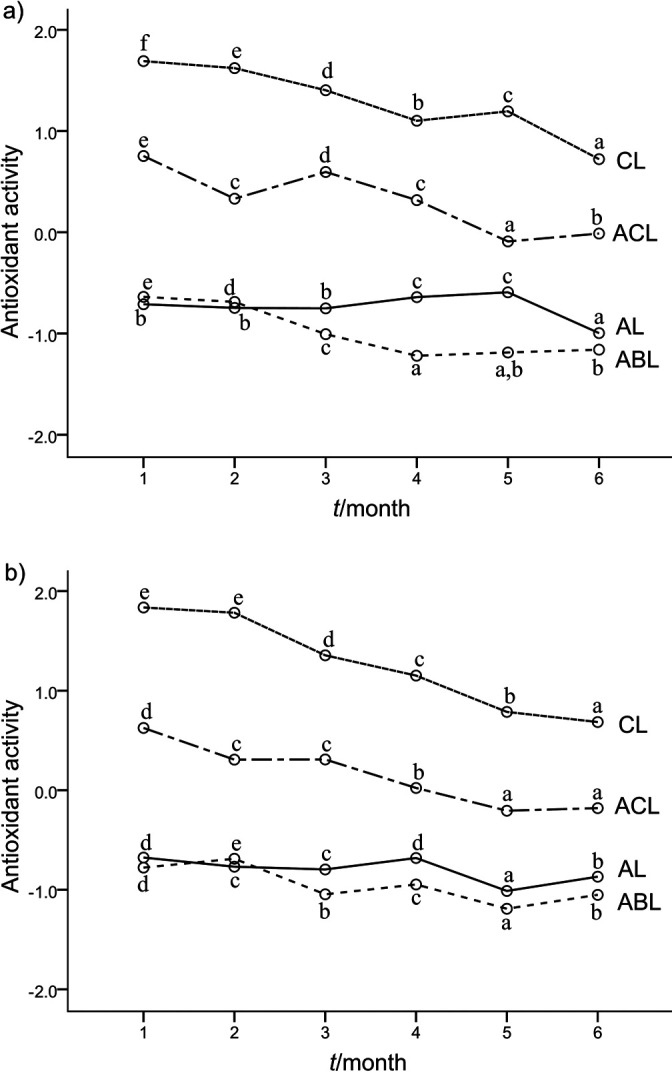
Apple and chokeberry liqueurs were produced from apple and chokeberry pomace extracts, respectively. Apple/chokeberry and apple/beetroot liqueurs were obtained by combining apple pomace with chokeberry and beetroot pomace extracts in ratios 50:50 and 70:30, respectively. The sensory quality and acceptability of freshly prepared liqueurs were evaluated by experts and consumers. Sugars and phenolics were identified and quantified by high-performance anion-exchange chromatography with pulsed-amperometric detection (HPAEC-PAD) and high-performance liquid chromatography-diode array detection-tandem mass spectrometry (HPLC-DAD-MS/MS), respectively. Storability was preliminarily evaluated based on monitoring of total phenolic concentration, antioxidant activity and colour each month during 6 months of storage at 4 and 22 °C.
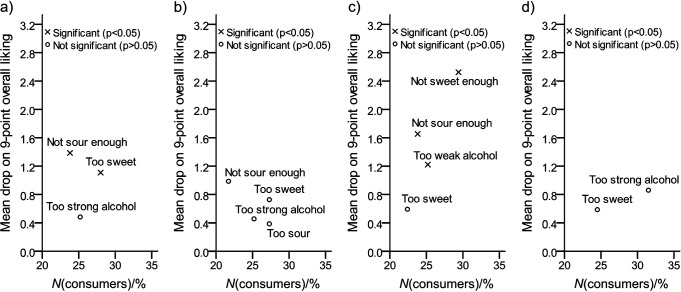
The expert and the consumer testing indicated that apple and chokeberry pomace could be used as raw materials without any flavour corrections while apple/beetroot pomace liqueur would require modification. High total phenolic content and antioxidant activity were found in all freshly prepared liqueurs, with chokeberry liqueur being by far superior. Among identified phenolics, ellagic acid and phlorizin were quantified as the most prominent, except in chokeberry liqueur, where phlorizin was not quantified. Despite the decrease in total phenolic concentration and antioxidant activity after 6 months, liqueurs still represented a rich source of phytochemicals. The highest phenolic compound retention and antioxidant activity maintenance were observed in chokeberry liqueur. Also, the appealing colour was retained despite the changes detected in chromatic characteristics.
The possibility of apple, beetroot and chokeberry pomace restoration into the food chain by the production of liqueurs has been demonstrated for the first time. Functional and sensorial properties of newly developed liqueurs indicated that the selected pomace represents the promising raw material for liqueur production. The applied approach represents a contribution to the circular economy in juice production.
苹果汁是全球最受欢迎且备受喜爱的饮品之一。由于消费者健康意识的提高,甜菜根汁和黑加仑汁的消费量也呈上升趋势。尽管果渣在加工水果中占相当大的比例且是生物活性化合物的丰富来源,但在果汁生产后剩余的果渣仍未得到充分利用。在此,研究了在利口酒配方中使用苹果、甜菜根和黑加仑果渣的可能性。
分别用苹果果渣提取物和黑加仑果渣提取物生产苹果利口酒和黑加仑利口酒。苹果/黑加仑利口酒和苹果/甜菜根利口酒分别通过将苹果果渣与黑加仑果渣提取物和甜菜根果渣提取物按50:50和70:30的比例混合制得。由专家和消费者对新制备的利口酒的感官品质和可接受性进行评估。分别采用高效阴离子交换色谱-脉冲安培检测法(HPAEC-PAD)和高效液相色谱-二极管阵列检测-串联质谱法(HPLC-DAD-MS/MS)对糖类和酚类物质进行鉴定和定量。通过在4℃和22℃下储存6个月期间每月监测总酚浓度、抗氧化活性和颜色,初步评估了储存稳定性。
专家和消费者测试表明,苹果果渣和黑加仑果渣可直接用作原料而无需进行任何风味调整,而苹果/甜菜根果渣利口酒则需要进行改良。所有新制备的利口酒中总酚含量和抗氧化活性都很高,其中黑加仑利口酒的含量远远高于其他利口酒。在鉴定出的酚类物质中,除黑加仑利口酒未检测到根皮苷外,鞣花酸和根皮苷被定量为最主要的酚类物质。尽管6个月后总酚浓度和抗氧化活性有所下降,但利口酒仍是植物化学物质的丰富来源。黑加仑利口酒中酚类化合物的保留率和抗氧化活性的维持率最高。此外,尽管颜色特征发生了变化,但仍保留了吸引人的色泽。
首次证明了通过生产利口酒将苹果、甜菜根和黑加仑果渣重新纳入食物链的可能性。新开发的利口酒的功能和感官特性表明,所选果渣是利口酒生产的有前途的原料。所采用的方法为果汁生产中的循环经济做出了贡献。