Haydon Trent D, Seymour Justin R, Raina Jean-Baptiste, Edmondson John, Siboni Nachshon, Matthews Jennifer L, Camp Emma F, Suggett David J
Climate Change Cluster, University of Technology, Ultimo, NSW, Australia.
Wavelength Reef Cruises, Port Douglas, QLD, Australia.
Front Microbiol. 2021 Oct 25;12:756091. doi: 10.3389/fmicb.2021.756091. eCollection 2021.
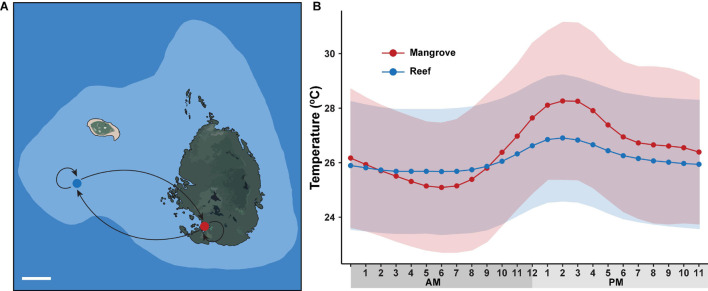
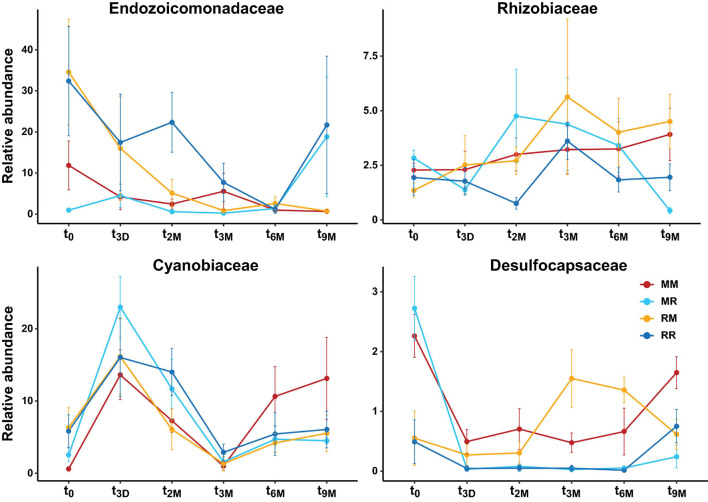
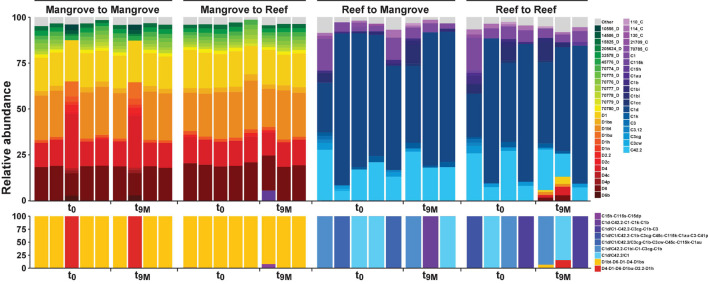
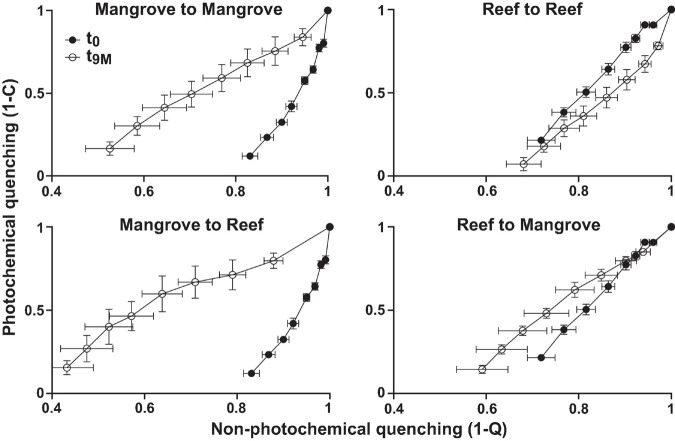
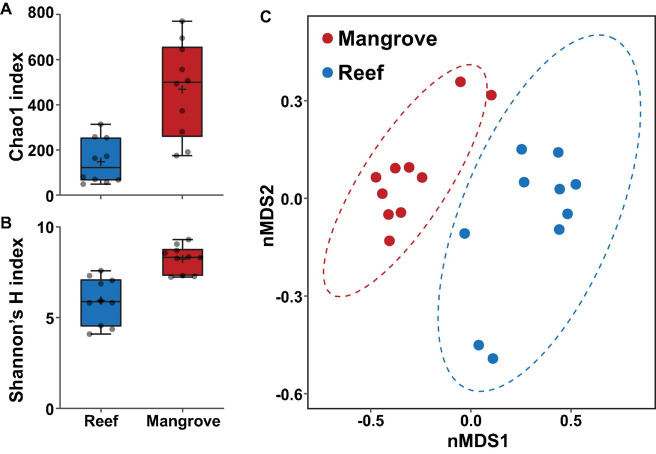
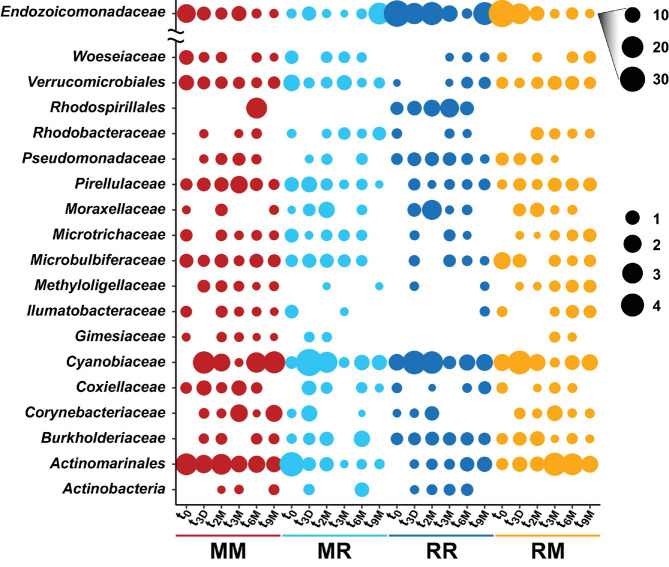
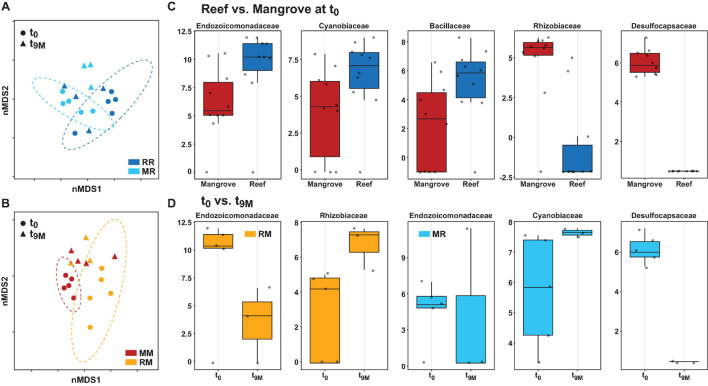
It has been proposed that an effective approach for predicting whether and how reef-forming corals persist under future climate change is to examine populations thriving in present day extreme environments, such as mangrove lagoons, where water temperatures can exceed those of reef environments by more than 3°C, pH levels are more acidic (pH < 7.9, often below 7.6) and O concentrations are regularly considered hypoxic (<2 mg/L). Defining the physiological features of these "extreme" corals, as well as their relationships with the, often symbiotic, organisms within their microbiome, could increase our understanding of how corals will persist into the future. To better understand coral-microbe relationships that potentially underpin coral persistence within extreme mangrove environments, we therefore conducted a 9-month reciprocal transplant experiment, whereby specimens of the coral were transplanted between adjacent mangrove and reef sites on the northern Great Barrier Reef. Bacterial communities associated with specimens native to the reef environment were dominated by , while Symbiodiniaceae communities were dominated by members of the genus. In contrast, colonies native to the mangrove site exhibited highly diverse bacterial communities with no dominating members, and Symbiodiniaceae communities dominated by All corals survived for 9 months after being transplanted from reef-to-mangrove, mangrove-to-reef environments (as well as control within environment transplants), and during this time there were significant changes in the bacterial communities, but not in the Symbiodiniaceae communities or their photo-physiological functioning. In reef-to-mangrove transplanted corals, there were varied, but sometimes rapid shifts in the associated bacterial communities, including a loss of "core" bacterial members after 9 months where coral bacterial communities began to resemble those of the native mangrove corals. Bacterial communities associated with mangrove-to-reef colonies also changed from their original composition, but remained different to the native reef corals. Our data demonstrates that associated bacterial communities are strongly influenced by changes in environmental conditions, whereas Symbiodiniaceae associated communities remain highly stable.
有人提出,预测造礁珊瑚在未来气候变化下能否以及如何存续的一种有效方法,是研究现今在极端环境中繁盛的珊瑚种群,比如红树林泻湖,那里的水温可能比珊瑚礁环境的水温高出3°C以上,pH值更酸(pH < 7.9,通常低于7.6),氧气浓度经常被认为处于缺氧状态(<2毫克/升)。确定这些“极端”珊瑚的生理特征,以及它们与微生物群落中通常为共生关系的生物之间的关系,可能会增进我们对珊瑚未来如何存续的理解。因此,为了更好地理解可能支撑珊瑚在极端红树林环境中存续的珊瑚-微生物关系,我们进行了一项为期9个月的相互移植实验,即将珊瑚标本在大堡礁北部相邻的红树林和珊瑚礁地点之间进行移植。与珊瑚礁环境原生的标本相关的细菌群落以 为主,而共生藻群落则以 属的成员为主。相比之下,红树林地点原生的 群体表现出高度多样的细菌群落,没有占主导地位的成员,共生藻群落则以 为主。所有珊瑚从珊瑚礁移植到红树林、从红树林移植到珊瑚礁环境(以及环境内的对照移植)后都存活了9个月,在此期间细菌群落发生了显著变化,但共生藻群落及其光生理功能没有变化。在从珊瑚礁移植到红树林的珊瑚中,相关细菌群落有不同但有时迅速的变化,包括9个月后“核心”细菌成员的丧失,此时珊瑚细菌群落开始类似于原生红树林珊瑚的细菌群落。与从红树林移植到珊瑚礁的 群体相关的细菌群落也从其原始组成发生了变化,但与原生珊瑚礁珊瑚仍有差异。我们的数据表明,与 相关的细菌群落受到环境条件变化的强烈影响,而与共生藻相关的群落则保持高度稳定。