GEOMAR, Helmholtz Centre for Ocean Research, Kiel, Germany.
Phuket Marine Biological Center (PMBC), Phuket, Thailand.
Microbiome. 2021 May 6;9(1):102. doi: 10.1186/s40168-021-01053-6.
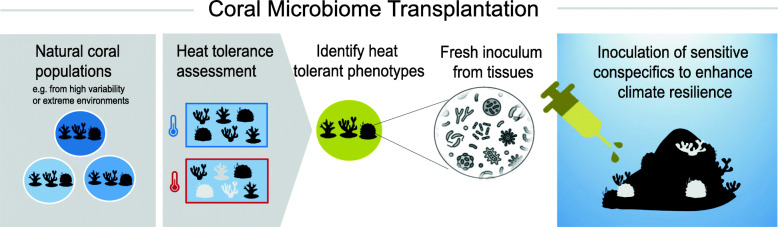
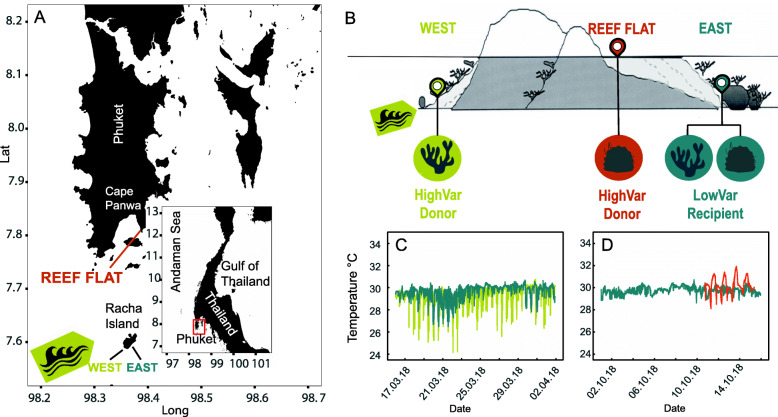
Microbiome manipulation could enhance heat tolerance and help corals survive the pressures of ocean warming. We conducted coral microbiome transplantation (CMT) experiments using the reef-building corals, Pocillopora and Porites, and investigated whether this technique can benefit coral heat resistance while modifying the bacterial microbiome. Initially, heat-tolerant donors were identified in the wild. We then used fresh homogenates made from coral donor tissues to inoculate conspecific, heat-susceptible recipients and documented their bleaching responses and microbiomes by 16S rRNA gene metabarcoding.
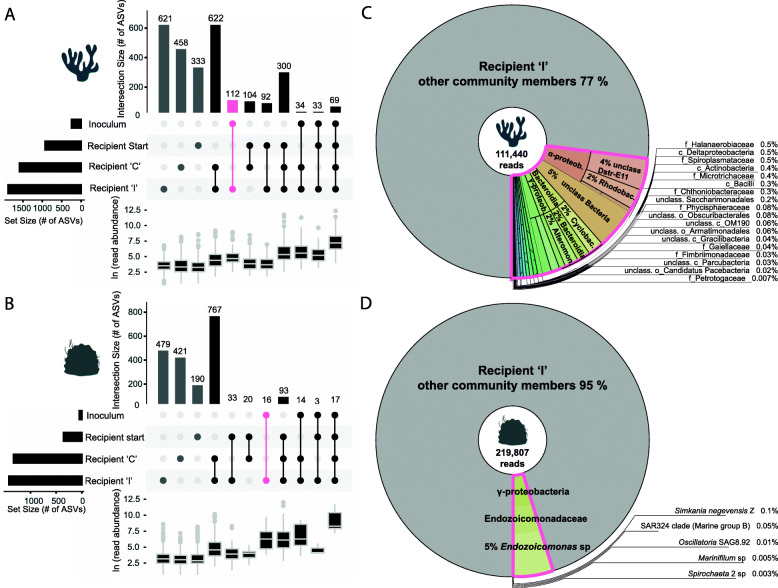
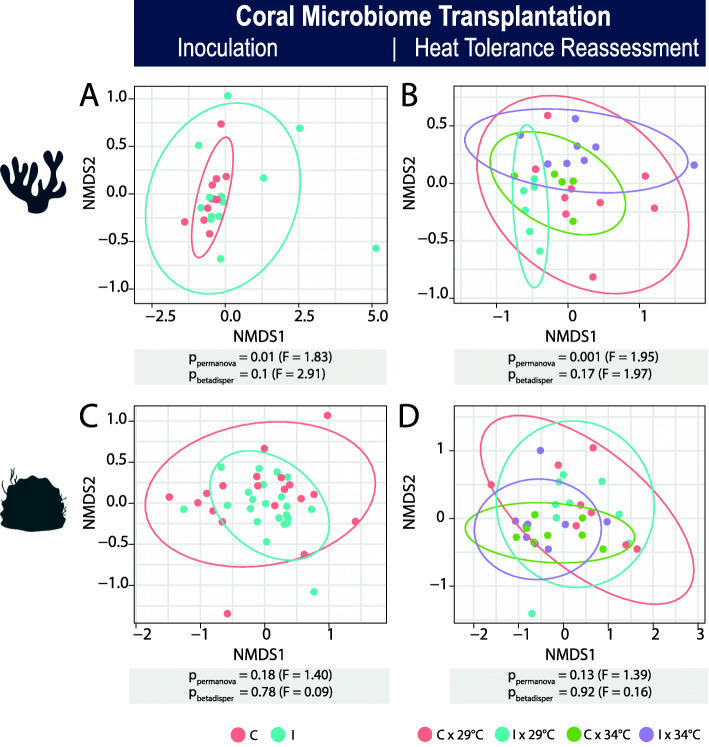
Recipients of both coral species bleached at lower rates compared to the control group when exposed to short-term heat stress (34 °C). One hundred twelve (Pocillopora sp.) and sixteen (Porites sp.) donor-specific bacterial species were identified in the microbiomes of recipients indicating transmission of bacteria. The amplicon sequence variants of the majority of these transmitted bacteria belonged to known, putatively symbiotic bacterial taxa of corals and were linked to the observed beneficial effect on the coral stress response. Microbiome dynamics in our experiments support the notion that microbiome community evenness and dominance of one or few bacterial species, rather than host-species identity, were drivers for microbiome stability in a holobiont context.
Our results suggest that coral recipients likely favor the uptake of putative bacterial symbionts, recommending to include these taxonomic groups in future coral probiotics screening efforts. Our study suggests a scenario where these donor-specific bacterial symbionts might have been more efficient in supporting the recipients to resist heat stress compared to the native symbionts present in the control group. These findings urgently call for further experimental investigation of the mechanisms of action underlying the beneficial effect of CMT and for field-based long-term studies testing the persistence of the effect. Video abstract.
微生物组的操纵可以提高珊瑚的耐热性,帮助它们在海洋变暖的压力下生存。我们对造礁珊瑚(Pocillopora 和 Porites)进行了珊瑚微生物组移植(CMT)实验,研究了这种技术是否可以在改变细菌微生物组的同时提高珊瑚的耐热性。首先,在野外确定了耐热供体。然后,我们使用来自珊瑚供体组织的新鲜匀浆来接种同种、耐热性差的受主,并通过 16S rRNA 基因宏条形码记录它们的白化反应和微生物组。
与对照组相比,在短期热应激(34°C)下,两种珊瑚的受主白化率都较低。在受主的微生物组中鉴定出 112 种(Pocillopora sp.)和 16 种(Porites sp.)供体特异性细菌,表明细菌的传播。这些传播细菌的大多数扩增子序列变异属于珊瑚的已知、假定共生细菌分类群,与观察到的对珊瑚应激反应的有益影响有关。我们实验中的微生物组动态支持这样一种观点,即微生物组群落均匀度和少数几种细菌的优势,而不是宿主物种的身份,是在整个生物组背景下微生物组稳定性的驱动因素。
我们的结果表明,珊瑚受主可能更倾向于吸收假定的细菌共生体,建议在未来的珊瑚益生菌筛选工作中包括这些分类群。我们的研究表明,与对照组中存在的本地共生体相比,这些供体特异性细菌共生体可能更有效地支持受主抵抗热应激。这些发现迫切需要进一步研究 CMT 有益效果的作用机制,并进行基于野外的长期研究,以测试效果的持久性。视频摘要。