• 文献检索
  • 文档翻译
  • 深度研究
  • 学术资讯
  • Suppr Zotero 插件Zotero 插件
  • 邀请有礼
  • 套餐&价格
  • 历史记录
应用&插件
Suppr Zotero 插件Zotero 插件浏览器插件Mac 客户端Windows 客户端微信小程序
定价
高级版会员购买积分包购买API积分包
服务
文献检索文档翻译深度研究API 文档MCP 服务
关于我们
关于 Suppr公司介绍联系我们用户协议隐私条款
关注我们

Suppr 超能文献

核心技术专利:CN118964589B侵权必究
粤ICP备2023148730 号-1Suppr @ 2026

文献检索

告别复杂PubMed语法,用中文像聊天一样搜索,搜遍4000万医学文献。AI智能推荐,让科研检索更轻松。

立即免费搜索

文件翻译

保留排版,准确专业,支持PDF/Word/PPT等文件格式,支持 12+语言互译。

免费翻译文档

深度研究

AI帮你快速写综述,25分钟生成高质量综述,智能提取关键信息,辅助科研写作。

立即免费体验

重度创伤性脑损伤后针对情感面孔的视觉扫描路径训练:一项单病例设计。

Visual scanpath training to emotional faces following severe traumatic brain injury: A single case design.

作者信息

Vassallo Suzane, Douglas Jacinta

机构信息

La Trobe University, Melbourne, Australia.

University of Technology, Sydney, Australia.

出版信息

J Eye Mov Res. 2021 Oct 21;14(4). doi: 10.16910/jemr.14.4.6. eCollection 2021.

DOI:10.16910/jemr.14.4.6
PMID:34760060
原文链接:https://pmc.ncbi.nlm.nih.gov/articles/PMC8575428/
Abstract

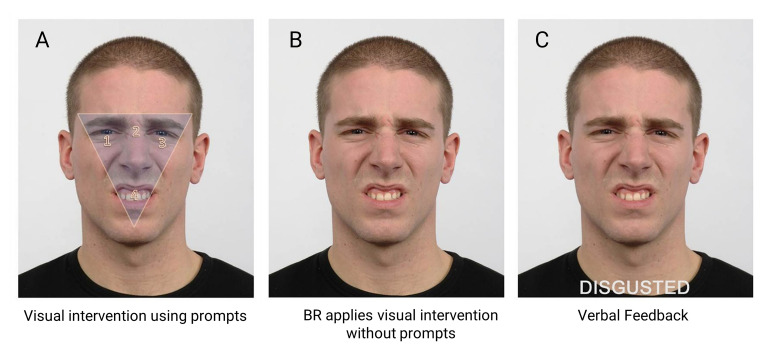
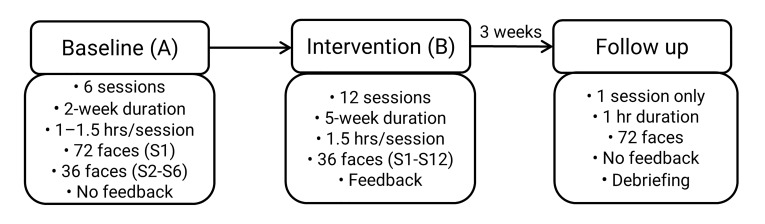
The visual scanpath to emotional facial expressions was recorded in BR, a 35-year-old male with chronic severe traumatic brain injury (TBI), both before and after he underwent intervention. The novel intervention paradigm combined visual scanpath training with verbal feedback and was implemented over a 3-month period using a single case design (AB) with one follow up session. At baseline BR's scanpath was restricted, characterised by gaze allocation primarily to salient facial features on the right side of the face stimulus. Following intervention his visual scanpath became more lateralised, although he continued to demonstrate an attentional bias to the right side of the face stimulus. This study is the first to demonstrate change in both the pattern and the position of the visual scanpath to emotional faces following intervention in a person with chronic severe TBI. In addition, these findings extend upon our previous work to suggest that modification of the visual scanpath through targeted facial feature training can support improved facial recognition performance in a person with severe TBI.

摘要

在一名35岁患有慢性重度创伤性脑损伤(TBI)的男性BR身上,记录了其在接受干预前后对情绪化面部表情的视觉扫描路径。这种新颖的干预范式将视觉扫描路径训练与言语反馈相结合,并采用单病例设计(AB)在3个月的时间内实施,同时进行了一次随访。在基线期,BR的扫描路径受限,其特征是主要将目光分配到面部刺激右侧的显著面部特征上。干预后,他的视觉扫描路径变得更加偏向一侧,尽管他仍表现出对面部刺激右侧的注意力偏向。本研究首次证明,对患有慢性重度TBI的人进行干预后,其对情绪化面孔的视觉扫描路径在模式和位置上均发生了变化。此外,这些发现扩展了我们之前的研究成果,表明通过有针对性的面部特征训练来改变视觉扫描路径,可以支持重度TBI患者提高面部识别能力。
https://cdn.ncbi.nlm.nih.gov/pmc/blobs/57a9/8575428/75db1f83a461/jemr-14-04-f-figure-05.jpg
https://cdn.ncbi.nlm.nih.gov/pmc/blobs/57a9/8575428/ca462d98b1e1/jemr-14-04-f-figure-01.jpg
https://cdn.ncbi.nlm.nih.gov/pmc/blobs/57a9/8575428/69f07129a0cd/jemr-14-04-f-figure-02.jpg
https://cdn.ncbi.nlm.nih.gov/pmc/blobs/57a9/8575428/b825a1595a6b/jemr-14-04-f-figure-03.jpg
https://cdn.ncbi.nlm.nih.gov/pmc/blobs/57a9/8575428/40b31af97bee/jemr-14-04-f-figure-04.jpg
https://cdn.ncbi.nlm.nih.gov/pmc/blobs/57a9/8575428/75db1f83a461/jemr-14-04-f-figure-05.jpg
https://cdn.ncbi.nlm.nih.gov/pmc/blobs/57a9/8575428/ca462d98b1e1/jemr-14-04-f-figure-01.jpg
https://cdn.ncbi.nlm.nih.gov/pmc/blobs/57a9/8575428/69f07129a0cd/jemr-14-04-f-figure-02.jpg
https://cdn.ncbi.nlm.nih.gov/pmc/blobs/57a9/8575428/b825a1595a6b/jemr-14-04-f-figure-03.jpg
https://cdn.ncbi.nlm.nih.gov/pmc/blobs/57a9/8575428/40b31af97bee/jemr-14-04-f-figure-04.jpg
https://cdn.ncbi.nlm.nih.gov/pmc/blobs/57a9/8575428/75db1f83a461/jemr-14-04-f-figure-05.jpg

相似文献

1
Visual scanpath training to emotional faces following severe traumatic brain injury: A single case design.重度创伤性脑损伤后针对情感面孔的视觉扫描路径训练:一项单病例设计。
J Eye Mov Res. 2021 Oct 21;14(4). doi: 10.16910/jemr.14.4.6. eCollection 2021.
2
A novel combined visual scanning and verbal cuing intervention improves facial affect recognition after chronic severe traumatic brain injury: A single case design.一种新型的视觉扫描与言语提示相结合的干预措施可改善慢性重度创伤性脑损伤后的面部表情识别:一项单病例设计。
Neuropsychol Rehabil. 2021 Jul;31(6):863-888. doi: 10.1080/09602011.2020.1742744. Epub 2020 Mar 18.
3
Schizophrenia and affective disorder show different visual scanning behavior for faces: a trait versus state-based distinction?精神分裂症和情感障碍在面部视觉扫描行为上表现出差异:基于特质与基于状态的区别?
Biol Psychiatry. 2002 Aug 15;52(4):338-48. doi: 10.1016/s0006-3223(02)01356-2.
4
The attenuated visual scanpaths of patients with schizophrenia whilst recognizing emotional facial expressions are worsened in natural social scenes.精神分裂症患者在识别情绪面部表情时,其视觉扫视轨迹减弱,而在自然社会场景中则会进一步恶化。
Schizophr Res. 2020 Jun;220:155-163. doi: 10.1016/j.schres.2020.03.040. Epub 2020 Apr 4.
5
Effects of Training of Affect Recognition on the recognition and visual exploration of emotional faces in schizophrenia.情感识别训练对精神分裂症患者面部表情识别及视觉探索的影响
Schizophr Res. 2014 Nov;159(2-3):485-90. doi: 10.1016/j.schres.2014.09.003. Epub 2014 Sep 20.
6
Effects of facial emotion recognition remediation on visual scanning of novel face stimuli.面部情绪识别矫正对新奇面孔刺激视觉扫描的影响。
Schizophr Res. 2012 Nov;141(2-3):234-40. doi: 10.1016/j.schres.2012.08.006. Epub 2012 Sep 5.
7
Image complexity analysis with scanpath identification using remote gaze estimation model.使用远程注视估计模型进行扫描路径识别的图像复杂度分析
Multimed Tools Appl. 2020;79(33-34):24393-24412. doi: 10.1007/s11042-020-09117-9. Epub 2020 Jun 20.
8
Scanning to conclusions? Visual attention to neutral faces under stress in individuals with and without subclinical paranoia.扫描得出结论?有或无亚临床偏执狂个体在压力下对中性面孔的视觉注意力
J Behav Ther Exp Psychiatry. 2017 Sep;56:137-143. doi: 10.1016/j.jbtep.2016.08.013. Epub 2016 Aug 28.
9
Social phobics do not see eye to eye: a visual scanpath study of emotional expression processing.社交恐惧症患者看法不一:一项关于情绪表情加工的视觉扫描路径研究。
J Anxiety Disord. 2003;17(1):33-44. doi: 10.1016/s0887-6185(02)00180-9.
10
Emotion recognition abilities across stimulus modalities in schizophrenia and the role of visual attention.精神分裂症跨感觉模态的情绪识别能力及视觉注意力的作用。
Schizophr Res. 2013 Dec;151(1-3):102-6. doi: 10.1016/j.schres.2013.09.026. Epub 2013 Oct 11.

引用本文的文献

1
SARS-CoV-2 Infection Impairs Oculomotor Functions: A Longitudinal Eye-tracking Study.严重急性呼吸综合征冠状病毒2感染损害动眼功能:一项纵向眼动追踪研究。
J Eye Mov Res. 2024 Feb 27;17(1). doi: 10.16910/jemr.17.1.2. eCollection 2024.
2
Baseline Variability Affects N-of-1 Intervention Effect: Simulation and Field Studies.基线变异性影响单病例干预效果:模拟与现场研究。
J Pers Med. 2023 Apr 24;13(5):720. doi: 10.3390/jpm13050720.
3
Video game training in traumatic brain injury patients: an exploratory case report study using eye tracking.

本文引用的文献

1
A novel combined visual scanning and verbal cuing intervention improves facial affect recognition after chronic severe traumatic brain injury: A single case design.一种新型的视觉扫描与言语提示相结合的干预措施可改善慢性重度创伤性脑损伤后的面部表情识别:一项单病例设计。
Neuropsychol Rehabil. 2021 Jul;31(6):863-888. doi: 10.1080/09602011.2020.1742744. Epub 2020 Mar 18.
2
Community Integration in Traumatic Brain Injury: The Contributing Factor of Affect Recognition Deficits.创伤性脑损伤中的社区融入:影响识别缺陷的促成因素。
J Int Neuropsychol Soc. 2019 Sep;25(8):890-895. doi: 10.1017/S1355617719000559. Epub 2019 Jun 10.
3
创伤性脑损伤患者的电子游戏训练:一项使用眼动追踪的探索性病例报告研究
J Eye Mov Res. 2022 Jun 15;15(1). doi: 10.16910/jemr.15.1.6. eCollection 2022.
Disorders of Emotional Communication in Traumatic Brain Injury.
创伤性脑损伤中的情感交流障碍
Semin Speech Lang. 2019 Feb;40(1):13-26. doi: 10.1055/s-0038-1676364. Epub 2019 Jan 7.
4
Relationship between social cognition and social behaviour following traumatic brain injury.创伤性脑损伤后社会认知与社会行为之间的关系。
Brain Inj. 2019;33(1):62-68. doi: 10.1080/02699052.2018.1531301. Epub 2018 Oct 16.
5
Facial-affect recognition deficit as a predictor of different aspects of social-communication impairment in traumatic brain injury.面部表情识别缺陷可预测创伤性脑损伤患者社会交往障碍的不同方面。
Neuropsychology. 2018 May;32(4):476-483. doi: 10.1037/neu0000368.
6
Functional neural correlates of facial affect recognition impairment following TBI.脑外伤后面部情感识别障碍的功能神经相关性。
Brain Imaging Behav. 2019 Apr;13(2):526-540. doi: 10.1007/s11682-018-9889-x.
7
Linear Trend in Single-Case Visual and Quantitative Analyses.单病例视觉与定量分析中的线性趋势
Behav Modif. 2018 Sep;42(5):684-706. doi: 10.1177/0145445517726301. Epub 2017 Aug 17.
8
Social Behavior and Impairments in Social Cognition Following Traumatic Brain Injury.创伤性脑损伤后的社会行为与社会认知障碍
J Int Neuropsychol Soc. 2017 May;23(5):400-411. doi: 10.1017/S1355617717000182. Epub 2017 Apr 12.
9
What to expect from your remote eye-tracker when participants are unrestrained.当被试者不受约束时,您可以从远程眼动追踪器中获得哪些信息。
Behav Res Methods. 2018 Feb;50(1):213-227. doi: 10.3758/s13428-017-0863-0.
10
Relationship between individual differences in functional connectivity and facial-emotion recognition abilities in adults with traumatic brain injury.创伤性脑损伤成年患者功能连接的个体差异与面部情绪识别能力之间的关系
Neuroimage Clin. 2016 Dec 12;13:370-377. doi: 10.1016/j.nicl.2016.12.010. eCollection 2017.