Narasannaiah Arun H, Anwar Ali Z, Kv Manjunath, R Yeshwanth, Althaf Syed, Arakeri Praveen, Jain Siddharth, Kumar Rajalakshmi S, Ali Mohammed A, Manukonda Nikhil
Surgical Oncology, Kidwai Memorial Institute of Oncology, Bangalore, IND.
Cureus. 2021 Oct 7;13(10):e18576. doi: 10.7759/cureus.18576. eCollection 2021 Oct.
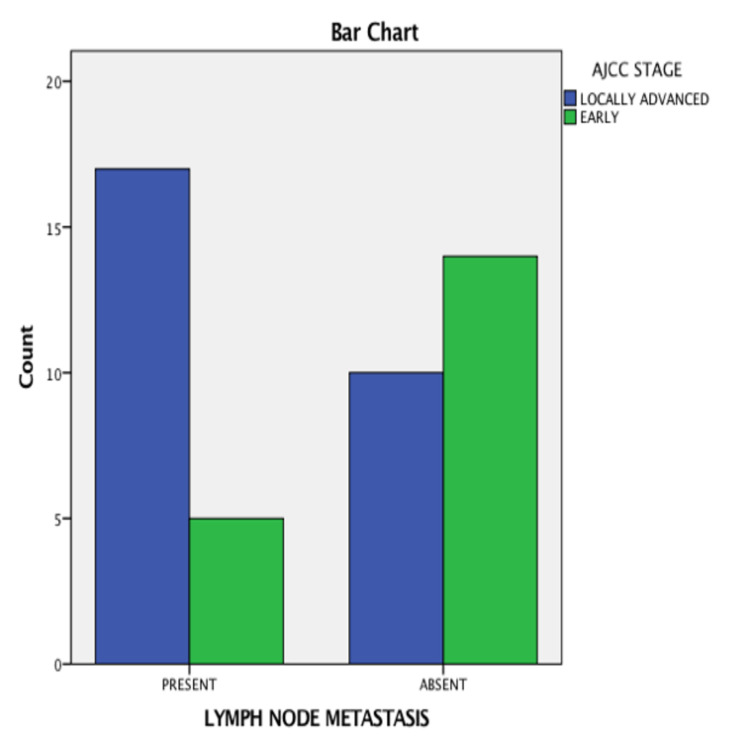
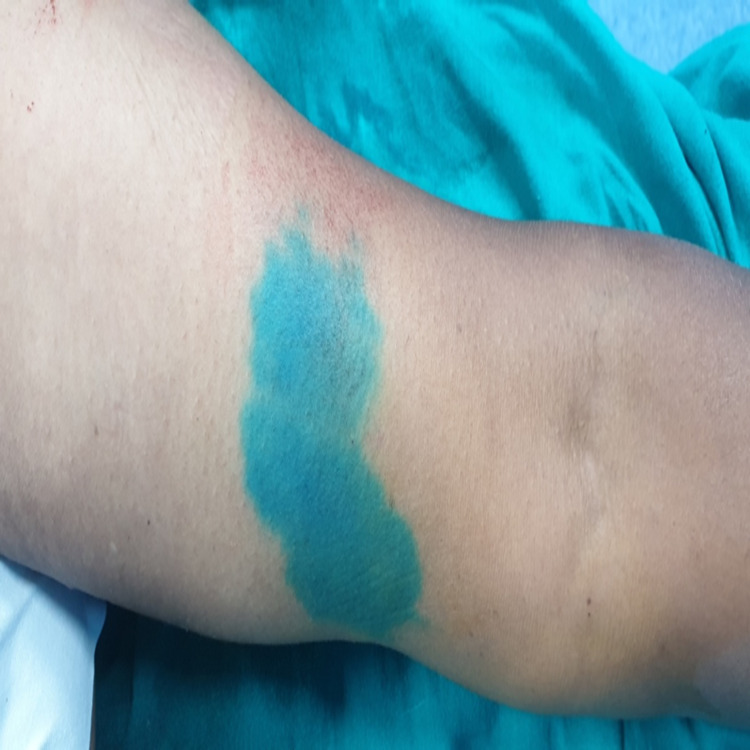
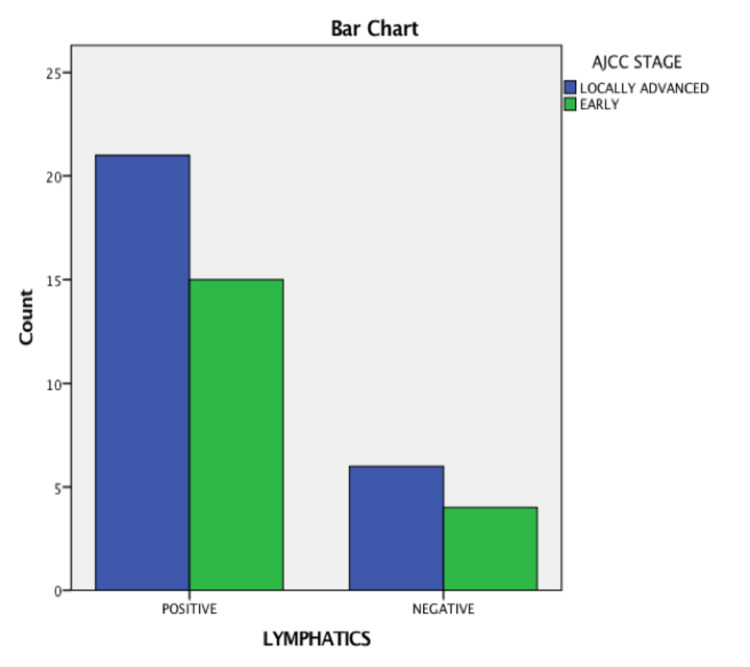
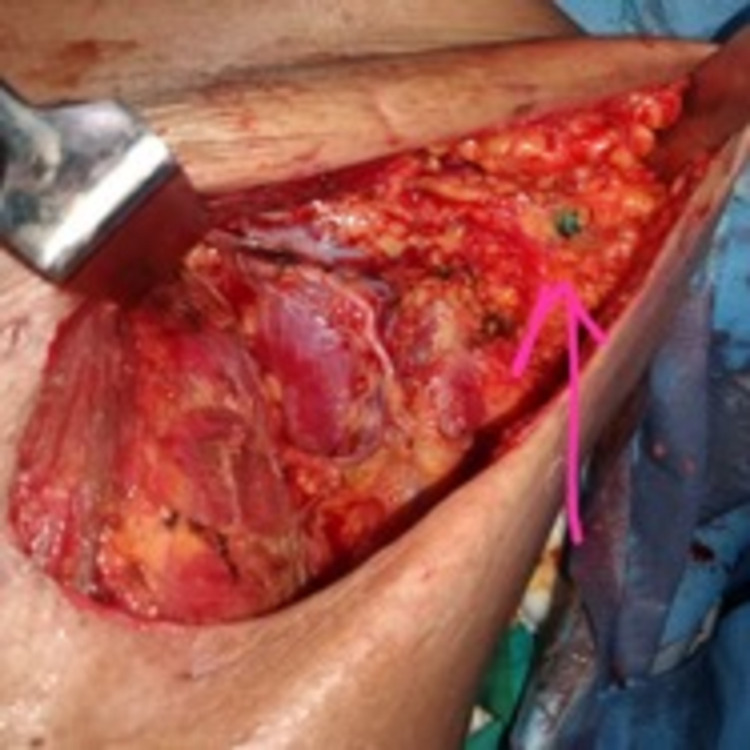
The concept of reverse axillary mapping originated with the main purpose of reducing lymphedema. In this study, we test the advantage of reverse axillary mapping to delineate the arm-draining lymph nodes and their involvement in various stages of breast carcinoma. In this study, we also attempt to redefine the template for axillary dissection in breast cancer. During the period of September 30, 2020, to August 30, 2021, 46 patients were recruited to undergo a procedure in which isosulfan blue dye was injected into the upper arm and the axilla was explored to isolate the lymph nodes. The lymph nodes were submitted for examination histopathologically. The results conclusively showed that axillary lymph node metastasis was only influenced by the advanced stage of the disease (p=0.014) and the visualization of the lymphatics was independent of the stage, type of surgery, decubitus, or age. The study conclusively shows that attempts to preserve the upper limb-draining nodes in advanced stages would be futile and the preservation of such lymph nodes should be limited to the early stages of breast cancer.
反向腋窝 mapping 的概念最初源于减少淋巴水肿的主要目的。在本研究中,我们测试了反向腋窝 mapping 在描绘手臂引流淋巴结及其在乳腺癌各个阶段受累情况方面的优势。在本研究中,我们还试图重新定义乳腺癌腋窝清扫的模板。在2020年9月30日至2021年8月30日期间,招募了46名患者接受将异硫蓝染料注入上臂并探查腋窝以分离淋巴结的手术。将淋巴结送检进行组织病理学检查。结果确凿地表明,腋窝淋巴结转移仅受疾病晚期影响(p = 0.014),淋巴管的可视化与分期、手术类型、卧位或年龄无关。该研究确凿地表明,在晚期试图保留上肢引流淋巴结将是徒劳的,此类淋巴结的保留应限于乳腺癌的早期阶段。