Mukesh Reshma Koolaparambil, Kalam Azeem Abdul, Nag Joydeep, Jaikumar Vishnu Sunil, Kunnakkadan Umerali, Kumar Nisha Asok, Suma Sreenath Muraleedharan, Rajavelu Arumugam, Johnson John Bernet
Pathogen Biology, Virology, Rajiv Gandhi Centre for Biotechnology, Thiruvananthapuram 695014, Kerala, India.
Manipal Academy of Higher Education, Manipal 576104, Karnataka, India.
Mol Ther Oncolytics. 2021 Oct 5;23:254-265. doi: 10.1016/j.omto.2021.09.009. eCollection 2021 Dec 17.
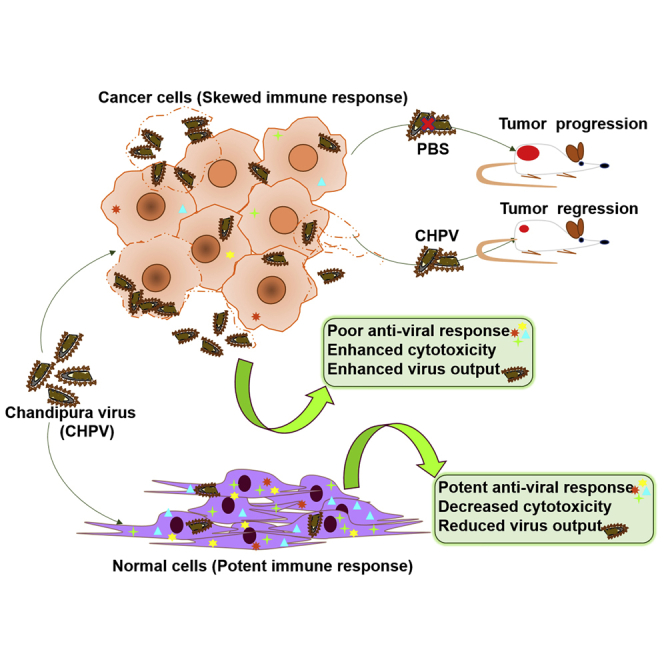
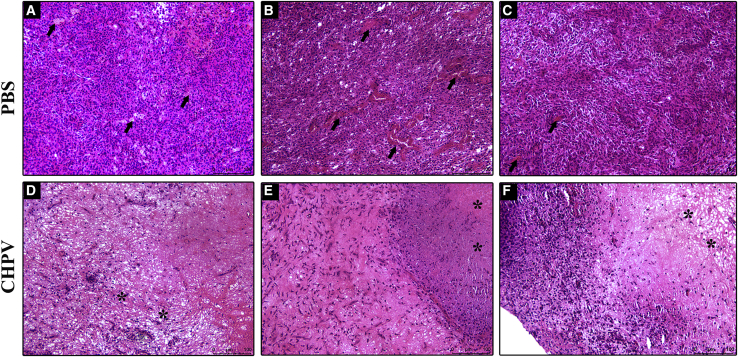
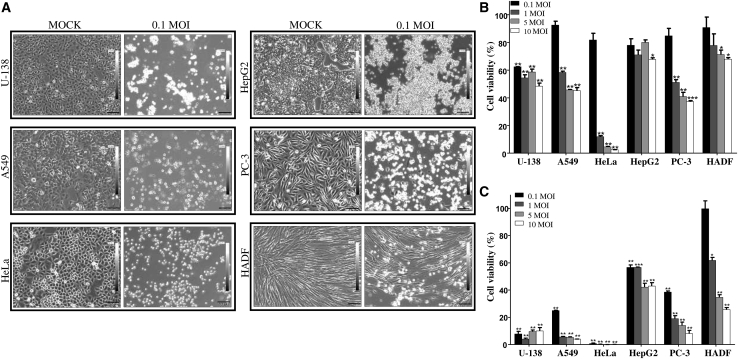
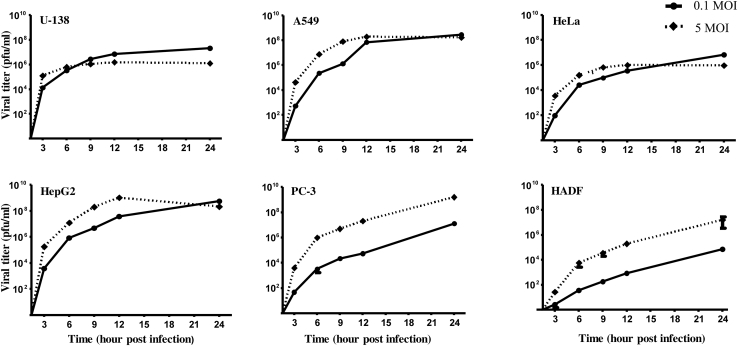
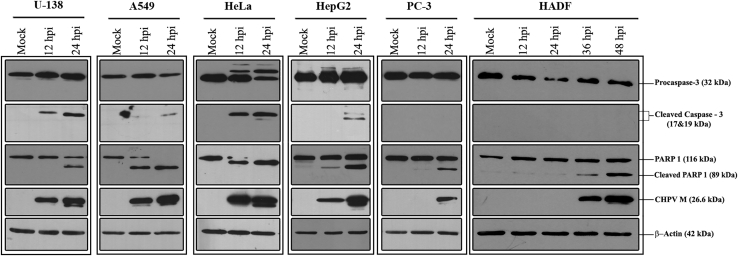
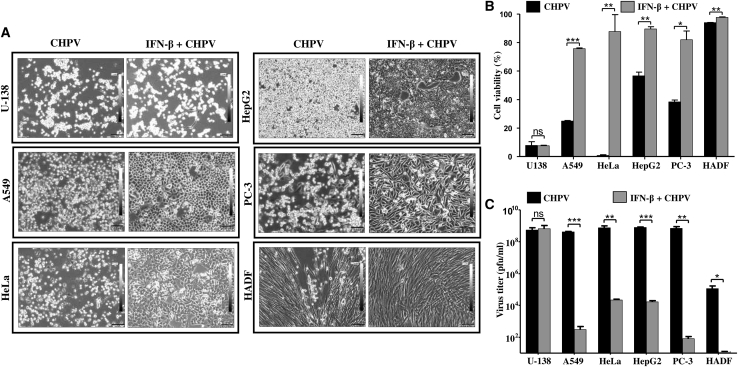
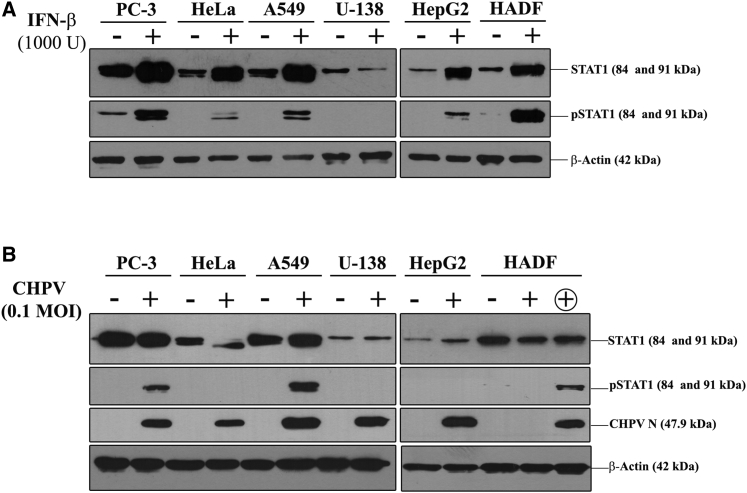
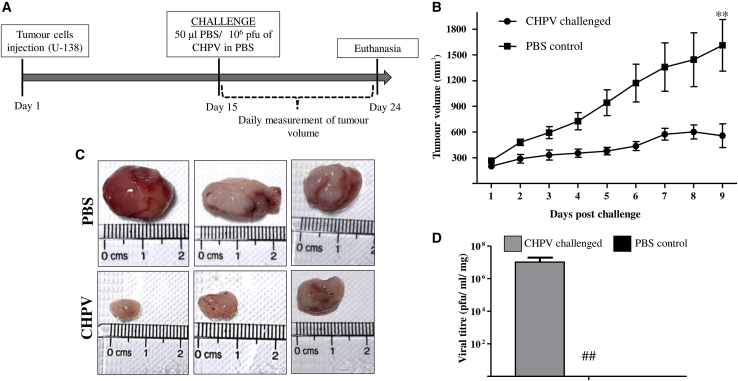
Chandipura virus (CHPV) is an emerging human pathogen of great clinical significance. In this study, we have investigated the susceptibility pattern of both normal and cancer cell lines of human origin to wild-type (wt) CHPV in order to explore the possibility of developing CHPV as an oncolytic vector (OV). Marked cytopathic effect along with enhanced virus output was observed in cancer cell lines (HeLa, A549, U-138, PC-3, and HepG2) in comparison to normal human adult dermal fibroblast (HADF) cells. At an MOI of 0.1, cancer cell lines were differentially susceptible to CHPV, with cells like HeLa and U-138 having pronounced cell death, while the PC-3 were comparatively resistant. All cell lines used in the study except U-138 restricted CHPV infection to varying degrees with IFN-β pre-treatment and supplementation of interferon (IFN) could neither activate the IFN signaling pathway in U-138 cells. Finally, U-138 tumor xenografts established in non-obese diabetic severe combined immunodeficiency (NOD/SCID) mice showed significant delay in tumor growth in the CHPV-challenged animals. Thus, targeted cytopathic effect in cancer cells at a very low dose with restricted replication in normal cells offers a rationale to exploit CHPV as an oncolytic vector in the future.
钱迪普拉病毒(CHPV)是一种新出现的具有重大临床意义的人类病原体。在本研究中,我们研究了源自人类的正常细胞系和癌细胞系对野生型(wt)CHPV的敏感性模式,以探索将CHPV开发为溶瘤载体(OV)的可能性。与正常人成人皮肤成纤维细胞(HADF)相比,在癌细胞系(HeLa、A549、U - 138、PC - 3和HepG2)中观察到明显的细胞病变效应以及病毒产量增加。在感染复数(MOI)为0.1时,癌细胞系对CHPV的敏感性存在差异,HeLa和U - 138等细胞出现明显的细胞死亡,而PC - 3相对耐药。除U - 138外,本研究中使用的所有细胞系在不同程度上限制了CHPV感染,用IFN - β预处理后,补充干扰素(IFN)既不能激活U - 138细胞中的IFN信号通路。最后,在非肥胖糖尿病严重联合免疫缺陷(NOD/SCID)小鼠中建立的U - 138肿瘤异种移植模型显示,在接受CHPV攻击的动物中肿瘤生长显著延迟。因此,在正常细胞中复制受限的情况下,以极低剂量在癌细胞中产生靶向细胞病变效应,为未来将CHPV开发为溶瘤载体提供了理论依据。