Qian Xiaoyu, Tang Jian, Chu Yongquan, Chen Ziqiang, Chen Liang, Shen Chao, Li Lin
Department of Head and Neck Surgery, The First Hospital of Jiaxing, The Affiliated Hospital of Jiaxing University, Jiaxing, Zhejiang, People's Republic of China.
Department of Nuclear Medicine Clinic, The First Hospital of Jiaxing, The Affiliated Hospital of Jiaxing University, Jiaxing, Zhejiang, People's Republic of China.
Int J Gen Med. 2021 Nov 4;14:7669-7679. doi: 10.2147/IJGM.S337089. eCollection 2021.
Head and neck squamous cell carcinoma (HNSCC) is an extremely heterogeneous malignant cancer with poor prognosis. Pyroptosis is defined as a novel inflammation-dependent programmed cell death. However, the pyroptosis-associated gene expression in HNSCC and their relationship with prognosis are still indistinct.
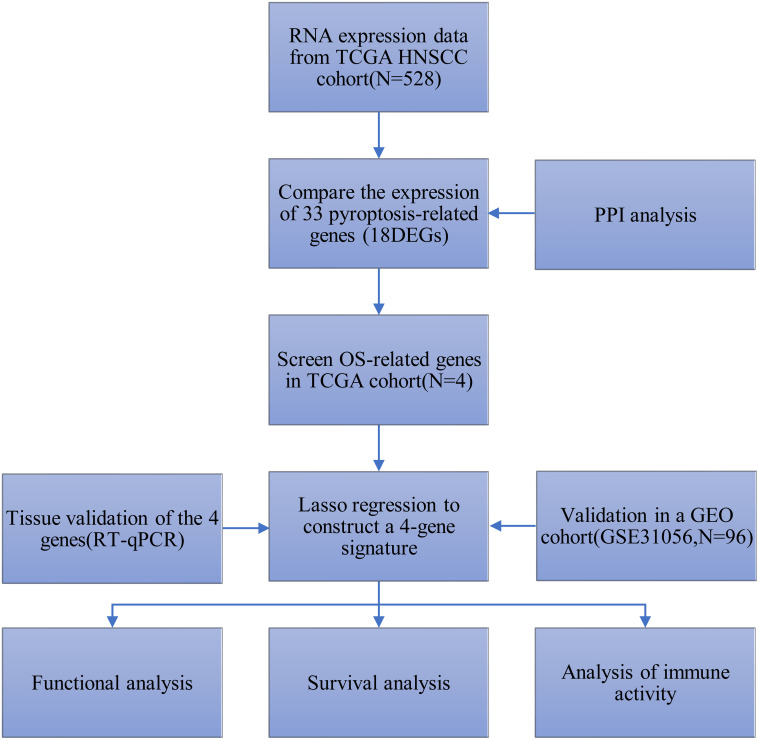
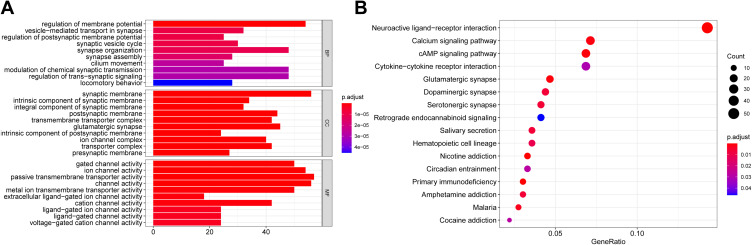
We acquired the mRNA expression information of HNSCC patients from publicly available TCGA and GEO databases. We compared the tumor issues and adjacent normal tissues in terms of the gene expression for the purpose of identifying differentially expressed genes (DEGs). Based on these genes, we established a risk signature by the LASSO Cox regression in the TCGA cohort and validated the results in a GEO cohort. We also verified the levels of relevant mRNA expression in the model by RT-qPCR analysis. Eventually, functional enrichment approach was carried out to explore the potential mechanisms.
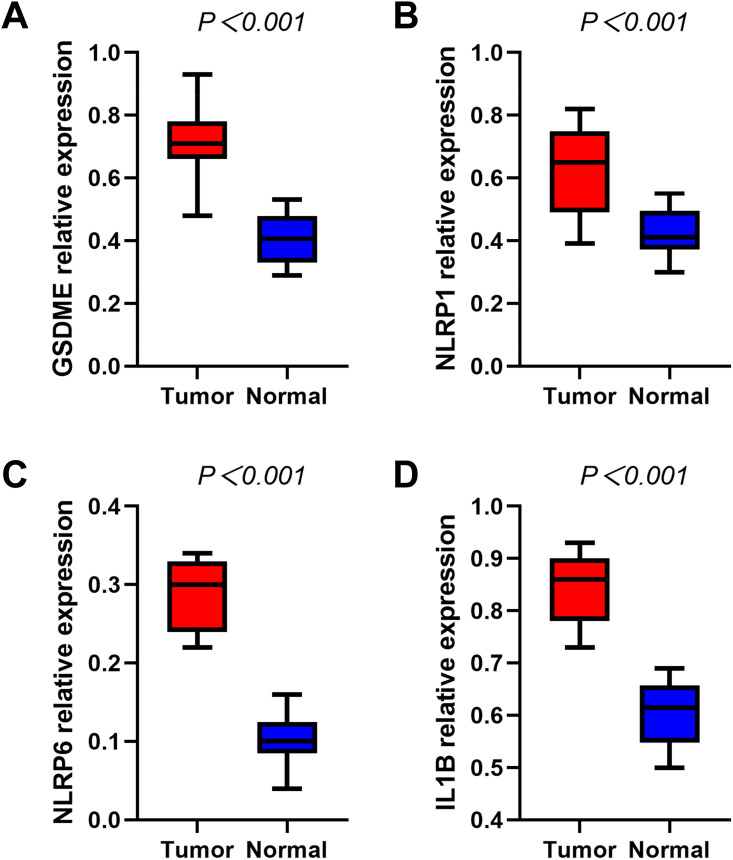
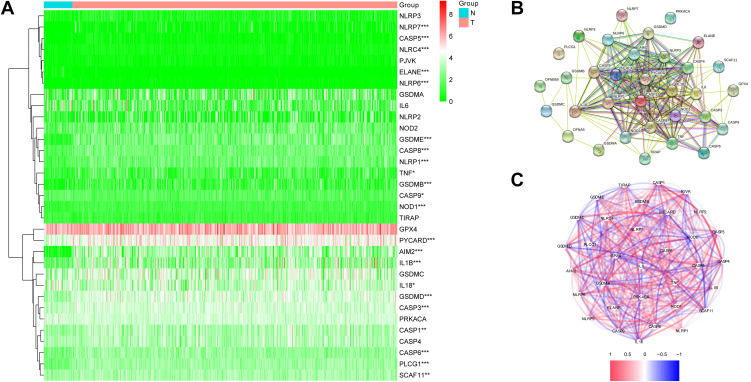
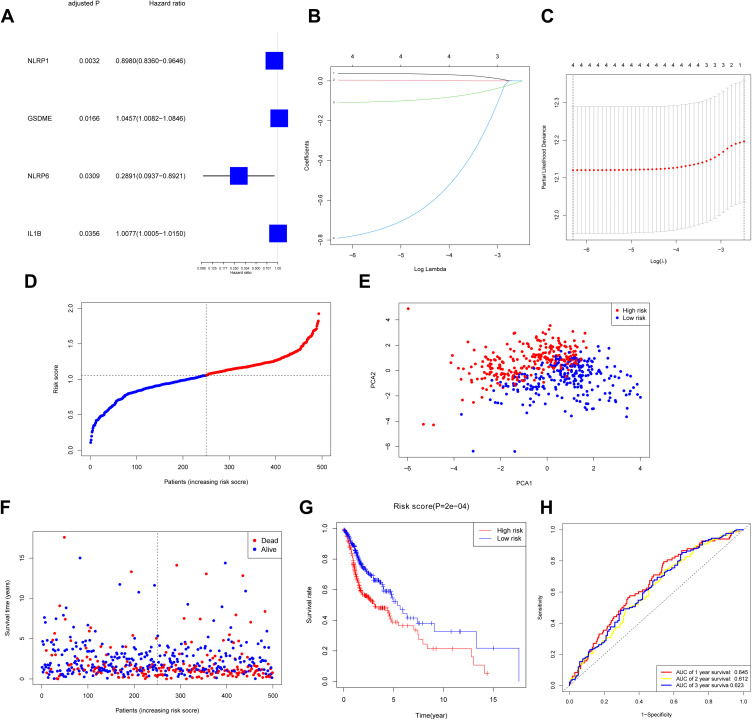
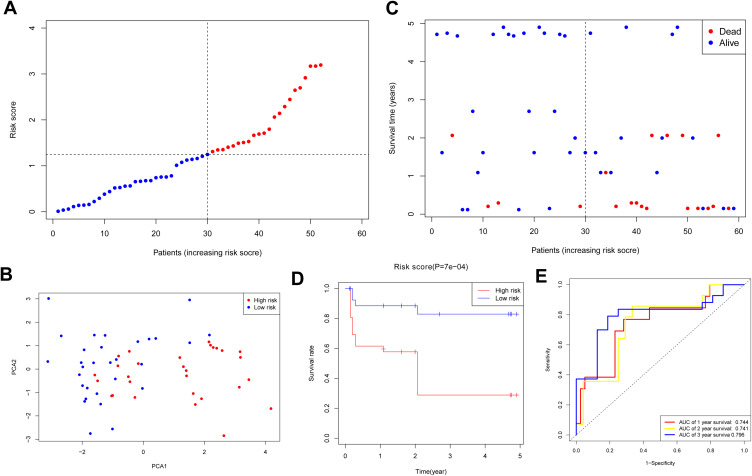
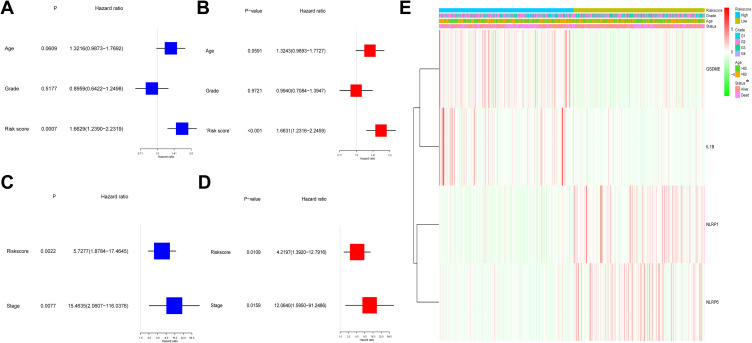
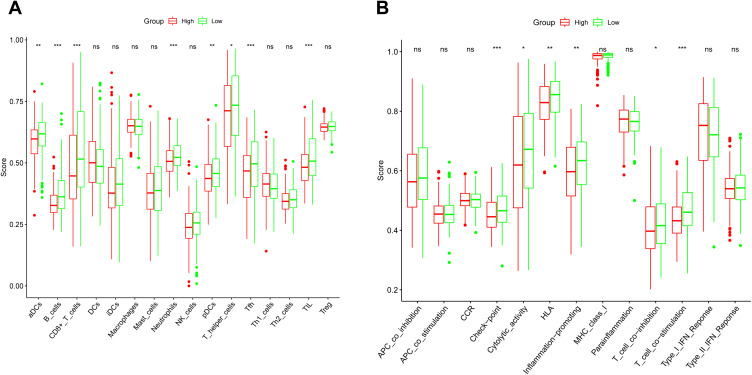
Our team found a total of 18 differentially expressed genes (DEGs) between the HNSCC and healthy samples, and 4 DEGs displayed a remarkable association with the overall survival (OS) (P < 0.05). A 4-gene signature was constructed, presenting beneficial forecast power in both TCGA and GEO cohorts. Our team categorized patients into a group with high risk and another group with low risk as per the average risk value of the 4-gene feature. The individuals in the low risk group displayed a notably greater OS compared with the high risk one (P < 0.01). The Cox regression study demonstrated the independent forecast capability of the risk score. The receiver operating characteristic approach facilitated the verification of the forecast function of the gene signature. Posterior to verification, 4 genes were aberrantly expressed in the HNSCC and healthy samples. Functional study displayed that these groups presented diverse immunity conditions.
Pyroptosis-associated genes are pivotal for the prognosis of HNSCC and can serve as potential therapeutic targets.
头颈部鳞状细胞癌(HNSCC)是一种异质性极强且预后较差的恶性肿瘤。细胞焦亡被定义为一种新型的炎症依赖性程序性细胞死亡。然而,HNSCC中与细胞焦亡相关的基因表达及其与预后的关系仍不明确。
我们从公开可用的TCGA和GEO数据库中获取HNSCC患者的mRNA表达信息。为了鉴定差异表达基因(DEG),我们比较了肿瘤组织和相邻正常组织的基因表达情况。基于这些基因,我们在TCGA队列中通过LASSO Cox回归建立了风险特征,并在GEO队列中验证了结果。我们还通过RT-qPCR分析验证了模型中相关mRNA表达水平。最终,采用功能富集方法探索潜在机制。
我们的研究团队发现HNSCC与健康样本之间共有18个差异表达基因(DEG),其中4个DEG与总生存期(OS)显著相关(P<0.05)。构建了一个由4个基因组成的特征,在TCGA和GEO队列中均具有良好的预测能力。根据这4个基因特征的平均风险值,我们的研究团队将患者分为高风险组和低风险组。低风险组个体的总生存期显著高于高风险组(P<0.01)。Cox回归研究证明了风险评分的独立预测能力。受试者工作特征方法有助于验证基因特征的预测功能。验证后发现,4个基因在HNSCC和健康样本中异常表达。功能研究表明,这些组呈现出不同的免疫状态。
细胞焦亡相关基因对HNSCC的预后至关重要,可作为潜在的治疗靶点。