Ye Ying, Dai Qinjin, Qi Hongbo
The Department of Obstetrics, The First Affiliated Hospital of Chongqing Medical University, Chongqing, 400016, China.
State Key Laboratory of Maternal and Fetal Medicine of Chongqing Municipality, Chongqing Medical University, Chongqing, 400016, China.
Cell Death Discov. 2021 Apr 7;7(1):71. doi: 10.1038/s41420-021-00451-x.
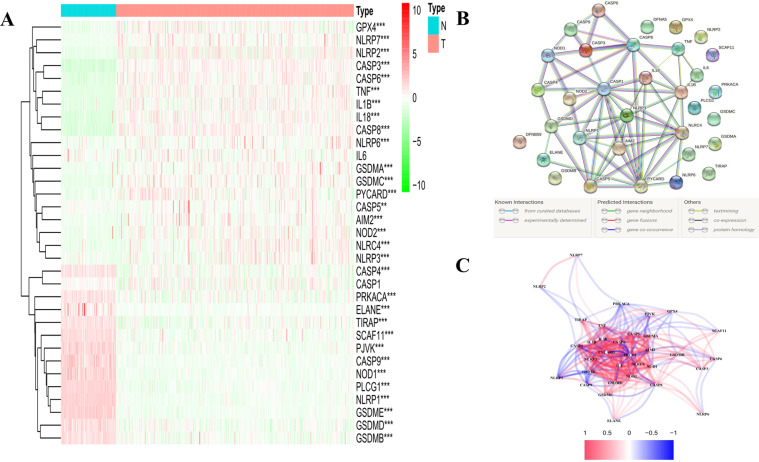
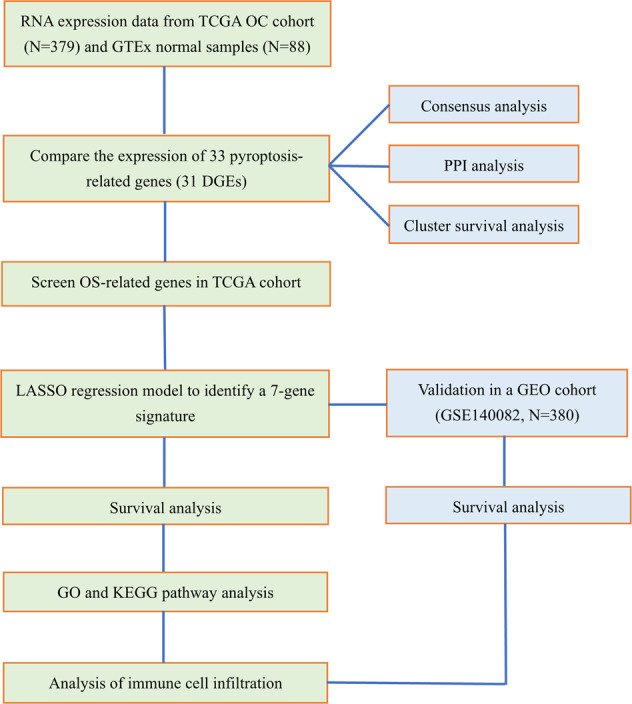
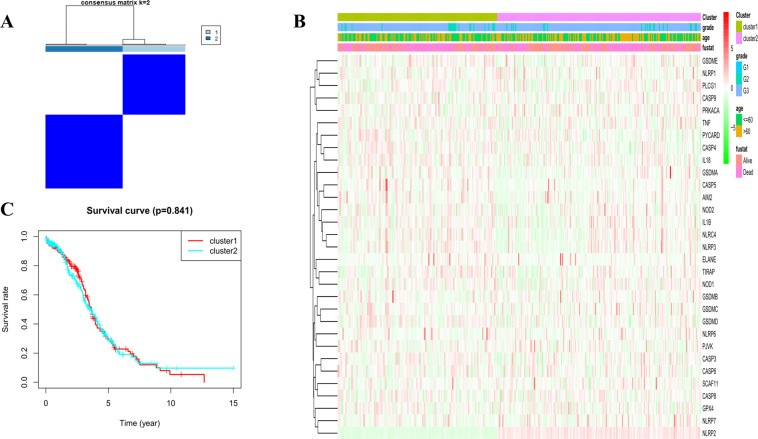
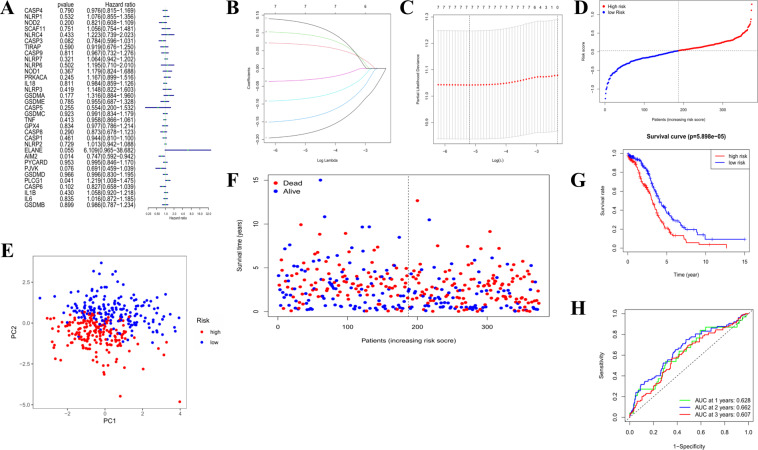
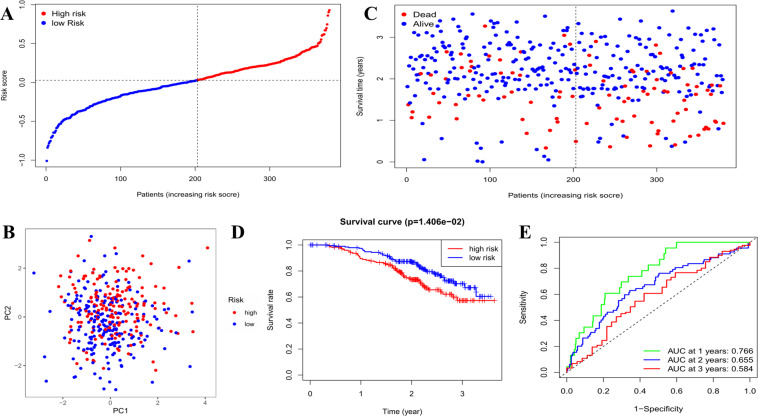
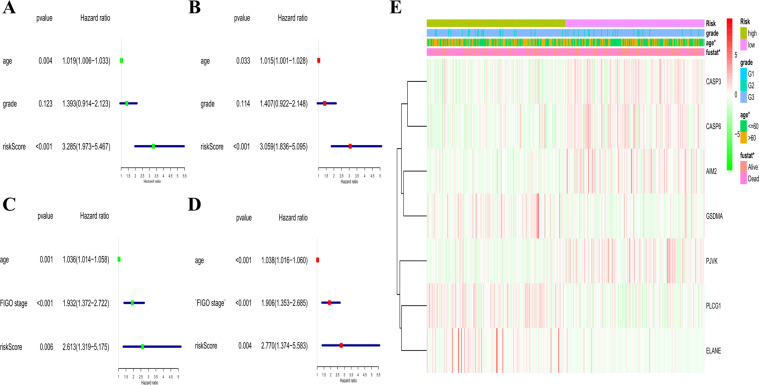
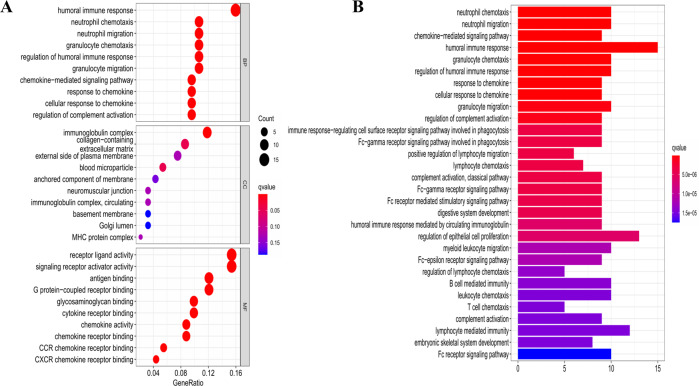
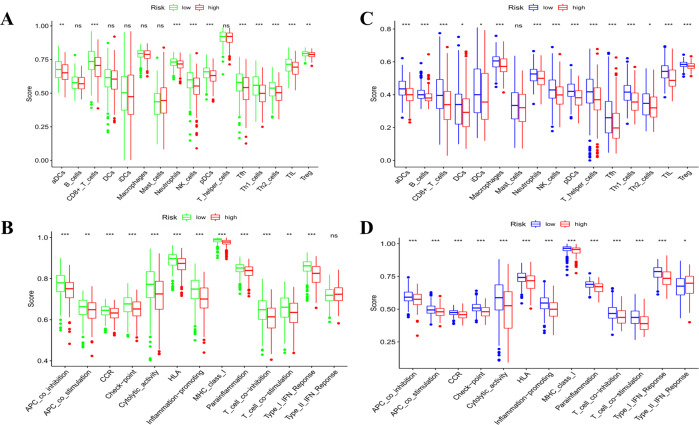
Ovarian cancer (OC) is a highly malignant gynaecological tumour that has a very poor prognosis. Pyroptosis has been demonstrated in recent years to be an inflammatory form of programmed cell death. However, the expression of pyroptosis-related genes in OC and their correlations with prognosis remain unclear. In this study, we identified 31 pyroptosis regulators that were differentially expressed between OC and normal ovarian tissues. Based on these differentially expressed genes (DEGs), all OC cases could be divided into two subtypes. The prognostic value of each pyroptosis-related gene for survival was evaluated to construct a multigene signature using The Cancer Genome Atlas (TCGA) cohort. By applying the least absolute shrinkage and selection operator (LASSO) Cox regression method, a 7-gene signature was built and classified all OC patients in the TCGA cohort into a low- or high-risk group. OC patients in the low-risk group showed significantly higher survival possibilities than those in the high-risk group (P < 0.001). Utilizing the median risk score from the TCGA cohort, OC patients from a Gene Expression Omnibus (GEO) cohort were divided into two risk subgroups, and the low-risk group had increased overall survival (OS) time (P = 0.014). Combined with the clinical characteristics, the risk score was found to be an independent factor for predicting the OS of OC patients. Gene ontology (GO) and Kyoto Encylopedia of Genes and Genomes (KEGG) analyses indicated that immune-related genes were enriched and that the immune status was decreased in the high-risk group. In conclusion, pyroptosis-related genes play important roles in tumour immunity and can be used to predict the prognosis of OCs.
卵巢癌(OC)是一种高度恶性的妇科肿瘤,预后很差。近年来,细胞焦亡已被证明是程序性细胞死亡的一种炎症形式。然而,OC中细胞焦亡相关基因的表达及其与预后的相关性仍不清楚。在本研究中,我们鉴定出31个在OC组织和正常卵巢组织之间差异表达的细胞焦亡调节因子。基于这些差异表达基因(DEG),所有OC病例可分为两个亚型。利用癌症基因组图谱(TCGA)队列评估每个细胞焦亡相关基因对生存的预后价值,以构建多基因特征。通过应用最小绝对收缩和选择算子(LASSO)Cox回归方法,构建了一个7基因特征,并将TCGA队列中的所有OC患者分为低风险组或高风险组。低风险组的OC患者比高风险组的患者显示出显著更高的生存可能性(P < 0.001)。利用TCGA队列的中位风险评分,将基因表达综合数据库(GEO)队列中的OC患者分为两个风险亚组,低风险组的总生存期(OS)时间延长(P = 0.014)。结合临床特征,发现风险评分是预测OC患者OS的独立因素。基因本体论(GO)和京都基因与基因组百科全书(KEGG)分析表明,高风险组中免疫相关基因富集且免疫状态降低。总之,细胞焦亡相关基因在肿瘤免疫中起重要作用,可用于预测OC的预后。