Department of Rehabilitation Medicine, The First Affiliated Hospital, Sun Yat-Sen University, Guangzhou, China.
Department of Rehabilitation Medicine, First Affiliated Hospital of Xi'an Jiaotong University, Xi'an, China.
Pain Res Manag. 2021 Nov 2;2021:9054152. doi: 10.1155/2021/9054152. eCollection 2021.
To explore the relationship between postural control and pain-related clinical outcomes in patients with chronic nonspecific low back pain (cNLBP).
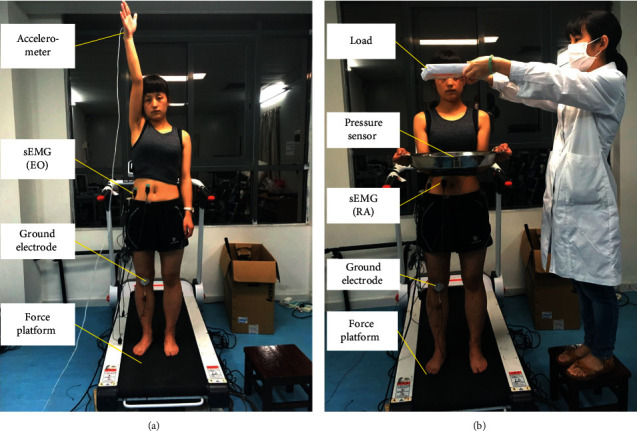
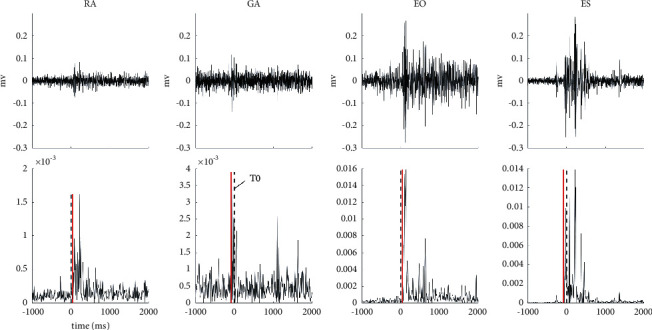
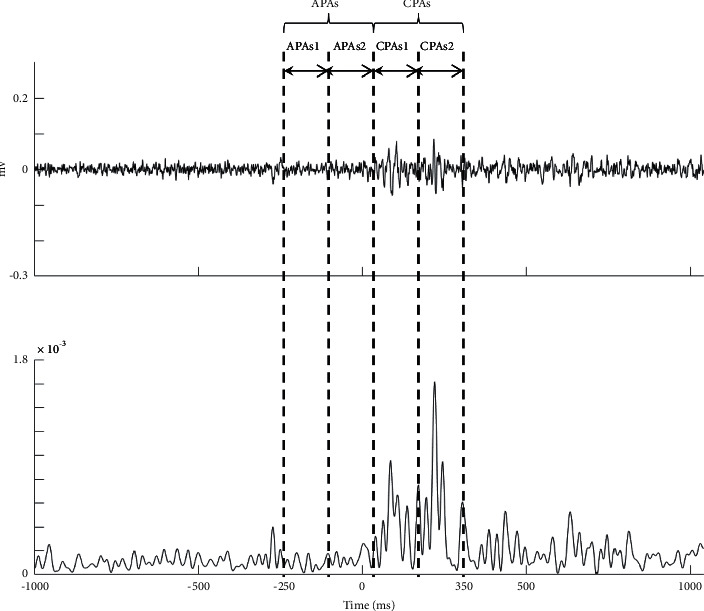
Participants with cNLBP and healthy individuals were recruited. Muscle activities were recorded during internal and external perturbation tasks. Postural control capacity was assessed by muscle onset time and integrals of electromyography (iEMGs) of postural muscles during the phases of anticipatory postural adjustments (APAs) and compensatory postural adjustments (CPAs). Correlation analysis was employed to investigate the relationship between postural control capacity, pain, and disability.
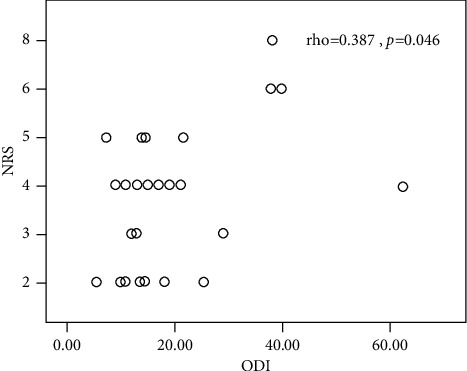
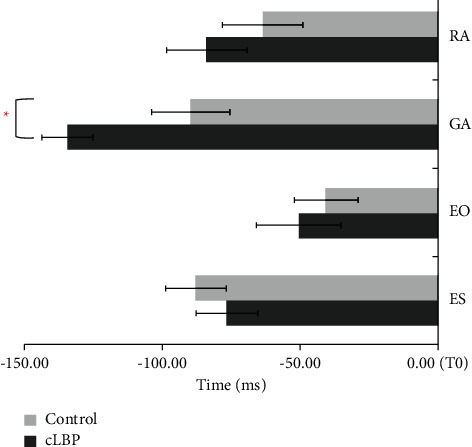
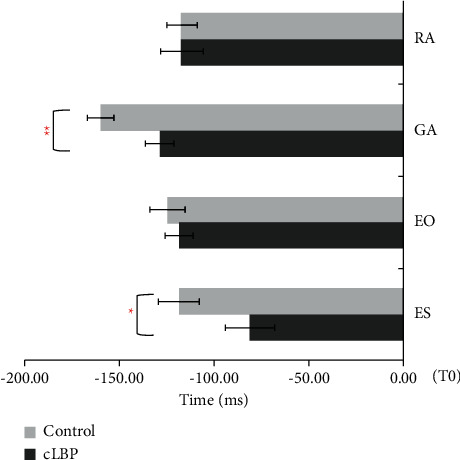
Twenty-seven patients with cNLBP and 27 healthy participants were recruited. Gastrocnemius (GA) muscle onset time was earlier in the cNLBP group than in the control group in the internal perturbation task. The onset time of GA and erector spinae (ES) of the cNLBP group was later than that of the controls in the external perturbation task. Disability level moderately correlated with the iEMGs of rectus abdominis (RA), GA, and external oblique (EO) during APAs. Pain score moderately correlated with the iEMGs of RA, EO, and ES during CPAs of perturbation tasks.
cNLBP participants had altered muscle activation strategy to maintain postural stability in response to perturbation. This study further discovered that pain-related disabilities of cNLBP participants were likely related to the APAs capacity, whereas the pain intensity may relate to the CPAs capacity. Pain and disability may therefore be related to the control process of the posture-related muscles.
探讨慢性非特异性下腰痛(cNLBP)患者姿势控制与疼痛相关临床结果的关系。
招募 cNLBP 患者和健康个体。在内部和外部扰动任务中记录肌肉活动。通过姿势肌肉在预期姿势调整(APAs)和补偿性姿势调整(CPAs)阶段的肌电活动(iEMG)的起始时间和积分来评估姿势控制能力。采用相关分析来研究姿势控制能力、疼痛和残疾之间的关系。
招募了 27 名 cNLBP 患者和 27 名健康参与者。在内部扰动任务中,cNLBP 组的比目鱼肌(GA)肌起始时间早于对照组。在外部扰动任务中,cNLBP 组的 GA 和竖脊肌(ES)的起始时间晚于对照组。残疾程度与 APA 期间的腹直肌(RA)、GA 和外斜肌(EO)的 iEMG 中度相关。疼痛评分与扰动任务 CPAs 期间的 RA、EO 和 ES 的 iEMG 中度相关。
cNLBP 参与者改变了肌肉激活策略,以在受到干扰时保持姿势稳定。本研究进一步发现,cNLBP 参与者的与疼痛相关的残疾可能与 APAs 能力有关,而疼痛强度可能与 CPAs 能力有关。因此,疼痛和残疾可能与姿势相关肌肉的控制过程有关。