Division of Pediatric Neonatology, Department of Pediatrics, Chang Gung Memorial Hospital, Taoyuan 333, Taiwan.
School of Medicine, College of Medicine, Chang Gung University, Taoyuan 333, Taiwan.
Int J Mol Sci. 2021 Oct 27;22(21):11626. doi: 10.3390/ijms222111626.
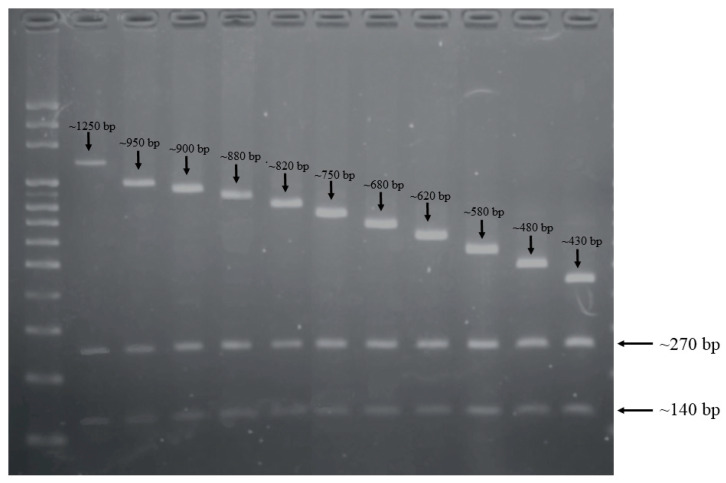
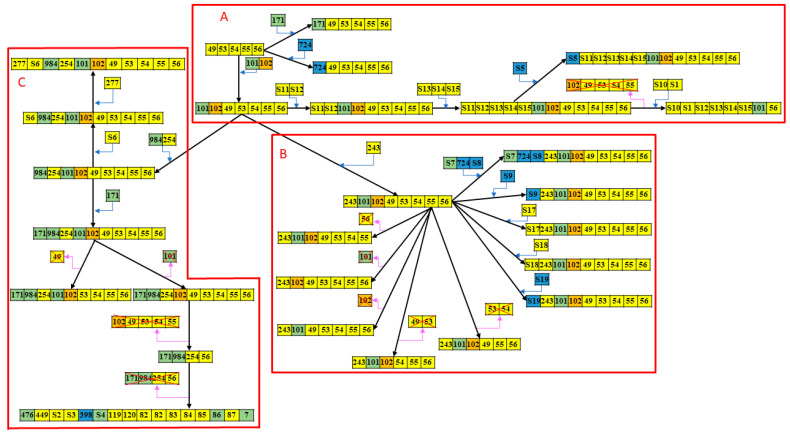
Group B (GBS) is an important pathogen of neonatal infections, and the clonal complex (CC)-17/serotype III GBS strain has emerged as the dominant strain. The clinical manifestations of CC17/III GBS sepsis may vary greatly but have not been well-investigated. A total of 103 CC17/III GBS isolates that caused neonatal invasive diseases were studied using a new approach based on clustered regularly interspaced short palindromic repeats (CRISPR) loci and restriction fragment length polymorphism (RFLP) analyses. All spacers of CRISPR loci were sequenced and analyzed with the clinical presentations. After CRISPR-RFLP analyses, a total of 11 different patterns were observed among the 103 CRISPR-positive GBS isolates. GBS isolates with the same RFLP patterns were found to have highly comparable spacer contents. Comparative sequence analysis of the CRISPR1 spacer content revealed that it is highly diverse and consistent with the dynamics of this system. A total of 29 of 43 (67.4%) spacers displayed homology to reported phage and plasmid DNA sequences. In addition, all CC17/III GBS isolates could be categorized into three subgroups based on the CRISPR-RFLP patterns and eBURST analysis. The CC17/III GBS isolates with a specific CRISPR-RFLP pattern were more significantly associated with occurrences of severe sepsis (57.1% vs. 29.3%, = 0.012) and meningitis (50.0% vs. 20.8%, = 0.009) than GBS isolates with RFLP lengths between 1000 and 1300 bp. Whole-genome sequencing was also performed to verify the differences between CC17/III GBS isolates with different CRISPR-RFLP patterns. We concluded that the CRISPR-RFLP analysis is potentially applicable to categorizing CC17/III GBS isolates, and a specific CRISPR-RFLP pattern could be used as a new biomarker to predict meningitis and illness severity after further verification.
B 组链球菌(GBS)是新生儿感染的重要病原体,克隆复合体(CC)-17/血清型 III GBS 菌株已成为优势菌株。CC17/III GBS 败血症的临床表现可能差异很大,但尚未得到充分研究。本研究采用基于成簇规律间隔短回文重复序列(CRISPR)基因座和限制性片段长度多态性(RFLP)分析的新方法,研究了 103 株导致新生儿侵袭性疾病的 CC17/III GBS 分离株。对 CRISPR 基因座的所有间隔区进行测序,并与临床表现进行分析。在 CRISPR-RFLP 分析后,在 103 株 CRISPR 阳性 GBS 分离株中观察到 11 种不同的模式。具有相同 RFLP 模式的 GBS 分离株被发现具有高度可比的间隔区内容。CRISPR1 间隔区内容的比较序列分析表明,它具有高度的多样性,并与该系统的动态一致。43 个(67.4%)间隔区中有 29 个与报道的噬菌体和质粒 DNA 序列具有同源性。此外,根据 CRISPR-RFLP 模式和 eBURST 分析,所有 CC17/III GBS 分离株可分为三个亚群。具有特定 CRISPR-RFLP 模式的 CC17/III GBS 分离株与严重败血症(57.1%比 29.3%,=0.012)和脑膜炎(50.0%比 20.8%,=0.009)的发生显著相关,而 RFLP 长度在 1000 至 1300bp 之间的 GBS 分离株则无显著相关性。还进行了全基因组测序,以验证具有不同 CRISPR-RFLP 模式的 CC17/III GBS 分离株之间的差异。我们得出结论,CRISPR-RFLP 分析可能适用于对 CC17/III GBS 分离株进行分类,并且特定的 CRISPR-RFLP 模式可以作为一种新的生物标志物,在进一步验证后用于预测脑膜炎和疾病严重程度。