Department of Functional Sciences-Pathophysiology, "Victor Babeș" University of Medicine and Pharmacy, Eftimie Murgu Sq. no. 2, 300041 Timișoara, Romania.
Centre for Translational Research and Systems Medicine, "Victor Babeș" University of Medicine and Pharmacy, Eftimie Murgu Sq. no. 2, 300041 Timișoara, Romania.
Int J Mol Sci. 2021 Oct 29;22(21):11786. doi: 10.3390/ijms222111786.
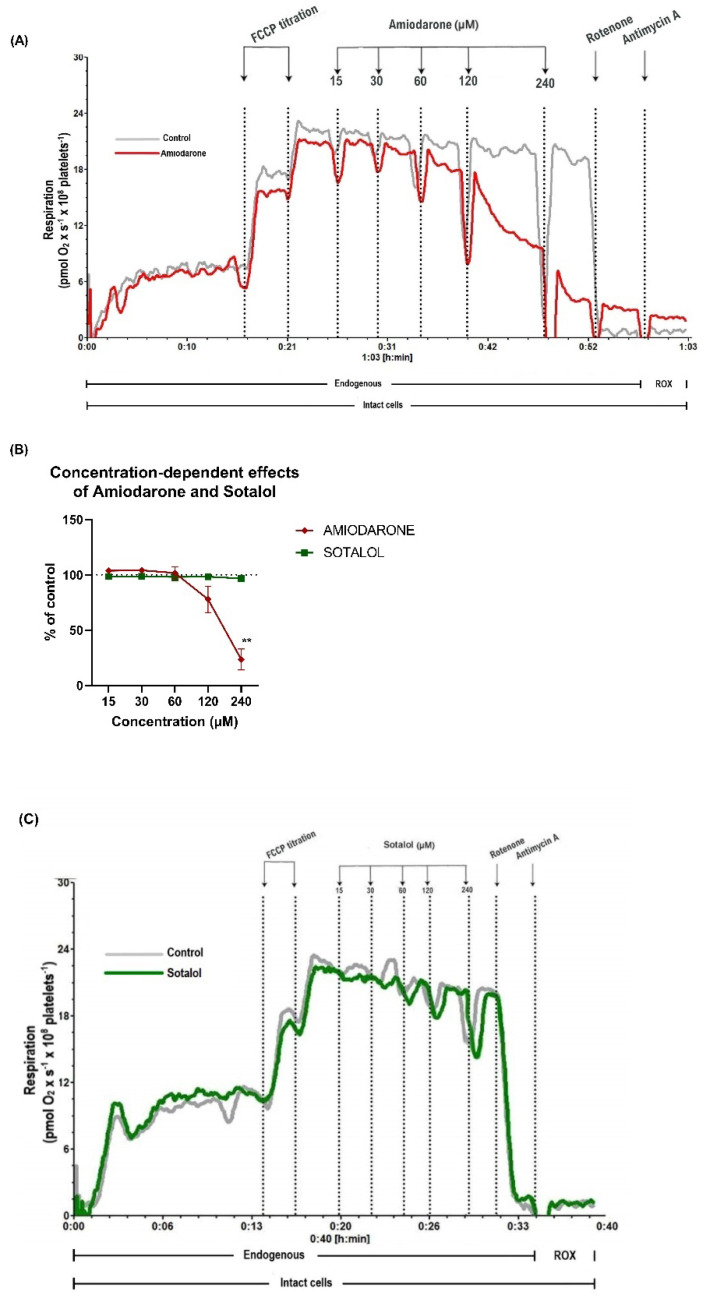
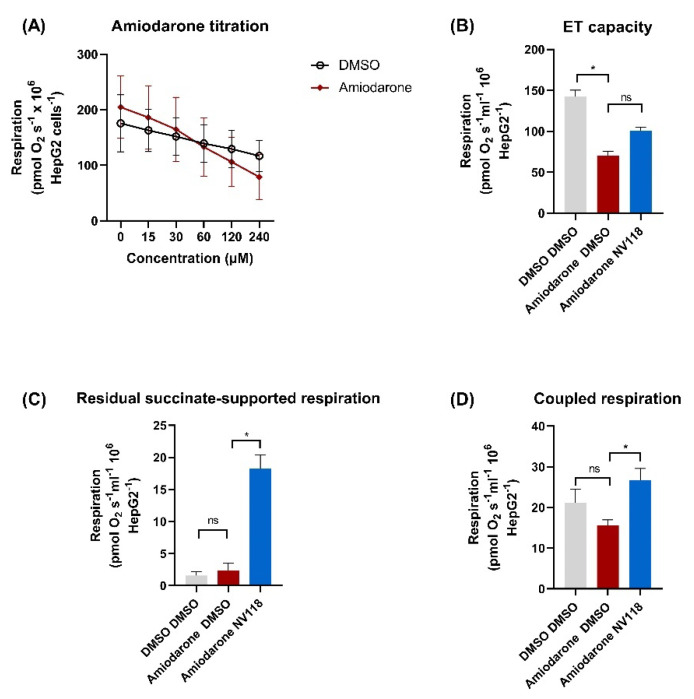
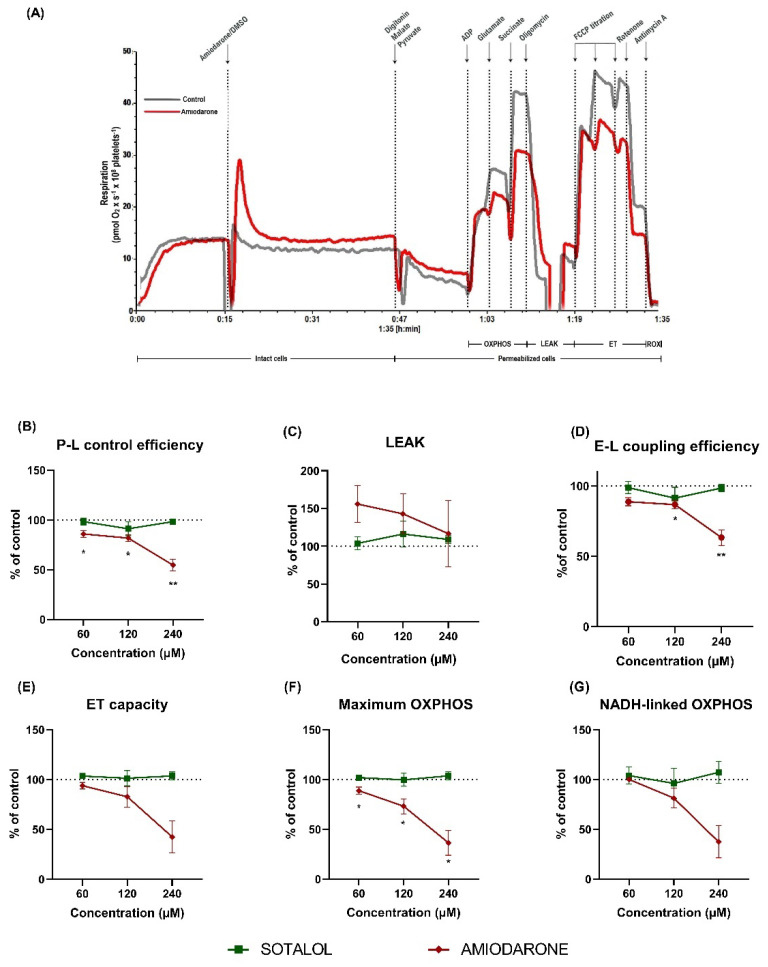
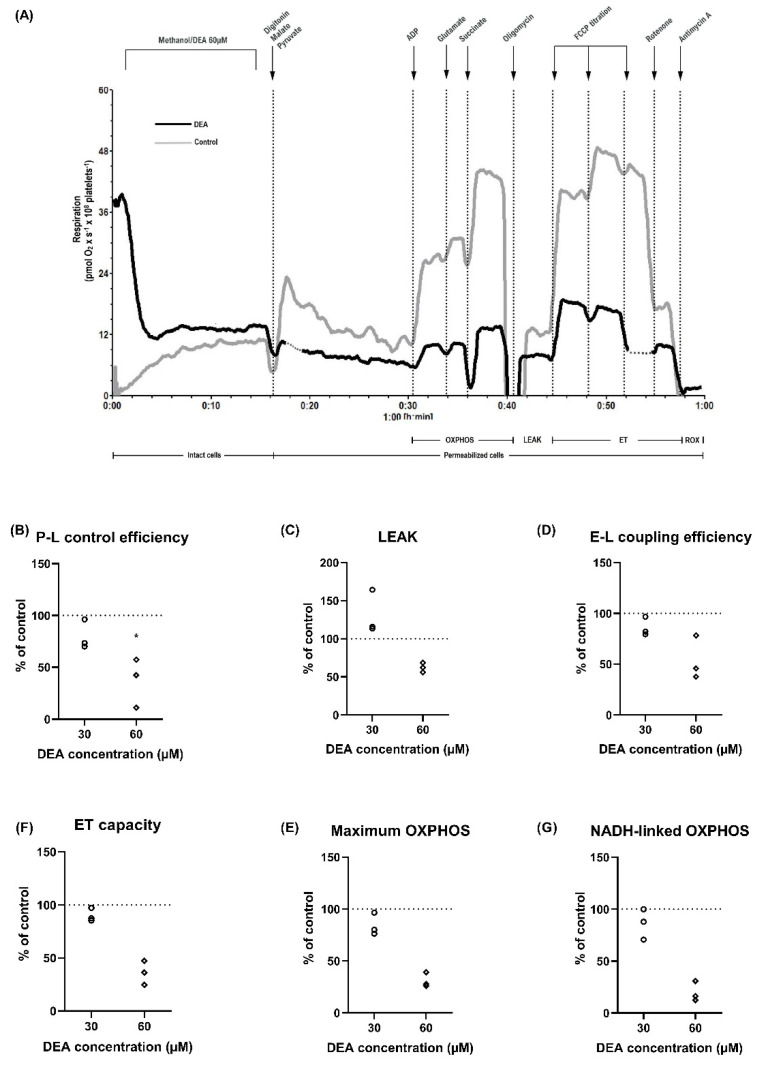
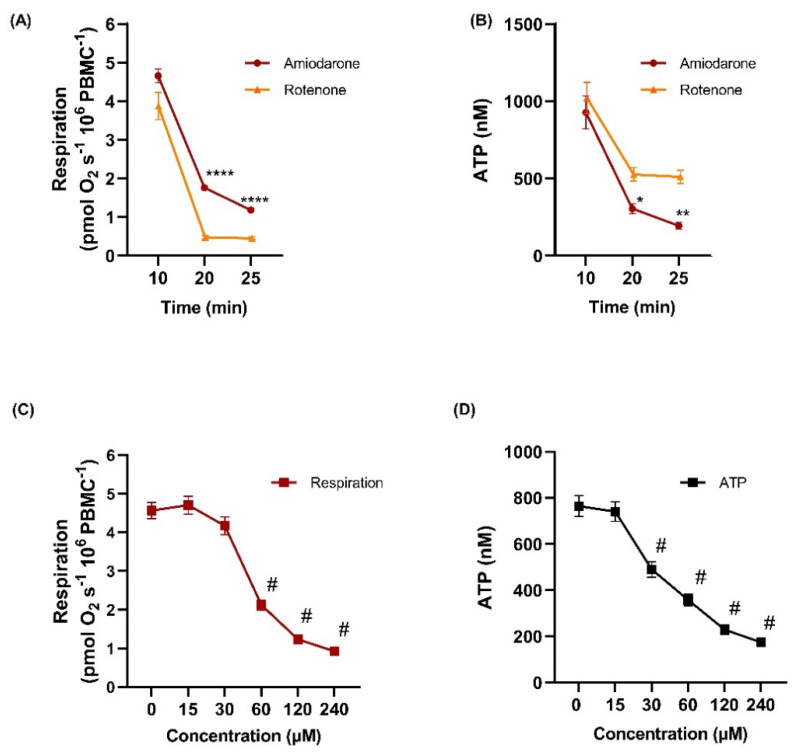
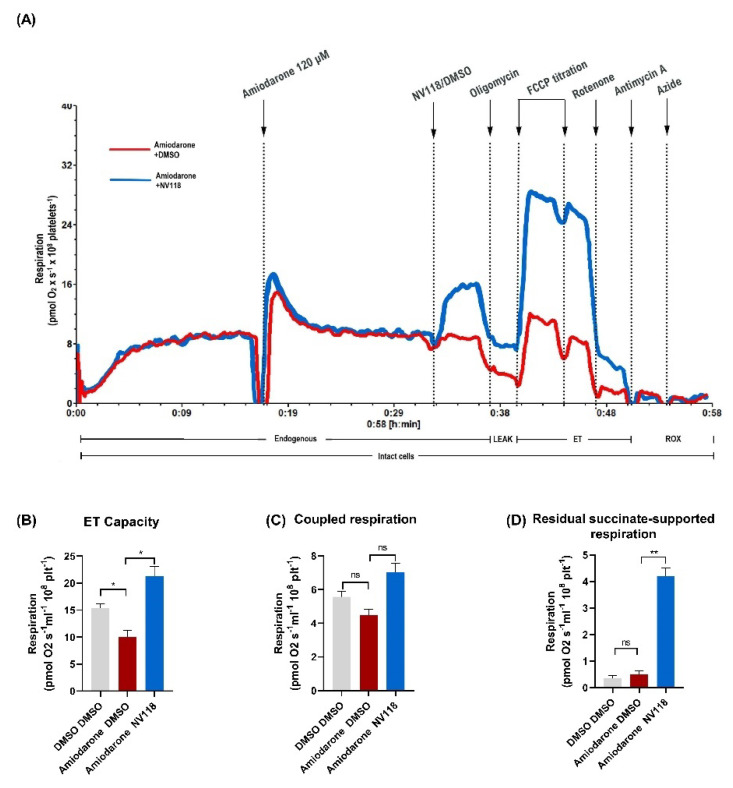
Amiodarone is a potent antiarrhythmic drug and displays substantial liver toxicity in humans. It has previously been demonstrated that amiodarone and its metabolite (desethylamiodarone, DEA) can inhibit mitochondrial function, particularly complexes I (CI) and II (CII) of the electron transport system in various animal tissues and cell types. The present study, performed in human peripheral blood cells, and one liver-derived human cell line, is primarily aimed at assessing the concentration-dependent effects of these drugs on mitochondrial function (respiration and cellular ATP levels). Furthermore, we explore the efficacy of a novel cell-permeable succinate prodrug in alleviating the drug-induced acute mitochondrial dysfunction. Amiodarone and DEA elicit a concentration-dependent impairment of mitochondrial respiration in both intact and permeabilized platelets via the inhibition of both CI- and CII-supported respiration. The inhibitory effect seen in human platelets is also confirmed in mononuclear cells (PBMCs) and HepG2 cells. Additionally, amiodarone elicits a severe concentration-dependent ATP depletion in PBMCs, which cannot be explained solely by mitochondrial inhibition. The succinate prodrug NV118 alleviates the respiratory deficit in platelets and HepG2 cells acutely exposed to amiodarone. In conclusion, amiodarone severely inhibits metabolism in primary human mitochondria, which can be counteracted by increasing mitochondrial function using intracellular delivery of succinate.
胺碘酮是一种强效抗心律失常药物,在人类中显示出显著的肝毒性。先前已经证明,胺碘酮及其代谢物(去乙基胺碘酮,DEA)可以抑制线粒体功能,特别是各种动物组织和细胞类型中的电子传递系统的复合物 I(CI)和 II(CII)。本研究在人外周血细胞和一种肝来源的人细胞系中进行,主要旨在评估这些药物对线粒体功能(呼吸和细胞内 ATP 水平)的浓度依赖性影响。此外,我们还探索了一种新型细胞通透性琥珀酸前药在缓解药物引起的急性线粒体功能障碍方面的功效。胺碘酮和 DEA 通过抑制 CI 和 CII 支持的呼吸,在完整和通透血小板中引起线粒体呼吸的浓度依赖性损伤。在单核细胞(PBMCs)和 HepG2 细胞中也证实了人血小板中观察到的抑制作用。此外,胺碘酮在 PBMCs 中引起严重的浓度依赖性 ATP 耗竭,这不能仅通过线粒体抑制来解释。琥珀酸前药 NV118 可缓解急性暴露于胺碘酮的血小板和 HepG2 细胞中的呼吸缺陷。总之,胺碘酮严重抑制原代人线粒体中的代谢,可通过细胞内递送来增加线粒体功能来抵消。