College of Horticulture, Gansu Agricultural University, Lanzhou 730070, China.
Int J Mol Sci. 2021 Nov 8;22(21):12068. doi: 10.3390/ijms222112068.
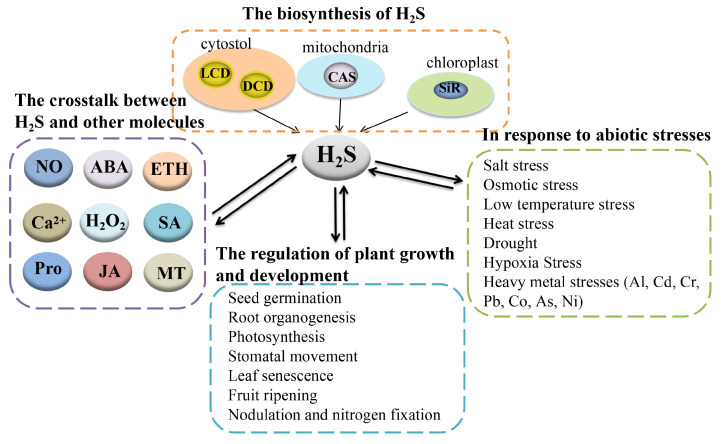
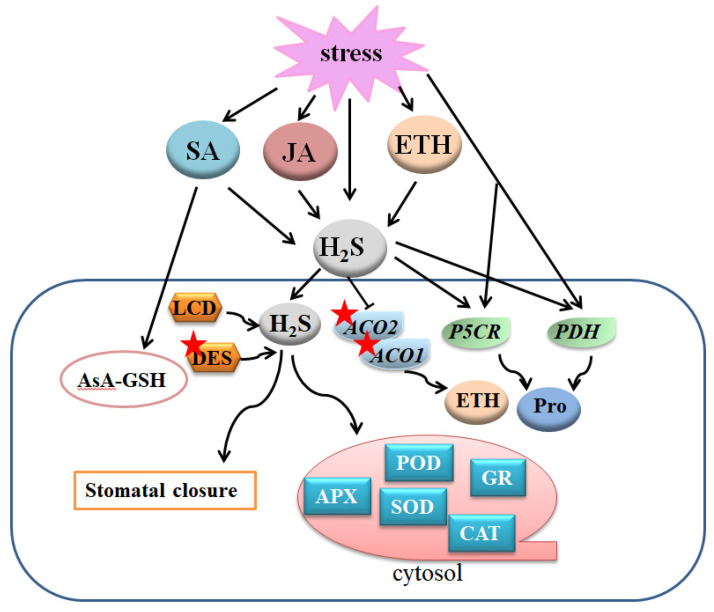
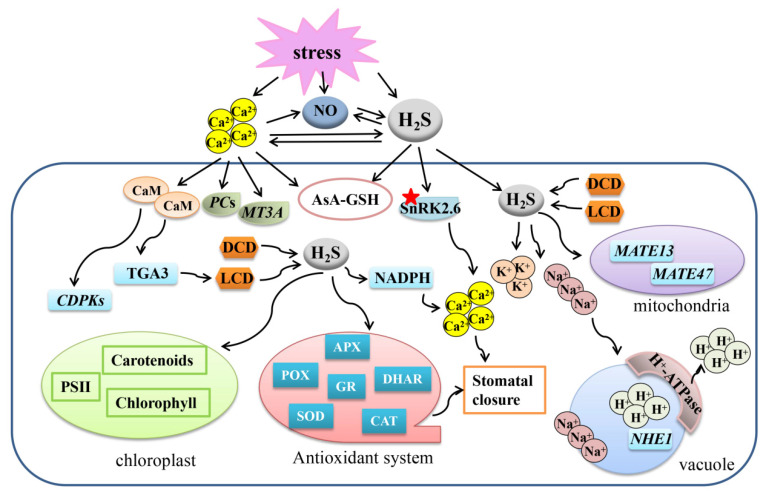
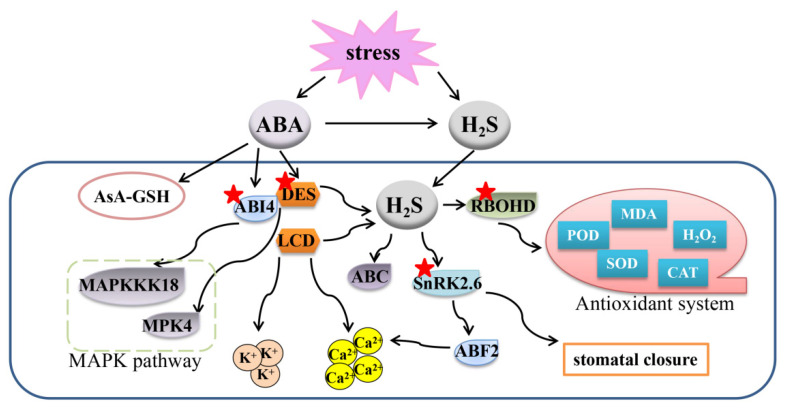
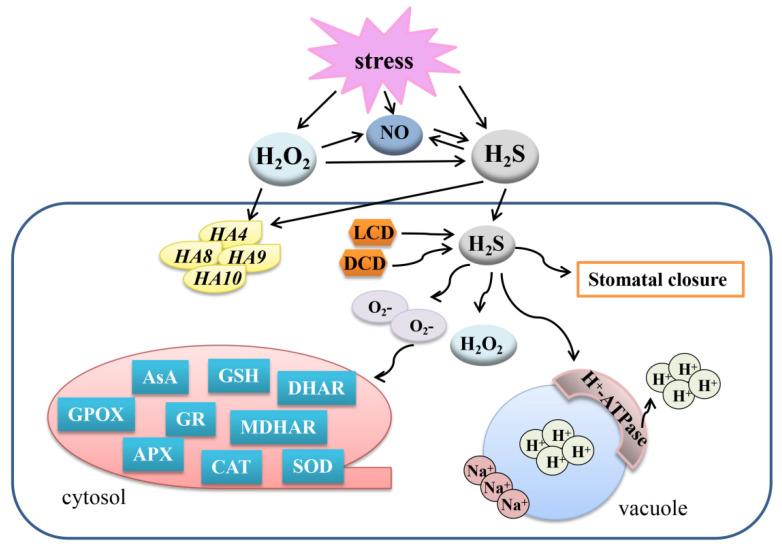
Hydrogen sulfide (HS) has recently been considered as a crucial gaseous transmitter occupying extensive roles in physiological and biochemical processes throughout the life of plant species. Furthermore, plenty of achievements have been announced regarding HS working in combination with other signal molecules to mitigate environmental damage, such as nitric oxide (NO), abscisic acid (ABA), calcium ion (Ca), hydrogen peroxide (HO), salicylic acid (SA), ethylene (ETH), jasmonic acid (JA), proline (Pro), and melatonin (MT). This review summarizes the current knowledge within the mechanism of HS and the above signal compounds in response to abiotic stresses in plants, including maintaining cellular redox homeostasis, exchanging metal ion transport, regulating stomatal aperture, and altering gene expression and enzyme activities. The potential relationship between HS and other signal transmitters is also proposed and discussed.
硫化氢 (HS) 最近被认为是一种重要的气态递质,在植物物种的整个生命过程中广泛参与生理和生化过程。此外,已经公布了大量关于 HS 与其他信号分子(如一氧化氮 (NO)、脱落酸 (ABA)、钙离子 (Ca)、过氧化氢 (HO)、水杨酸 (SA)、乙烯 (ETH)、茉莉酸 (JA)、脯氨酸 (Pro) 和褪黑素 (MT))结合减轻环境破坏的作用的研究成果。本综述总结了目前关于 HS 与上述信号化合物在植物应对非生物胁迫中的作用机制的知识,包括维持细胞氧化还原稳态、交换金属离子运输、调节气孔开度以及改变基因表达和酶活性。还提出并讨论了 HS 与其他信号递质之间的潜在关系。