Chang Dun-Hao, Wang Yu-Hsiang, Hsieh Chi-Ying, Chang Che-Wei, Chang Ke-Chung, Chen Yo-Shen
Division of Plastic and Aesthetic Surgery, Department of Surgery, Far Eastern Memorial Hospital, No. 21, Section 2, Nanya S. Road, Banciao District, New Taipei City 22060, Taiwan.
Department of Information Management, Yuan Ze University, No. 135 Yuan-Tung Road, Chung-Li, Taoyuan City 32003, Taiwan.
Int J Environ Res Public Health. 2021 Oct 21;18(21):11081. doi: 10.3390/ijerph182111081.
Few studies have addressed patient preferences in emergent surgical decision making.
Analyzing patient preferences for hand trauma reconstruction to propose a decision-making model.
A conjoint analysis survey was developed with Sawtooth Software. Three common flaps-i.e., a cross-finger flap (CFF), a dorsal metacarpal artery perforator flap (DMAPF), and an arterialized venous flap (AVF)-were listed as treatment alternatives. Five attributes corresponding to these flaps were recovery time, total procedure, postoperative care methods, postoperative scar condition, and complication rate. Utility and importance scores were generated from the software, and preference characteristics were evaluated using cluster analysis.
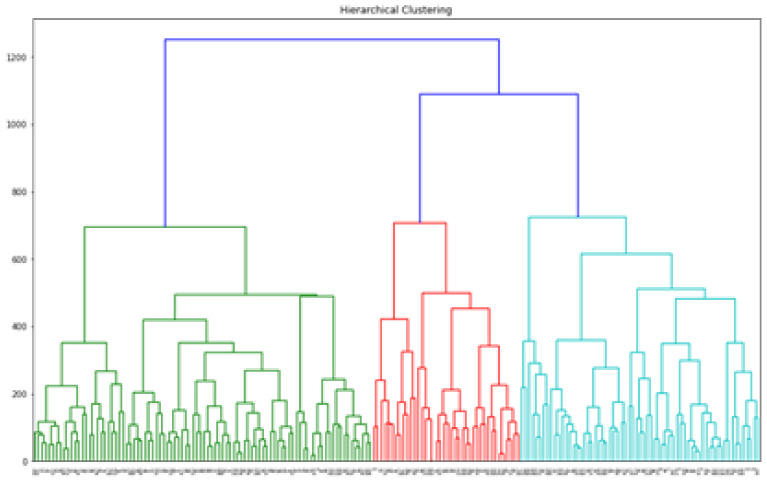
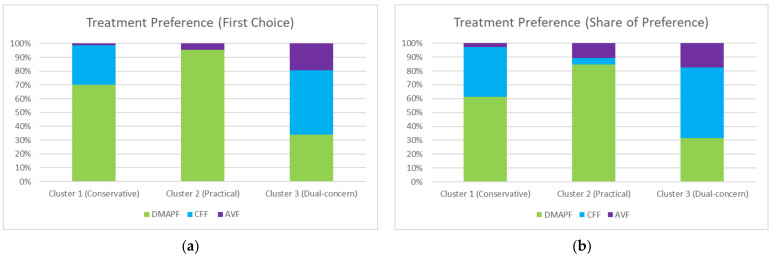
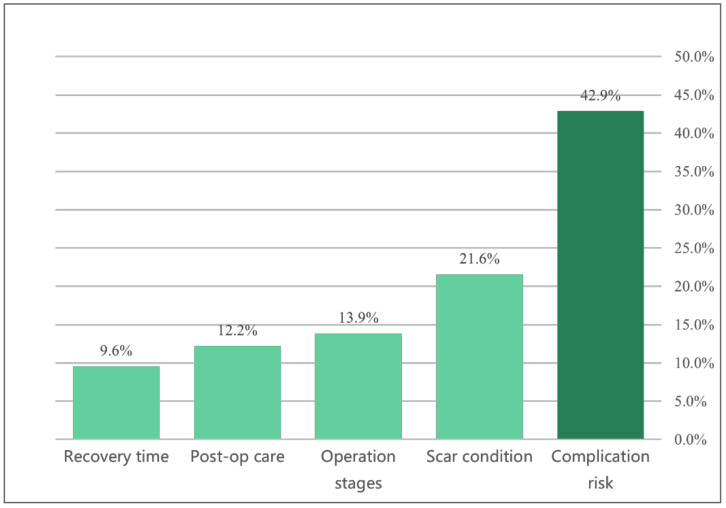
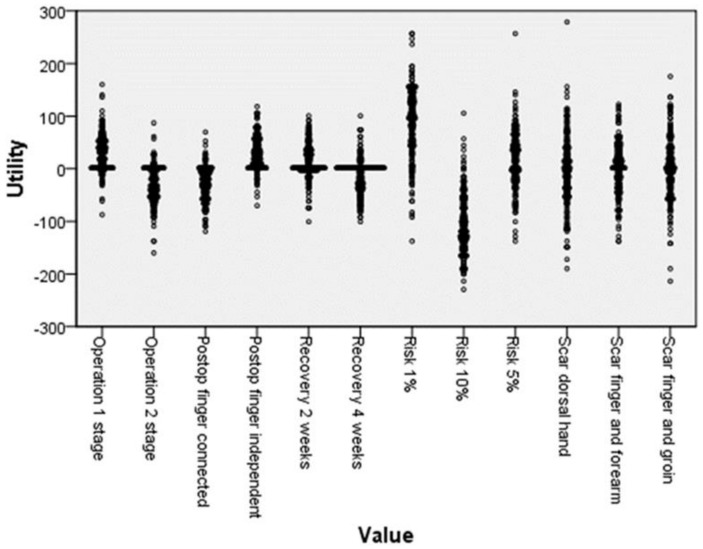
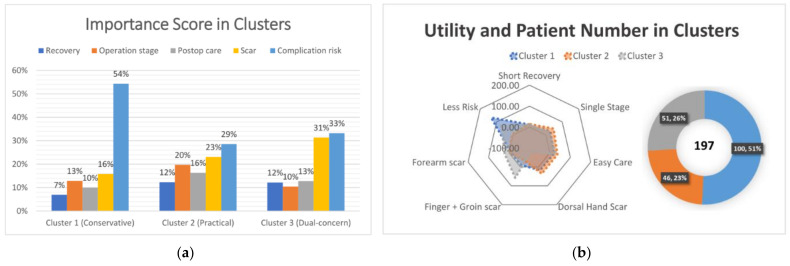
The survey was completed by 197 participants with hand trauma. Complication risk received the highest importance score (42.87%), followed by scar condition (21.55%). Cluster analysis classified the participants as "conservative," "practical," and "dual-concern". The dual-concern and conservative groups had more foreign laborers and highly educated participants, respectively, than the other groups. Most participants in the conservative and practical groups preferred DMAPF, whereas those in the dual-concern group favored CFF. Our proposed model consisted of shared decision-making and treatment recommendation pathways.
Incorporating patient preferences into the decision-making model can strengthen patient-centered care. Further research on the applications of the proposed model is warranted.
很少有研究探讨急诊手术决策中的患者偏好。
分析患者对手部创伤重建的偏好,以提出一种决策模型。
使用Sawtooth软件开展联合分析调查。列出三种常见皮瓣,即邻指皮瓣(CFF)、掌背动脉穿支皮瓣(DMAPF)和动脉化静脉皮瓣(AVF)作为治疗选择。与这些皮瓣对应的五个属性为恢复时间、整个手术过程、术后护理方法、术后瘢痕情况和并发症发生率。通过该软件生成效用和重要性评分,并使用聚类分析评估偏好特征。
197名手部创伤患者完成了调查。并发症风险获得的重要性评分最高(42.87%),其次是瘢痕情况(21.55%)。聚类分析将参与者分为“保守型”“务实型”和“双重关注型”。与其他组相比,双重关注型组和保守型组分别有更多的外来务工人员和高学历参与者。保守型组和务实型组的大多数参与者更喜欢DMAPF,而双重关注型组的参与者则青睐CFF。我们提出的模型包括共同决策和治疗推荐途径。
将患者偏好纳入决策模型可以加强以患者为中心的护理。有必要对所提出模型的应用进行进一步研究。