Bhanderi Mansi, Shah Jigar, Gorain Bapi, Nair Anroop B, Jacob Shery, Asdaq Syed Mohammed Basheeruddin, Fattepur Santosh, Alamri Abdulhakeem S, Alsanie Walaa F, Alhomrani Majid, Nagaraja Sreeharsha, Anwer Md Khalid
Department of Pharmaceutics, Institute of Pharmacy, Nirma University, Ahmedabad 382481, India.
Department of Pharmaceutical Sciences and Technology, Birla Institute of Technology Mesra, Ranchi 835215, India.
Materials (Basel). 2021 Oct 22;14(21):6291. doi: 10.3390/ma14216291.
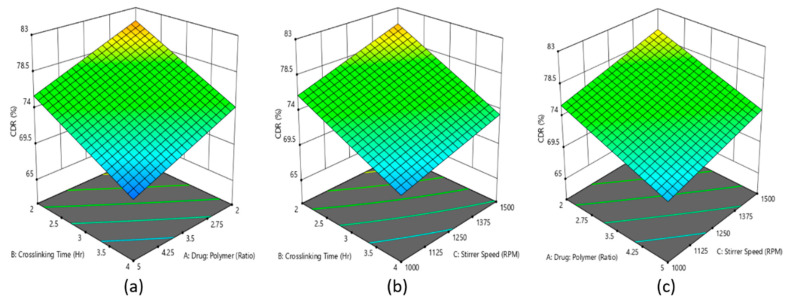
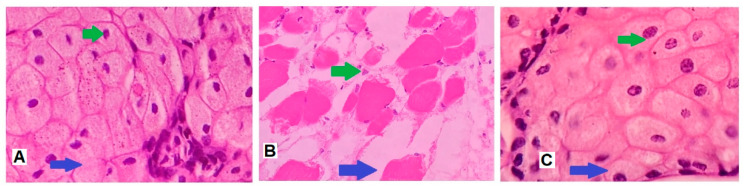
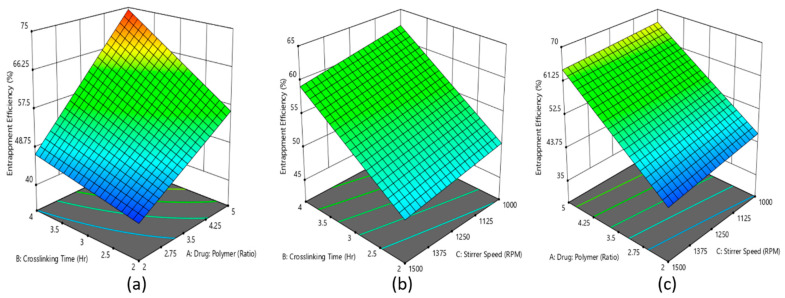
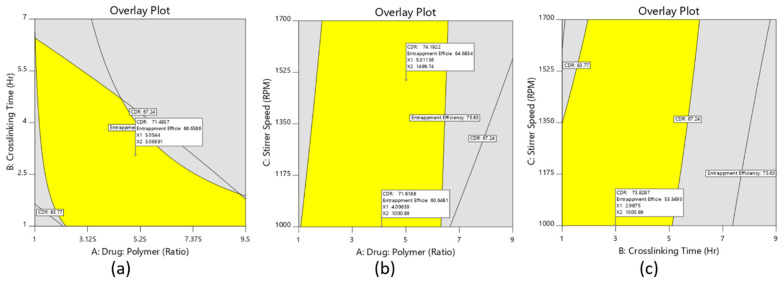
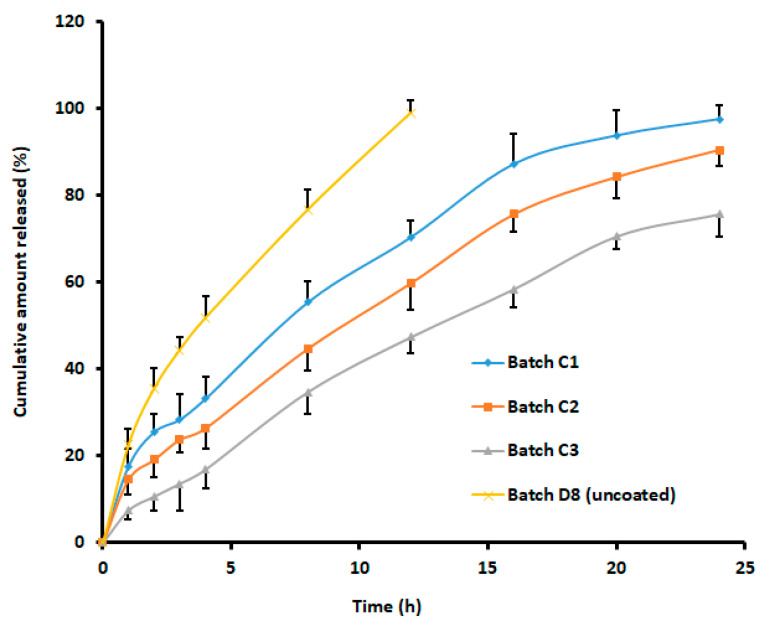
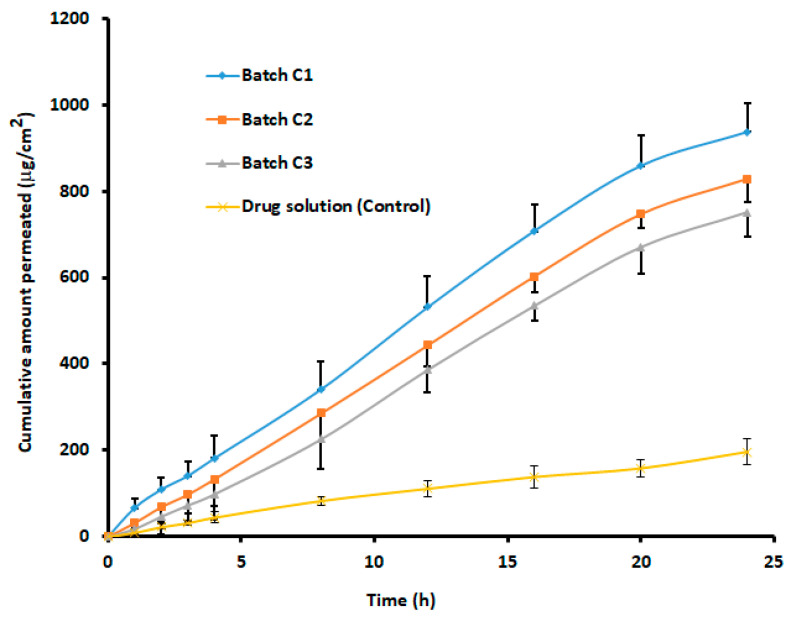
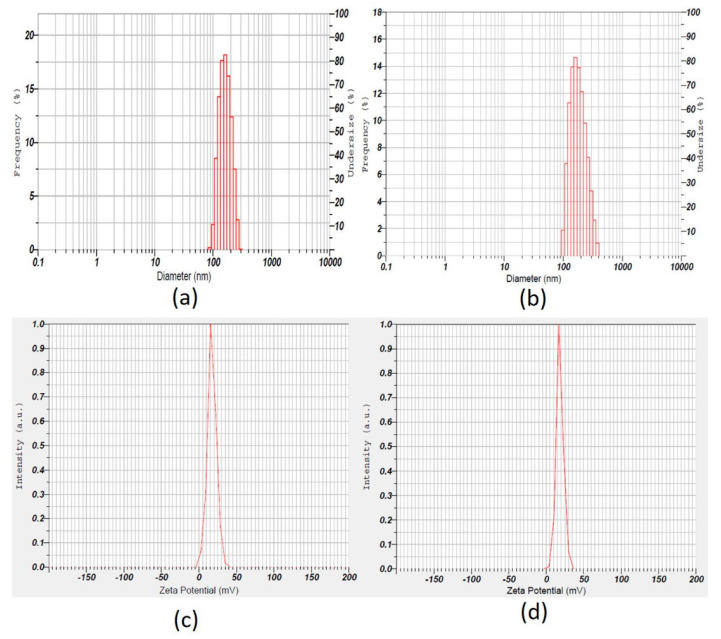
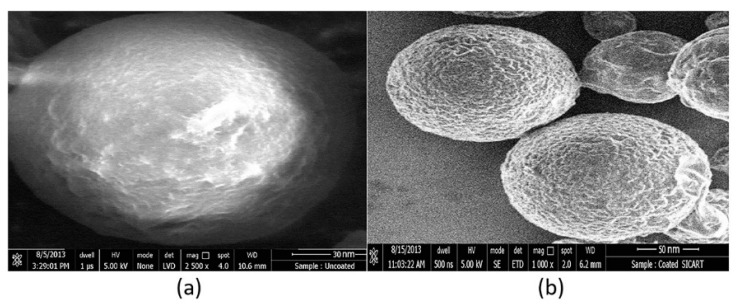
Rivastigmine, a reversible cholinesterase inhibitor, is frequently indicated in the management of demented conditions associated with Alzheimer disease. The major hurdle of delivering this drug through the oral route is its poor bioavailability, which prompted the development of novel delivery approaches for improved efficacy. Due to numerous beneficial properties associated with nanocarriers in the drug delivery system, rivastigmine nanoparticles were fabricated to be administer through the intranasal route. During the development of the nanoparticles, preliminary optimization of processing and formulation parameters was done by the design of an experimental approach. The drug-polymer ratio, stirrer speed, and crosslinking time were fixed as independent variables, to analyze the effect on the entrapment efficiency (% EE) and in vitro drug release of the drug. The formulation (D8) obtained from 2 full factorial designs was further coated using Eudragit EPO to extend the release pattern of the entrapped drug. Furthermore, the 1:1 ratio of core to polymer depicted spherical particle size of ~175 nm, % EE of 64.83%, 97.59% cumulative drug release, and higher flux (40.39 ± 3.52 µg.h/cm). Finally, the intranasal ciliotoxicity study on sheep nasal mucosa revealed that the exposure of developed nanoparticles was similar to the negative control group, while destruction of normal architecture was noticed in the positive control test group. Overall, from the in vitro results it could be summarized that the optimization of nanoparticles' formulation of rivastigmine for intranasal application would be retained at the application site for a prolonged duration to release the entrapped drug without producing any local toxicity at the mucosal region.
利伐斯的明是一种可逆性胆碱酯酶抑制剂,常用于治疗与阿尔茨海默病相关的痴呆症。口服该药物的主要障碍是其生物利用度差,这促使人们开发新的给药方法以提高疗效。由于药物递送系统中的纳米载体具有许多有益特性,因此制备了利伐斯的明纳米颗粒以便通过鼻内途径给药。在纳米颗粒的研发过程中,通过设计实验方法对工艺和配方参数进行了初步优化。将药物与聚合物的比例、搅拌速度和交联时间设定为自变量,以分析其对药物包封率(% EE)和体外药物释放的影响。从2个全因子设计中获得的制剂(D8)进一步用Eudragit EPO包衣,以延长包封药物的释放模式。此外,核与聚合物1:1的比例显示出球形粒径约为175 nm,包封率为64.83%,药物累积释放率为97.59%,通量更高(40.39 ± 3.52 µg·h/cm)。最后,对绵羊鼻黏膜进行的鼻内纤毛毒性研究表明,所制备的纳米颗粒的暴露情况与阴性对照组相似,而在阳性对照试验组中观察到正常结构遭到破坏。总体而言,从体外实验结果可以总结出,用于鼻内给药的利伐斯的明纳米颗粒制剂经过优化后,将在给药部位长时间保留,以释放包封的药物,且不会在黏膜区域产生任何局部毒性。