Department of Molecular and Cellular Biology, Harvard University, Cambridge, 02138, USA.
Center for Brain Science, Harvard University, Cambridge, MA, 02138, USA.
Nat Commun. 2021 Nov 12;12(1):6578. doi: 10.1038/s41467-021-26748-0.
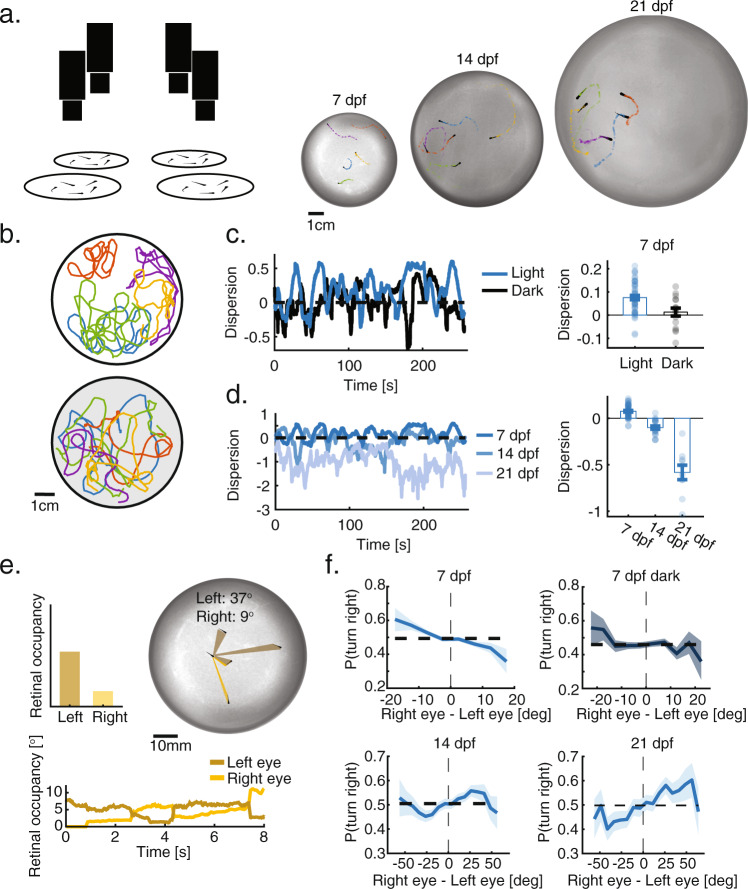
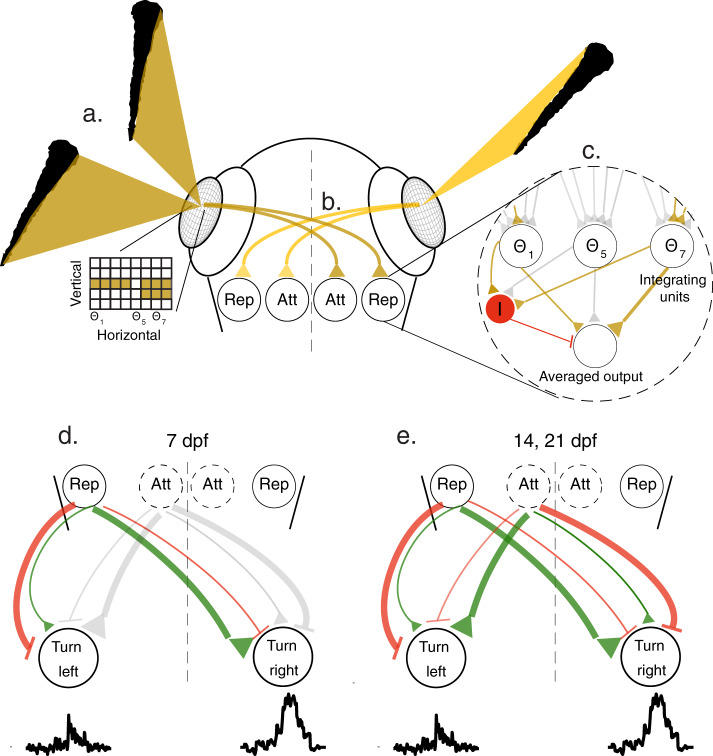
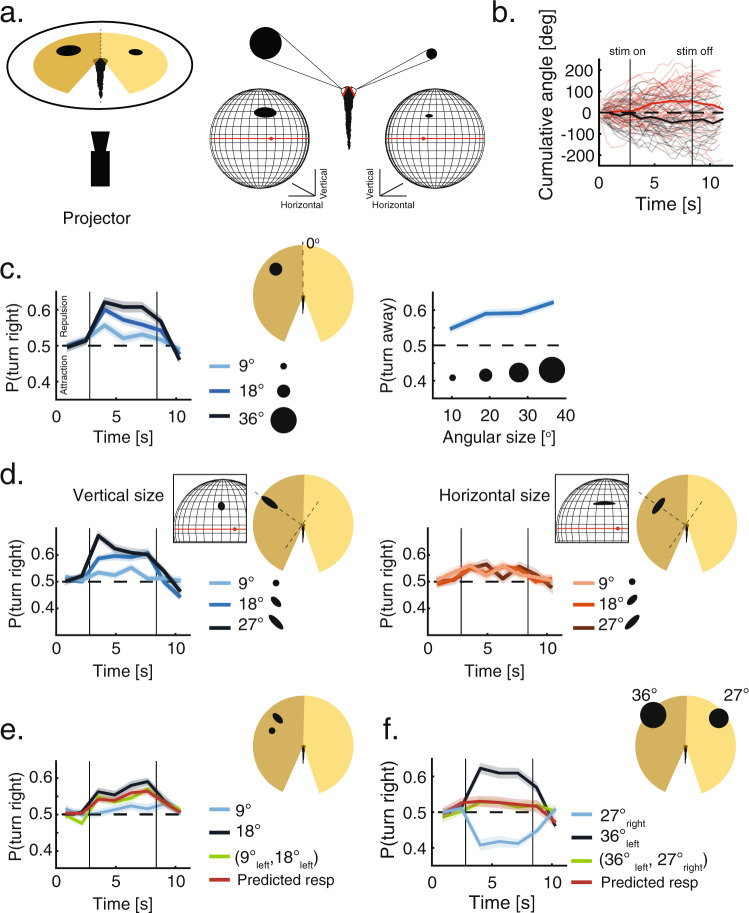
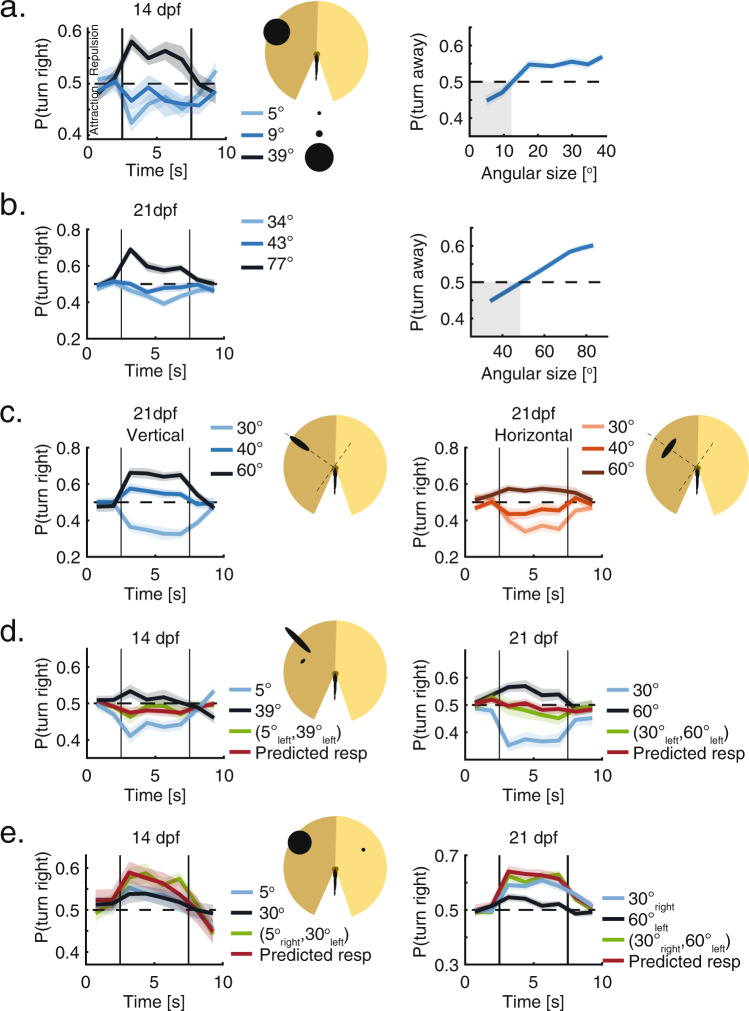
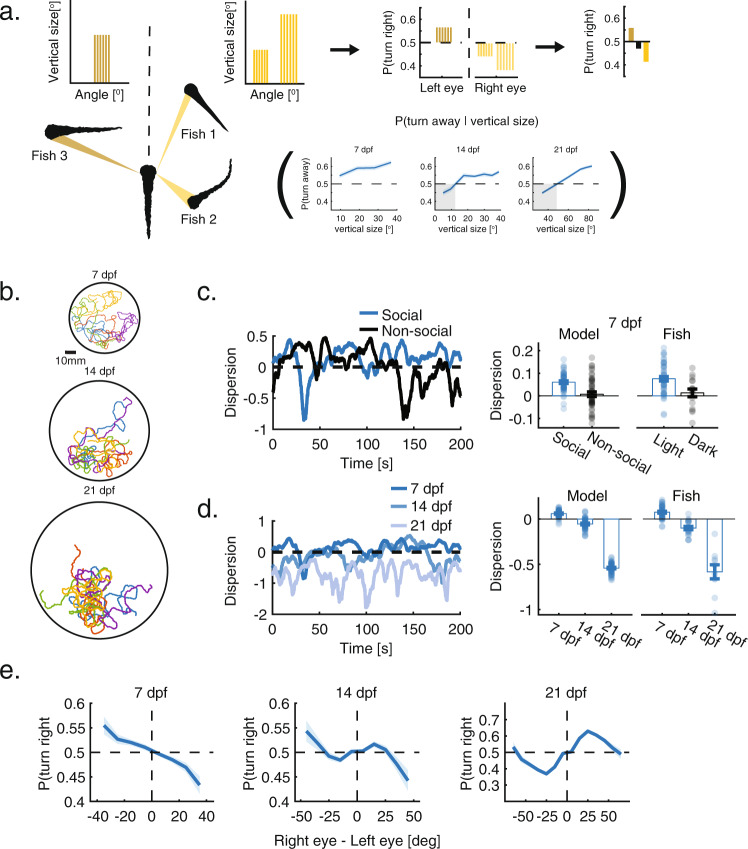
Complex schooling behaviors result from local interactions among individuals. Yet, how sensory signals from neighbors are analyzed in the visuomotor stream of animals is poorly understood. Here, we studied aggregation behavior in larval zebrafish and found that over development larvae transition from overdispersed groups to tight shoals. Using a virtual reality assay, we characterized the algorithms fish use to transform visual inputs from neighbors into movement decisions. We found that young larvae turn away from virtual neighbors by integrating and averaging retina-wide visual occupancy within each eye, and by using a winner-take-all strategy for binocular integration. As fish mature, their responses expand to include attraction to virtual neighbors, which is based on similar algorithms of visual integration. Using model simulations, we show that the observed algorithms accurately predict group structure over development. These findings allow us to make testable predictions regarding the neuronal circuits underlying collective behavior in zebrafish.
复杂的学习行为源于个体之间的局部相互作用。然而,动物的视觉运动流中,来自邻居的感觉信号是如何被分析的,目前还知之甚少。在这里,我们研究了幼虫斑马鱼的聚集行为,发现随着发育的进行,幼虫从过度分散的群体转变为紧密的鱼群。使用虚拟现实分析,我们描述了鱼类将来自邻居的视觉输入转化为运动决策所使用的算法。我们发现,年幼的幼虫通过整合和平均每个眼睛的视网膜宽视场占有率,并使用双眼整合的胜者全拿策略,从虚拟邻居那里转身离开。随着鱼类的成熟,它们的反应扩展到包括对虚拟邻居的吸引力,这是基于类似的视觉整合算法。使用模型模拟,我们表明观察到的算法可以准确地预测整个发育过程中的群体结构。这些发现使我们能够对斑马鱼集体行为背后的神经元回路做出可测试的预测。