• 文献检索
  • 文档翻译
  • 深度研究
  • 学术资讯
  • Suppr Zotero 插件Zotero 插件
  • 邀请有礼
  • 套餐&价格
  • 历史记录
应用&插件
Suppr Zotero 插件Zotero 插件浏览器插件Mac 客户端Windows 客户端微信小程序
定价
高级版会员购买积分包购买API积分包
服务
文献检索文档翻译深度研究API 文档MCP 服务
关于我们
关于 Suppr公司介绍联系我们用户协议隐私条款
关注我们

Suppr 超能文献

核心技术专利:CN118964589B侵权必究
粤ICP备2023148730 号-1Suppr @ 2026

文献检索

告别复杂PubMed语法,用中文像聊天一样搜索,搜遍4000万医学文献。AI智能推荐,让科研检索更轻松。

立即免费搜索

文件翻译

保留排版,准确专业,支持PDF/Word/PPT等文件格式,支持 12+语言互译。

免费翻译文档

深度研究

AI帮你快速写综述,25分钟生成高质量综述,智能提取关键信息,辅助科研写作。

立即免费体验

生物信息学方法鉴定 2019 年冠状病毒和肺腺癌患者的常见基因特征。

Bioinformatics approach to identify common gene signatures of patients with coronavirus 2019 and lung adenocarcinoma.

机构信息

Department of Anesthesiology, West China Hospital, Sichuan University, Chengdu, Sichuan Province, China.

Department of Anesthesiology, Sichuan Cancer Center, Sichuan Cancer Hospital & Institute, School of Medicine, University of Electronic Science and Technology of China, No.55, Section 4, Renmin South Road, Chengdu, 610041, Sichuan Province, China.

出版信息

Environ Sci Pollut Res Int. 2022 Mar;29(15):22012-22030. doi: 10.1007/s11356-021-17321-9. Epub 2021 Nov 13.

DOI:10.1007/s11356-021-17321-9
PMID:34775559
原文链接:https://pmc.ncbi.nlm.nih.gov/articles/PMC8590527/
Abstract

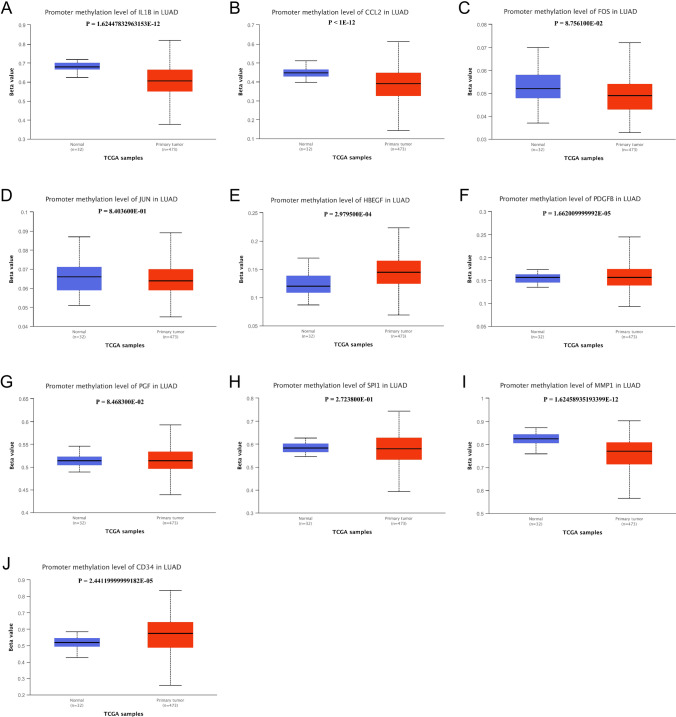
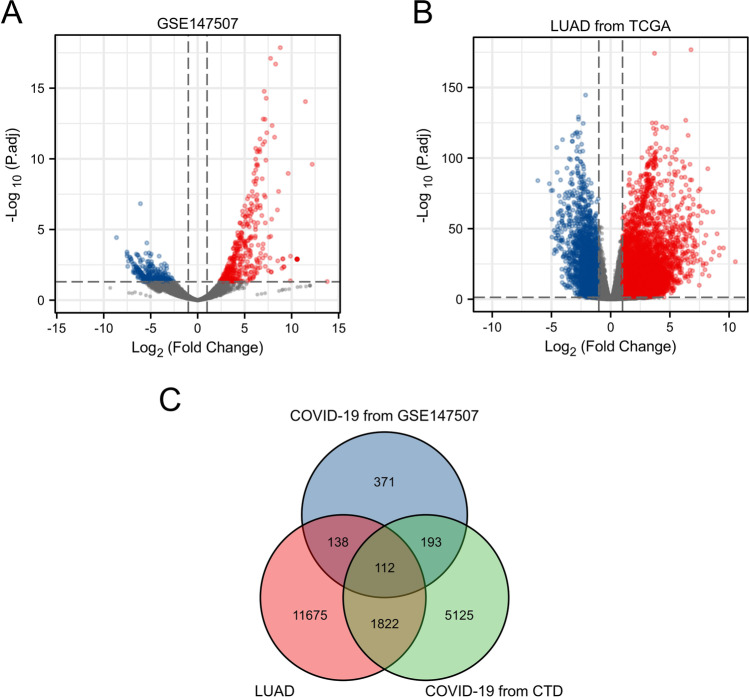
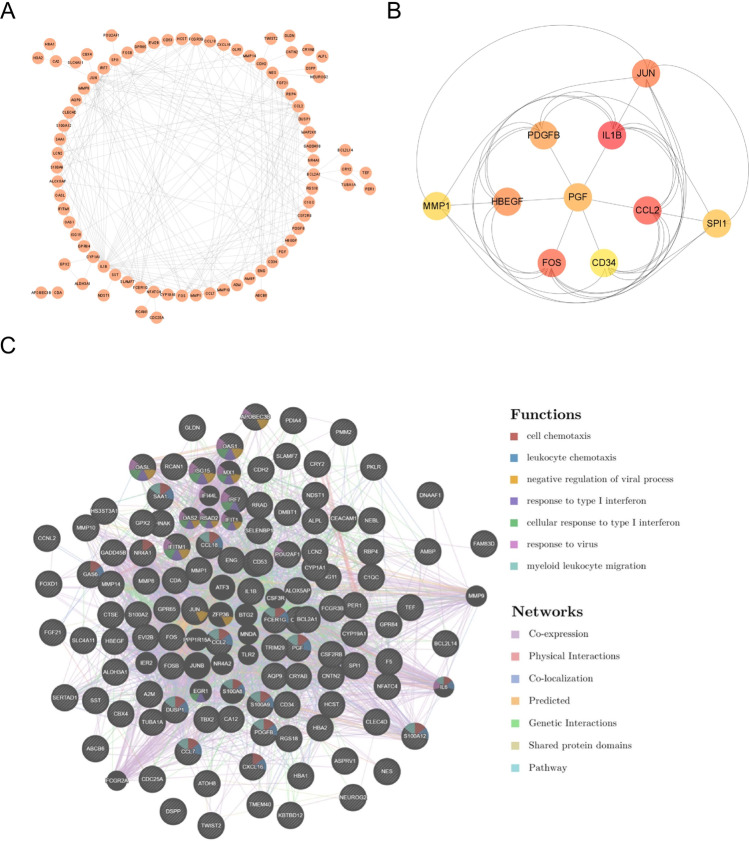
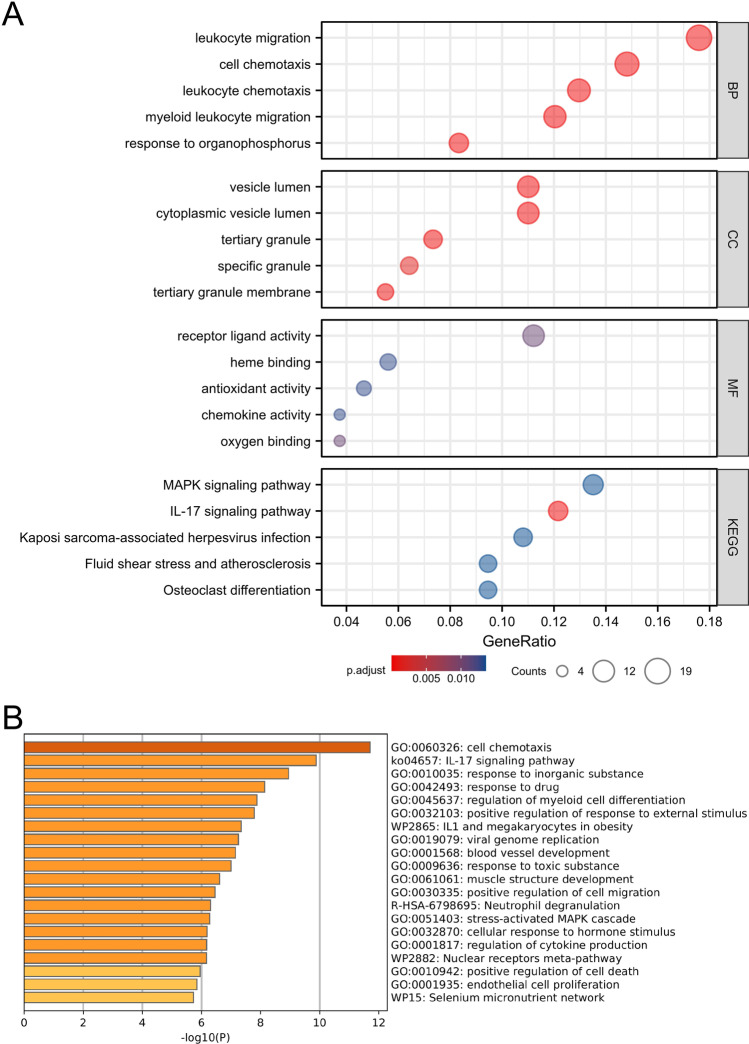
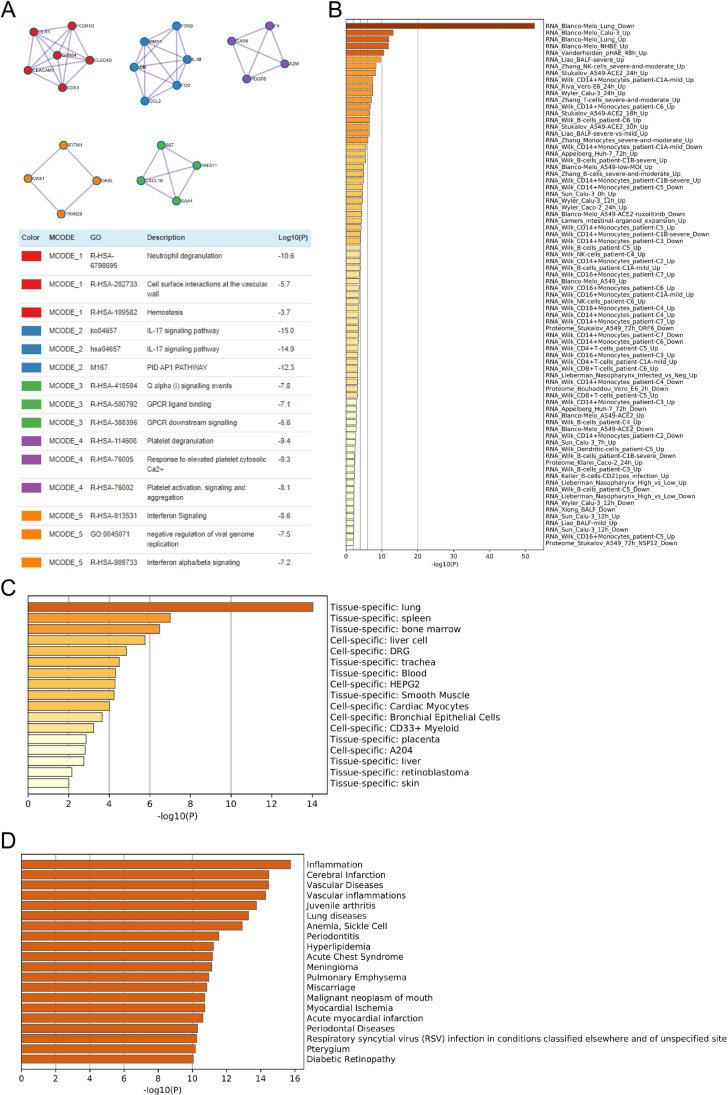
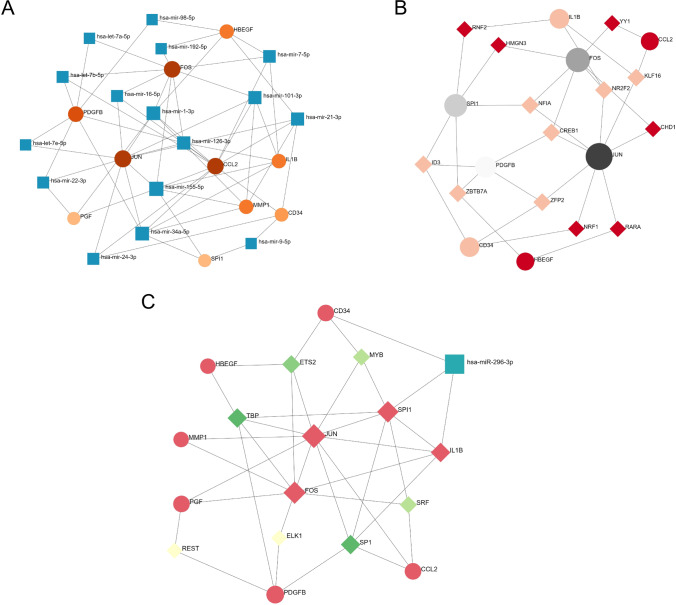
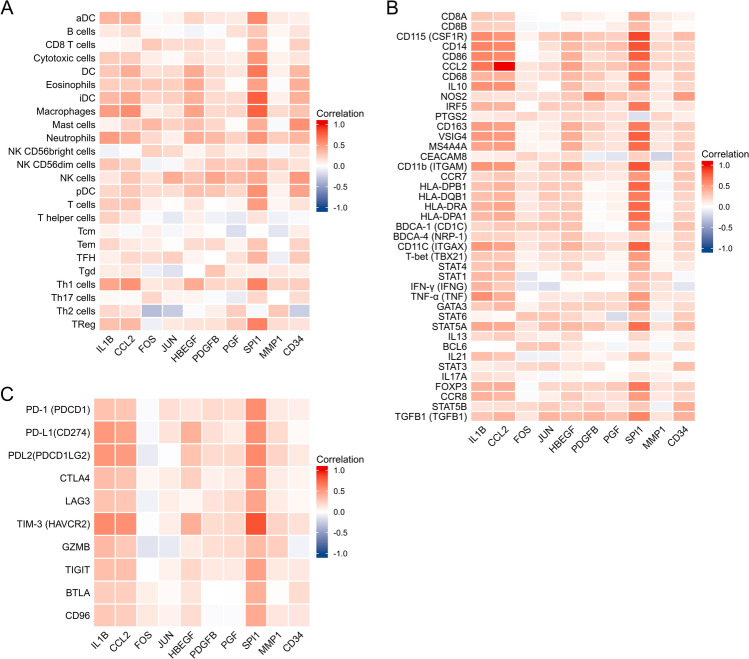
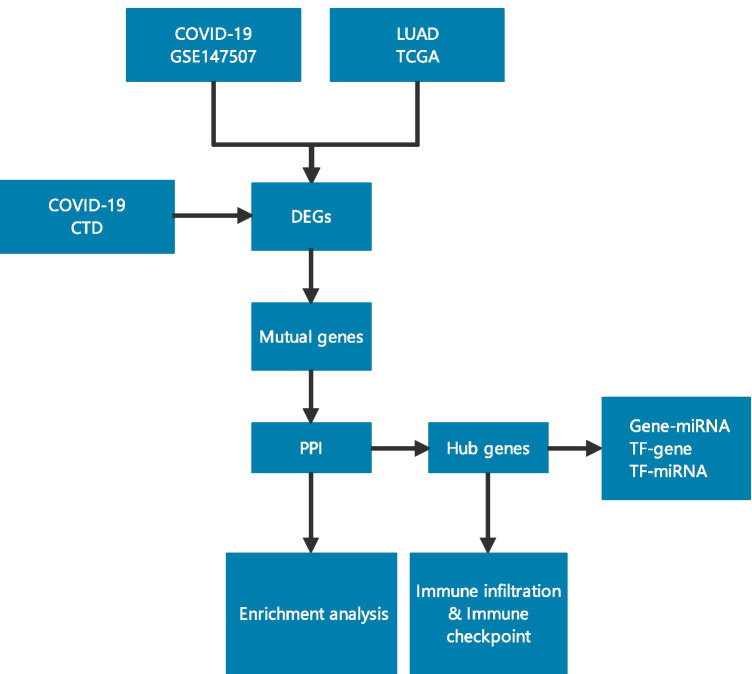
Coronavirus disease 2019 (COVID-19) continues as a global pandemic. Patients with lung cancer infected with COVID-19 may develop severe disease or die. Treating such patients severely burdens overwhelmed healthcare systems. Here, we identified potential pathological mechanisms shared between patients with COVID-19 and lung adenocarcinoma (LUAD). Co-expressed, differentially expressed genes (DEGs) in patients with COVID-19 and LUAD were identified and used to construct a protein-protein interaction (PPI) network and to perform enrichment analysis. We used the NetworkAnalyst platform to establish a co-regulatory of the co-expressed DEGs, and we used Spearman's correlation to evaluate the significance of associations of hub genes with immune infiltration and immune checkpoints. Analysis of three datasets identified 112 shared DEGs, which were used to construct a protein-PPI network. Subsequent enrichment analysis revealed co-expressed genes related to biological process (BP), molecular function (MF), and cellular component (CC) as well as to pathways, specific organs, cells, and diseases. Ten co-expressed hub genes were employed to construct a gene-miRNA, transcription factor (TF)-gene, and TF-miRNA network. Hub genes were significantly associated with immune infiltration and immune checkpoints. Finally, methylation level of hub genes in LUAD was obtained via UALCAN database. The present multi-dimensional study reveals commonality in specific gene expression by patients with COVID-19 and LUAD. These findings provide insights into developing strategies for optimising the management and treatment of patients with LUAD with COVID-19.

摘要

新型冠状病毒病(COVID-19)仍然是一种全球大流行疾病。感染 COVID-19 的肺癌患者可能会发展为重症疾病甚至死亡。治疗此类患者给负担过重的医疗系统带来了巨大压力。在这里,我们确定了 COVID-19 患者和肺腺癌(LUAD)患者之间可能存在的共同病理机制。鉴定 COVID-19 患者和 LUAD 患者的共表达、差异表达基因(DEGs),并构建蛋白-蛋白相互作用(PPI)网络并进行富集分析。我们使用 NetworkAnalyst 平台建立共表达 DEGs 的共调控网络,并使用 Spearman 相关性评估核心基因与免疫浸润和免疫检查点关联的显著性。对三个数据集的分析确定了 112 个共享 DEGs,用于构建蛋白质 PPI 网络。随后的富集分析揭示了与生物学过程(BP)、分子功能(MF)和细胞成分(CC)以及途径、特定器官、细胞和疾病相关的共表达基因。使用十个共表达的枢纽基因构建基因-miRNA、转录因子(TF)-基因和 TF-miRNA 网络。枢纽基因与免疫浸润和免疫检查点显著相关。最后,通过 UALCAN 数据库获得 LUAD 中枢纽基因的甲基化水平。这项多维研究揭示了 COVID-19 患者和 LUAD 患者特定基因表达的共性。这些发现为制定优化 COVID-19 合并 LUAD 患者管理和治疗策略提供了思路。
https://cdn.ncbi.nlm.nih.gov/pmc/blobs/d861/8590527/eb3e23ebaeaa/11356_2021_17321_Fig8_HTML.jpg
https://cdn.ncbi.nlm.nih.gov/pmc/blobs/d861/8590527/e7b6894f57d2/11356_2021_17321_Fig1_HTML.jpg
https://cdn.ncbi.nlm.nih.gov/pmc/blobs/d861/8590527/75bd881d5be8/11356_2021_17321_Fig2_HTML.jpg
https://cdn.ncbi.nlm.nih.gov/pmc/blobs/d861/8590527/3bbe38a322f7/11356_2021_17321_Fig3_HTML.jpg
https://cdn.ncbi.nlm.nih.gov/pmc/blobs/d861/8590527/b03ced378e88/11356_2021_17321_Fig4_HTML.jpg
https://cdn.ncbi.nlm.nih.gov/pmc/blobs/d861/8590527/c511edf24e18/11356_2021_17321_Fig5_HTML.jpg
https://cdn.ncbi.nlm.nih.gov/pmc/blobs/d861/8590527/defecbe459cc/11356_2021_17321_Fig6_HTML.jpg
https://cdn.ncbi.nlm.nih.gov/pmc/blobs/d861/8590527/5177a9ddf5d6/11356_2021_17321_Fig7_HTML.jpg
https://cdn.ncbi.nlm.nih.gov/pmc/blobs/d861/8590527/eb3e23ebaeaa/11356_2021_17321_Fig8_HTML.jpg
https://cdn.ncbi.nlm.nih.gov/pmc/blobs/d861/8590527/e7b6894f57d2/11356_2021_17321_Fig1_HTML.jpg
https://cdn.ncbi.nlm.nih.gov/pmc/blobs/d861/8590527/75bd881d5be8/11356_2021_17321_Fig2_HTML.jpg
https://cdn.ncbi.nlm.nih.gov/pmc/blobs/d861/8590527/3bbe38a322f7/11356_2021_17321_Fig3_HTML.jpg
https://cdn.ncbi.nlm.nih.gov/pmc/blobs/d861/8590527/b03ced378e88/11356_2021_17321_Fig4_HTML.jpg
https://cdn.ncbi.nlm.nih.gov/pmc/blobs/d861/8590527/c511edf24e18/11356_2021_17321_Fig5_HTML.jpg
https://cdn.ncbi.nlm.nih.gov/pmc/blobs/d861/8590527/defecbe459cc/11356_2021_17321_Fig6_HTML.jpg
https://cdn.ncbi.nlm.nih.gov/pmc/blobs/d861/8590527/5177a9ddf5d6/11356_2021_17321_Fig7_HTML.jpg
https://cdn.ncbi.nlm.nih.gov/pmc/blobs/d861/8590527/eb3e23ebaeaa/11356_2021_17321_Fig8_HTML.jpg

相似文献

1
Bioinformatics approach to identify common gene signatures of patients with coronavirus 2019 and lung adenocarcinoma.生物信息学方法鉴定 2019 年冠状病毒和肺腺癌患者的常见基因特征。
Environ Sci Pollut Res Int. 2022 Mar;29(15):22012-22030. doi: 10.1007/s11356-021-17321-9. Epub 2021 Nov 13.
2
Microarray analysis of the expression profile of immune-related gene in rapid recurrence early-stage lung adenocarcinoma.免疫相关基因在快速复发早期肺腺癌中表达谱的基因芯片分析。
J Cancer Res Clin Oncol. 2020 Sep;146(9):2299-2310. doi: 10.1007/s00432-020-03287-7. Epub 2020 Jun 18.
3
Predictions of the dysregulated competing endogenous RNA signature involved in the progression of human lung adenocarcinoma.预测涉及人肺腺癌进展的失调竞争内源性 RNA 特征。
Cancer Biomark. 2020;29(3):399-416. doi: 10.3233/CBM-200133.
4
High Expression of , , and Predicts Worse Prognosis among Nonsmoking Patients with Lung Adenocarcinoma through Bioinformatics Analysis.通过生物信息学分析, 、 、 在不吸烟肺腺癌患者中的高表达预示着更差的预后。
Biomed Res Int. 2020 Oct 20;2020:2071593. doi: 10.1155/2020/2071593. eCollection 2020.
5
Integrated bioinformatics analysis reveals CDK1 and PLK1 as potential therapeutic targets of lung adenocarcinoma.整合生物信息学分析揭示 CDK1 和 PLK1 是肺腺癌的潜在治疗靶点。
Medicine (Baltimore). 2021 Aug 13;100(32):e26474. doi: 10.1097/MD.0000000000026474.
6
IFI44 is an immune evasion biomarker for SARS-CoV-2 and infection in patients with RA.IFI44 是 SARS-CoV-2 的免疫逃逸生物标志物,与 RA 患者的感染相关。
Front Immunol. 2022 Sep 15;13:1013322. doi: 10.3389/fimmu.2022.1013322. eCollection 2022.
7
An integrated analysis of prognostic and immune infiltrates for hub genes as potential survival indicators in patients with lung adenocarcinoma.肺腺癌患者预后和免疫浸润的综合分析,寻找潜在的生存指标的关键基因。
World J Surg Oncol. 2022 Mar 30;20(1):99. doi: 10.1186/s12957-022-02543-z.
8
The identification of key biomarkers in patients with lung adenocarcinoma based on bioinformatics.基于生物信息学的肺腺癌患者关键生物标志物的鉴定。
Math Biosci Eng. 2019 Aug 21;16(6):7671-7687. doi: 10.3934/mbe.2019384.
9
KRT8 and KRT19, associated with EMT, are hypomethylated and overexpressed in lung adenocarcinoma and link to unfavorable prognosis.KRT8 和 KRT19 与 EMT 相关,在肺腺癌中呈低甲基化和过表达,与不良预后相关。
Biosci Rep. 2020 Jul 31;40(7). doi: 10.1042/BSR20193468.
10
Comprehensive Analysis of Candidate Diagnostic and Prognostic Biomarkers Associated with Lung Adenocarcinoma.与肺腺癌相关的候选诊断和预后生物标志物的综合分析。
Med Sci Monit. 2020 Jun 24;26:e922070. doi: 10.12659/MSM.922070.

引用本文的文献

1
identification and functional characterization of common genes associated with type 2 diabetes and hypertension.2型糖尿病和高血压相关常见基因的鉴定与功能表征
Heliyon. 2024 Aug 21;10(16):e36546. doi: 10.1016/j.heliyon.2024.e36546. eCollection 2024 Aug 30.
2
Systematic analysis of prognostic and immunologic characteristics associated with coronavirus disease 2019 regulators in acute myeloid leukemia.2019冠状病毒病调控因子与急性髓系白血病预后及免疫特征的系统分析
Front Genet. 2022 Sep 6;13:959109. doi: 10.3389/fgene.2022.959109. eCollection 2022.
3
Decreased TMPRSS2 expression by SARS-CoV-2 predicts the poor prognosis of lung cancer patients through metabolic pathways and immune infiltration.
通过代谢途径和免疫浸润,SARS-CoV-2 降低 TMPRSS2 的表达预示着肺癌患者的不良预后。
Aging (Albany NY). 2022 Jan 11;14(1):73-108. doi: 10.18632/aging.203823.