Haver Holly N, Scaglione K Matthew
Department of Molecular Genetics and Microbiology, Duke University, Durham, NC, United States.
Department of Neurology, Duke University, Durham, NC, United States.
Front Cell Neurosci. 2021 Oct 27;15:759532. doi: 10.3389/fncel.2021.759532. eCollection 2021.
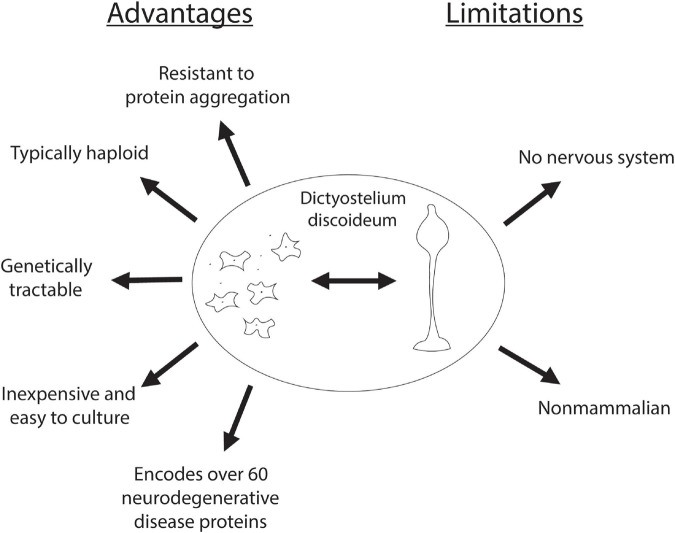
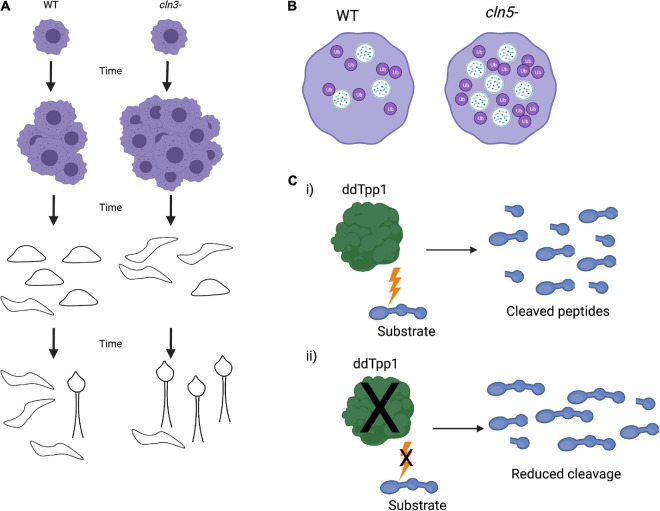
The social amoeba is a model organism that is used to investigate many cellular processes including chemotaxis, cell motility, cell differentiation, and human disease pathogenesis. While many single-cellular model systems lack homologs of human disease genes, genome encodes for many genes that are implicated in human diseases including neurodegenerative diseases. Due to its short doubling time along with the powerful genetic tools that enable rapid genetic screening, and the ease of creating knockout cell lines, is an attractive model organism for both interrogating the normal function of genes implicated in neurodegeneration and for determining pathogenic mechanisms that cause disease. Here we review the literature involving the use of to interrogate genes implicated in neurodegeneration and highlight key questions that can be addressed using as a model organism.
社会性变形虫是一种模式生物,用于研究许多细胞过程,包括趋化性、细胞运动、细胞分化和人类疾病发病机制。虽然许多单细胞模型系统缺乏人类疾病基因的同源物,但该基因组编码了许多与人类疾病相关的基因,包括神经退行性疾病。由于其短的倍增时间,以及能够进行快速基因筛选的强大遗传工具,并且易于创建基因敲除细胞系,它是一种有吸引力的模式生物,可用于探究与神经退行性变相关基因的正常功能,以及确定导致疾病的致病机制。在这里,我们综述了涉及使用社会性变形虫探究与神经退行性变相关基因的文献,并强调了可以使用社会性变形虫作为模式生物来解决的关键问题。