Sakai Kazuko, Sakurai Toshiharu, De Velasco Marco A, Nagai Tomoyuki, Chikugo Takaaki, Ueshima Kazuomi, Kura Yurie, Takahama Takayuki, Hayashi Hidetoshi, Nakagawa Kazuhiko, Kudo Masatoshi, Nishio Kazuto
Department of Genome Biology, Faculty of Medicine, Kindai University, Osaka, Japan.
Department of Gastroenterology and Hepatology, Faculty of Medicine, Kindai University, Osaka, Japan.
Front Oncol. 2021 Oct 27;11:763468. doi: 10.3389/fonc.2021.763468. eCollection 2021.
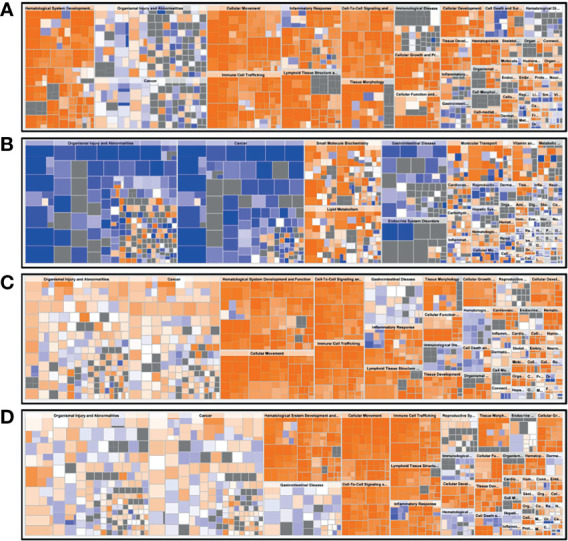
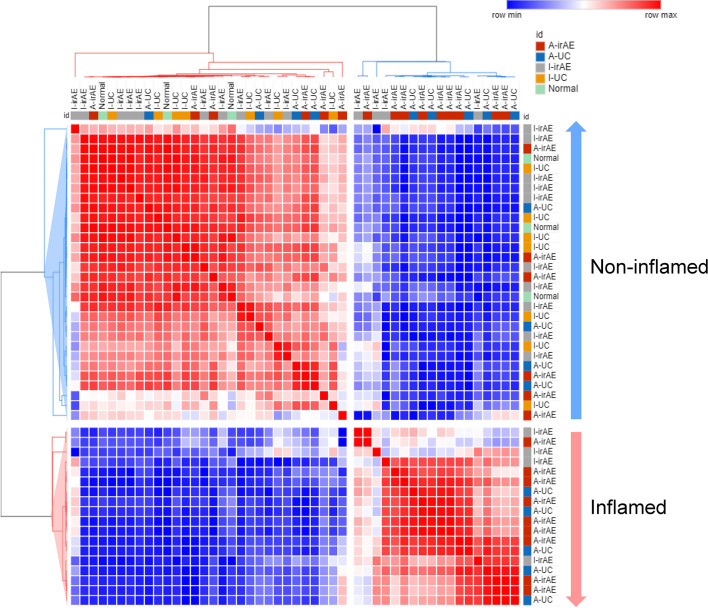
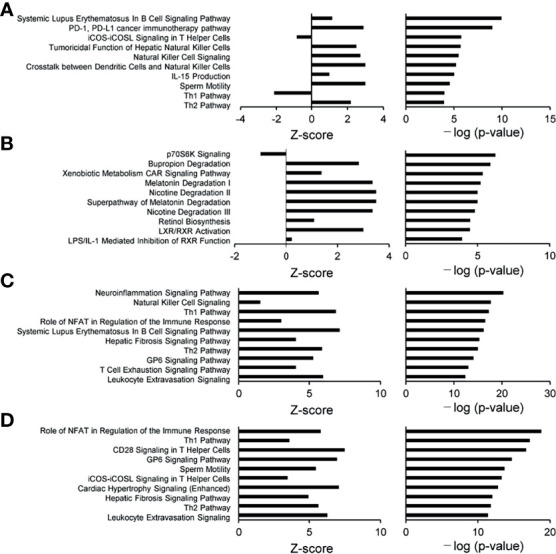
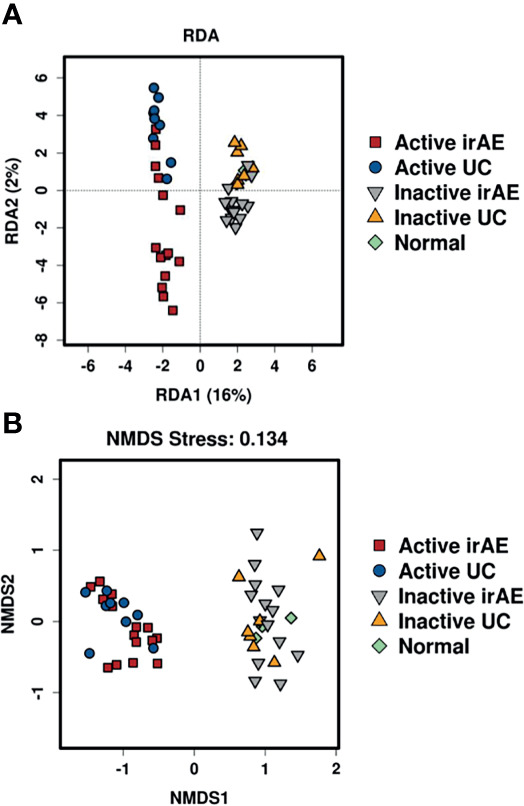
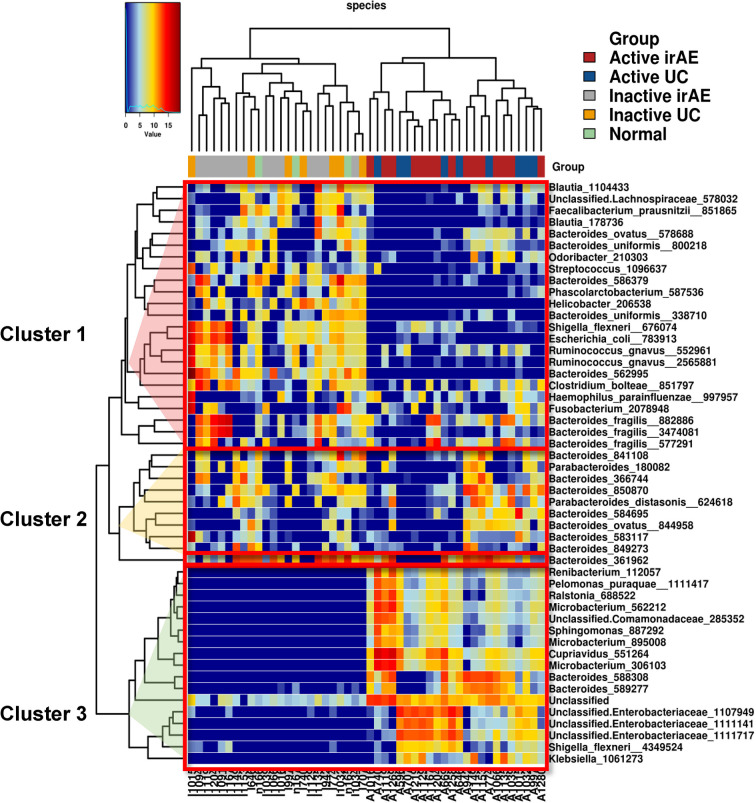
Immune checkpoint inhibitors (ICIs) have become the standard of care for several cancers. However, ICI therapy has also been associated with various immune-related adverse events (irAEs). Clinical manifestations of immune-related colitis resemble those of inflammatory bowel diseases such as ulcerative colitis (UC). The composition of the bowel microflora is thought to influence the development of inflammatory bowel disease and irAE colitis. We profiled the gene expressions and microbe compositions of colonic mucosa from patients with solid cancers receiving anti-PD-L1 antibody treatment; we then compared the expression profiles associated with irAE colitis with those associated with UC. The pathway enrichment analysis revealed functional similarities between inflamed regions of irAE colitis and UC. The common enriched pathways included leukocyte extravasation and immune responses, whereas non-inflamed mucosa from patients with irAE colitis was distinct from patients with UC and was characterized by the recruitment of immune cells. A similarity between the microbiota profiles was also identified. A decreased abundance of species was observed in inflamed regions from both irAE colitis and UC based on a microbiota composition analysis of 16S rDNA sequencing. Pathways associated with molecule transport systems, including fatty acids, were enriched in inflamed and non-inflamed irAE colitis and inflamed UC, similar to Piphillin-inferred KEGG pathways. While UC is characterized by local regions of inflammation, ICI treatment extends to non-inflammatory regions of the colonial mucosa where immune cells are reconstituted. This analysis of the similarity and heterogeneity of irAE colitis and UC provides important information for the management of irAE colitis.
免疫检查点抑制剂(ICIs)已成为多种癌症的标准治疗方法。然而,ICI治疗也与各种免疫相关不良事件(irAEs)有关。免疫相关结肠炎的临床表现类似于炎症性肠病,如溃疡性结肠炎(UC)。肠道微生物群的组成被认为会影响炎症性肠病和irAE结肠炎的发展。我们分析了接受抗PD-L1抗体治疗的实体癌患者结肠黏膜的基因表达和微生物组成;然后我们将与irAE结肠炎相关的表达谱与与UC相关的表达谱进行了比较。通路富集分析揭示了irAE结肠炎和UC炎症区域之间的功能相似性。共同富集的通路包括白细胞外渗和免疫反应,而irAE结肠炎患者的非炎症黏膜与UC患者不同,其特征是免疫细胞的募集。还确定了微生物群谱之间的相似性。基于16S rDNA测序的微生物群组成分析,在irAE结肠炎和UC的炎症区域均观察到物种丰度降低。与分子转运系统相关的通路,包括脂肪酸,在炎症和非炎症的irAE结肠炎以及炎症性UC中均有富集,类似于Piphillin推断的KEGG通路。虽然UC的特征是局部炎症区域,但ICI治疗扩展到了结肠黏膜的非炎症区域,在那里免疫细胞得以重建。对irAE结肠炎和UC的相似性和异质性的分析为irAE结肠炎的管理提供了重要信息。