Translational Gastroenterology Unit, John Radcliffe Hospital, University of Oxford, Oxford, OX3 9DU, UK.
NIHR Oxford Biomedical Research Centre, Oxford University Hospitals NHS Foundation Trust, John Radcliffe Hospital, Oxford, OX3 9DU, UK.
Br J Cancer. 2020 Jul;123(2):207-215. doi: 10.1038/s41416-020-0882-y. Epub 2020 May 18.
Immune checkpoint inhibitors (ICI) improve survival but cause immune-related adverse events (irAE). We sought to determine if CTCAE classification, IBD biomarkers/endoscopic/histological scores correlate with irAE colitis outcomes.
A dual-centre retrospective study was performed on patients receiving ICI for melanoma, NSCLC or urothelial cancer from 2012 to 2018. Demographics, clinical data, endoscopies (reanalysed using Mayo/Ulcerative Colitis Endoscopic Index of Severity (UCEIS) scores), histology (scored with Nancy Index) and treatment outcomes were analysed.
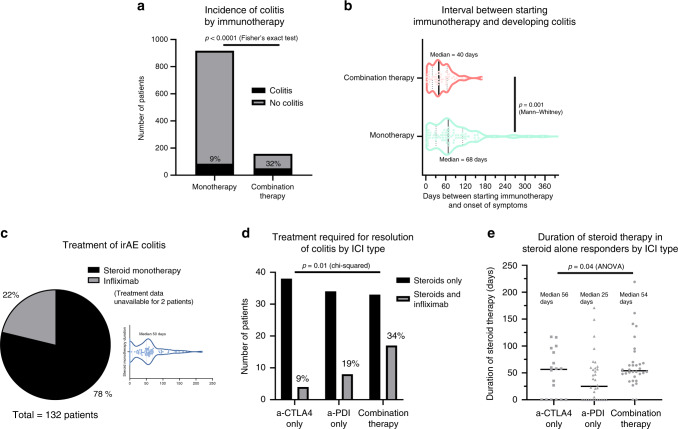
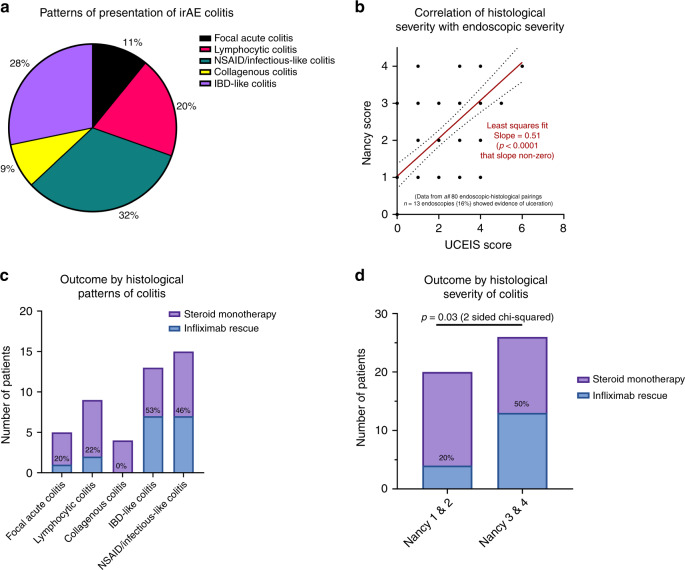
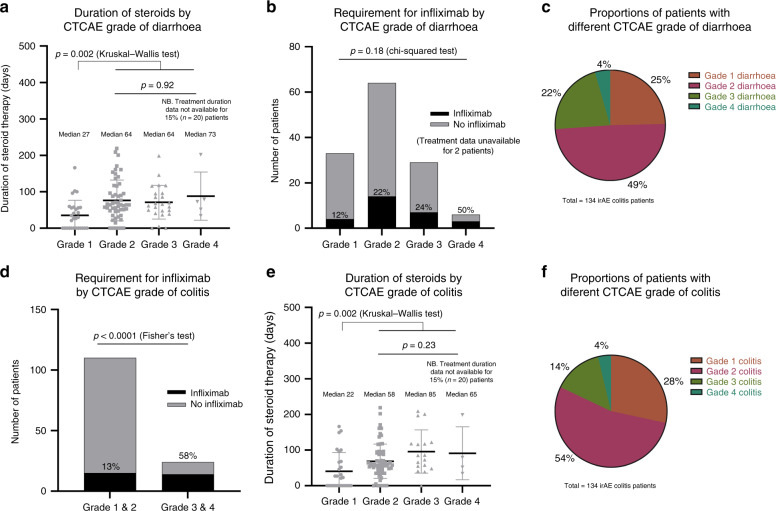
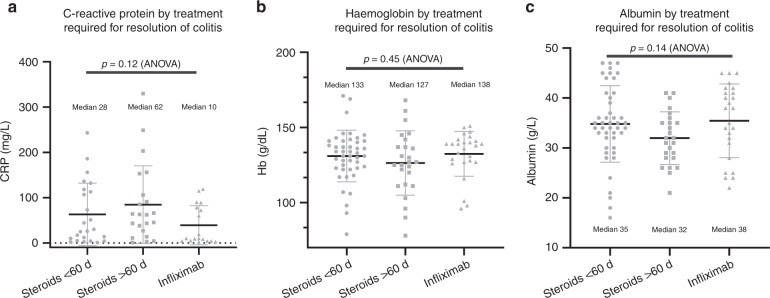
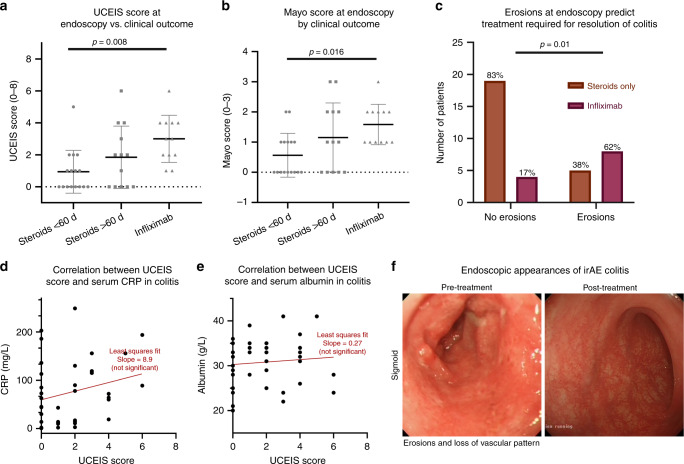
In all, 1074 patients were analysed. Twelve percent (134) developed irAE colitis. Median patient age was 66, 59% were male. CTCAE diarrhoea grade does not correlate with steroid/ infliximab use. G3/4 colitis patients are more likely to need infliximab (p < 0.0001) but colitis grade does not correlate with steroid duration. CRP, albumin and haemoglobin do not correlate with severity. The UCEIS (p = 0.008) and Mayo (p = 0.016) scores correlate with severity/infliximab requirement. Patients with higher Nancy indices (3/4) are more likely to require infliximab (p = 0.03).
CTCAE assessment does not accurately reflect colitis severity and our data do not support its use in isolation, as this may negatively impact timely management. Our data support utilising endoscopic scoring for patients with >grade 1 CTCAE disease, and demonstrate the potential prognostic utility of objective histologic scoring.
免疫检查点抑制剂(ICI)可提高生存率,但会引起免疫相关不良事件(irAE)。我们旨在确定 CTCAE 分类、IBD 生物标志物/内镜/组织学评分是否与 irAE 结肠炎的结果相关。
对 2012 年至 2018 年间接受黑色素瘤、非小细胞肺癌或膀胱癌 ICI 治疗的患者进行了一项双中心回顾性研究。分析了人口统计学、临床数据、内镜(使用 Mayo/溃疡性结肠炎内镜严重程度指数(UCEIS)评分重新分析)、组织学(用 Nancy 指数评分)和治疗结果。
共分析了 1074 例患者。12%(134 例)发生 irAE 结肠炎。中位患者年龄为 66 岁,59%为男性。CTCAE 腹泻分级与类固醇/英夫利昔单抗的使用无关。G3/4 级结肠炎患者更有可能需要英夫利昔单抗(p<0.0001),但结肠炎分级与类固醇持续时间无关。CRP、白蛋白和血红蛋白与严重程度无关。UCEIS(p=0.008)和 Mayo(p=0.016)评分与严重程度/英夫利昔单抗需求相关。Nancy 指数较高的患者(3/4)更有可能需要英夫利昔单抗(p=0.03)。
CTCAE 评估不能准确反映结肠炎的严重程度,我们的数据不支持单独使用,因为这可能会对及时治疗产生负面影响。我们的数据支持对 CTCAE 疾病分级>1 的患者使用内镜评分,并证明了客观组织学评分的潜在预后效用。