Department of Pharmacy, The First Affiliated Hospital of Nanjing Medical University, Nanjing, China.
Lineberger Comprehensive Cancer Center, University of North Carolina School of Medicine, Chapel hill, United States.
Elife. 2021 Nov 15;10:e70412. doi: 10.7554/eLife.70412.
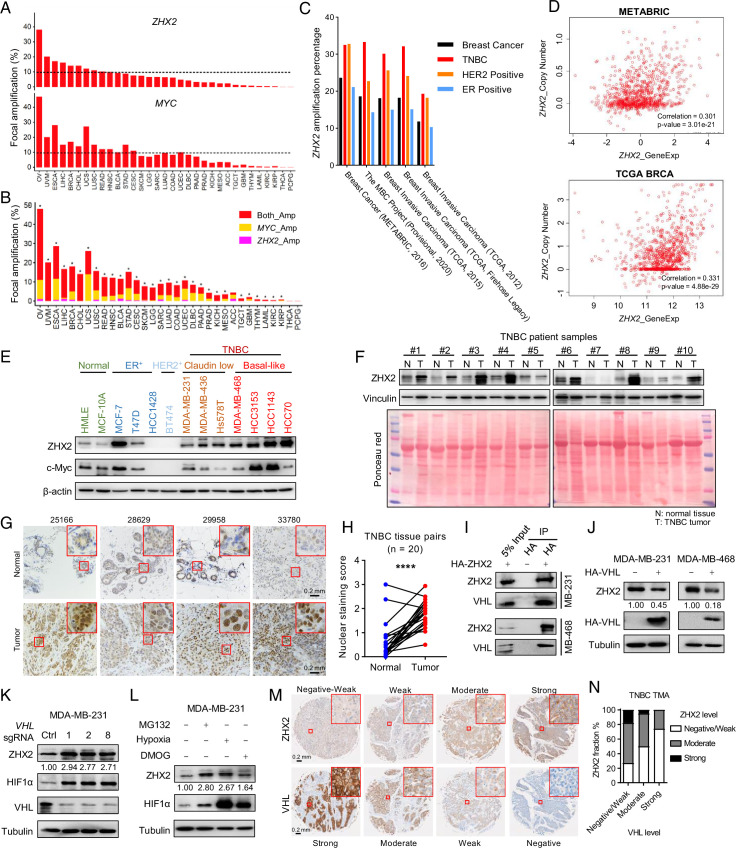
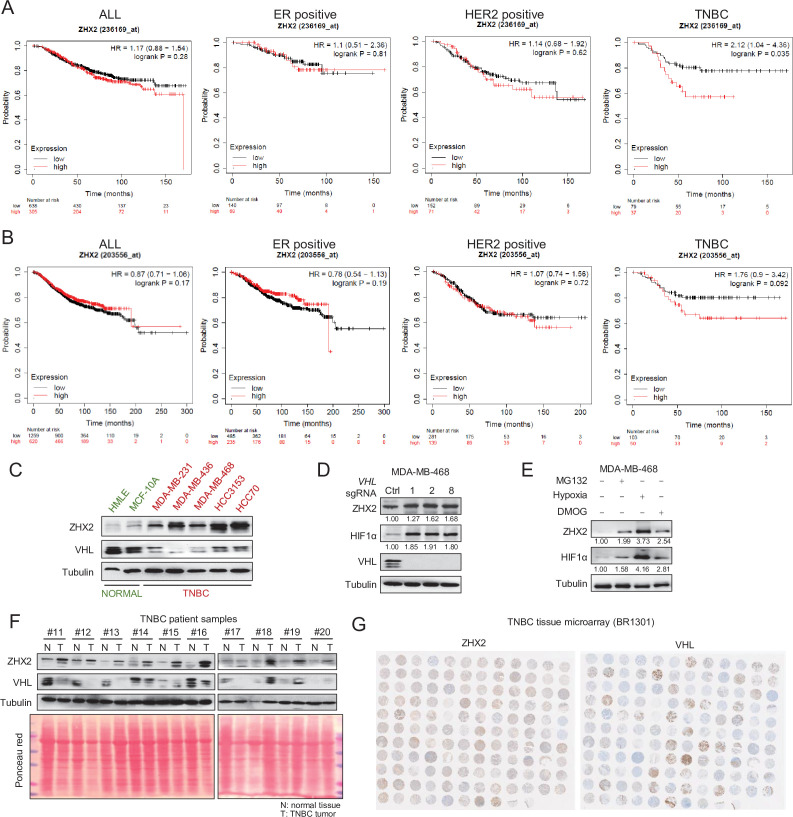
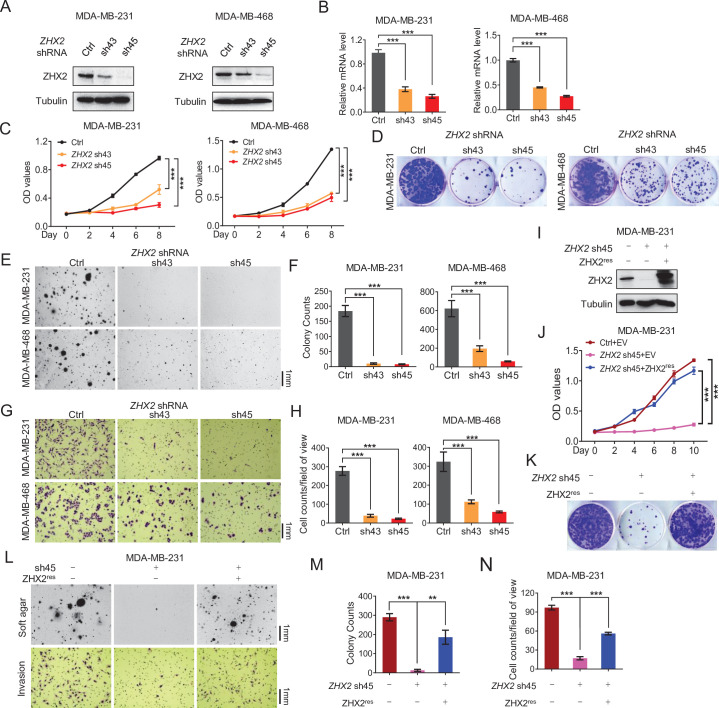
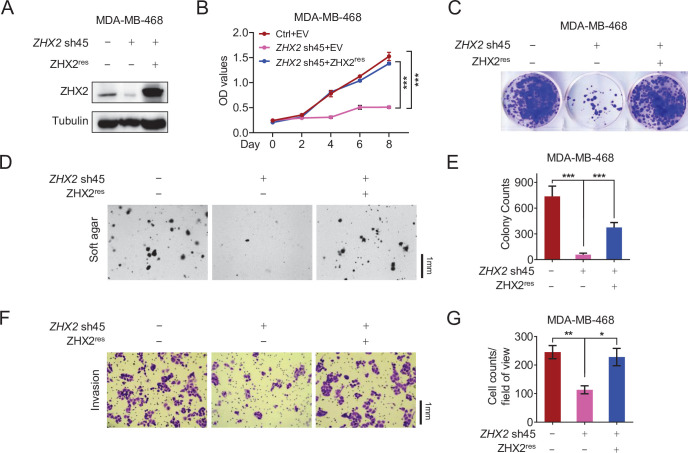
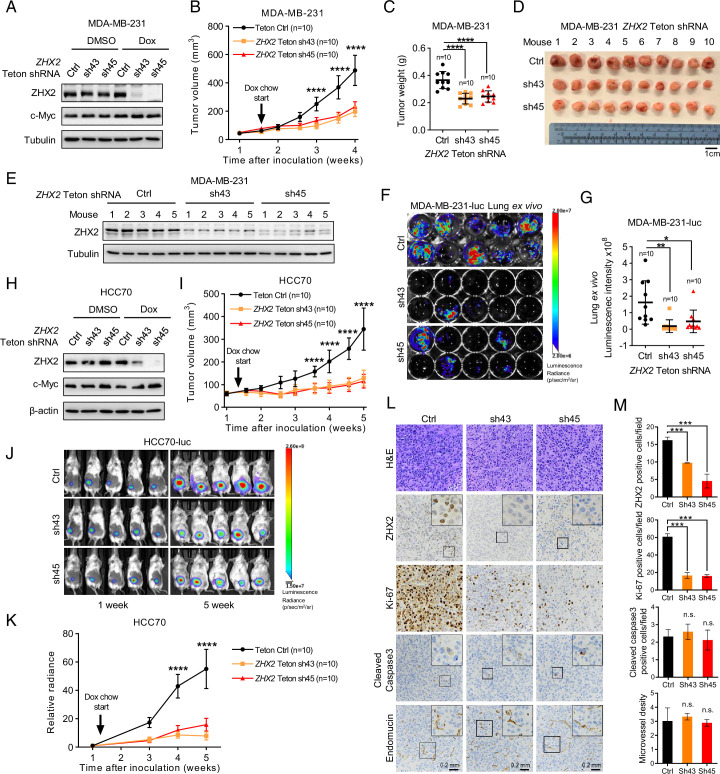
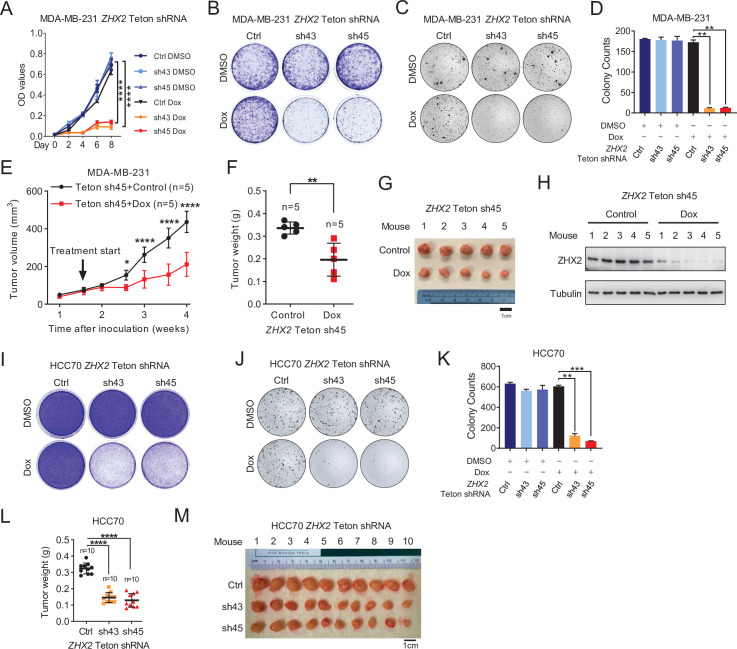
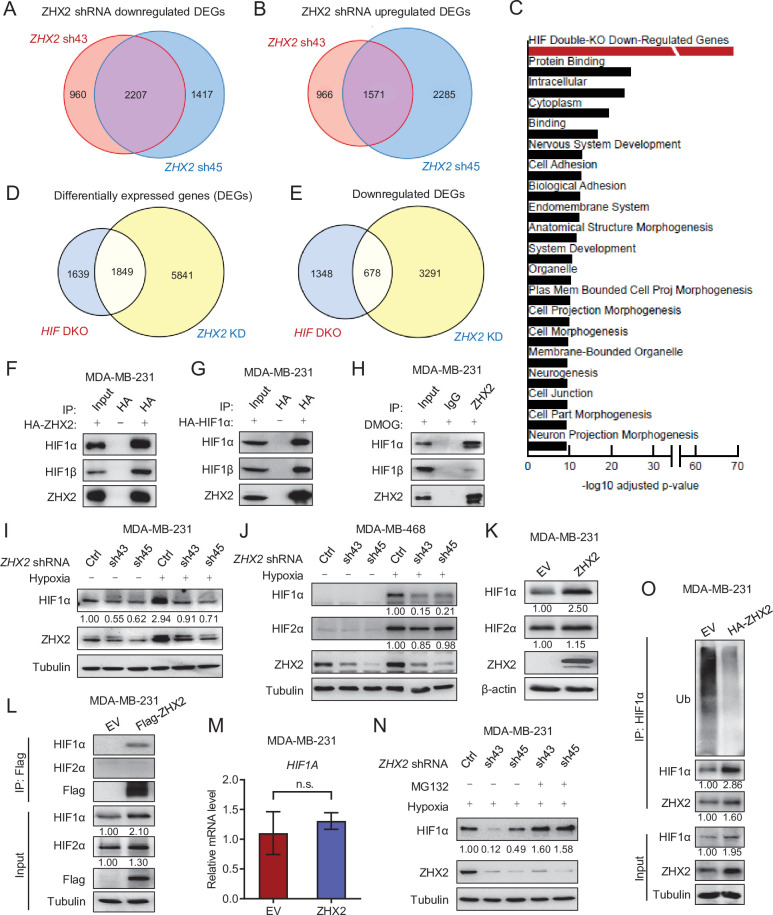
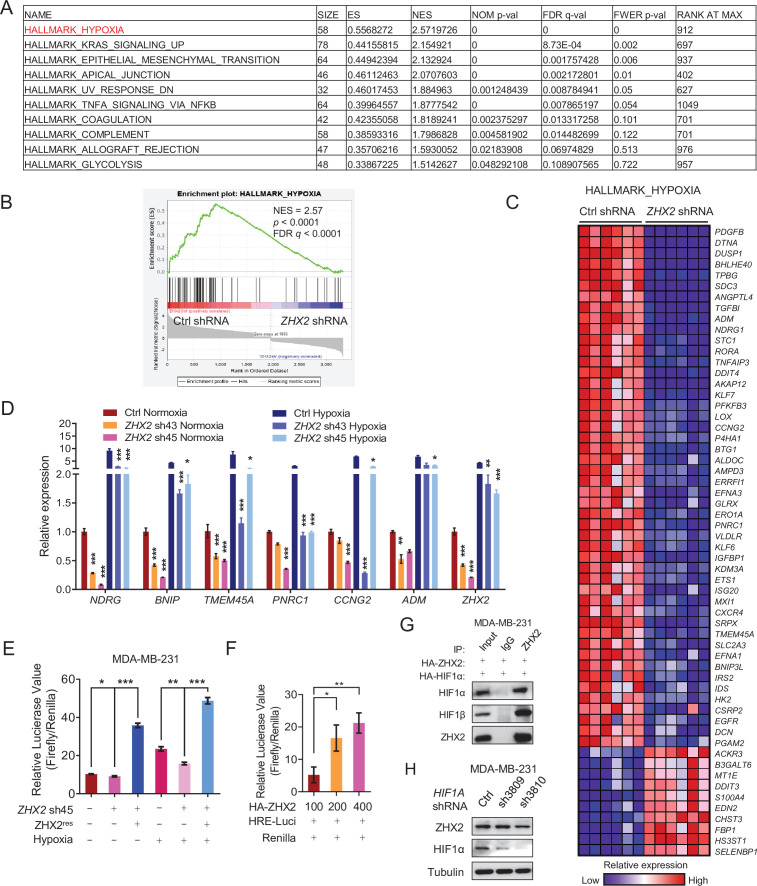
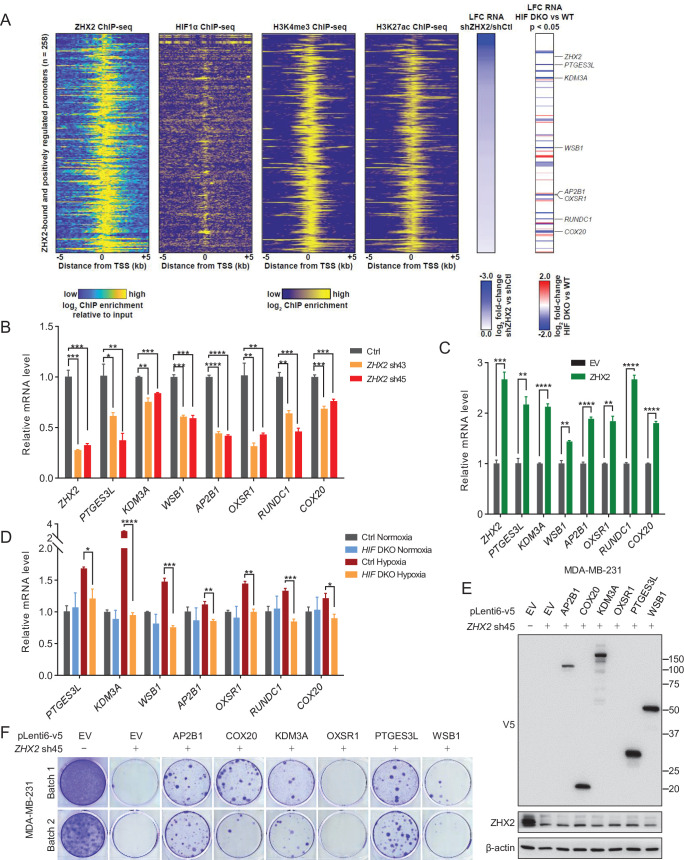
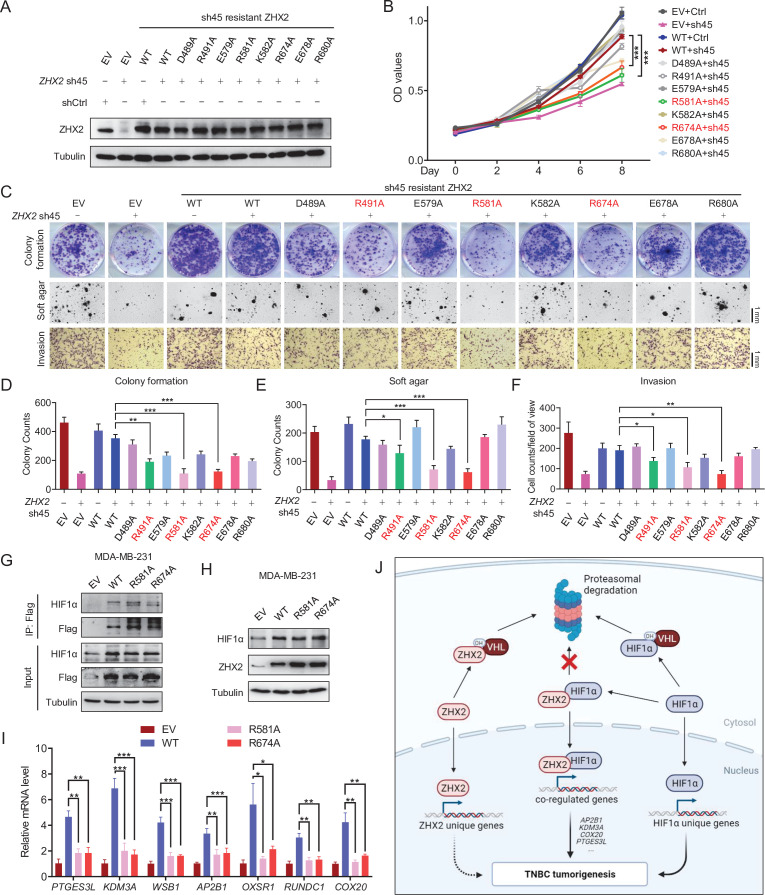
Triple-negative breast cancer (TNBC) is an aggressive and highly lethal disease, which warrants the critical need to identify new therapeutic targets. We show that Zinc Fingers and Homeoboxes 2 () is amplified or overexpressed in TNBC cell lines and patients. Functionally, depletion of ZHX2 inhibited TNBC cell growth and invasion in vitro, orthotopic tumor growth, and spontaneous lung metastasis in vivo. Mechanistically, ZHX2 bound with hypoxia-inducible factor (HIF) family members and positively regulated HIF1α activity in TNBC. Integrated ChIP-seq and gene expression profiling demonstrated that ZHX2 co-occupied with HIF1α on transcriptionally active promoters marked by H3K4me3 and H3K27ac, thereby promoting gene expression. Among the identified ZHX2 and HIF1α coregulated genes, overexpression of , , , or could partially rescue TNBC cell growth defect by depletion, suggested that these downstream targets contribute to the oncogenic role of ZHX2 in an accumulative fashion. Furthermore, multiple residues (R491, R581, and R674) on ZHX2 are important in regulating its phenotype, which correspond with their roles on controlling ZHX2 transcriptional activity in TNBC cells. These studies establish that ZHX2 activates oncogenic HIF1α signaling, therefore serving as a potential therapeutic target for TNBC.
三阴性乳腺癌(TNBC)是一种侵袭性和高致死性疾病,这就需要迫切地寻找新的治疗靶点。我们发现锌指和同源盒蛋白 2(ZHX2)在 TNBC 细胞系和患者中扩增或过表达。功能上,ZHX2 的耗竭抑制了 TNBC 细胞的体外生长和侵袭、原位肿瘤生长和自发肺转移。机制上,ZHX2 与缺氧诱导因子(HIF)家族成员结合,并在 TNBC 中正向调节 HIF1α 的活性。整合 ChIP-seq 和基因表达谱分析表明,ZHX2 与 HIF1α 共同占据转录活跃的启动子,这些启动子被 H3K4me3 和 H3K27ac 标记,从而促进基因表达。在鉴定出的 ZHX2 和 HIF1α 共同调控的基因中,通过 ZHX2 耗竭部分挽救了 、 、 或 的 TNBC 细胞生长缺陷,表明这些下游靶基因以累积的方式有助于 ZHX2 的致癌作用。此外,ZHX2 上的多个残基(R491、R581 和 R674)在调节其表型方面很重要,这与其在 TNBC 细胞中控制 ZHX2 转录活性的作用相对应。这些研究确立了 ZHX2 激活致癌性的 HIF1α 信号通路,因此可作为 TNBC 的潜在治疗靶点。